Artwork
The Resurrection
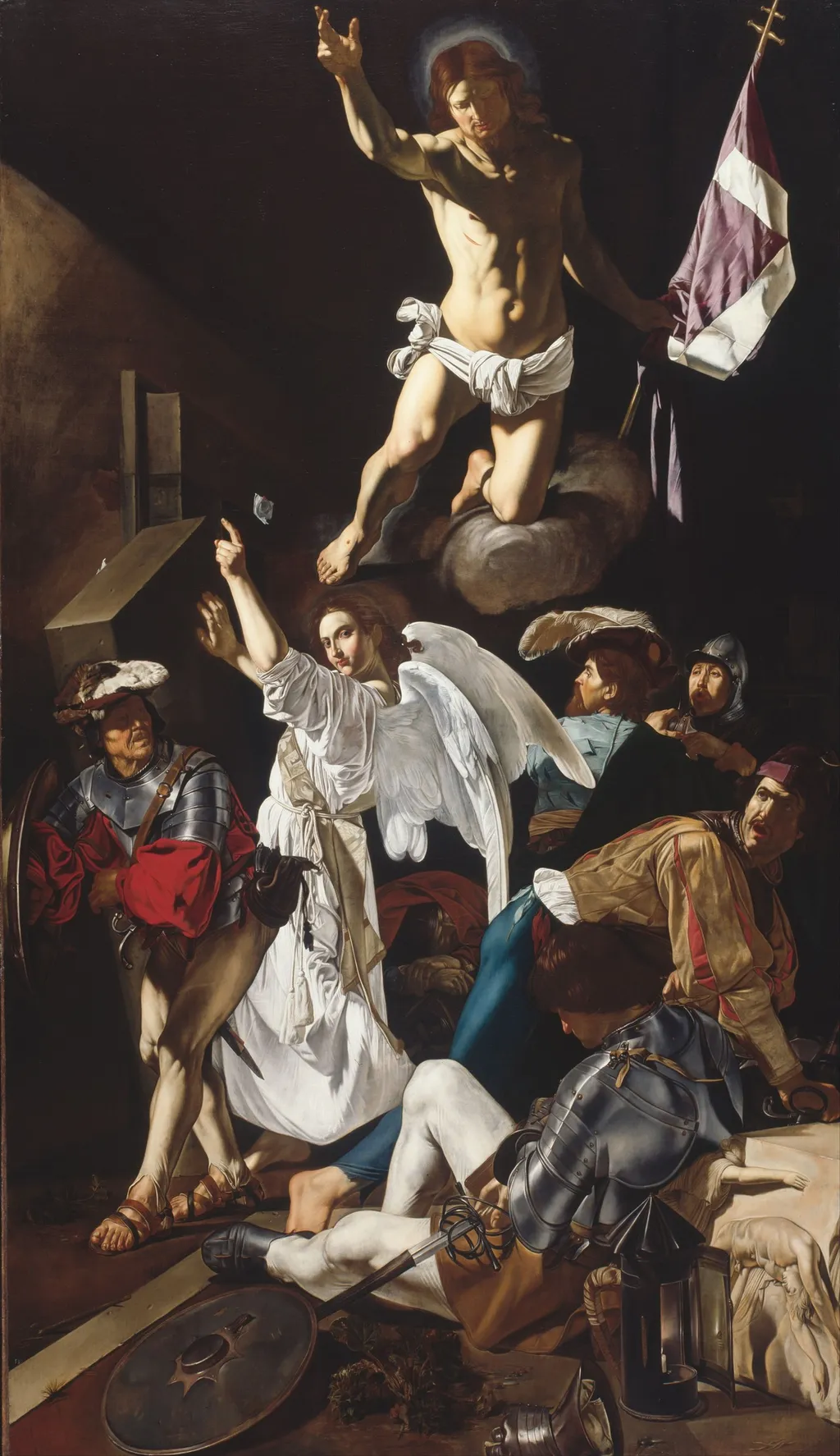
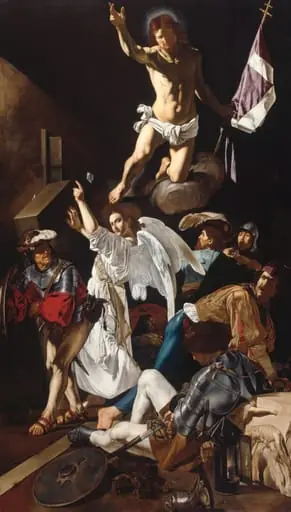
The Resurrection is an oil painting by the Caravaggisti artist Cecco del Caravaggio. It dates from 1619 and is held in the collection of the Art Institute of Chicago.
About this work
This oil painting on canvas shows a dramatic scene full of light and shadow. Cecco del Caravaggio painted it in 1619 for the Tuscan ambassador in Rome. The strong contrasts make the moment feel urgent and alive.
Only one painting by this artist is known for sure. That makes this piece extra special in art history.
Look up Cecco del Caravaggio next.
Overview
The painting has been part of the permanent collection of the Art Institute of Chicago since 1934, entering as part of the Charles H.
The Resurrection is an oil on canvas painting by the Italian Baroque artist Cecco del Caravaggio, dated to 1619. It is the only work that can be attributed to the artist with absolute certainty. The large-scale religious painting was commissioned by Piero Guicciardini, the Tuscan ambassador to Rome, for his private chapel in the church of Santa Felicita in Florence. Completed around 1620, the work never reached its intended destination after being rejected by Guicciardini, subsequently entering the collection of Cardinal Francesco Barberini. The painting has been part of the permanent collection of the Art Institute of Chicago since 1934, entering as part of the Charles H. and Mary F. S. Worcester Collection.
Subject & Meaning
The painting illustrates the moment of the Resurrection of Jesus as described in the Gospel of Matthew 28:2. At the apex of the vertical composition, the nude Christ floats on a cloud, bearing a wound in his side, draped in a white cloth around his hips, and holding a white and purple resurrection banner topped with a cross in his left hand. A pale halo encircles his head, and he makes a sign of benediction directed at the earthly figures below. An angel in white robes stands in profile, having lifted the tombstone, and turns his head victoriously toward the viewer while gesturing upward. Six Roman soldiers assigned to guard the tomb react to the supernatural event. Two remain asleep, while the other four recoil in shock, falling backward with raised hands and startled faces. One soldier in the foreground lies nearly prone amid scattered armor, a sword, and a shield.
Technique & Style
Executed in oil on canvas, the painting is a large vertical work measuring 3391 by 1995 units. Cecco del Caravaggio employs the Caravaggisti style, defined by the dramatic alternate use of strong lights and deep shadows. A single shaft of light entering from the upper left carves sharp shadows across muscled bodies, polished armor, and draped cloth, heightening the vividness of the dramatic scene. The palette contrasts deep browns and blacks in the background against gleaming pale flesh tones, white fabrics, and crimson sleeves. The artist balances strong, clear colors with softened, muted nuances, achieving an equilibrium of shadow and light typical of Baroque painting. The surface features a smooth, almost invisible slick finish, allowing for the precise rendering of metal, feathers, and complex fabric folds within the twisted arrangement of bodies.
History & Provenance
Piero Guicciardini commissioned the painting in 1619 for his private chapel at Santa Felicita in Florence. Upon completion in 1620, Guicciardini rejected the work, and it never arrived in Florence, where it was replaced by a painting by Antonio Tempesta. Shortly after, the canvas entered the private collection of Cardinal Francesco Barberini, a discerning patron of the arts. The work later passed through the collection of Scipione Caffarelli-Borghese. In 1934, the Art Institute of Chicago acquired the painting, purchasing it as a work by Orazio Gentileschi. It has remained at the Art Institute of Chicago since that time as part of the Charles H. and Mary F. S. Worcester Collection.
Context
Cecco del Caravaggio was an Italian Baroque painter operating within the Caravaggisti movement, which adopted and expanded upon the stylistic innovations of Michelangelo Merisi da Caravaggio. The Resurrection stands as a crucial anchor in the artist's oeuvre because it is the only painting known for certain to be by his hand, providing a vital touchstone for attributing other works to the master. The painting has been characterized by scholars as a powerful and aesthetically pleasing work of art, demonstrating the profound influence of Caravaggio's tenebrism while introducing the complex, twisted compositions and vivid coloring that defined the broader Roman Baroque period.
Artist & collection

Artist
Cecco del Caravaggio is the Notname given to a painter who worked in Rome in the early decades of the 17th century and was an important early follower of Caravaggio (1571–1610).