Artwork
Ecce Homo
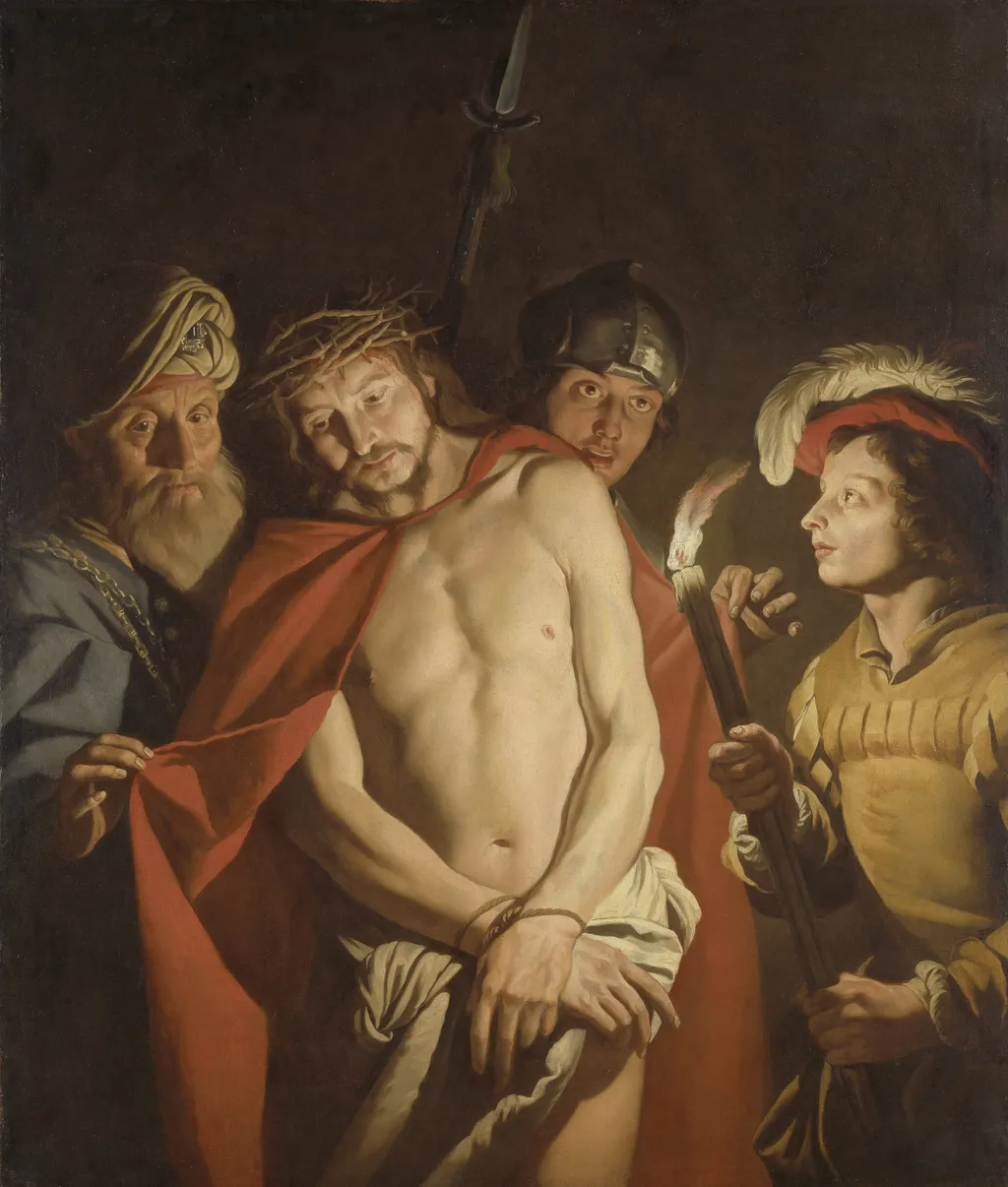
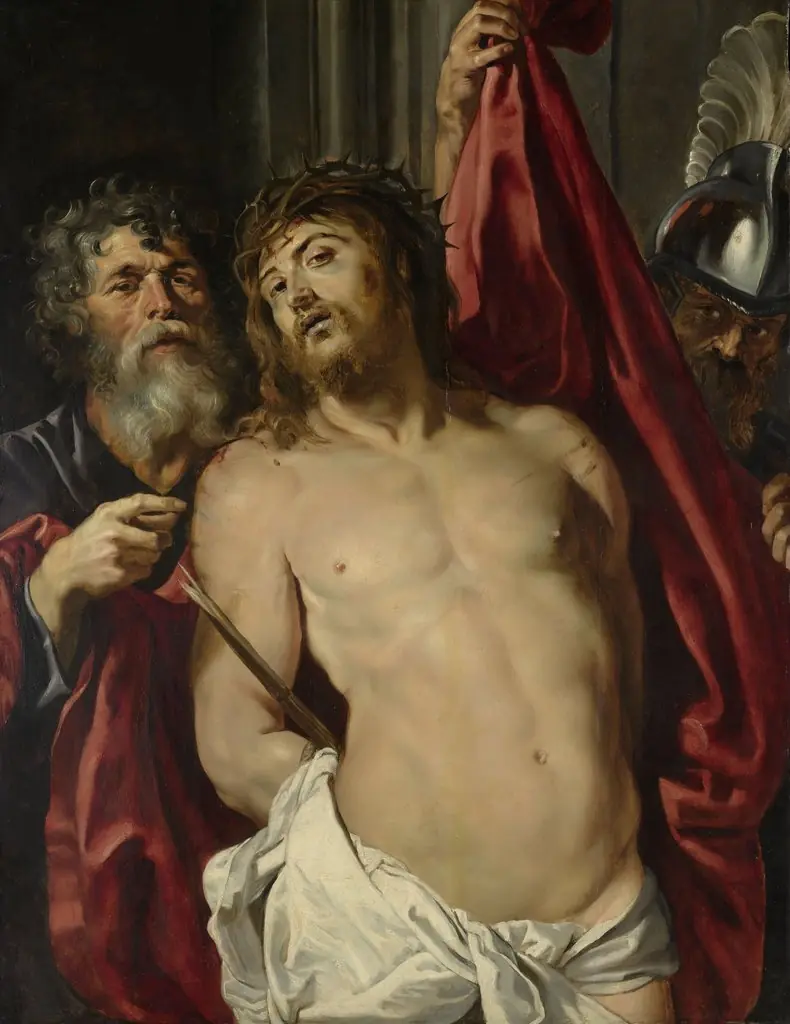
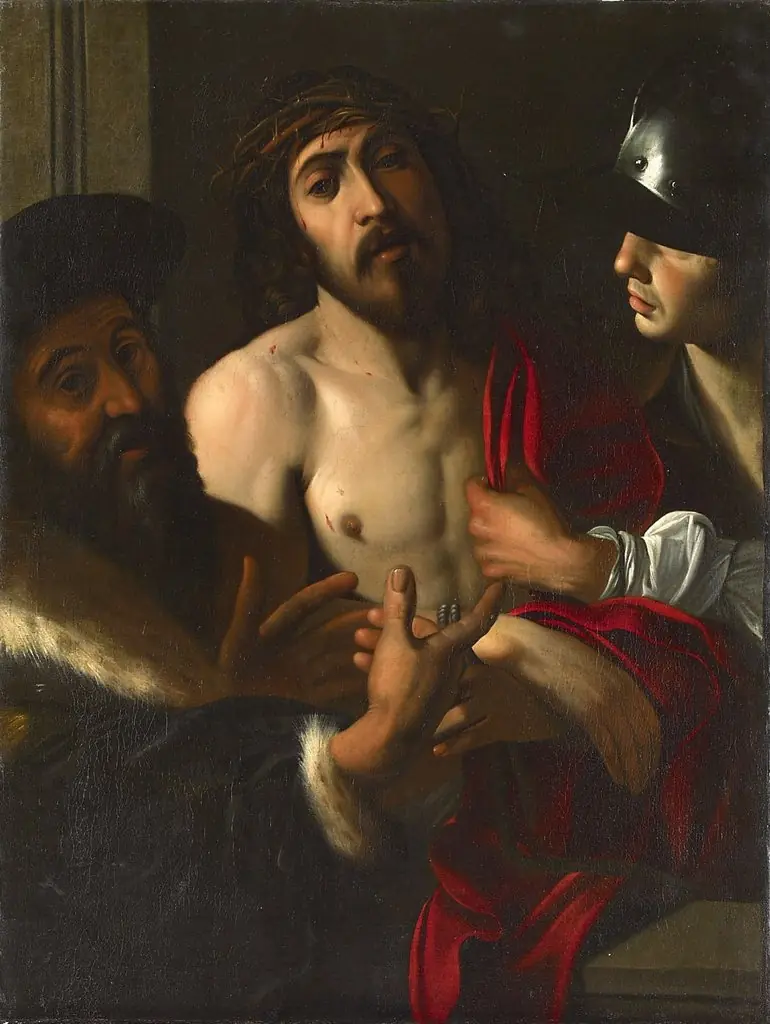
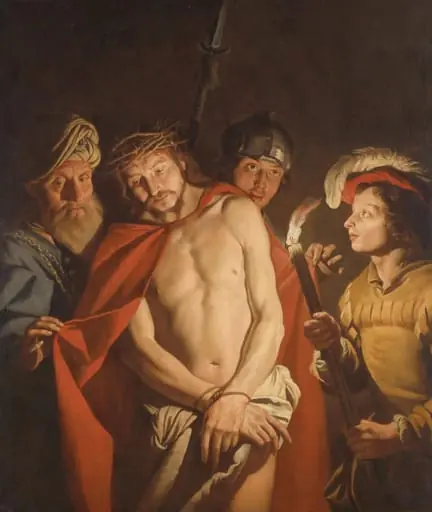
Ecce Homo is an oil painting by the Caravaggisti artist Matthias Stom. It dates from 1650 and is held in the collection of the Rijksmuseum.
About this work
Subject & Meaning
As a piece of religious art, the composition focuses on the humanity and suffering of the subject, serving as a visual meditation on the Passion.
Matthias Stom's Ecce Homo, created in 1650, is a religious painting that depicts Jesus Christ as the central figure. The work adheres to the traditional iconography of the Ecce Homo motif, which translates to "Behold the Man," representing the moment Pontius Pilate presents the scourged and crowned Christ to the crowd. As a piece of religious art, the composition focuses on the humanity and suffering of the subject, serving as a visual meditation on the Passion. The painting is currently held in the collection of the Rijksmuseum.
Technique & Style
The work is painted in oil on canvas, a medium typical of the Dutch Golden Age for its luminous depth and slow drying time that allowed for nuanced modeling of light and flesh tones. Stom’s handling emphasizes chiaroscuro, sharply distinguishing the illuminated figure of Christ from the surrounding crowd and architecture. The composition’s formal qualities center on Christ’s frontal presentation, his draped robe rendered in thick, sculptural folds that catch light, while the soldiers’ armor and the stone architecture are described with crisp, almost metallic precision.
The scene’s restrained palette and controlled contrasts convey a restrained drama, focusing attention on Christ’s gesture and gaze rather than theatrical agitation.
History & Provenance
Matthias Stom’s Ecce Homo is dated to 1650 and is painted in oil on canvas with dimensions of 137.5 cm in height and 115 cm in width. The work entered the collection of the Rijksmuseum, Amsterdam, where it remains located. The painting depicts the biblical scene of Pontius Pilate presenting Jesus to the crowd with the words “Ecce Homo” (“Behold the Man”), aligning with the religious genre associated with Stom’s oeuvre.
The painting is held by the Rijksmuseum in Amsterdam, where it is recorded with inventory number SK-C-1618.
It was included in the exhibition “Rembrandt and His Pupils: Drawings and Etchings” held at the Rijksmuseum from 15 November 1984 to 10 February 1985.
Overview
Matthias Stöm’s Ecce Homo, executed in oil around 1650, presents a dramatic biblical moment. The work is part of the Rijksmuseum’s holdings and exemplifies the artist’s focus on religious subjects rather than everyday genre scenes.
Own this work as a print
Artist & collection
Artist
Matthias Stom or Matthias Stomer (c. 1600 – after 1652) was a Dutch, or possibly Flemish, painter who is only known for the works he produced during his residence in Italy. He was influenced by the work of non-Italian…