Artwork
Second View of the Agrigento Countryside
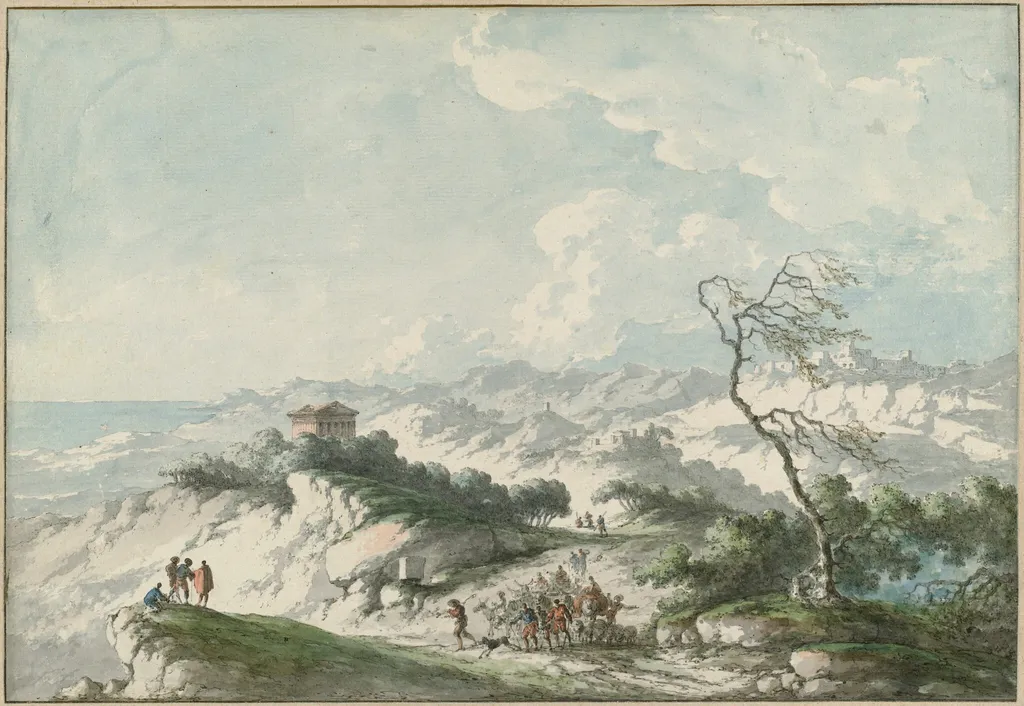
Second View of the Agrigento Countryside is an ink drawing by the Romanticist artist Claude-Louis Châtelet. It dates from 1778 and is held in the collection of the National Gallery of Art.
- Inscription
- Inscribed:across bottom on mount in an unknown hand : Seconde Vue prise dans les Campagnes d'Agrigente--; lower right: Chatelet del.; across center verso by the abbé de Saint-Non: Sde Vue prise dans le Campagnes d'Agrigente / Chatelet; in a modern hand in graphite at lower right: 6484/Human and some mathematical calculations
About this work
Overview
Claude‑Louis Châtelet’s Second View of the Agrigento Countryside (1778) is a drawing on laid paper that combines pen and ink with watercolor and a gray wash. Executed in a topographical manner, it records a Sicilian landscape with a distant hill‑top structure, a sky of light blue and scattered clouds, and a populated foreground.
Subject & Meaning
The composition presents a rural scene populated by figures in period dress, some on foot, others mounted on horses or donkeys, engaged in everyday activity. A prominent building, perhaps a temple or palace, rises on a hill in the background, suggesting a relationship between human labor and the surrounding architecture within an agrarian setting.
Technique & Style
Châtelet employed fine pen lines in brown and black ink to delineate forms, while watercolor and a subtle gray wash provide atmospheric depth. The drawing rests on a graphite underdrawing and includes a partial framing line rendered in brown and gray ink, reflecting the artist’s interest in precise, documentary‑like representation characteristic of late‑eighteenth‑century topographical art.
History & Provenance
Created by the Paris‑born French painter Claude‑Louis Châtelet (b. 1753), the work belongs to a series of landscape studies that echo the style of Claude‑Joseph Vernet. After his artistic career, Châtelet became involved in the French Revolution, aligning with Robespierre before his arrest and execution in 1795. The drawing’s later ownership record is not detailed in the available sources.
Context
The drawing emerges from a period when French artists increasingly documented foreign locales for scientific and aesthetic purposes. Châtelet’s focus on Sicilian topography aligns with Enlightenment interests in geography and natural observation, preceding the Romantic emphasis on emotion and nature that would dominate early nineteenth‑century art.
Own this work as a print
Artist & collection
Artist
Claude-Louis Châtelet, a French painter, was born in Paris in 1753. He produced Swiss views, sea-pieces, and pastoral scenes in the style of Vernet. Examples of his work are in the Orléans Museum, the Palace at…

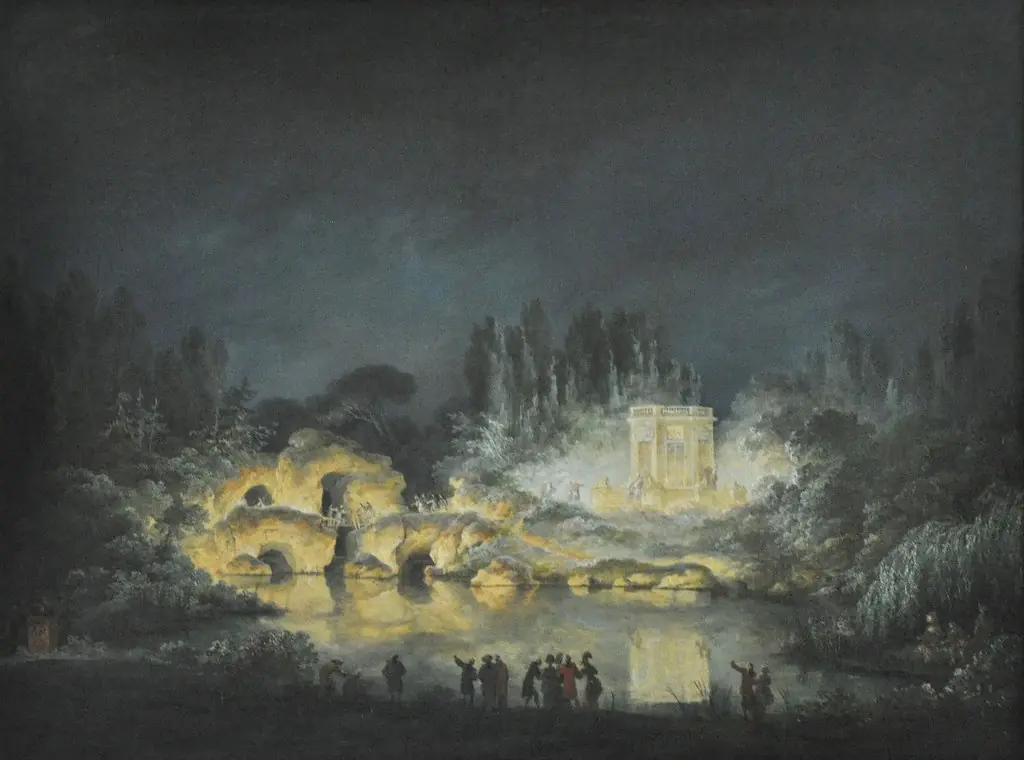
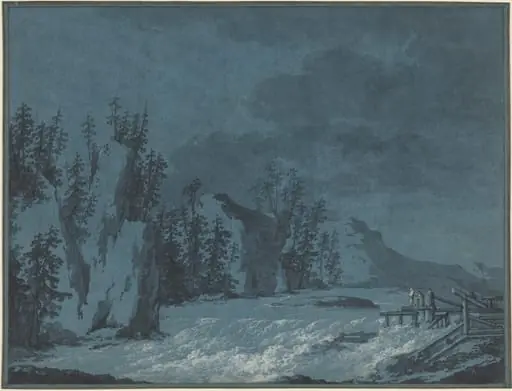
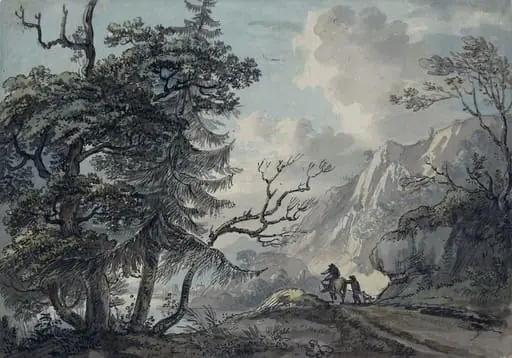
- A road in mountainous country, leading to a castle by a lake
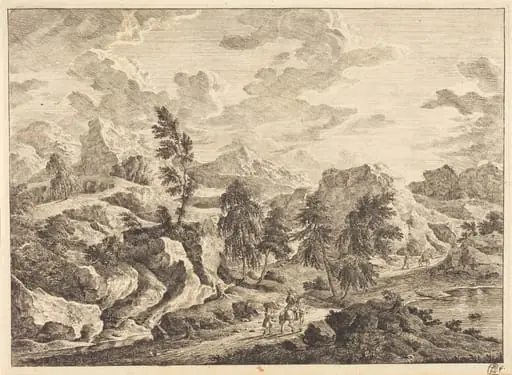 Landscape with the Rising Sun and a Rider with Attendant
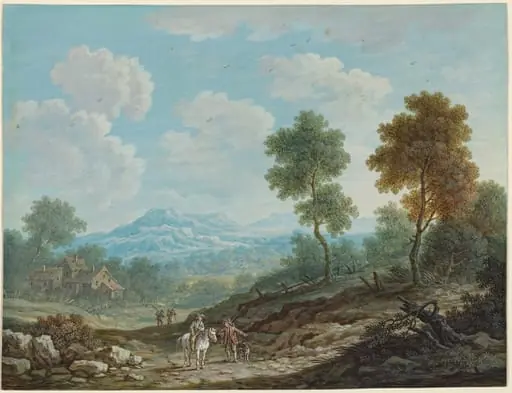 Travelers in a Broad Valley
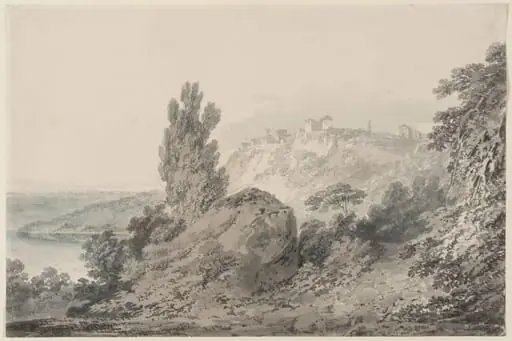 Lake and Town of Nemi
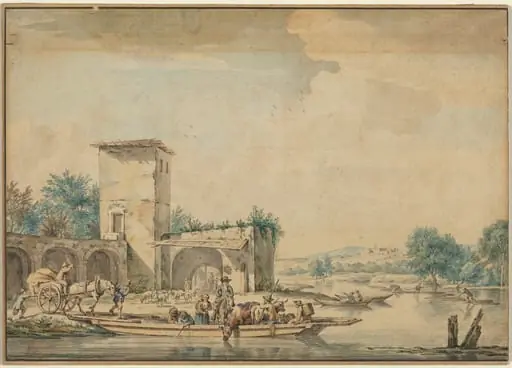 River Landscape with a Ferry Boat
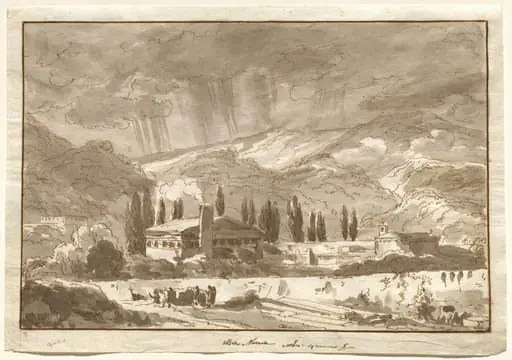 A Storm over the Mountains near Nocera
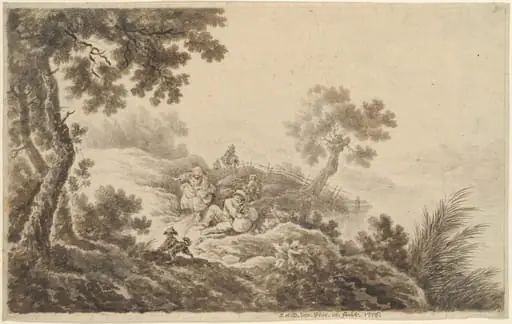 Landscape with Travelers
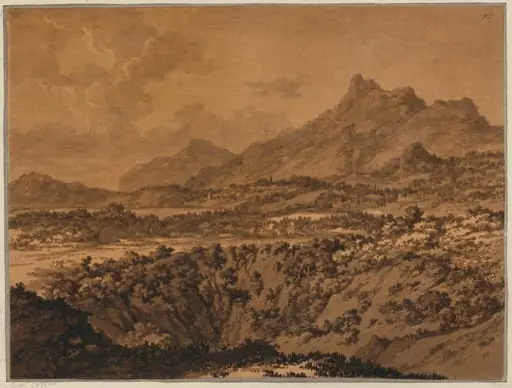 Mountain Landscape with a Hollow
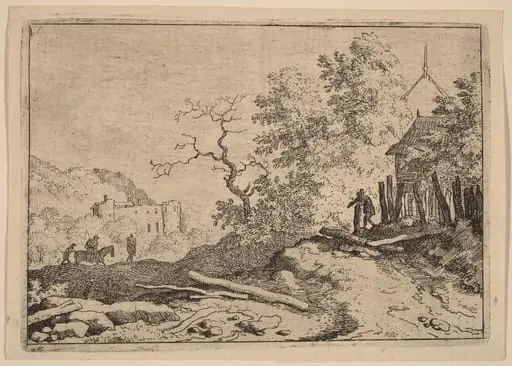 Hut with the Remains of a Hedge
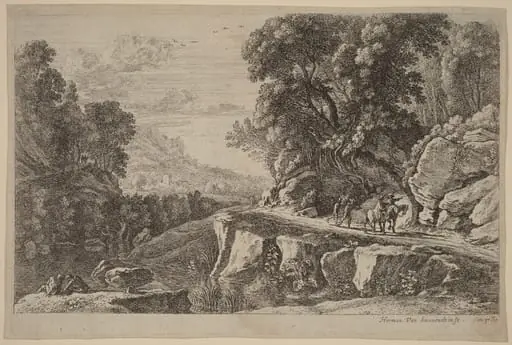 The Two Horsemen
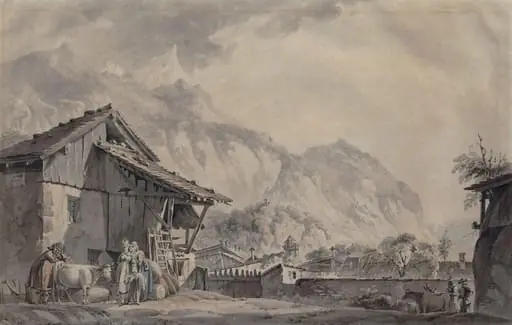 A Swiss Farmhouse
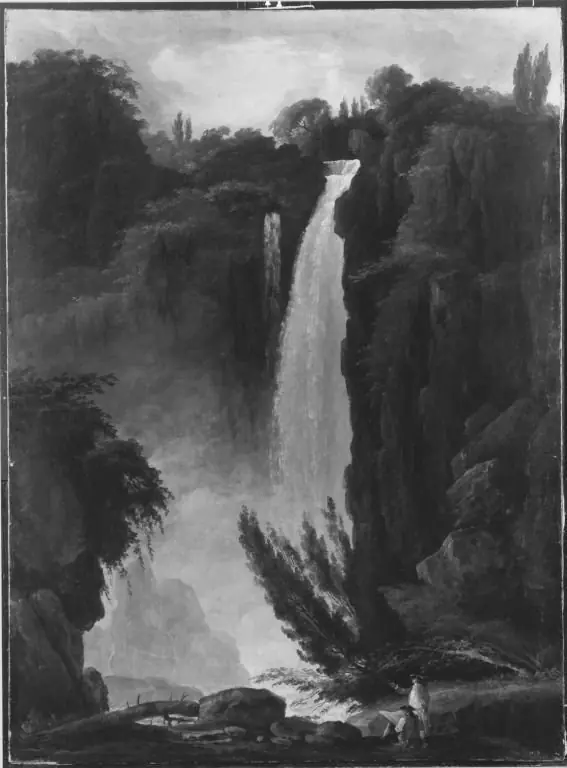
 Classical Landscape with a Waterfall