Artwork
The Constitution and the Guerriere
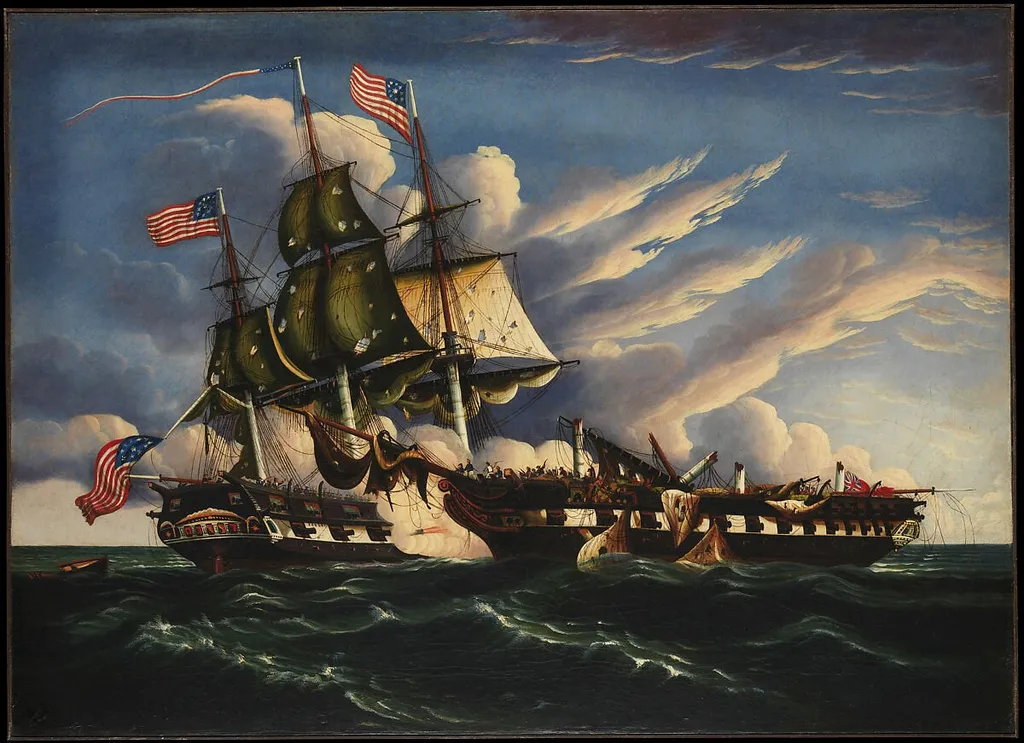
The Constitution and the Guerriere is an oil painting by the American Folk Art artist Thomas Chambers. It dates from 1845 and is held in the collection of the Metropolitan Museum of Art.
About this work
Two warships lock together in smoke and cannon fire on a choppy sea. Thomas Chambers never witnessed the battle; he painted it from memory and newspaper sketches around 1845. The tiny red, white, and blue flags burn almost too bright, as if he wanted every sailor noticed. The bold, storybook handling is typical of his naval scenes.
Overview
The Constitution and the Guerriere is an oil on canvas painting depicting a dramatic naval engagement. It captures two warships enveloped in the chaos of battle, with smoke billowing from cannon fire across a turbulent sea. This work is housed within The American Wing, offering a vivid portrayal of historical maritime conflict.
Subject & Meaning
The painting illustrates the intense confrontation between the American frigate USS Constitution and the British HMS Guerriere.
The painting illustrates the intense confrontation between the American frigate USS Constitution and the British HMS Guerriere. Amidst the smoke and cannon fire, the artist emphasizes the presence of numerous small, brightly colored flags. This detail suggests an intention to highlight the individual participants and the national identity within the broader conflict, rather than just the ships themselves.
Technique & Style
The artist's approach to this naval scene is characterized by a bold, almost narrative quality, reminiscent of a storybook illustration. Despite never having observed a real sea battle firsthand, Chambers constructed the composition from memory and contemporary newspaper sketches. This method allowed for a dramatic interpretation rather than a strict documentary rendering, shaping the energetic and stylized depiction of the engagement.
Context
This painting belongs to a tradition of depicting naval battles, a popular subject that often celebrated national triumphs and maritime prowess. Its inclusion in The American Wing underscores its significance as a historical representation, likely commemorating a pivotal moment in American military history. Such works served to visually narrate key events, shaping public perception and national identity during the era.
Artist & collection

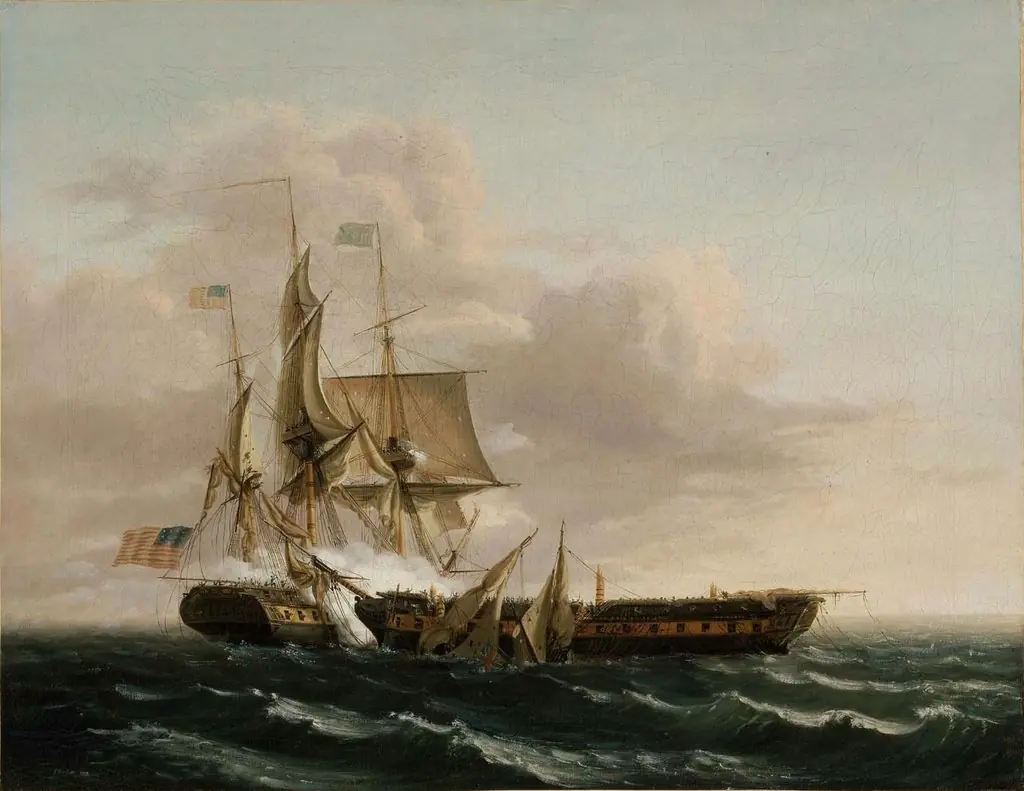
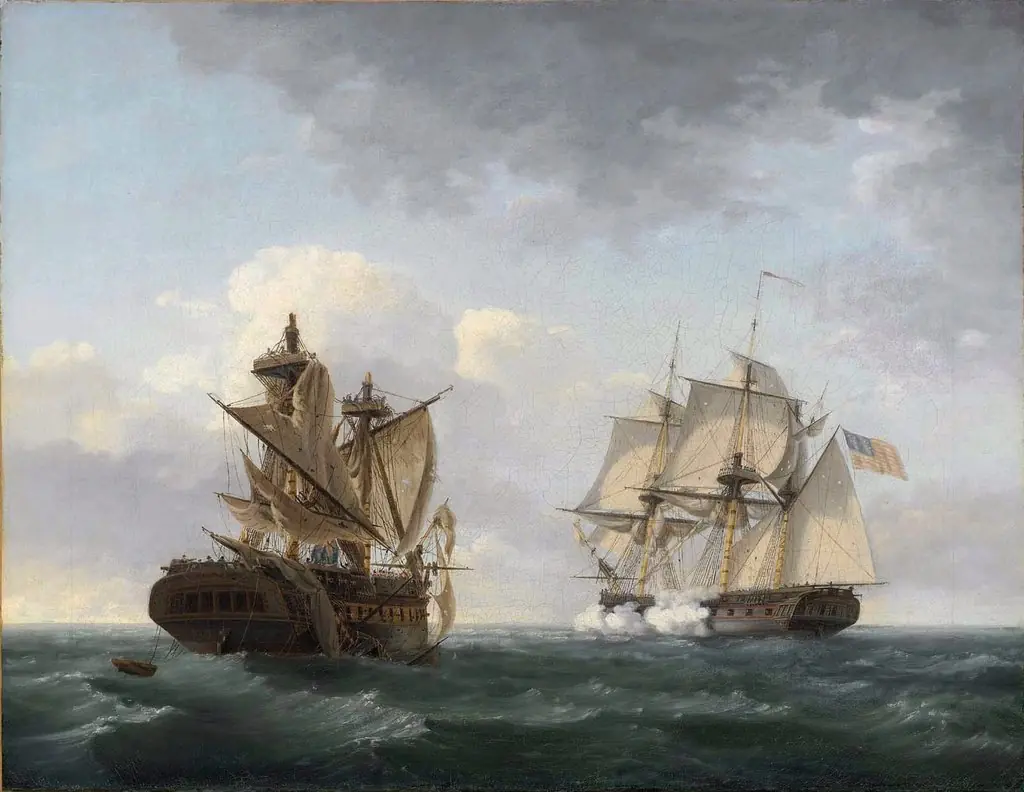 Engagement Between the "United States" and the "Macedonian"
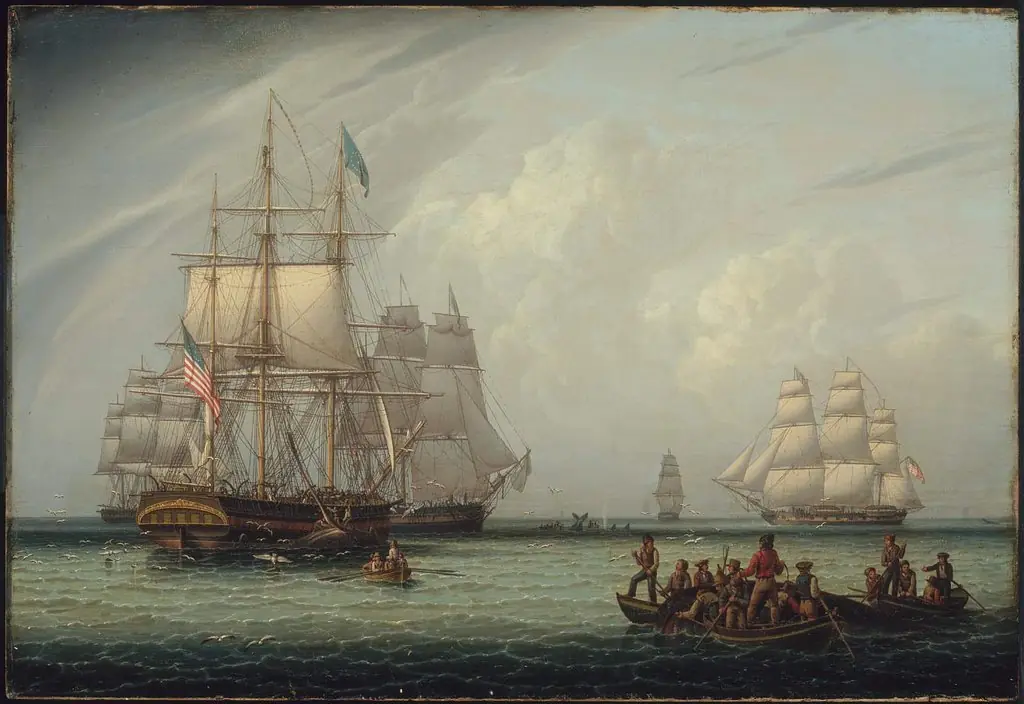 South Sea Whale Fishing I
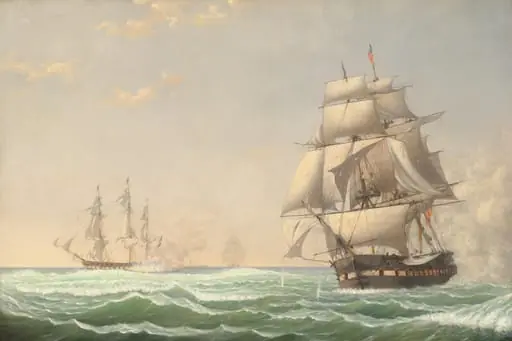 The United States Frigate "President" Engaging the British Squadron, 1815
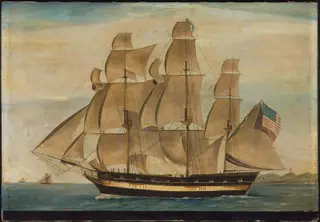 Early American Privateer "Avon"
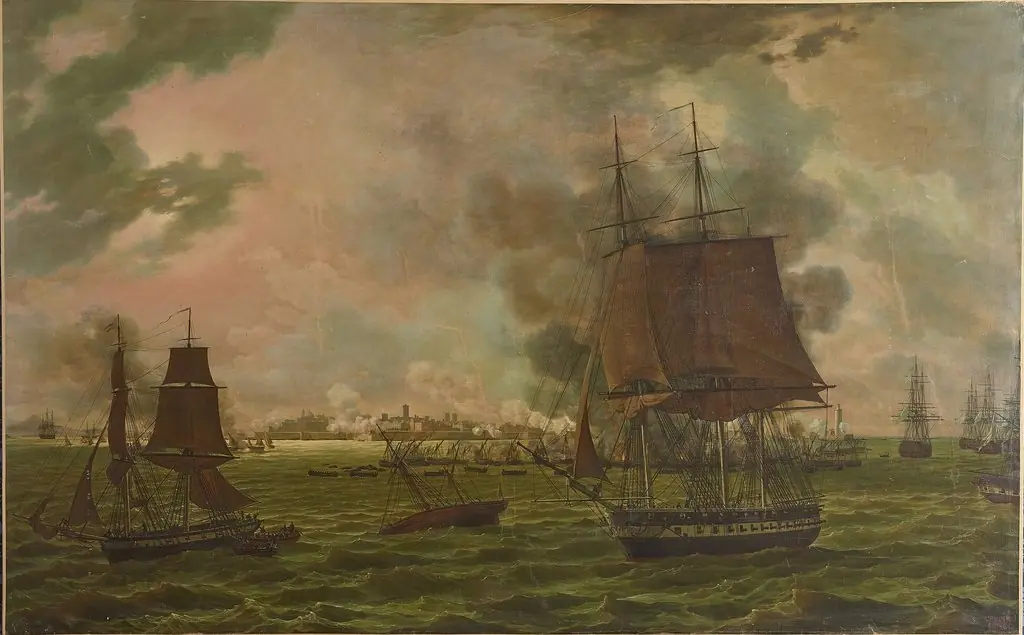 Bombardement de Cadix par l'escadre française, 23 septembre 1823
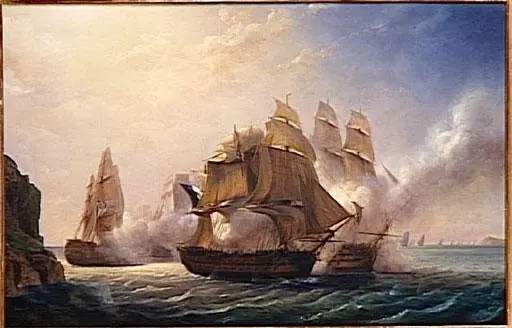 Combat du vaisseau francais le Romulus contre trois vaisseaux anglais à l'entrée de la rade de Toulon. 13 février 1814
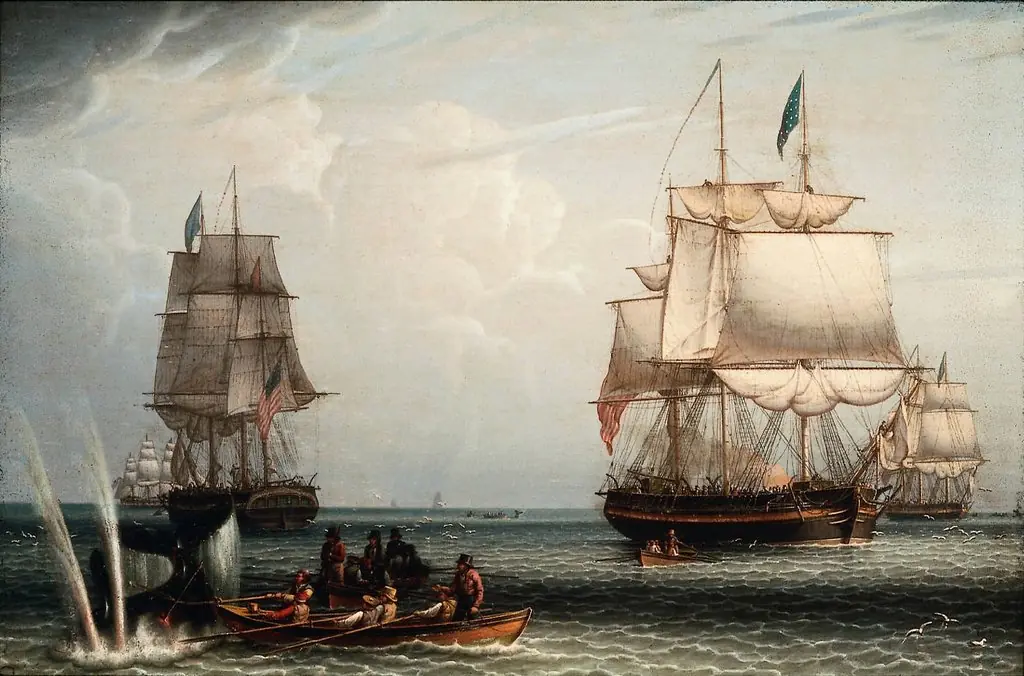 South Sea Whale Fishing II
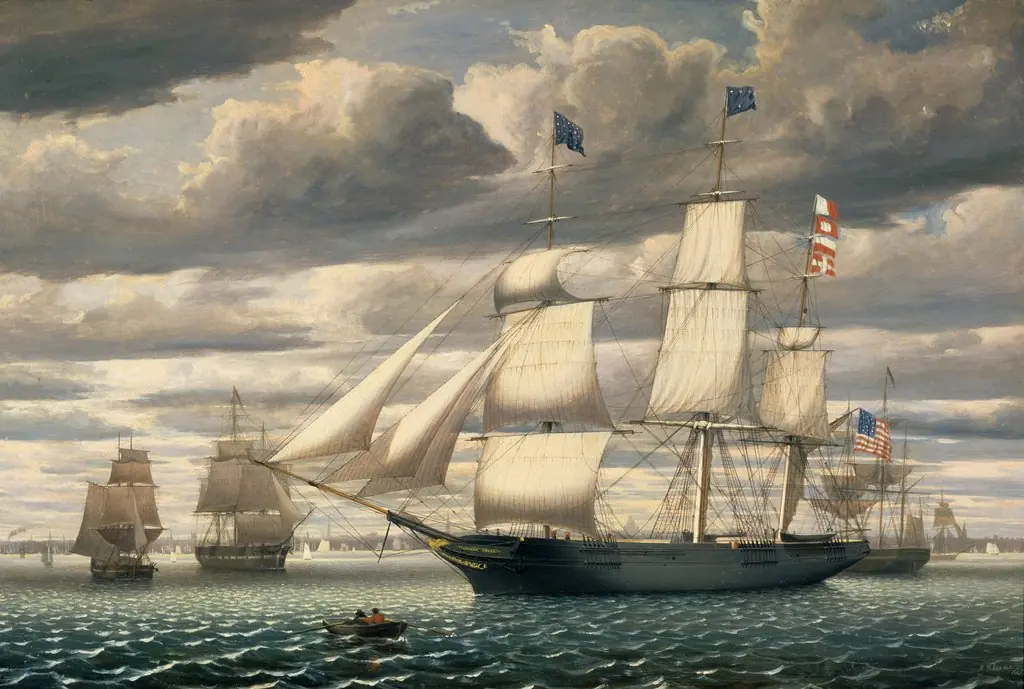 Ship Southern Cross in Boston Harbor, 1851
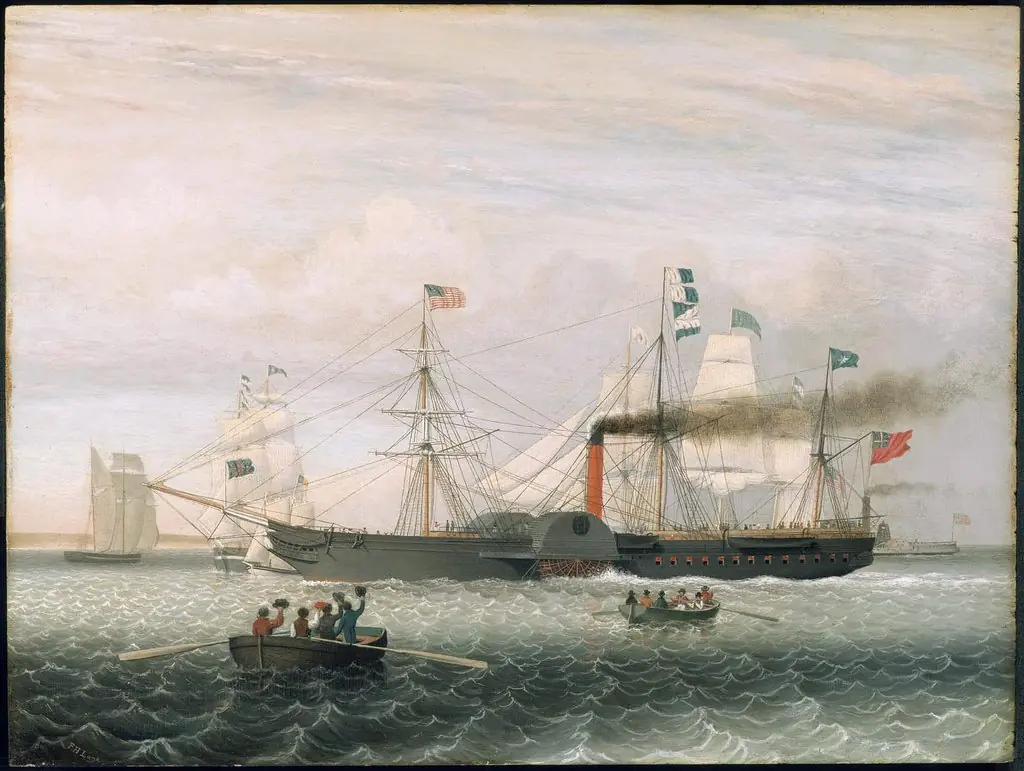 The Britannia Entering Boston Harbor
 Slaget på Rheden den 2. april 1801
- Engagement Between the "Constitution" and the "Guerrière"