Artwork
The Harvesters
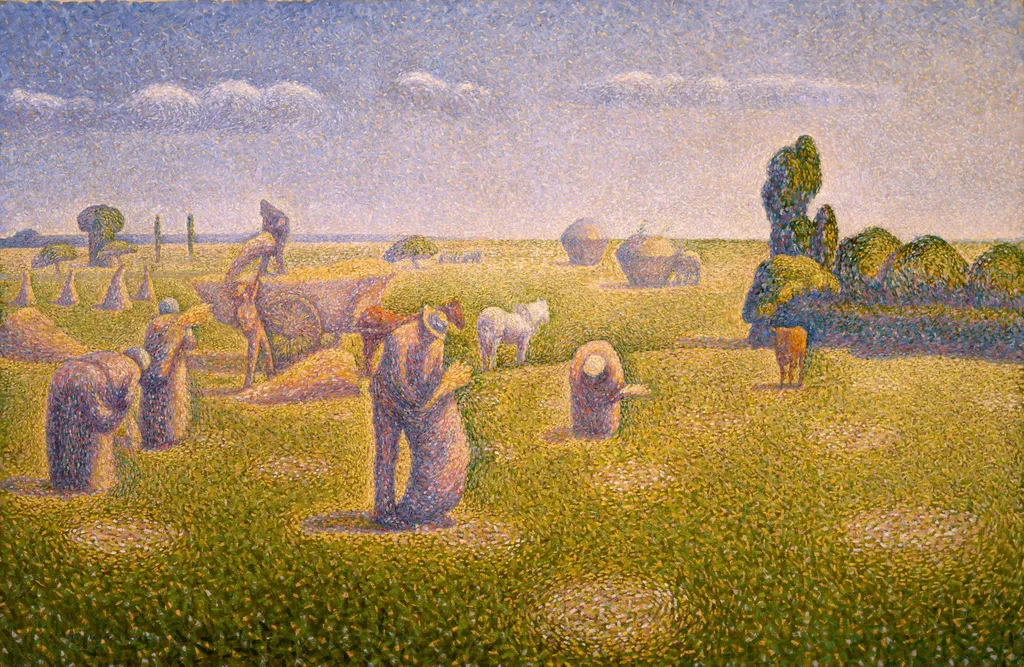
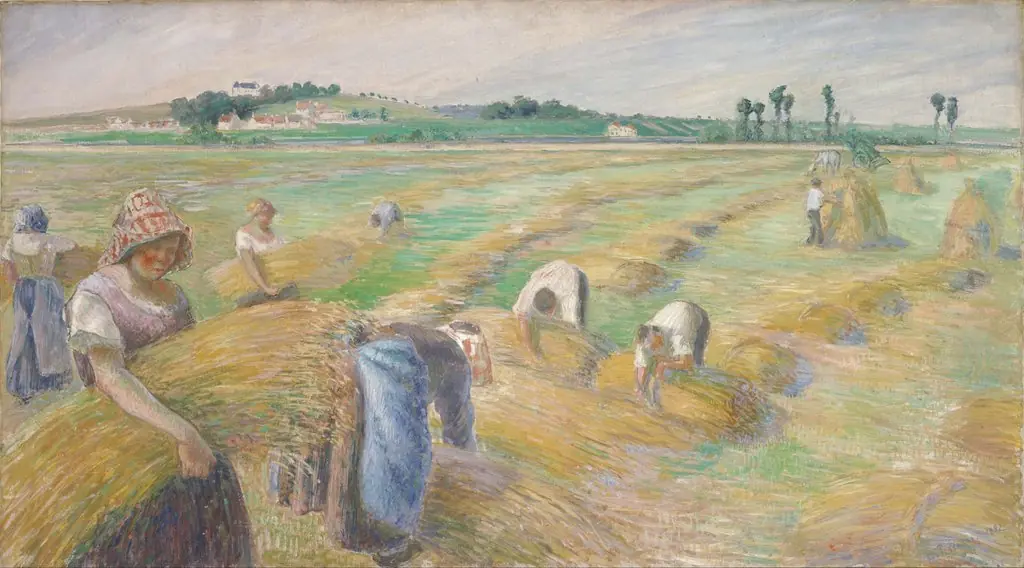
The Harvesters is an oil painting by the Neo-Impressionist artist Charles Angrand. It dates from 1896 and is held in the collection of the Museum of Fine Arts, Houston.
About this work
Overview
Painted in 1896, The Harvesters is an oil-on-canvas work by Charles Angrand that captures rural labor during the harvest season.
Painted in 1896, The Harvesters is an oil-on-canvas work by Charles Angrand that captures rural labor during the harvest season. It belongs to the genre of everyday life scenes and is part of the collection at the Museum of Fine Arts, Houston. The composition centers on a group of workers in a field, rendered with attention to natural movement and environmental conditions, reflecting Angrand’s interest in the rhythms of agricultural life.
Subject & Meaning
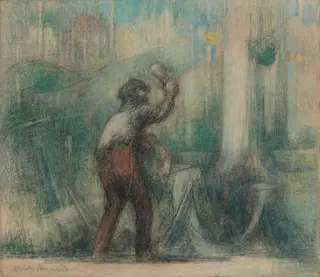
The painting portrays a group of laborers engaged in the physical act of harvesting crops, some bent low, others upright, suggesting the varied tasks and pacing of seasonal work. There is no overt narrative or symbolism; instead, the focus lies in the quiet dignity of manual labor. The figures blend into the landscape, emphasizing their connection to the land and the unglamorous reality of rural existence in late 19th-century France.
Technique & Style
Angrand employs a muted but deliberate palette of earth tones and soft blues to convey the warmth of sunlight and the texture of the field. Brushwork is loose yet controlled, suggesting movement without idealization. Light falls naturally across the figures and ground, creating subtle contrasts that define form without relying on dramatic chiaroscuro. The style aligns with Post-Impressionist tendencies, prioritizing observed truth over romanticized detail.
History & Provenance
Completed in 1896, the painting remained in private hands until it entered the Museum of Fine Arts, Houston’s collection. Its acquisition reflects the museum’s broader interest in European genre painting from the late 19th century. While not widely exhibited during Angrand’s lifetime, the work has since been recognized as a representative example of his focus on labor and landscape, contributing to scholarly reassessments of his oeuvre.
Context
Angrand painted during a period when urbanization and industrialization were reshaping French society. Rural labor, once a dominant theme in art, was increasingly viewed through a lens of nostalgia or social observation. The Harvesters aligns with contemporaneous efforts by artists like Jules Breton and Jean-François Millet to document agricultural life, though Angrand’s approach is less sentimental, more observational and structurally restrained.
Legacy
Though not among Angrand’s most famous works, The Harvesters contributes to understanding his evolution as a painter who valued quiet realism over theatricality. It stands as a modest but significant record of rural labor in late 19th-century France, offering insight into how artists of the time engaged with the changing social fabric without overt political commentary or idealization.
Own this work as a print
Artist & collection

Artist
Charles Angrand (French pronunciation: ; 19 April 1854 – 1 April 1926) was a French artist who gained renown for his Neo-Impressionist paintings and drawings.