Artwork
End of the Harvest
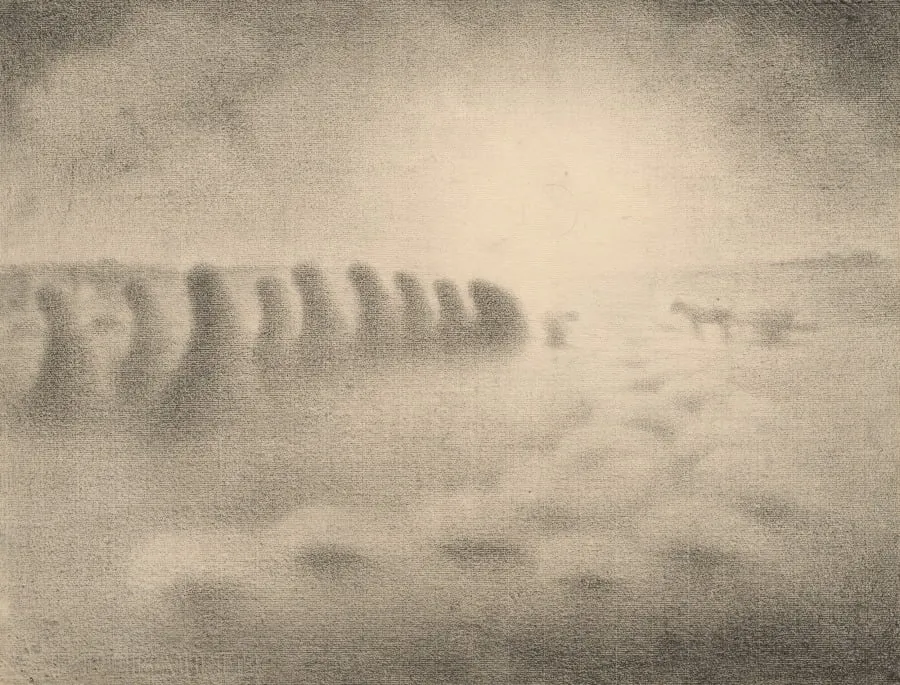
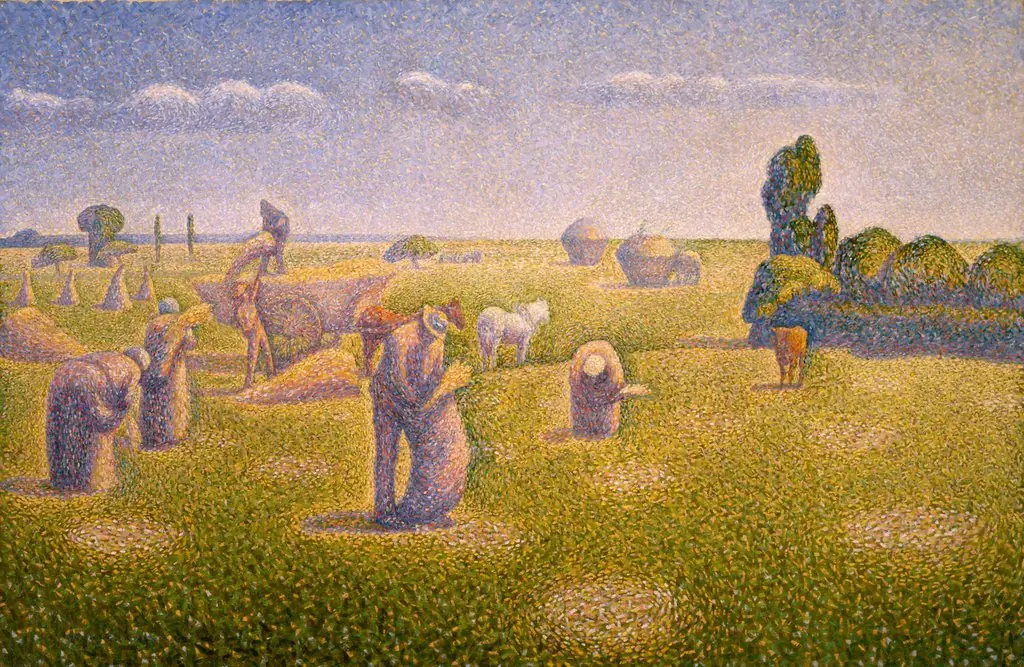
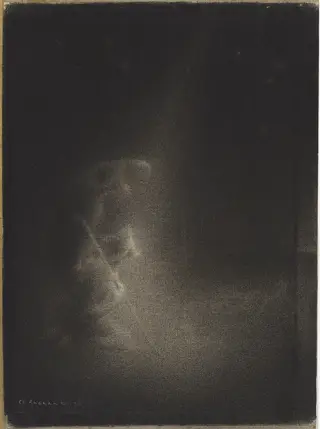
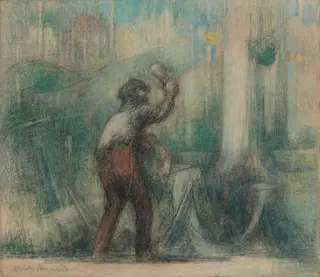
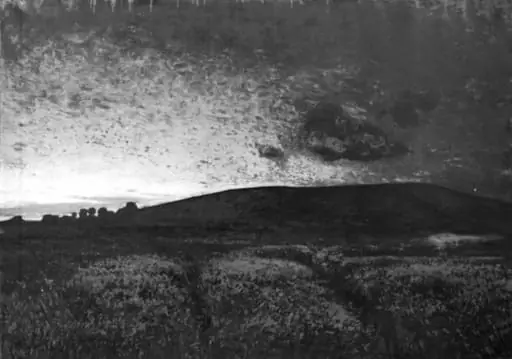
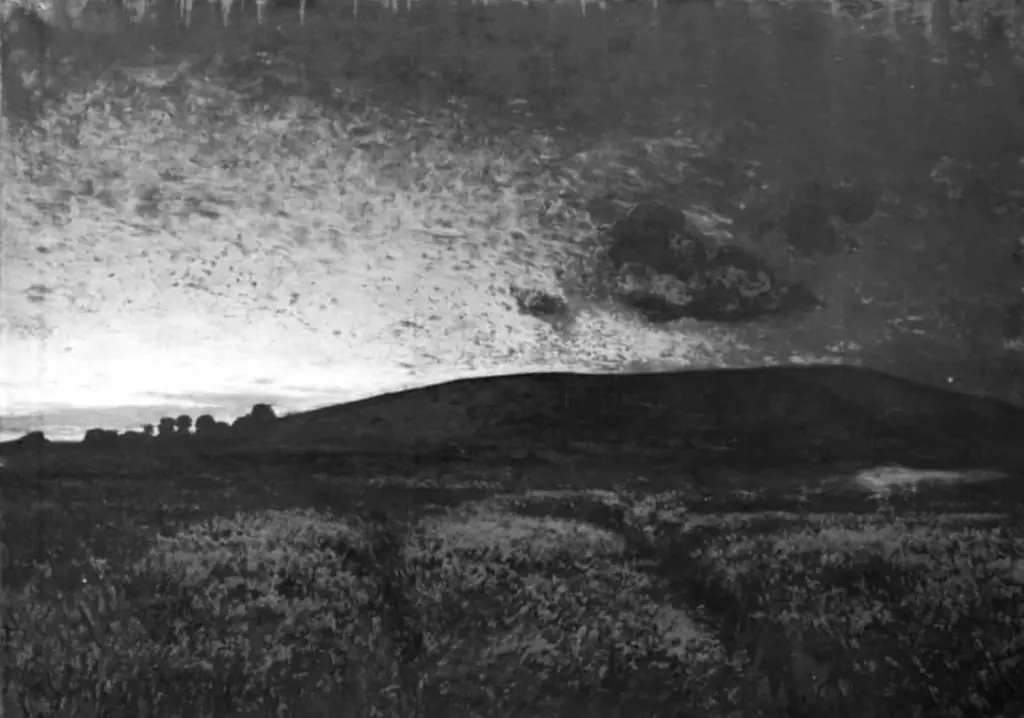
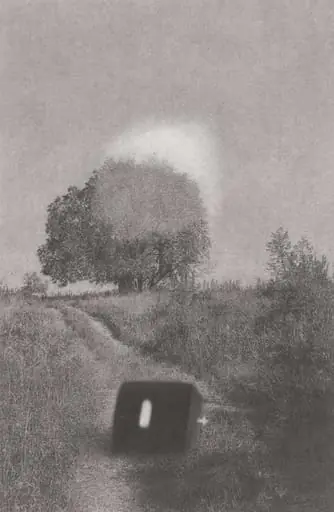
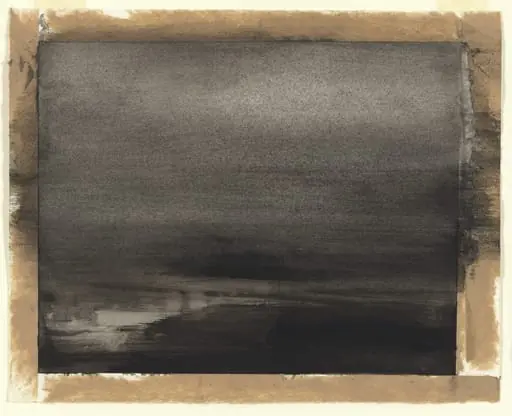
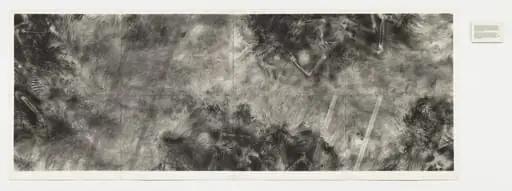
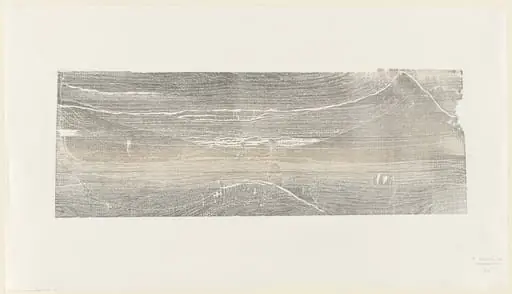
End of the Harvest is a drawing by the Impressionist artist Charles Angrand. It dates from 1898 and is held in the collection of the Cleveland Museum of Art.
- Accession no.
- 1999.49
- Credit line
- Purchase from the J. H. Wade Fund
About this work
Overview
Rather than paint, he employed a manufactured charcoal stick pressed onto textured paper, allowing the surface’s ridges to control the distribution of pigment.
Charles Angrand’s drawing captures the quiet stillness of a harvested field using a distinctive method that adapts Pointillist principles to black charcoal. Rather than paint, he employed a manufactured charcoal stick pressed onto textured paper, allowing the surface’s ridges to control the distribution of pigment. The resulting effect is a field of soft, granular tones that suggest light without direct line or shading.
Subject & Meaning
The scene depicts a field after the final wheat harvest, reduced to stubble under a fading sky. There are no figures, no tools, only the lingering traces of labor. The absence of detail invites contemplation of time and transience, transforming the landscape into a meditative abstraction where form dissolves into atmosphere, echoing the quiet rhythm of rural cycles.
Technique & Style
Angrand avoided brushes and ink, instead pressing a dense charcoal stick onto paper with fine, raised ridges. The charcoal adheres only to the peaks, leaving the valleys exposed as negative space. This creates a luminous, diffused gray tone that mimics evening light.
Up close, the marks appear as dots and dashes; from a distance, they coalesce into atmospheric shadows, paralleling optical mixing in Pointillist painting.
History & Provenance
Angrand, a close associate of Georges Seurat, adopted and adapted the Divisionist approach to drawing during the 1880s and 1890s. This work reflects his experimentation beyond oil paint, seeking to translate color theory into monochrome. The drawing belongs to a small group of such charcoal studies made during this period, few of which survive in such clear condition.
Context
In late 19th-century France, artists sought scientific rigor in visual representation. Angrand’s method aligned with broader interests in optics and perception, paralleling developments in color theory and photography. His use of textured paper as an active element in image-making distinguished his work from traditional sketching, positioning him as an innovator within the Neo-Impressionist circle.
Legacy
Angrand’s charcoal technique influenced later artists exploring tonal abstraction and material texture. His approach demonstrated that drawing could achieve the same optical effects as painted Pointillism, expanding the medium’s expressive range. Though less known than his contemporaries, his work remains a quiet but significant contribution to the evolution of modern graphic art.
Artist & collection

Artist
Charles Angrand (French pronunciation: ; 19 April 1854 – 1 April 1926) was a French artist who gained renown for his Neo-Impressionist paintings and drawings.