Artwork
Dyer Sharp Wynkoop
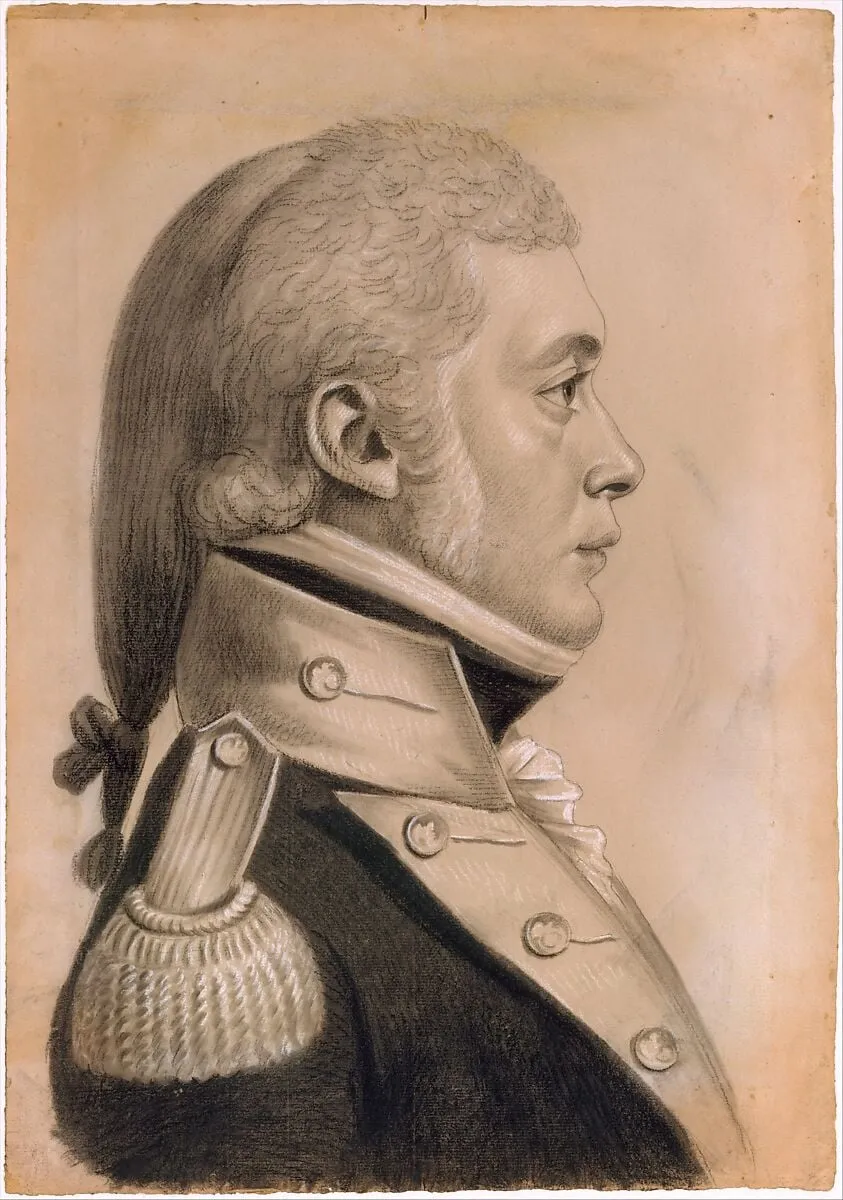
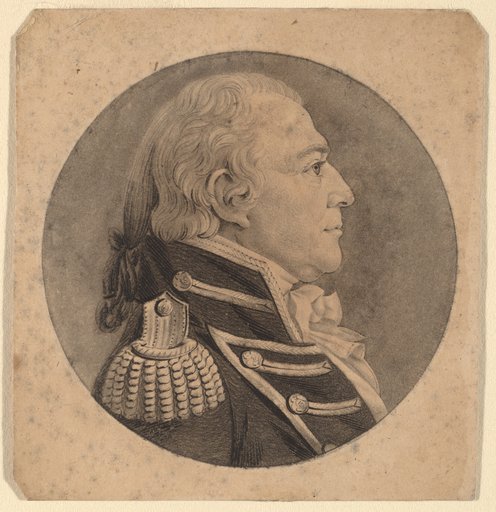
Dyer Sharp Wynkoop is a gouache drawing by the Romanticist artist Charles B. J. Févret de Saint-Mémin. It dates from 1800 and is held in the collection of the Metropolitan Museum of Art.
About this work
Subject & Meaning
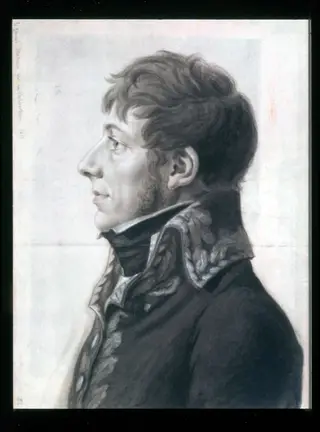
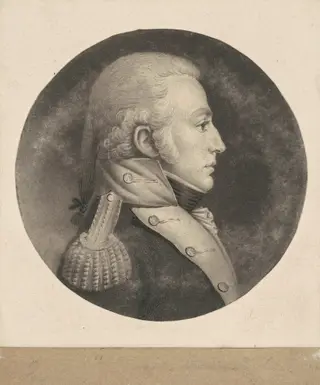
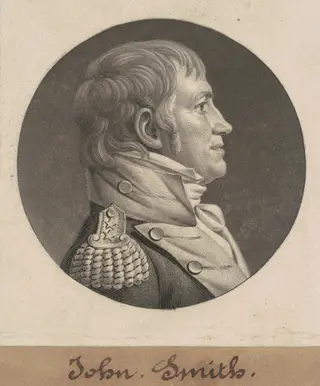
The portrait shows Dyer Sharp Wynkoop in a profile pose as a marine officer, rendered in Conté crayon, charcoal, white chalk and gouache on paper.
The portrait shows Dyer Sharp Wynkoop in a profile pose as a marine officer, rendered in Conté crayon, charcoal, white chalk and gouache on paper. His uniform and bearing convey naval authority, reflecting his service in the United States Marine Corps during the early Republic. The drawing combines precise draftsmanship with subtle shading to emphasize rank and personal identity, a common practice in early 19th‑century officer portraiture.
Technique & Style
The portrait of Dyer Sharp Wynkoop is executed in Conté crayon, charcoal, and white chalk heightening on off-white laid paper that has been coated with gouache. The handling emphasizes sharp linear definition and a restricted palette, with the profile silhouette modeled through subtle gradations of Conté and chalk. The subject’s naval uniform and profile orientation align with the period’s conventions for military portraiture, rendered with restrained detail and a focus on contour over volumetric modeling.
The support’s coated surface and the combination of Conté, charcoal, and chalk suggest a deliberate technique aimed at crisp edges and controlled tonal transitions. The overall condition is consistent with early nineteenth-century works on paper, with stable media and no overt signs of degradation reported in the technical record.
History & Provenance
Dyer Sharp Wynkoop is a portrait drawing by Charles Balthazar Julien Févret de Saint-Mémin, created in 1800 using conté rayon, charcoal, white chalk heightening, and gouache on laid paper. The work measures 54.1 cm in height and 38.1 cm in width and is classified within The American Wing as a profile portrait of a marine lieutenant. It depicts Dyer Sharp Wynkoop, who served as a marine officer.
The drawing is part of the permanent collection of the Metropolitan Museum of Art in New York, where it has been housed since its acquisition and is catalogued under the museum’s internal records.
The piece was produced during Wynkoop’s service in the early United States Marine Corps, reflecting his status as a marine officer at the turn of the 19th century. Its creation history is tied to Saint-Mémin’s practice of producing detailed profile portraits of military figures during his American period.
The work’s provenance is documented through its inclusion in the Metropolitan Museum of Art’s collection, with no further ownership history detailed in the available sources.
The drawing is held in the collection of the Metropolitan Museum of Art, where it is catalogued under the accession number 2000.588. It entered the museum as part of the Charles Balthazar Julien Févret de Saint-Mémin bequest, accessioned in 2000. The work has been included in exhibitions at the Metropolitan Museum of Art focusing on early American portraiture, notably "American Portraits: 1750–1900" (1999) and "The Art of the American Portrait" (2005).
Context
The drawing titled Dyer Sharp Wynkoop by Charles Balthazar Julien Févret de Saint-Mémin, created in 1800 using conté rayon, charcoal, and white chalk heightening on paper with gouache, is housed in The American Wing at the Metropolitan Museum of Art. It portrays Dyer Sharp Wynkoop as a lieutenant and marine officer in profile, reflecting early 19th-century American military portraiture. This work is part of the Metropolitan Museum of Art's collection and has been studied within scholarship on French émigré artists active in the United States after the Revolution, situating it within broader transatlantic artistic exchanges and early American identity formation.
Scholarly attention has focused on the drawing's technical execution and its role in documenting elite military figures in the early Republic, though specific exhibition histories or critical commentary from the 19th century are not detailed in the provided sources.
Overview
Created in 1800, this portrait depicts Lieutenant Dyer Sharp Wynkoop, a marine officer, rendered in conté crayon, charcoal and white chalk on gouache‑coated paper. The figure is shown in a crisp profile, his dark coat and white collar standing out against a pale background, his hair pulled back and his expression composed.
Artist & collection
Artist
Charles B. J. Févret de Saint-Mémin
Charles Balthazar Julien Févret de Saint-Mémin (French pronunciation: ; 1770–1852) was a French portrait painter and museum director.