Artist
Charles B. J. Févret de Saint-Mémin
France
Charles B. J. Févret de Saint-Mémin is a France Romanticism artist. 852 works are cataloged here, principally at National Gallery of Art.
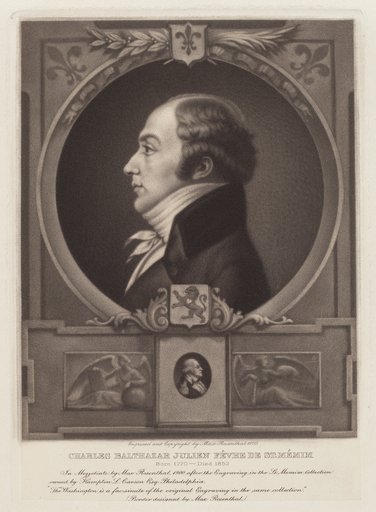
Charles Balthazar Julien Févret de Saint-Mémin (French pronunciation: ; 1770–1852) was a French portrait painter and museum director. He left France during the Revolution, and worked as a portrait engraver in the United States in the early 19th century. He created portraits from life of George Washington, Thomas Jefferson, and others. He later served as museum director in Dijon.
Overview
Charles Balthazar Julien Févret de Saint-Mémin (1770-1852) was a French portraitist, engraver, and museum director whose career bridged the Atlantic world during the age of revolution. Born into an aristocratic Burgundian family, he fled France during the Revolution and spent two decades in the United States, where he became the foremost practitioner of the physiognotrace technique and produced portraits of the young nation's most prominent figures, including George Washington and Thomas Jefferson. Upon his return to France in 1814, he served as director of the Musée des Beaux-Arts de Dijon for over three decades, shaping one of France's provincial museums until his death. His work represents a unique intersection of French neoclassical training, American republican portraiture, and early mechanical reproduction techniques.
Biography & dates
Saint-Mémin was born on 12 March 1770 in Dijon, the son of Bénigne-Charles Févret de Saint-Mémin, marquis and former conseiller au Parlement, and Victoire-Marie de Motmans of Port-au-Prince. He entered the École Militaire in Paris in 1784, graduating in 1785, and received an officer's commission as ensign in the French Guards on 27 April 1788. The Revolution forced his family's emigration; after joining the armée des Princes, Saint-Mémin took refuge in Switzerland with his parents, where he learned engraving. In 1793 the family sailed for North America, originally intending to reach Saint-Domingue to protect his mother's Creole properties, but news of the colony's upheaval led them to remain in the United States. They settled first in New York, where his mother established a girls' school, and later in Philadelphia. Faced with financial necessity after an unsuccessful attempt at market gardening, Saint-Mémin taught himself portraiture. He remained in the United States from 1793 to 1814, producing several hundred portraits. Upon returning to France, he was appointed conservateur (director) of the Musée des Beaux-Arts de Dijon in 1817, a position he held until his death on 23 June 1852.
Style & movement
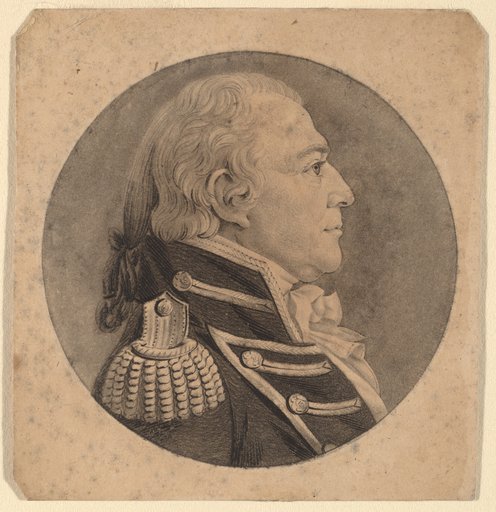
Saint-Mémin's portraiture is defined by his mastery of the physiognotrace, a mechanical drawing device invented by Gilles-Louis Chrétien in 1786 that traced a subject's profile via a pantograph-like mechanism. Working in partnership with the French artist Thomas Bluget de Valdenuit in New York, Saint-Mémin introduced this technique to the United States and became its most accomplished American exponent. The physiognotrace produced precise profile silhouettes that Saint-Mémin would then elaborate into detailed engravings, often at reduced scale. His style belongs to the broader neoclassical tradition: the profile format evoked classical medallions and Roman coinage, lending his American subjects an air of republican gravitas and permanence. The technique combined scientific exactitude with artistic refinement, producing images that were simultaneously documentary and idealized. His portraits of Native American subjects, including the Mandan chief Sheheke and an Osage warrior, applied this same formal vocabulary across cultural boundaries with striking results.
Major works
Saint-Mémin's American period yielded an extensive body of work, with surviving portraits held in major institutions. The New-York Historical Society holds his portrait of Sheheke (Shahaka), the Mandan chief who visited Washington in 1806, as well as a significant collection of his prints. The Metropolitan Museum of Art in New York preserves his portrait of an Osage warrior. His portraits of George Washington and Thomas Jefferson, taken from life, circulated widely through engraving and established his reputation among the political elite of the early republic. Other notable subjects included Chief Justice John Marshall, General Alexander Macomb, and Senator Christopher G. Champlin. The Musée des Beaux-Arts de Dijon retains several of his works, reflecting his later career as museum director. His output of several hundred physiognotrace portraits constitutes one of the most significant visual records of American leadership in the early national period.
Influences & students
Saint-Mémin's artistic formation was shaped by his aristocratic education and military training rather than formal apprenticeship in a painter's atelier. His introduction to engraving came during his Swiss exile, though specific teachers are not recorded. The decisive technical influence was Gilles-Louis Chrétien's physiognotrace apparatus, which provided the mechanical foundation for his artistic practice. His partnership with Thomas Bluget de Valdenuit in New York was crucial in establishing his American career and disseminating the physiognotrace technique in the United States. No pupils or followers of significance are documented in the sources, though his prolific output and the widespread circulation of his engraved portraits influenced the visual culture of American portraiture in the early nineteenth century.
Legacy
Saint-Mémin's posthumous reputation rests primarily on his American work, which has been the subject of sustained scholarly attention. Frank Weitenkampf published a foundational biography through the Grolier Club in 1899, followed by John Hill Morgan's critical study in the Brooklyn Museum Quarterly (1918). Fillmore Norfleet examined his Virginia portraits in 1942. The most significant modern scholar, Ellen G. Miles of the National Portrait Gallery, has produced multiple studies including "Saint-Mémin in the South 1803-1809" (1986), "Saint-Mémin's Portraits of American Indians 1804-1807" (1988), and the definitive monograph Saint-Mémin and the Neoclassical Profile Portrait in America (1994). His works are held by the New-York Historical Society, the Metropolitan Museum of Art, the National Gallery of Art, the Smithsonian American Art Museum, and the Art Institute of Chicago, among other institutions. The Library of Congress and the New-York Historical Society maintain dedicated collections of his prints.
Works by Charles B. J. Févret de Saint-Mémin
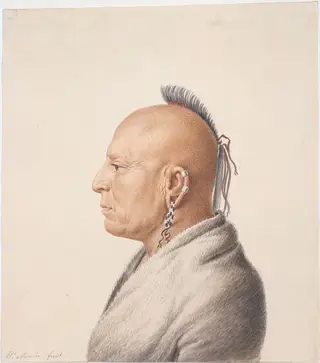 Osage Warrior
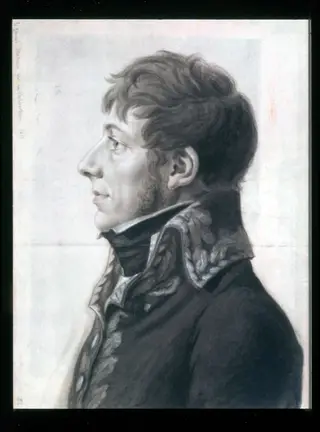 Jean-Victor Moreau
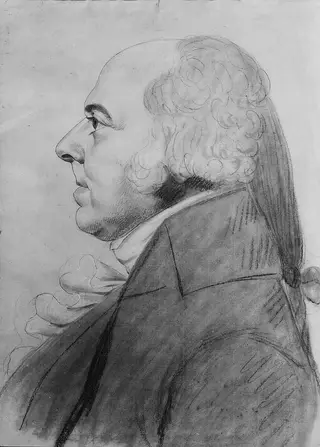 John Adams
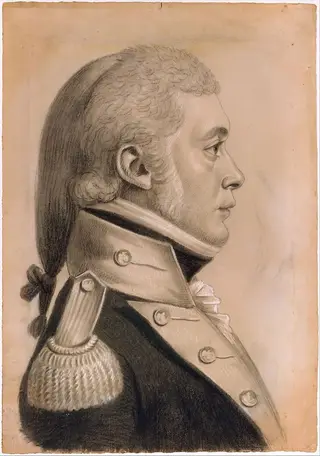 Dyer Sharp Wynkoop
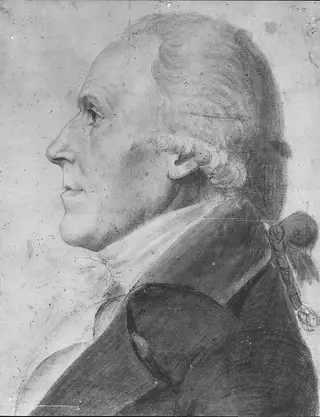 Portrait of a Man
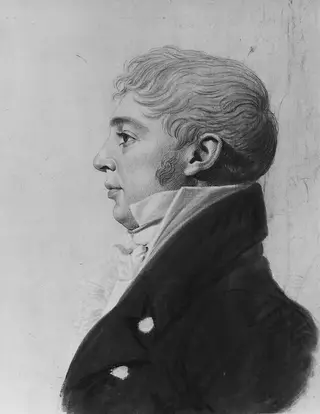 Alexander Rider (?)
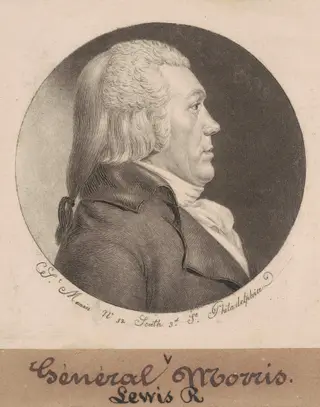 Lewis Richard Morris
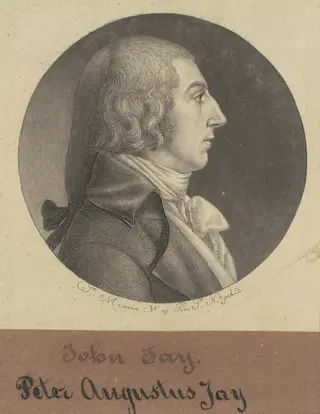 Peter Augustus Jay
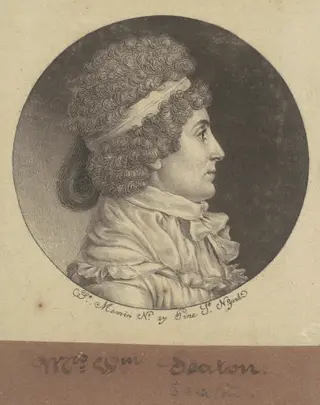 Elizabeth Ann Bayley Seton
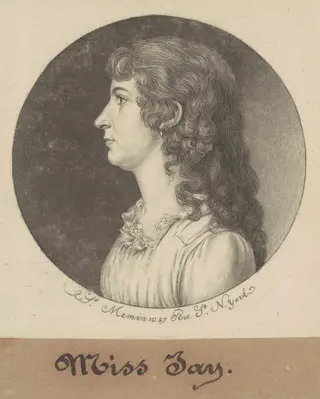 Maria Jay
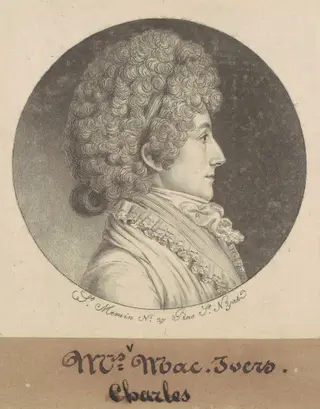 Mary Bache McEvers
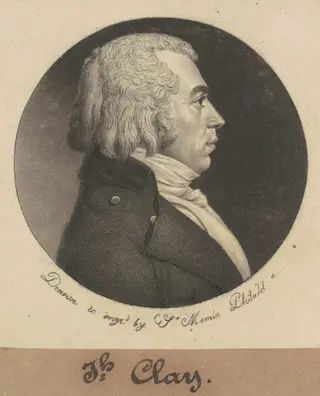 Joseph Clay
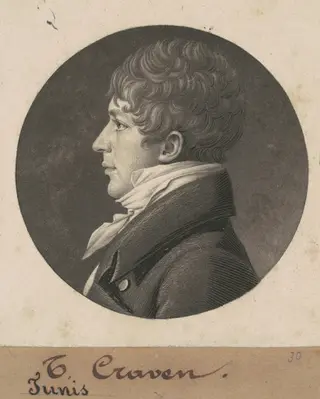 Tunis Craven
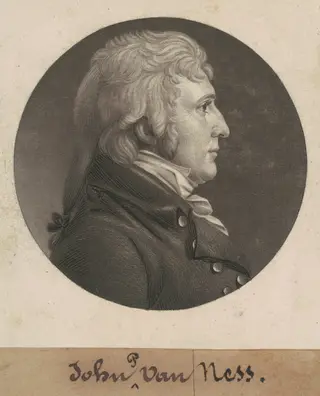 John Peter Van Ness
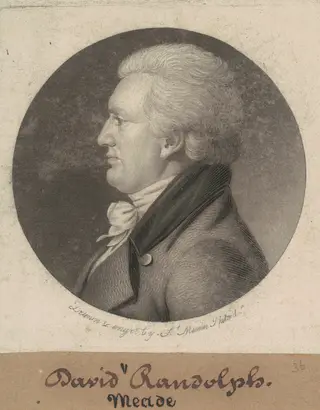 David Meade Randolph
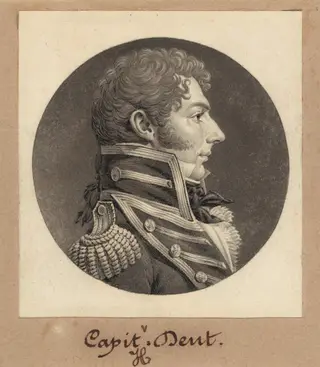 John Herbert Dent
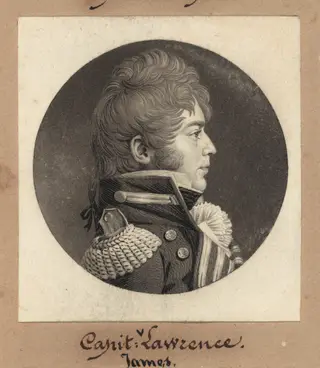 James Lawrence
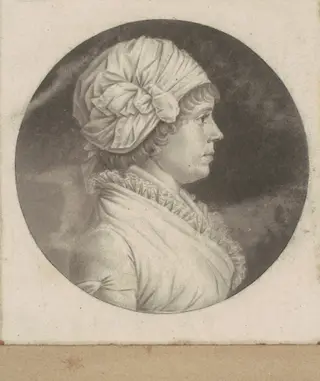 Elizabeth Rittenhouse Sergeant
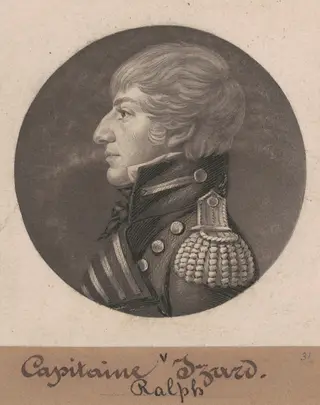 Ralph Izard II
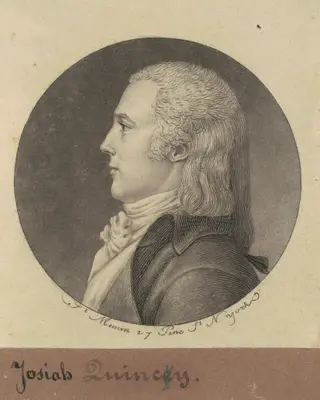 Josiah Quincy
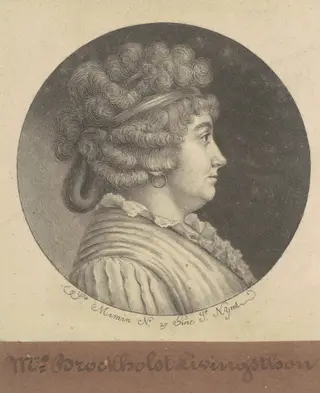 Catherine Keteltas Livingston
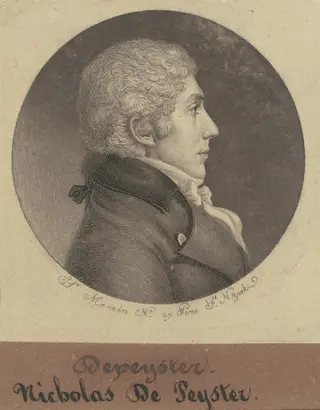 Nicholas de Peyster, Jr.
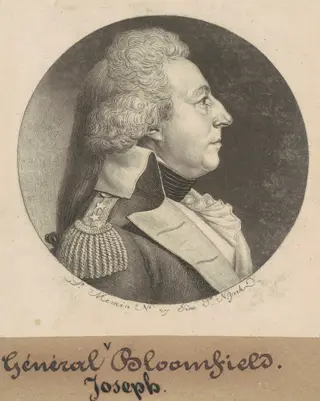 Joseph Bloomfield
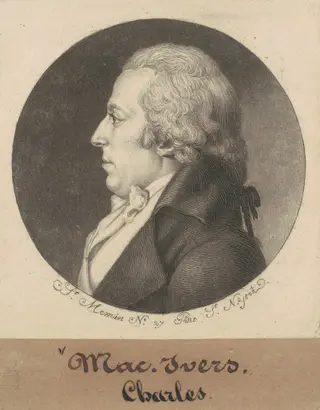 Charles McEvers
852 works in the catalog · 24 shown
Collections represented


Artists in a similar vein