Artwork
Osage Warrior
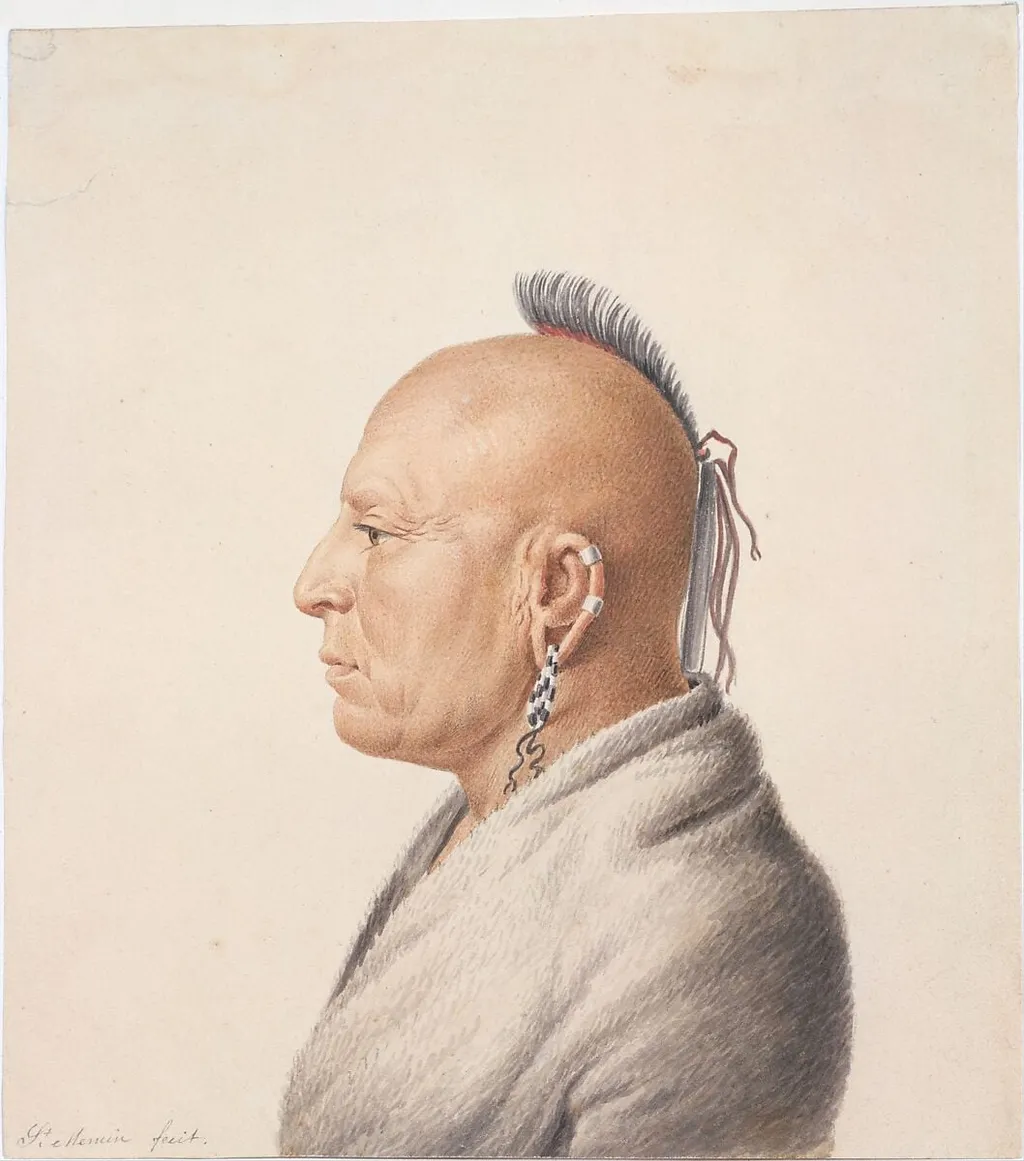
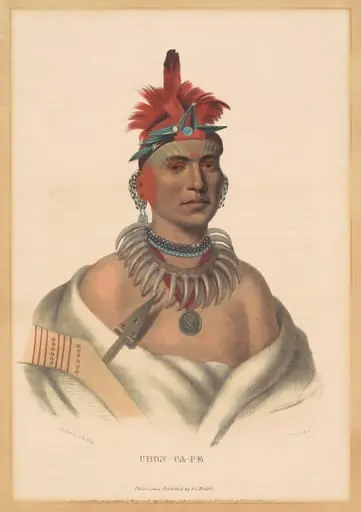
Osage Warrior is a watercolor work on paper by the Romanticist artist Charles B. J. Févret de Saint-Mémin. It dates from 1806 and is held in the collection of the Metropolitan Museum of Art. Created in 1806, this portrait presents an Osage individual in profile, rendered with watercolor and graphite on off‑white wove paper.
About this work
Subject & Meaning
The portrait depicts an Osage man shown in strict profile, a format Saint-Mémin favored for ethnographic likenesses.
The portrait depicts an Osage man shown in strict profile, a format Saint-Mémin favored for ethnographic likenesses. The title and iconography emphasize the sitter's warrior identity, aligning with early nineteenth-century conventions that associated profile views with dignity and cultural authenticity. By presenting the figure without adornment beyond his role, the watercolor foregrounds warrior status as the defining social attribute rather than personal identity.
The work's meaning has been discussed primarily through its ethnographic framing, positioning the sitter as an exemplar of Osage masculinity and martial tradition for an eastern audience. Such portraits served to document Native subjects within evolving colonial narratives of encounter and assimilation.
Technique & Style
The work is a watercolor and graphite drawing on off-white wove paper, classified as a portrait within the American Wing collection. It portrays a man in profile, identified as a warrior, reflecting the conventions of early-nineteenth-century portraiture. Saint-Mémin combined delicate watercolor with precise graphite lines to define the figure's features and attire.
History & Provenance
Osage Warrior was created by Charles Balthazar Julien Févret de Saint-Mémin in 1806 as a watercolor and graphite portrait of an Osage man, rendered in profile. It was produced in connection with the artist's portraits of members of an Osage delegation in the early nineteenth century, reflecting his interest in documenting Indigenous sitters. The work is held in the collection of the Metropolitan Museum of Art, where it is displayed in The American Wing and catalogued under accession number 54.82.
The sources do not contain information regarding specific exhibitions in which the piece has appeared.
Context
The portrait of an Osage warrior by the French émigré draftsman Charles Balthazar Julien Févret de Saint-Mémin, created in 1806, reflects early-nineteenth-century European interest in Indigenous subjects while documenting Native lifeways through a lens of contemporary ethnographic curiosity. Scholarship situates the work within the artist's broader oeuvre of aristocratic and ethnographic portraiture, in which depictions of warriors served as cultural artifacts that simultaneously reinforced and complicated Western perceptions of Native peoples. Its representation of Osage identity remains significant for how it shaped early museum narratives about North American cultures.
Legacy
The portrait of an Osage warrior created by Charles Balthazar Julien Févret de Saint-Mémin in 1806 is recognized as an important early example of Native American representation within American museum collections. Its inclusion in The American Wing at the Metropolitan Museum of Art underscores its significance in shaping scholarly and curatorial understandings of 19th-century portraiture and cross-cultural encounters. The work continues to inform discussions of Indigenous identity and artistic agency in historical contexts.
Though specific exhibition histories are not detailed in the source material, its presence in a major American institution has contributed to its lasting standing as a key reference in the study of early American portraiture and cross-cultural representation.
Overview
Created in 1806, this portrait presents an Osage individual in profile, rendered with watercolor and graphite on off‑white wove paper. The figure is shown in traditional warrior attire, his facial features, particularly a pronounced nose and firm jaw, emphasized against an unadorned background. The work belongs to the American Wing collection and exemplifies early nineteenth‑century interest in documenting Native American subjects.
Artist & collection
Artist
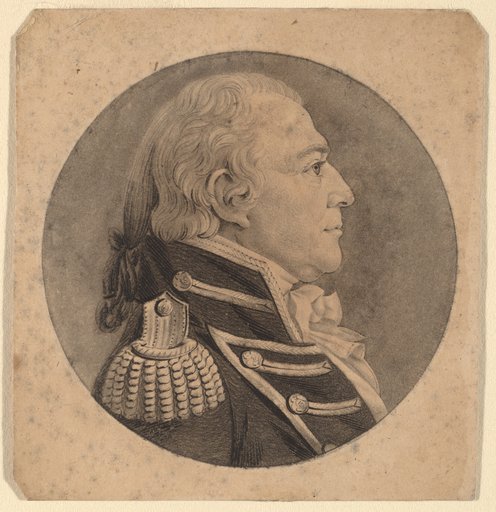
Charles B. J. Févret de Saint-Mémin
Charles Balthazar Julien Févret de Saint-Mémin (French pronunciation: ; 1770–1852) was a French portrait painter and museum director.