Artwork
Portrait of a Man
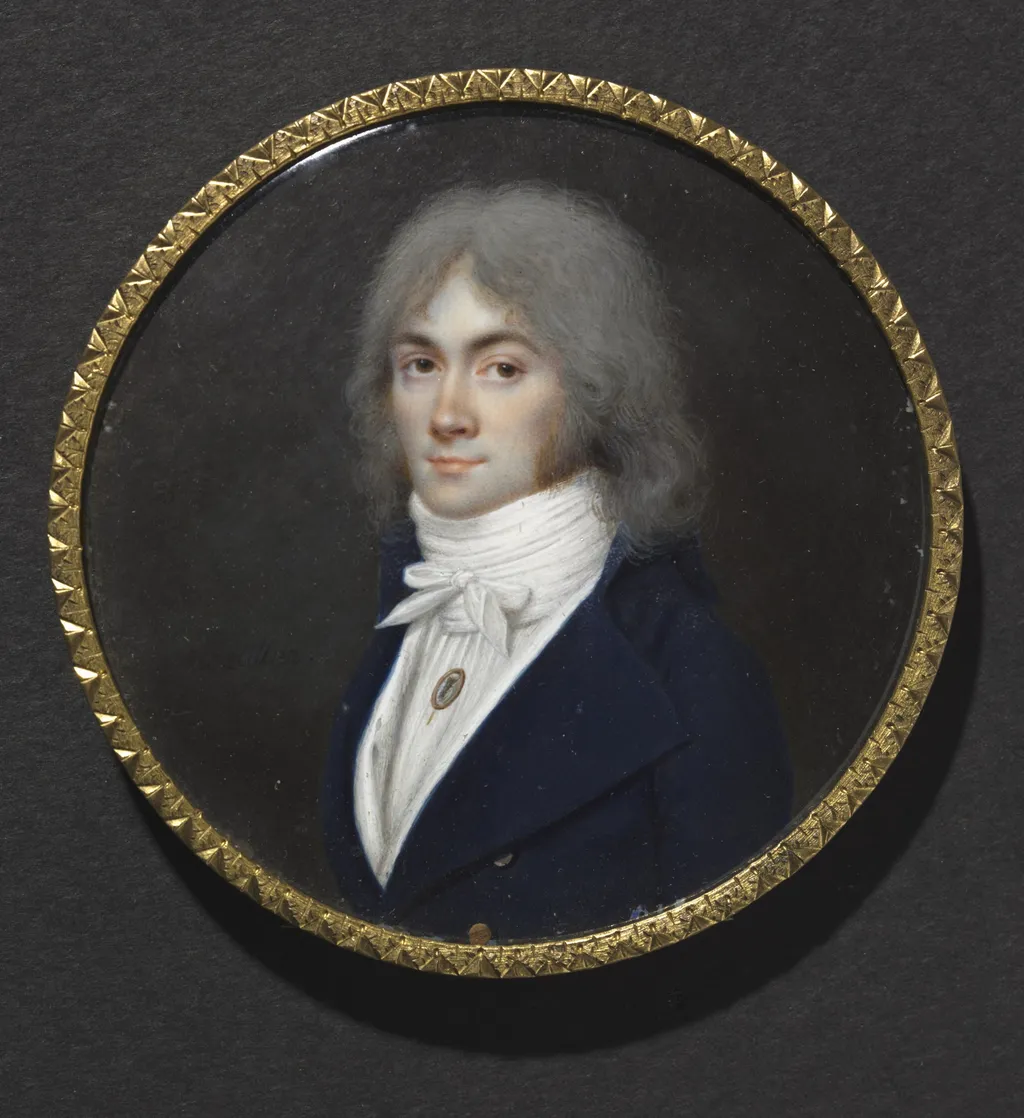
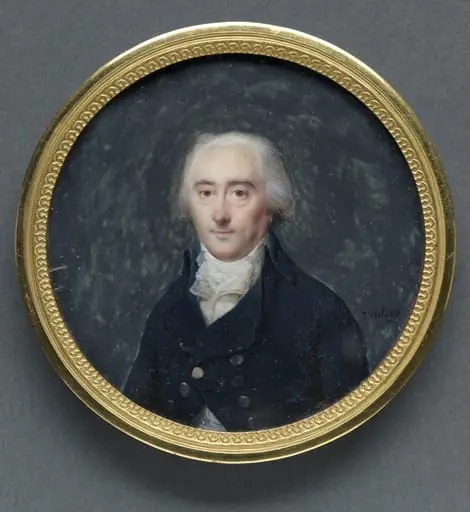
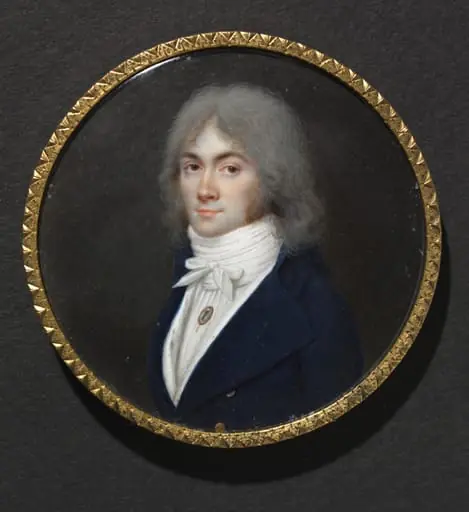
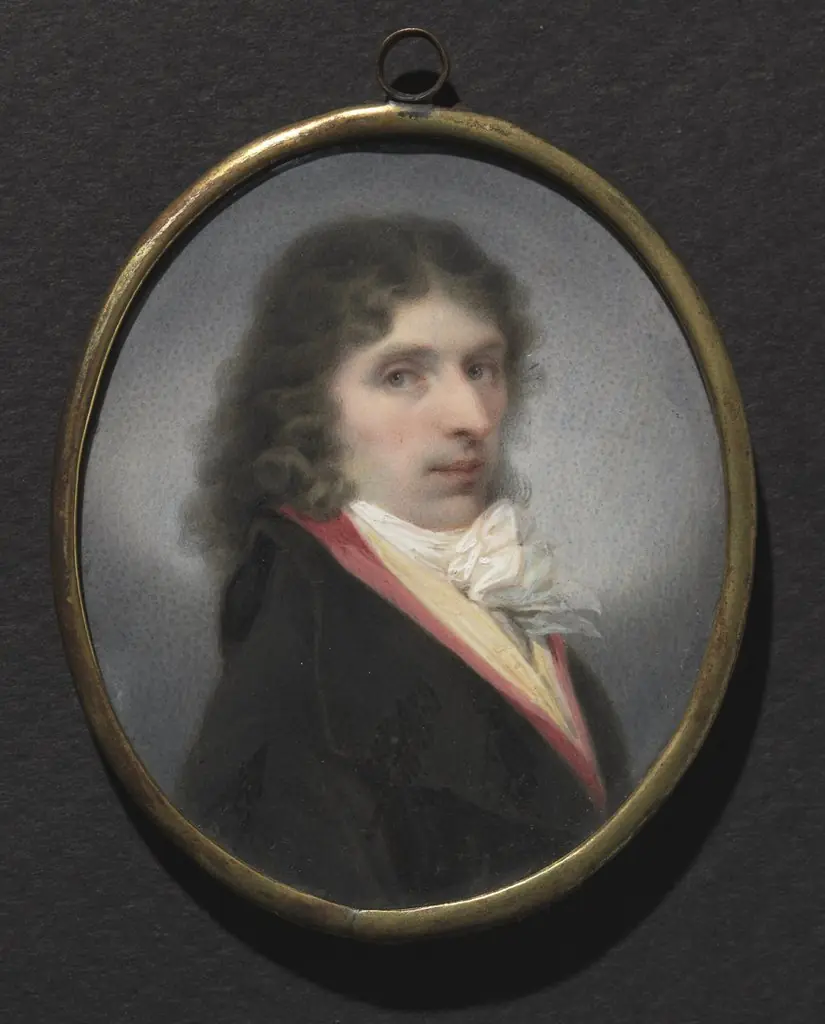
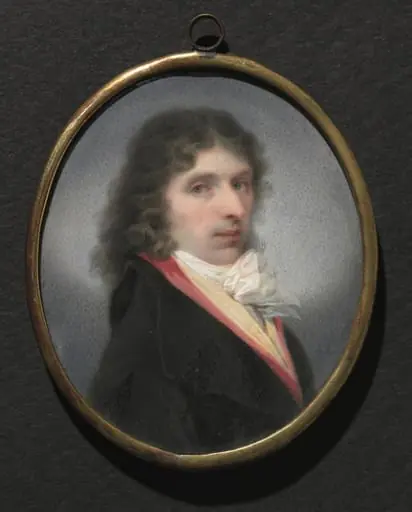
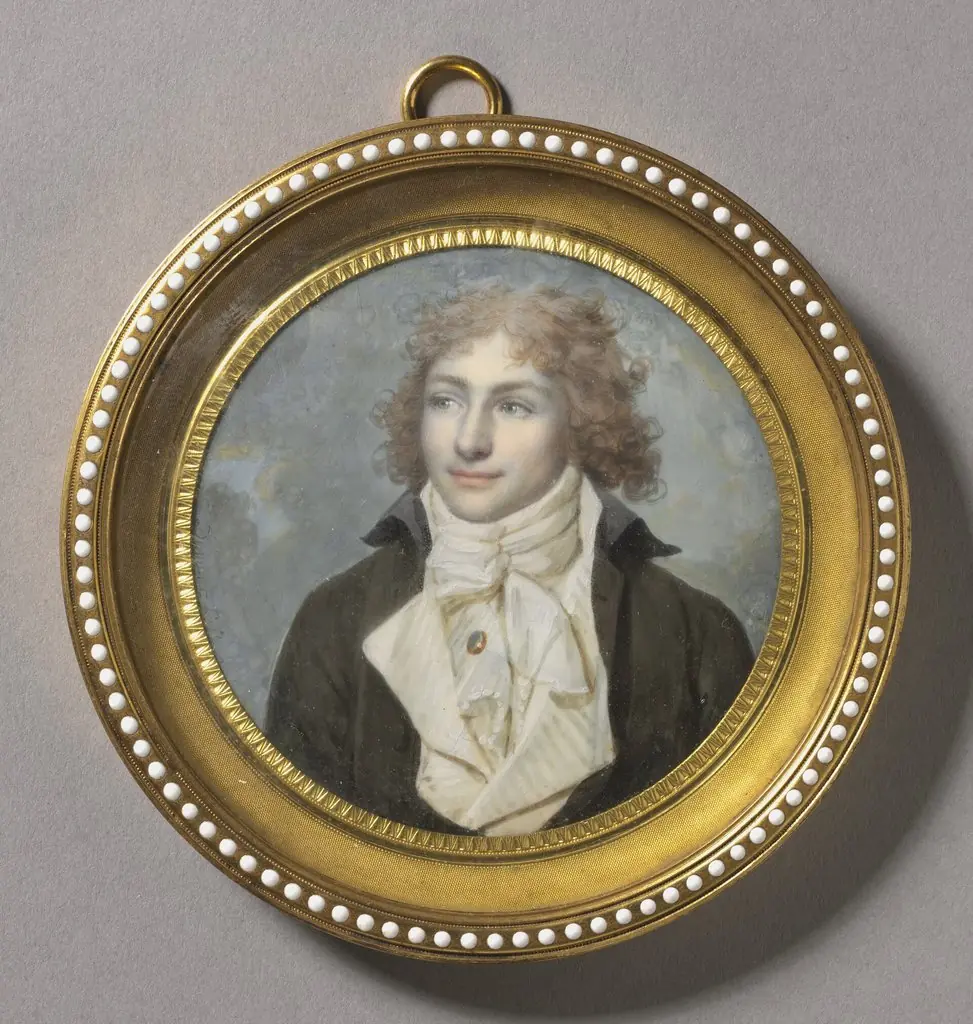
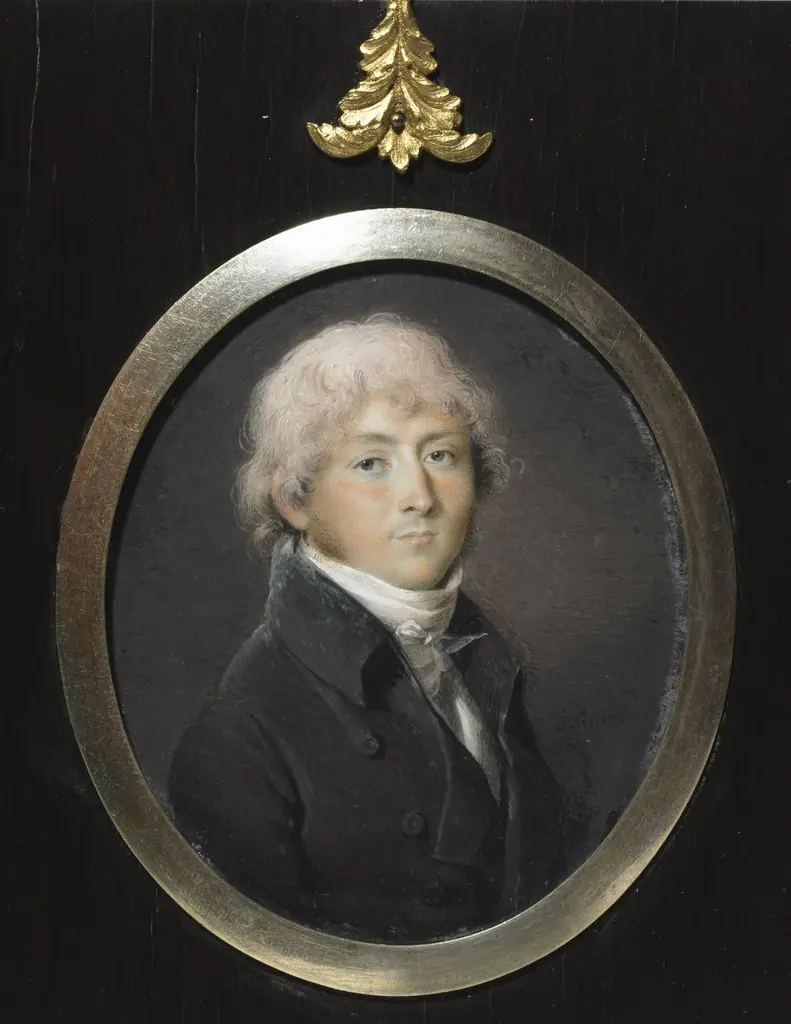
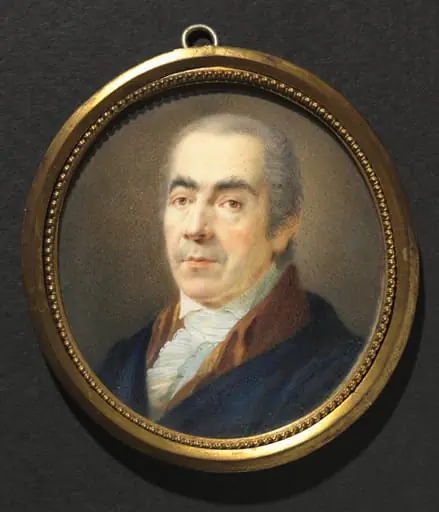
Portrait of a Man is a watercolor painting by the Neoclassicist artist Charles de Chatillon. It dates from 1798 and is held in the collection of the Cleveland Museum of Art.
About this work
Overview
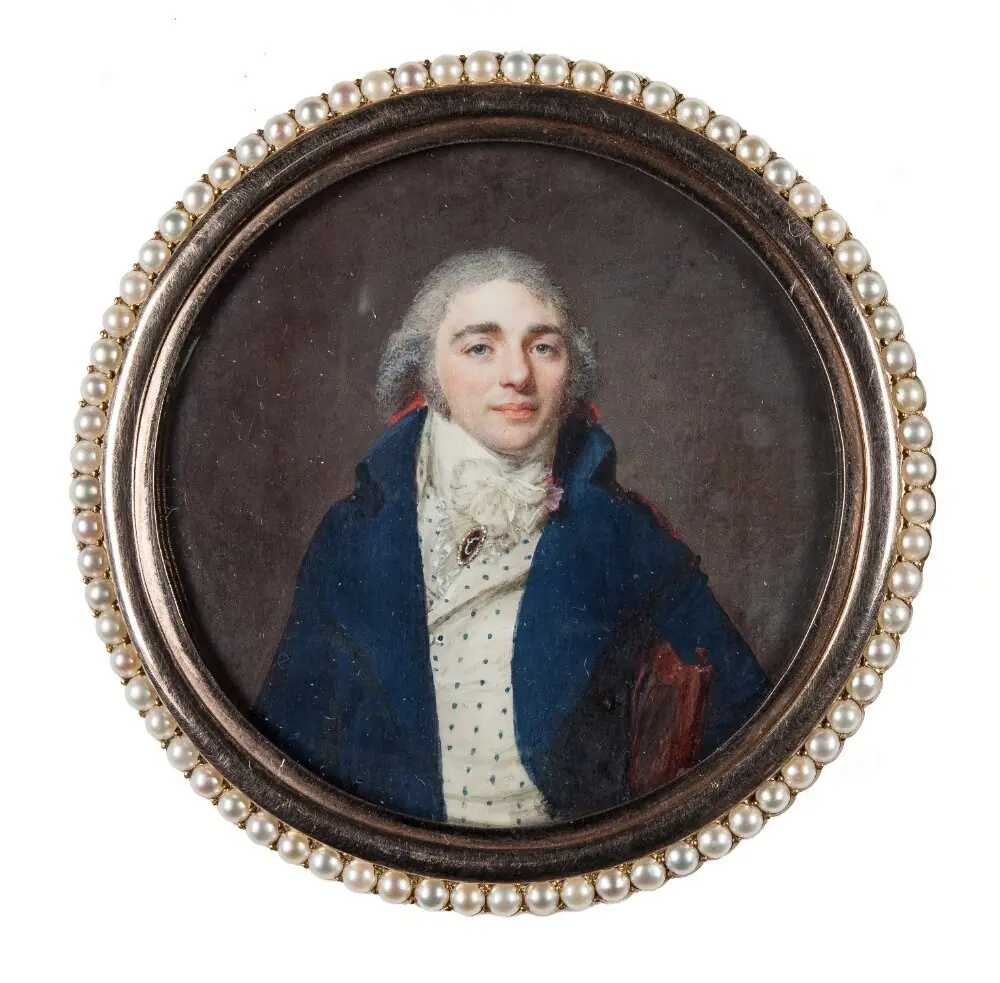
Charles de Chatillon created this "Portrait of a Man" in 1798. This small, oval painting on ivory depicts an unidentified male sitter, rendered with delicate details and a composed expression. The work is currently part of the collection at The Cleveland Museum of Art, representing a common form of personal portraiture from the late 18th century.
Subject & Meaning
The painting presents an unknown man, depicted from the chest up, who gazes directly forward with a calm and steady expression. He is attired in a dark coat over a high-collared white shirt, reflecting the fashion of the period. The intimate scale and directness of the portrait suggest it was a personal commission, though the sitter's specific identity remains unrecorded.
Technique & Style
Executed on an oval piece of ivory, this miniature portrait showcases the artist's ability to render fine details. The smooth, polished surface of the ivory provided an ideal ground for subtle color gradations and precise brushwork, evident in the man's hair and clothing. A decorative gold border frames the image, although the facial area exhibits some signs of wear over time.
Context
During the late 18th century, miniature portraits painted on ivory were considered luxury items. The material itself, ivory, was costly, and the specialized skill required to work on such a delicate surface made these small-scale paintings expensive commissions. They were often cherished personal mementos or gifts, reflecting the status and refined taste of the owner.
Own this work as a print
Artist & collection