Artwork
Portrait of a Man
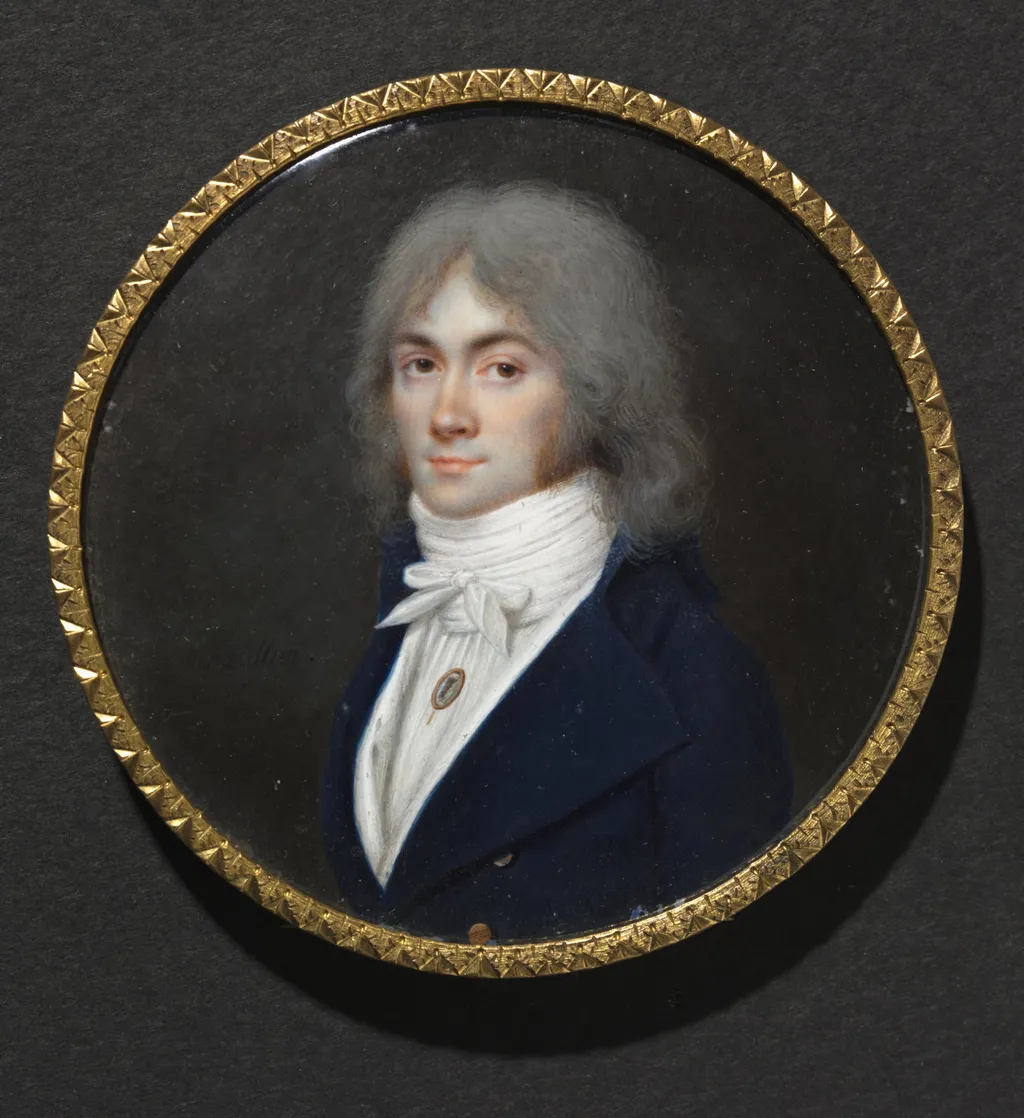
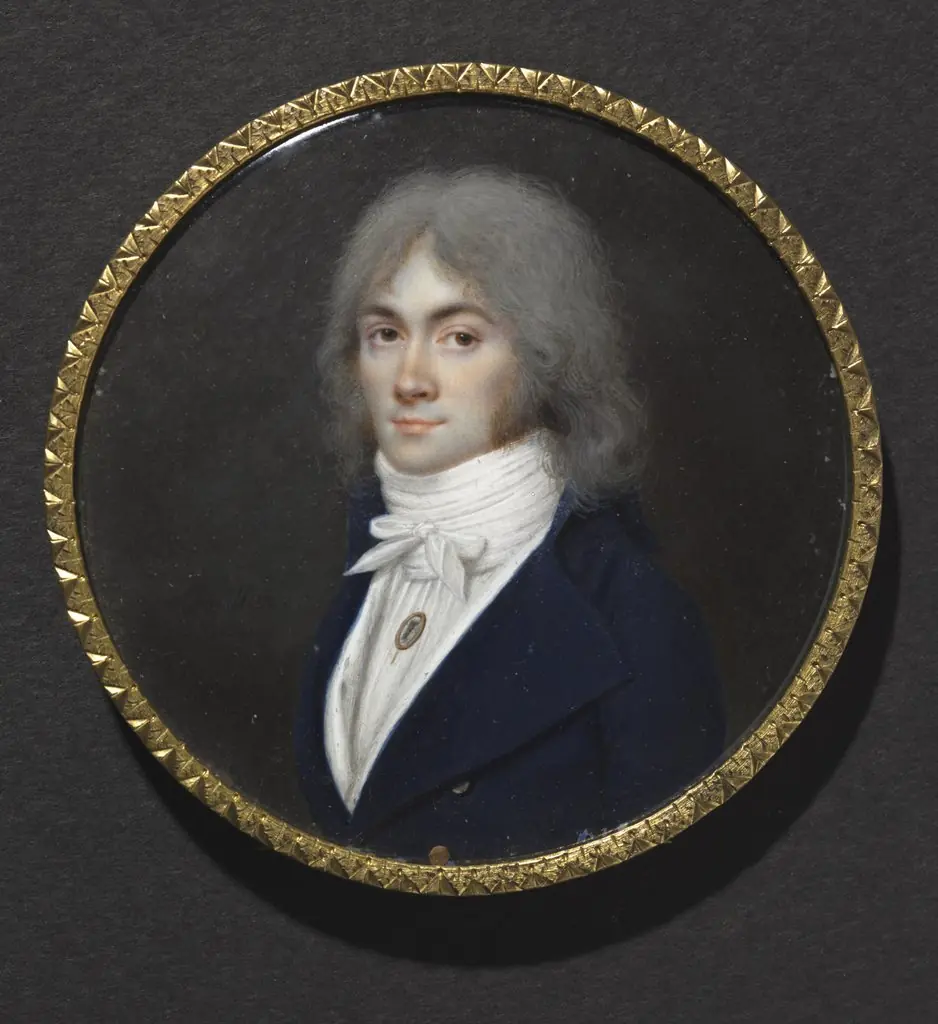
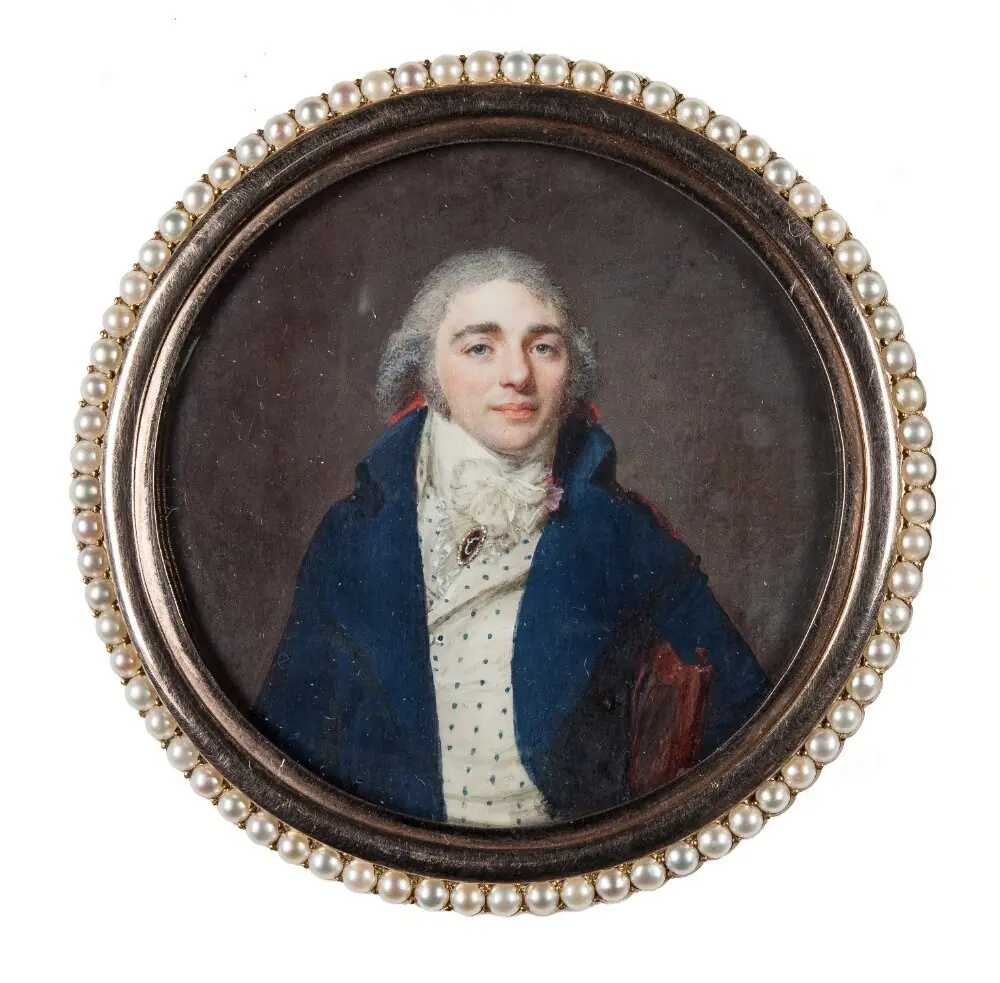
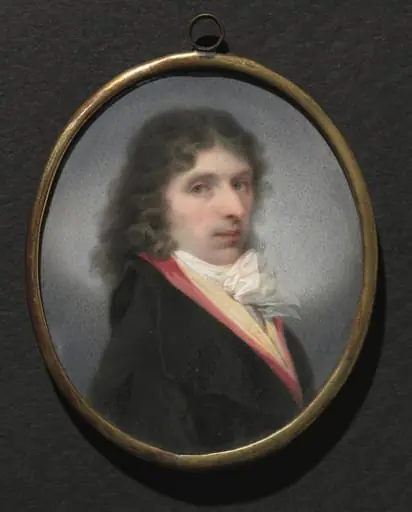
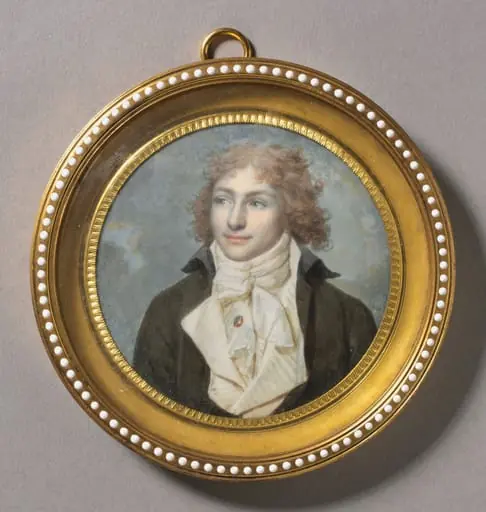
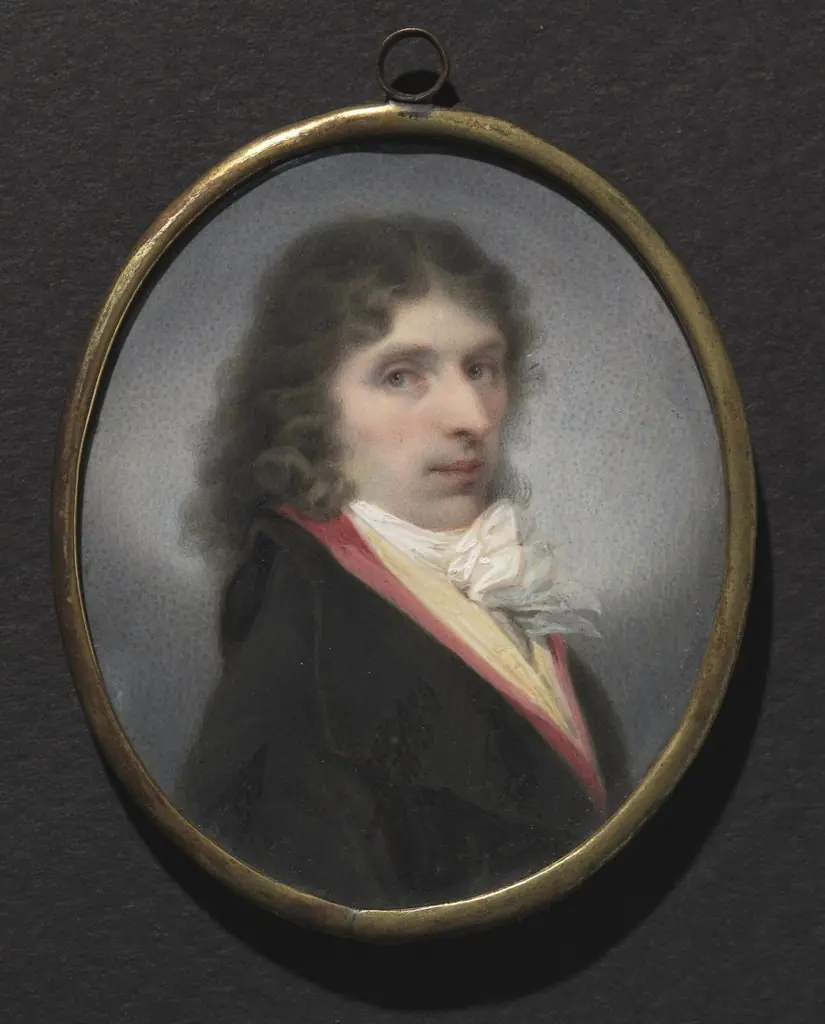
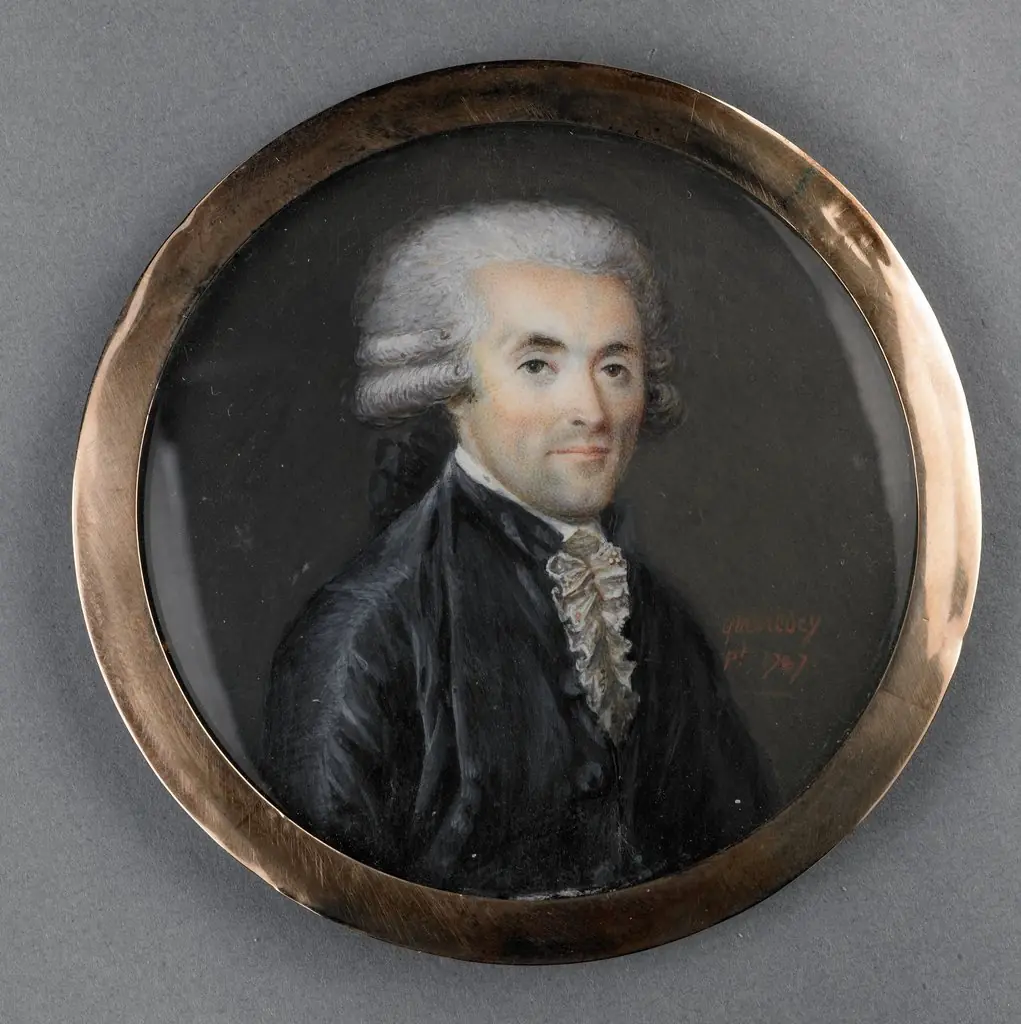
Portrait of a Man is an unspecified portrait miniature by the Neoclassicist artist Charles de Chatillon. It dates from 1796 and is held in the collection of the Cleveland Museum of Art.
- Accession no.
- 1942.1160
- Credit line
- The Edward B. Greene Collection
About this work
The artist's use of chiaroscuro, a technique that uses strong contrasts between light and dark, adds depth and dimension to the portrait.
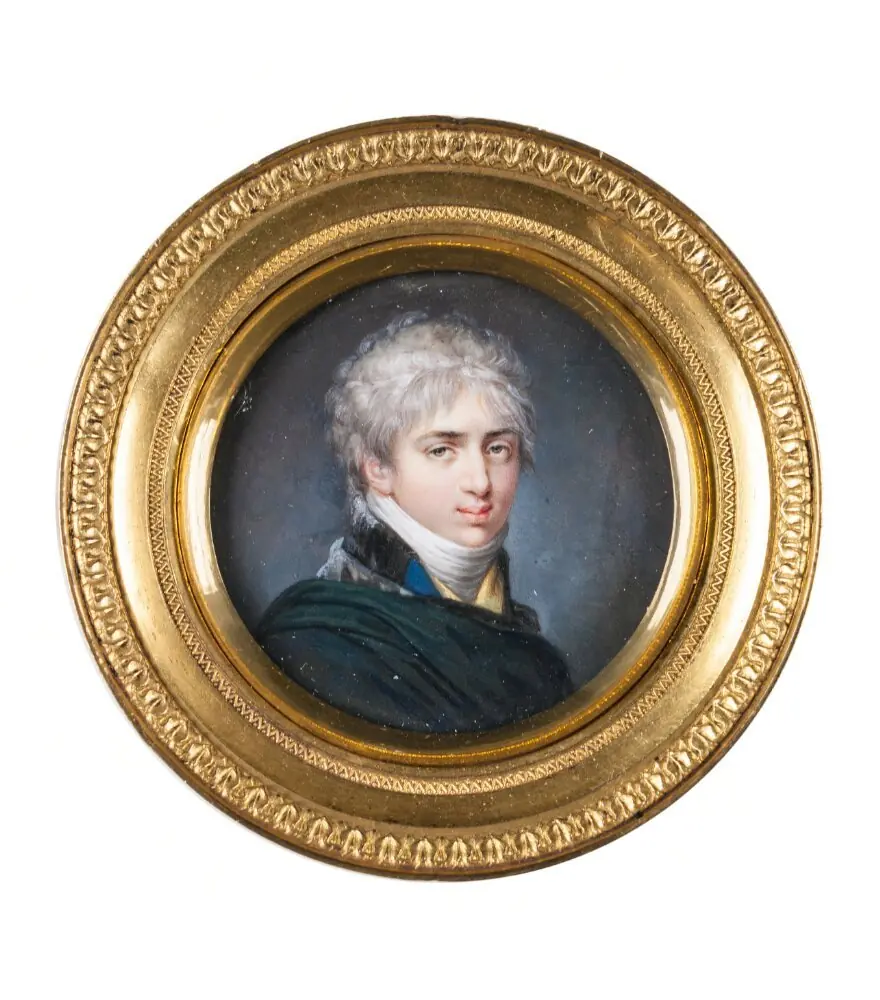
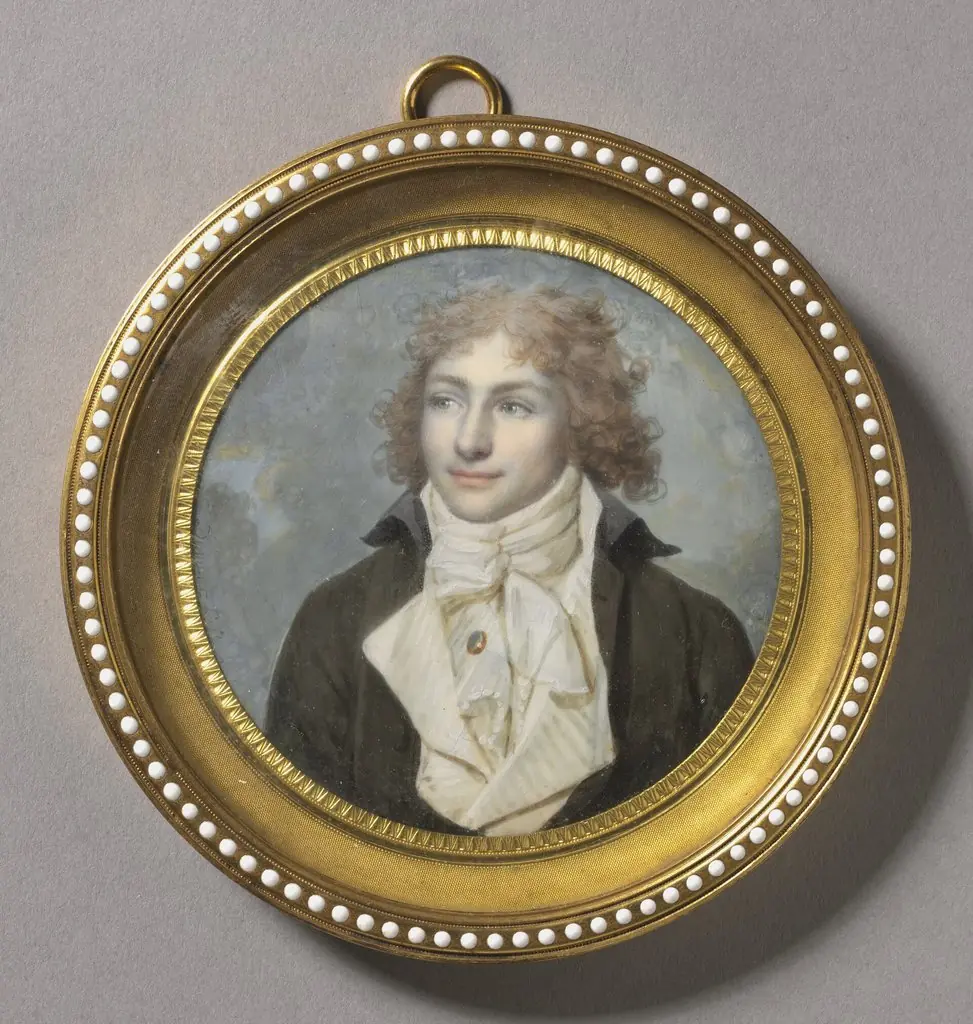
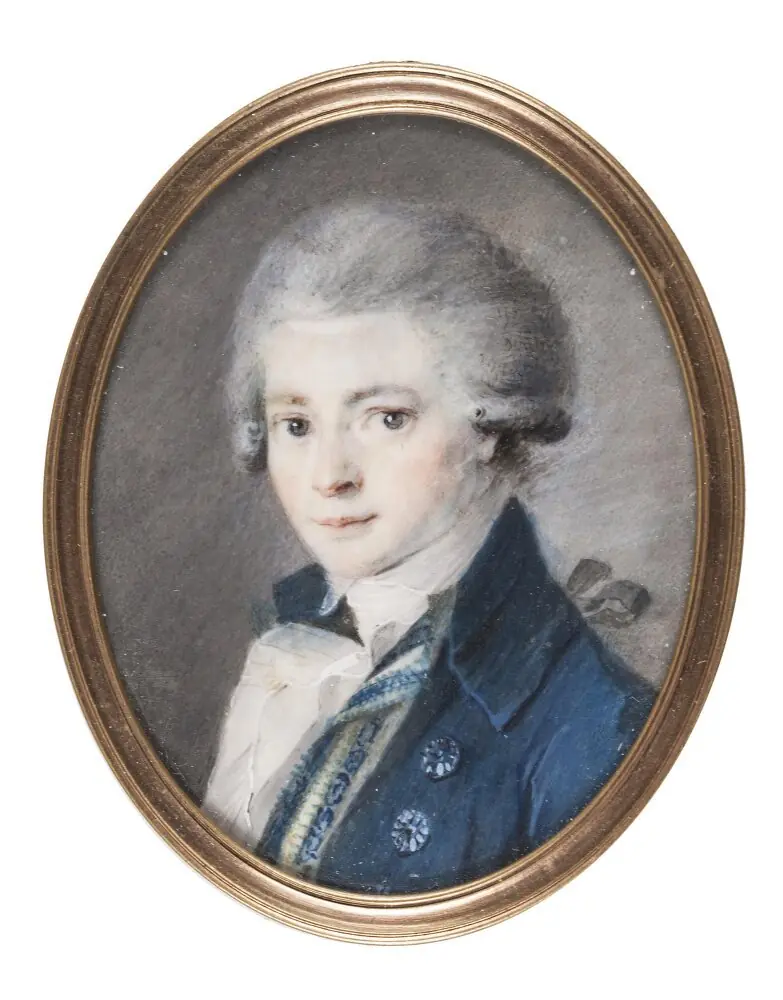
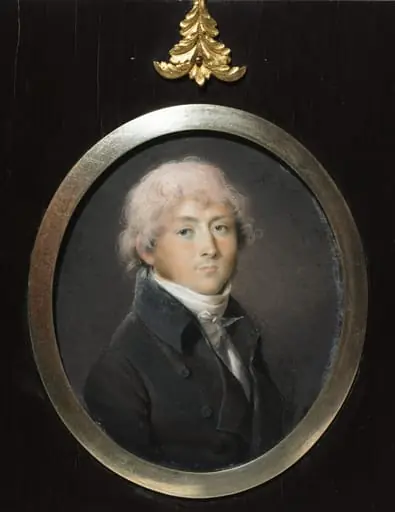
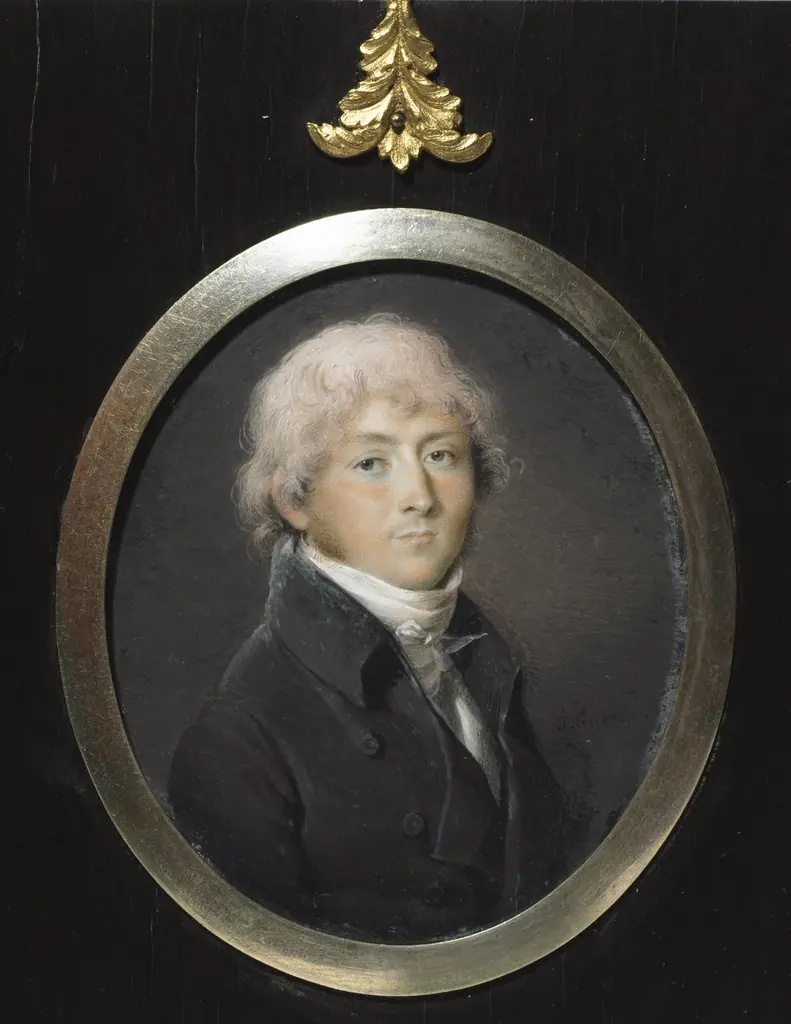
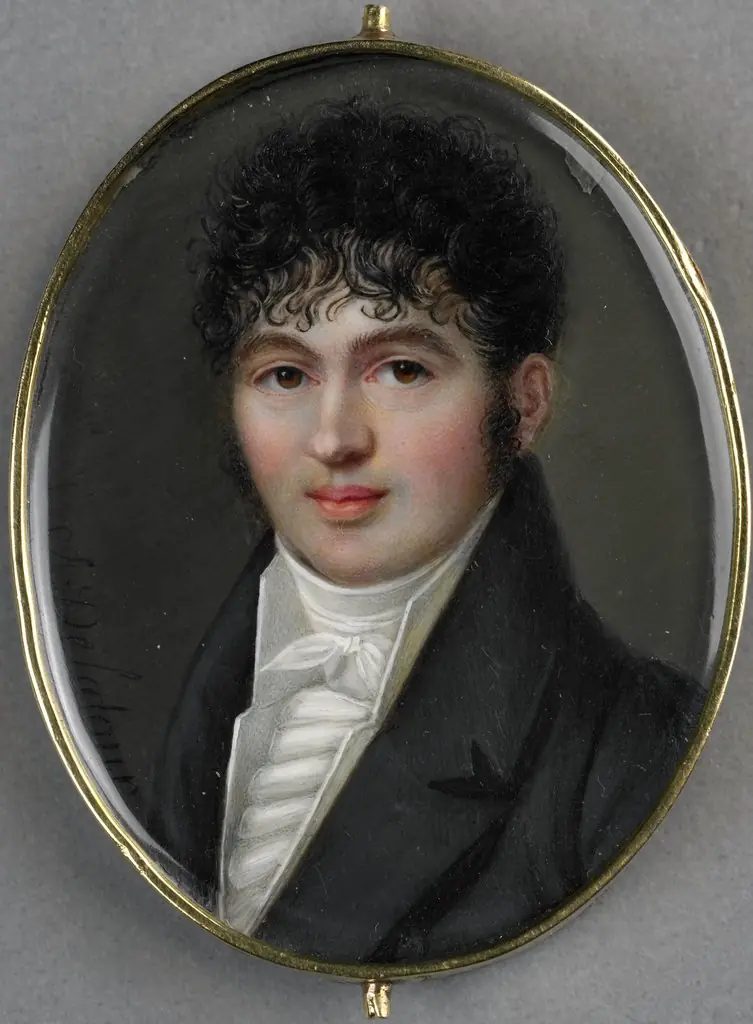
This portrait depicts a man with long, wavy gray hair and a serious expression. He is dressed in a dark blue jacket with gold buttons, a white cravat, and a white shirt. The background of the painting is a solid black color.
The man's attire and hairstyle suggest that the painting was created in the late 18th century. The artist's use of chiaroscuro, a technique that uses strong contrasts between light and dark, adds depth and dimension to the portrait.
The painting is a fine example of Romanticism, a movement that emphasized emotion and individualism. To learn more about this style, explore the Romanticism movement.
Overview
Portrait of a Man is a portrait miniature created by Charles de Chatillon in 1796, now held at The Cleveland Museum of Art.
Subject & Meaning
The portrait depicts a man with long, wavy gray hair and a serious expression, dressed in late 18th-century attire, including a dark blue jacket with gold buttons and a white cravat.
Technique & Style
The artist's use of chiaroscuro creates depth and dimension, characteristic of the Romanticism movement, which emphasized emotion and individualism.
Artist & collection