Artwork
Amaryllis
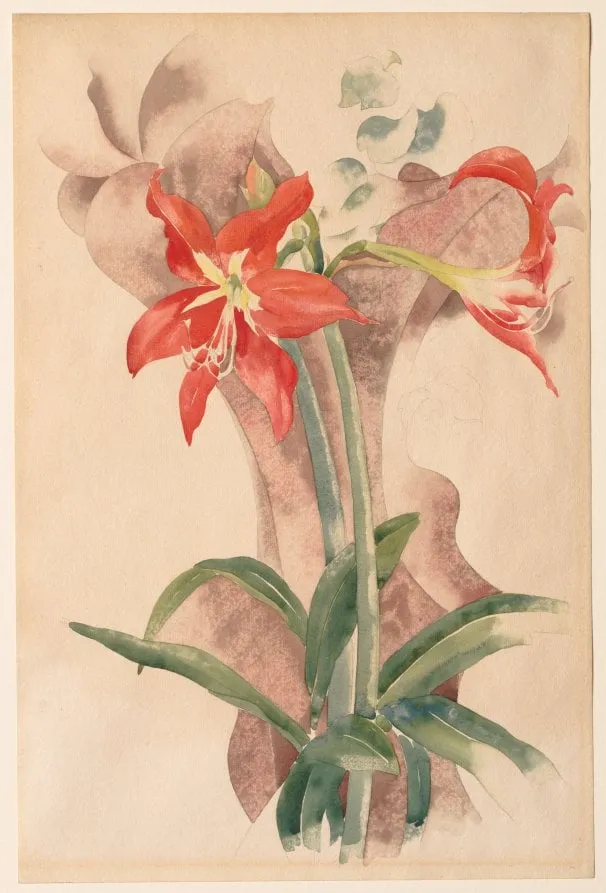
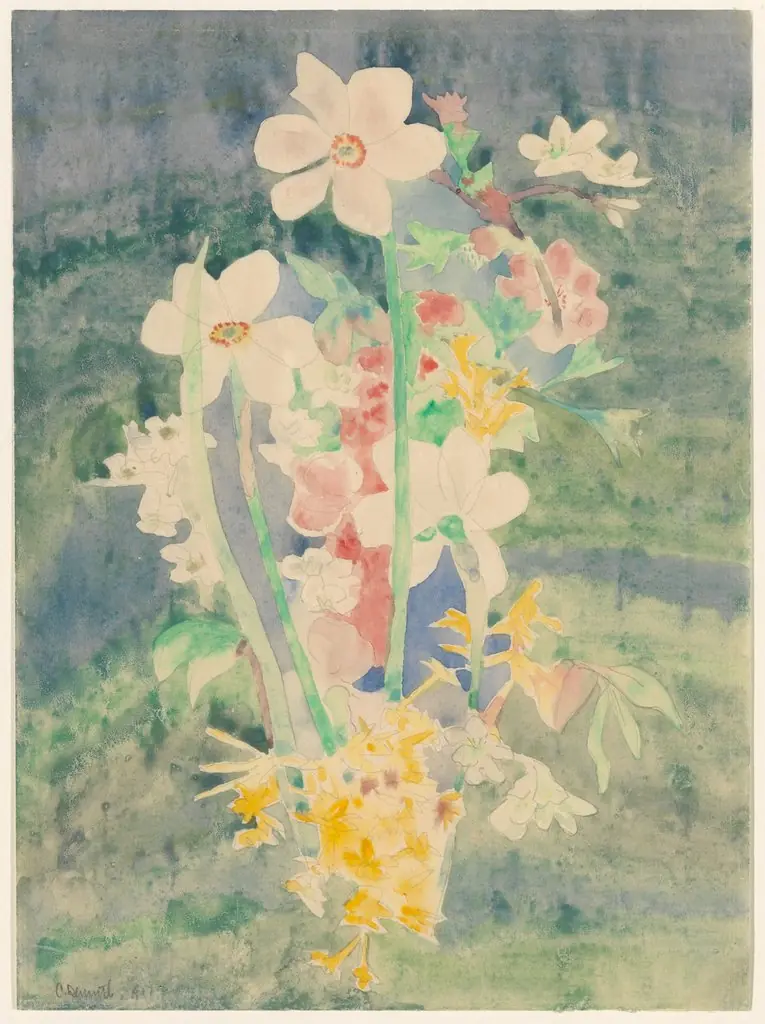
Amaryllis is a drawing by Charles Demuth. It dates from 1923 and is held in the collection of the Cleveland Museum of Art.
- Accession no.
- 1923.2490
- Credit line
- Hinman B. Hurlbut Collection
About this work
Overview
The work reflects his sustained interest in still-life subjects and his ability to transform modest domestic scenes into precise, modern compositions.
Charles Demuth created this watercolor drawing of an amaryllis during a period of convalescence in Lancaster, Pennsylvania, following complications from diabetes. Limited by physical weakness, he turned to watercolor for its accessibility and lightness, focusing on a single, closely observed flower. The work reflects his sustained interest in still-life subjects and his ability to transform modest domestic scenes into precise, modern compositions.
Subject & Meaning
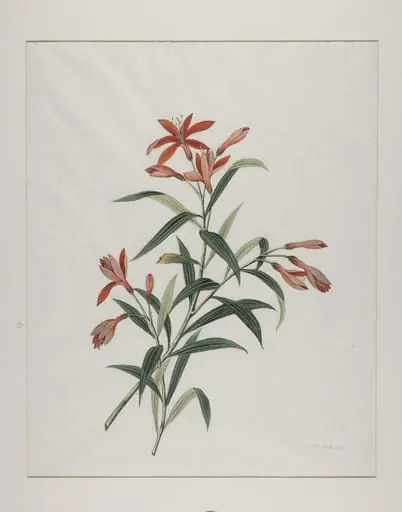
The drawing centers on a single blooming amaryllis, its vibrant red petals and curved stem dominating the composition. The flower, rendered with careful attention to form and light, appears both naturalistic and stylized. Its presence, isolated against the paper, suggests quiet introspection, mirroring the artist’s physical confinement. The bloom becomes a symbol of resilience, emerging from stillness with deliberate, almost theatrical grace.
Technique & Style
Demuth outlined the flower in graphite, then applied watercolor with controlled brushwork, allowing the paper’s white surface to suggest highlights. He used a blotter to lift pigment, creating a granular texture across the petals and leaves. This method produced a tactile surface that mimics natural variation without heavy pigment.
The result is a restrained yet dynamic interplay of line, color, and negative space, characteristic of his mature style.
History & Provenance
Executed in the early 1920s during Demuth’s recovery at his family home, the drawing is part of a series of floral studies made during his periods of illness. These works were not intended for public exhibition but served as personal exercises in observation and discipline. The piece remained in private hands until acquired by a public collection, where it now stands as a testament to his adaptability under physical constraint.
Context
Demuth’s floral drawings emerged alongside his broader engagement with modernist aesthetics, including Precisionism. While his urban scenes gained more attention, these intimate studies reveal his commitment to formal clarity and controlled composition. Working within domestic limits, he found in the amaryllis a subject that demanded precision without requiring physical exertion, aligning his artistic goals with his bodily reality.
Legacy
This drawing exemplifies how Demuth elevated everyday subjects through disciplined technique and emotional restraint. Though not widely exhibited in his lifetime, such works influenced later artists interested in the intersection of personal experience and formal abstraction. The amaryllis remains a quiet but significant example of how limitation can sharpen artistic vision.
Artist & collection

Artist
Charles Henry Buckius Demuth (November 8, 1883 – October 23, 1935) was an American painter who specialized in watercolors and turned to oils late in his career, developing a style of painting known as Precisionism.