Artwork
Cow in a Barn
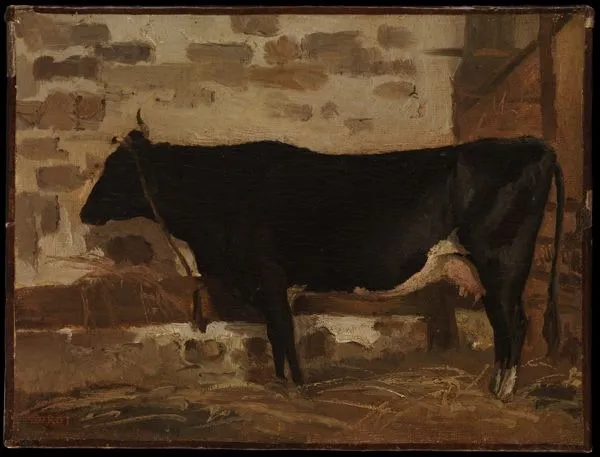
Cow in a Barn is an unspecified painting by the Barbizon school artist Jean Baptiste Camille Corot. It dates from 1838 and is held in the collection of the Metropolitan Museum of Art.
About this work
Subject & Meaning
Its subject is cattle within a barn interior, a modest rural motif that aligns with Corot's early interest in the French countryside and barnyard life.
Cow in a Barn is a small pastoral scene by Jean-Baptiste Camille Corot, dated 1838. Its subject is cattle within a barn interior, a modest rural motif that aligns with Corot's early interest in the French countryside and barnyard life. The depiction of livestock in a humble agricultural setting reflects the 19th-century Barbizon-influenced taste for unembellished rural imagery rather than grand historical or mythological narrative.
The painting's modest dimensions, 20.7 by 27.3 centimeters, reinforce its character as an intimate observational study rather than a monumental statement. Held by the Metropolitan Museum of Art, the work represents Corot's engagement with everyday pastoral subjects, treating the cow in its barn setting as a vehicle for quiet, naturalistic observation rather than overt symbolism.
History & Provenance
Cow in a Barn is a painting by Jean-Baptiste Camille Corot dated to 1838. It is held in the collection of the Metropolitan Museum of Art. The sources do not provide further details regarding a commission, prior owners, or intermediate provenance steps beyond its current institutional holding.
Context
Corot's Cow in a Barn (1838) demonstrates his handling of landscape infused with livestock, reflecting neoclassical compositional clarity and the influence of the Barbizon school. The work's restrained palette and precise rendering of animal anatomy exemplify the naturalistic detail characteristic of mid-nineteenth century French painting. Its inclusion in the Metropolitan Museum of Art collection underscores its recognized significance within the artist's oeuvre and the broader narrative of realist landscape development.
Scholarship emphasizes the painting's role in bridging plein air experimentation with classical structure, positioning it within Corot's transitional period toward more poetic interpretations of rural scenes.
Overview
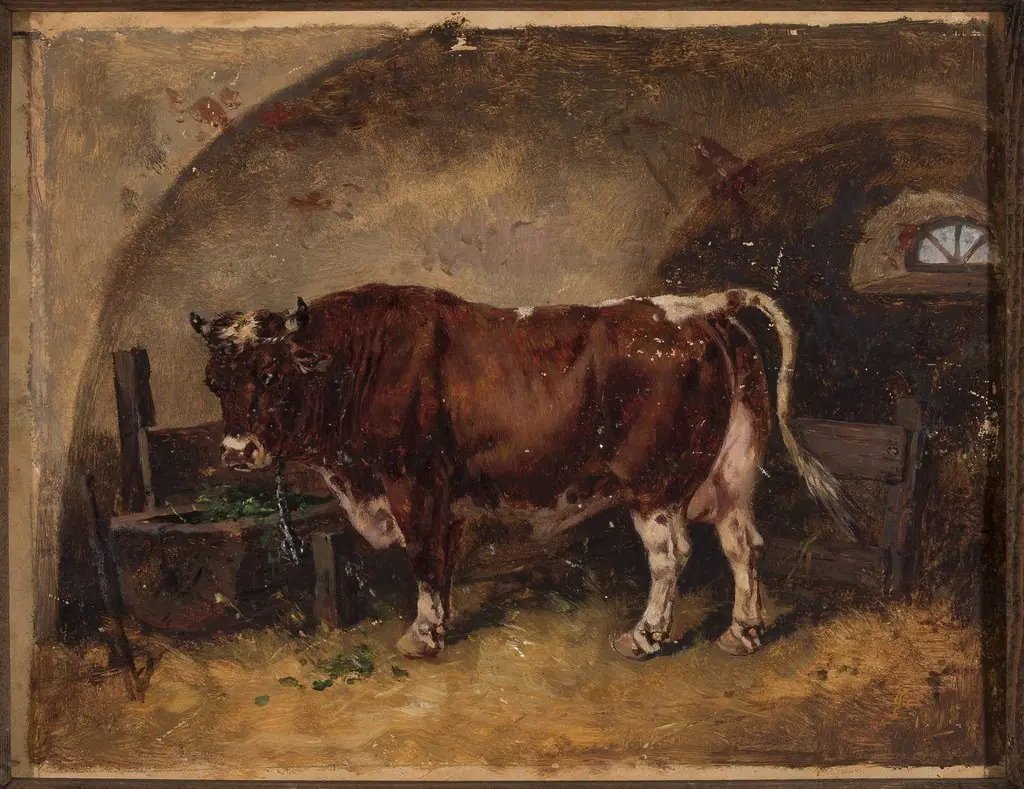
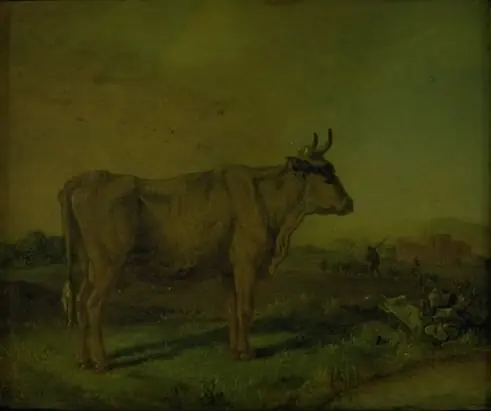
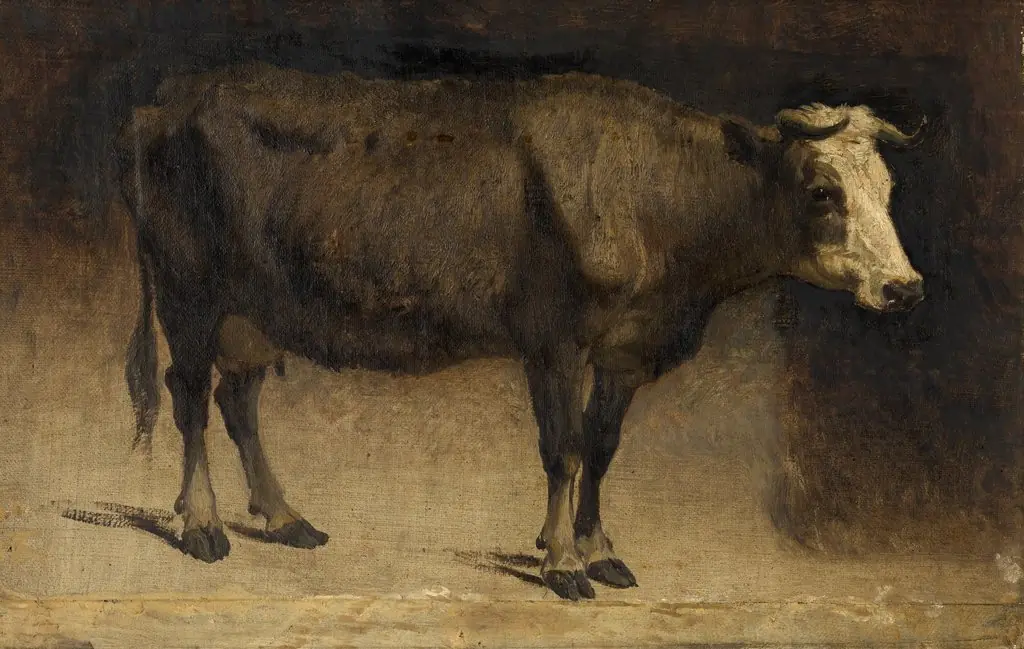
Jean-Baptiste-Camille Corot painted Cow in a Barn in 1838, a modestly sized oil work that captures a solitary bovine inside a dimly lit, rustic structure. The composition is anchored by the animal’s profile, which faces left, while the surrounding space is defined by uneven brick walls and a earthen floor strewn with a few pieces of straw. The overall mood is quiet and restrained, reflecting Corot’s interest in everyday rural life.
Technique & Style
Corot employs loose, rapid brushwork that conveys a sense of immediacy, allowing the forms of the cow and the textured walls to emerge with a soft, atmospheric quality. The limited palette of muted earth tones and subdued lighting creates gentle chiaroscuro, while the painterly handling balances a structured composition with a spontaneous, plein‑air sensibility characteristic of the early Barbizon approach.
Artist & collection
Artist
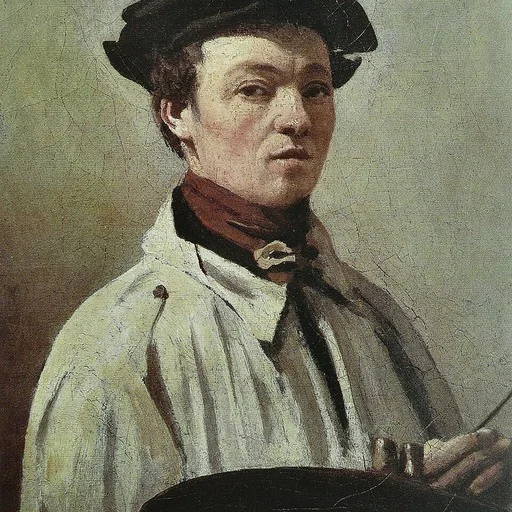
Jean-Baptiste-Camille Corot (UK: KORR-oh, US: kə-ROH, kor-OH; French:; 16 July 1796 – 22 February 1875), or simply Camille Corot, was a French landscape and portrait painter as well as a printmaker in etching.