Artwork
Veue des ruines d'une Tour qu'on dit avoir ete batie par les Romains
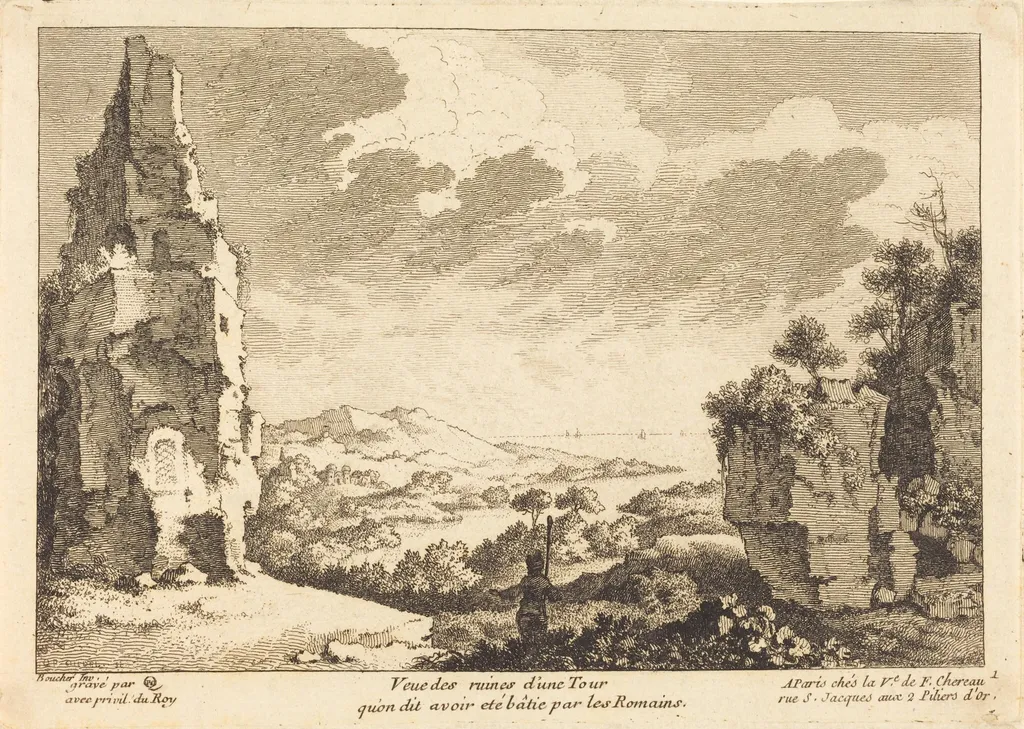
Veue des ruines d'une Tour qu'on dit avoir ete batie par les Romains is an ink print by the Baroque artist Quentin-Pierre Chedel. It dates from 1734 and is held in the collection of the National Gallery of Art.
- Inscription
- Inscribed:lower left in plate of image: QP CHEDEL; across bottom in plate below image: Boucher Inv. / grave par PC (circled) / avec privil. du Roy / Veue des ruines d'une Tour / qu'on dit avoi r ete batie par les Romains. / AParis ches la V.e de F. Chereau 1 / rue S. Jacques aux 2 Piliers d'O r.
About this work
Overview
Quentin‑Pierre Chedel’s 1734 etching, titled Vue des ruines d’une Tour qu’on dit avoir été bâtie par les Romains, presents a tranquil countryside scene. A solitary figure, turned away from the viewer, stands in the foreground, while a weathered tower occupies the left side of the composition, framed by gentle hills and a cloud‑filled sky.
Subject & Meaning
The ruined tower, suggested to have Roman origins, serves as a focal point for contemplation of the passage of time. Its crumbling masonry and encroaching vegetation contrast with the expansive, calm landscape, inviting reflection on the coexistence of history’s remnants within an otherwise serene natural setting.
Technique & Style
Executed in etching, Chedel employs fine incised lines and varied tonal washes to achieve depth and atmospheric perspective. The monochromatic palette of grays emphasizes texture, from the delicate rendering of clouds to the rugged stonework, while the subtle gradations guide the eye across the composition in a measured, Baroque‑influenced manner.
History & Provenance
Created in the early eighteenth century, the print reflects the period’s fascination with antiquarian subjects and the romantic allure of ruins. While specific ownership records are limited, the work exemplifies Chedel’s engagement with the French print market of the 1730s, a time when such vedute were popular among collectors interested in classical heritage.
Context
The etching aligns with broader Baroque trends that emphasized dramatic yet balanced compositions and a heightened interest in archaeological sites. By depicting a purportedly Roman tower, Chedel taps into contemporary scholarly curiosity about ancient architecture, a theme common among European artists responding to the growing popularity of travel literature and antiquarian studies.
Own this work as a print
Artist & collection


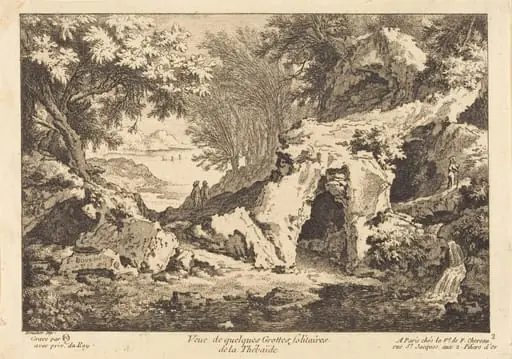 Veue de quelques Grottes solitaires de la Thebaide
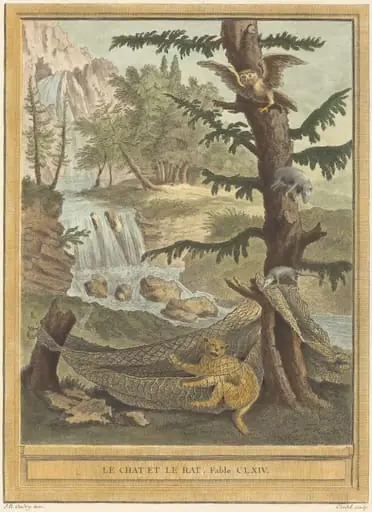 Le chat et le rat (The Cat and the Rat)
 Le corbeau, la gazelle, la tortue et le rat (The Crow, the Gazelle, the Tortoise, and
 Les vautours et les pigeons (Vultures and Pigeons)
 Abreuvoir d'oiseaux (The Birds' Watering Place)
 Les poissons et le cormoran (The Fish and theCormorant)
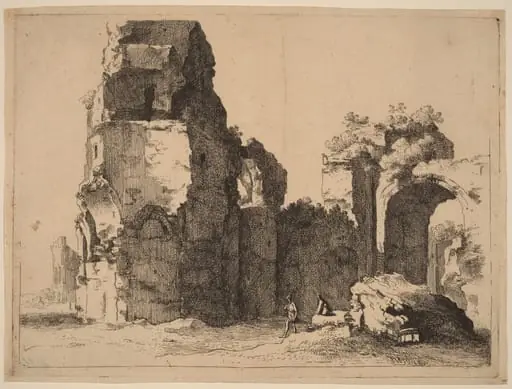 Ruins
Ruins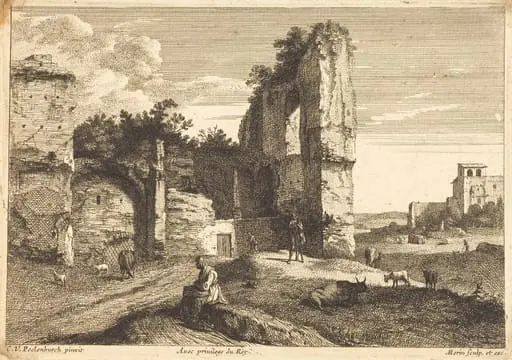 Old Woman Seated
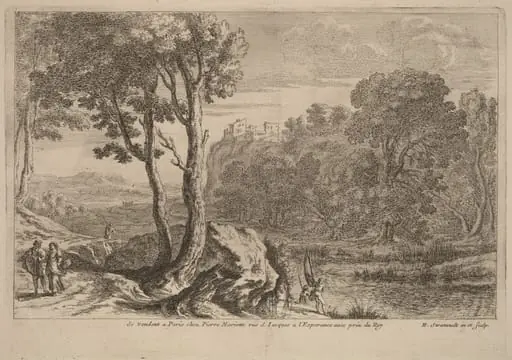 The Fishermen
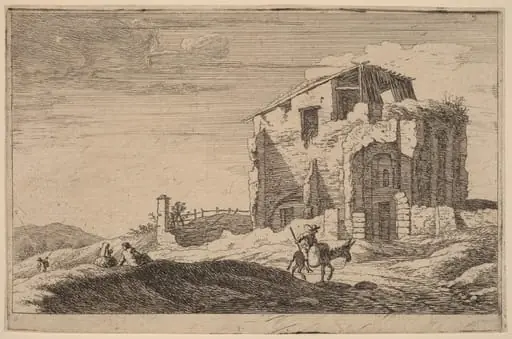 View of a Ruined Building
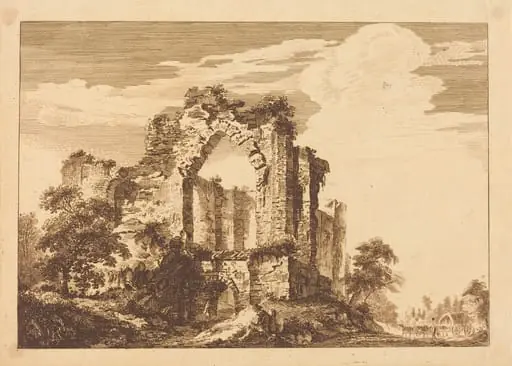 Ruins with a Seated Man, and a Covered Wagon in the Distance
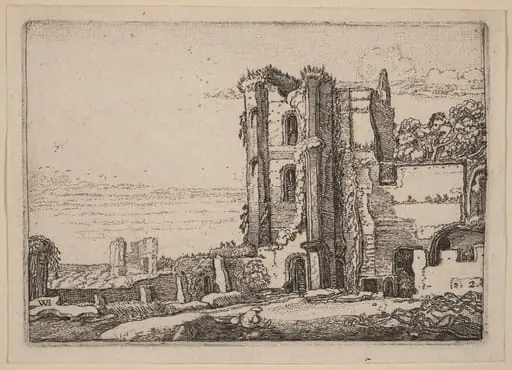 Ruined Tower Right of Center
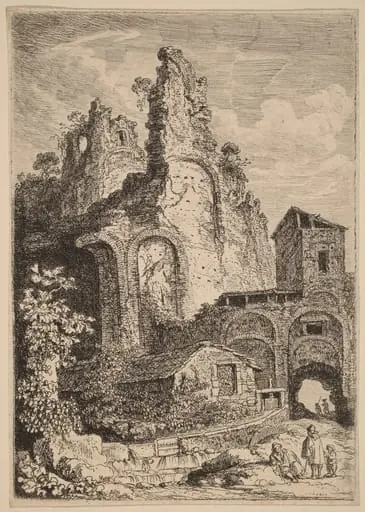 The Old Palace at Tivoli
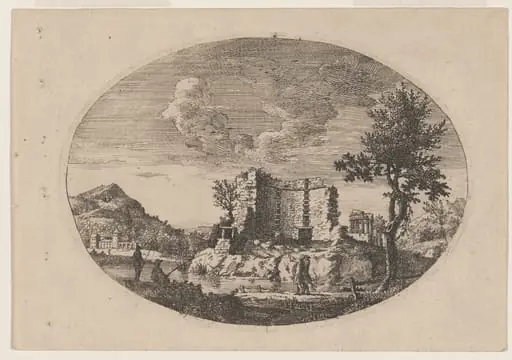 Ruined Two-Story Building with Mountains in Distance
 Building in Ruins at the Side of a River
 The Muleteers' Inn
 Landscape with Two Ruined Towers
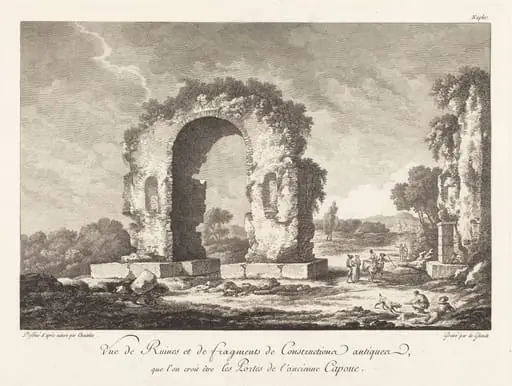
- Vue de Ruines et de fragments de Construction antique...de l'ancienne Capoue