Artwork
Actualités: Insurgez-vous donc! ...hien! voilà qui va devenir gentil! pourvu qu'on ne nous donne par sur les castagnettes!! ... avec notre pied de nez!!!
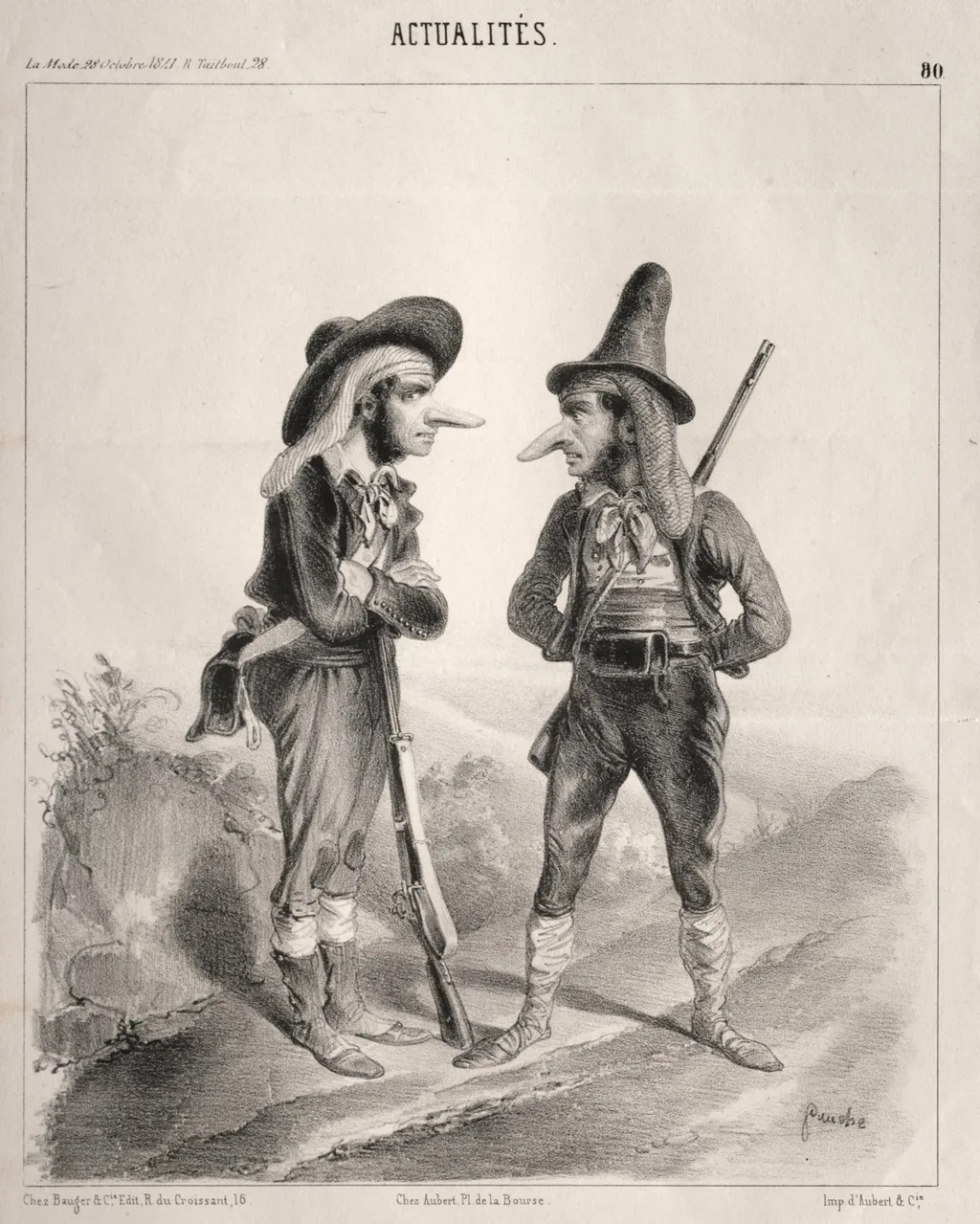
Actualités: Insurgez-vous donc! ...hien! voilà qui va devenir gentil! pourvu qu'on ne nous donne par sur les castagnettes!! ... avec notre pied de nez!!! is a print by the Romanticist artist Clémente Pruche. It dates from 1841 and is held in the collection of the Cleveland Museum of Art.
- Accession no.
- 1943.513
- Credit line
- Gift of Milton S. Fox
About this work
Overview
Created in 1841 by Clémente Pruche, this ink sketch is a satirical print that uses exaggerated figures and ironic French text to critique political fervor. It resides in the collection of The Cleveland Museum of Art. The work belongs to a tradition of visual wit that responded to the turbulent political climate of post-revolutionary France, employing caricature to deflate grandiose rhetoric.
Subject & Meaning
Two oddly proportioned men, distinguished by elongated noses and mismatched headwear, stand in close proximity as if conspiring.
Two oddly proportioned men, distinguished by elongated noses and mismatched headwear, stand in close proximity as if conspiring. One holds a rifle; the other carries a firearm and ammunition pouches. Their attire suggests an outdated military or peasant class.
The title, laced with sarcasm, mocks calls to rebellion, implying that revolutionary zeal is little more than childish posturing, symbolized by the gesture of a 'pied de nez,' or thumb to the nose.
Technique & Style
Executed in ink with loose, expressive lines, the drawing favors caricature over realism. Facial features are stretched for comic effect, and clothing is rendered with minimal detail, emphasizing absurdity rather than accuracy. The composition is tightly framed, drawing attention to the figures’ proximity and shared demeanor. The handwritten French text integrates visually with the image, reinforcing its satirical tone through ironic phrasing.
History & Provenance
The work was produced in 1841 during a period of political instability in France, following the July Monarchy’s consolidation of power. Pruche, a lesser-known illustrator, contributed to periodicals that used humor to navigate censorship. The sketch entered the Cleveland Museum of Art’s collection through documented acquisitions in the 20th century, where it remains as an example of political satire in early French print culture.
Context
In the early 1840s, French society was wary of renewed uprisings after the revolutions of 1830 and 1848. Artists and satirists responded by reducing political rhetoric to farce, using visual exaggeration to undermine authority. Pruche’s work aligns with broader trends in illustrated journalism, where humor served as both entertainment and quiet dissent, avoiding direct confrontation while still challenging public sentiment.
Legacy
Though not widely exhibited, the sketch exemplifies how 19th-century French illustrators used irony and visual absurdity to comment on politics without overt risk. It reflects a lineage of satirical printmaking that influenced later cartoonists and political illustrators. Its survival in a major museum collection underscores its value as a cultural artifact of dissent expressed through wit rather than violence.
Own this work as a print
Artist & collection

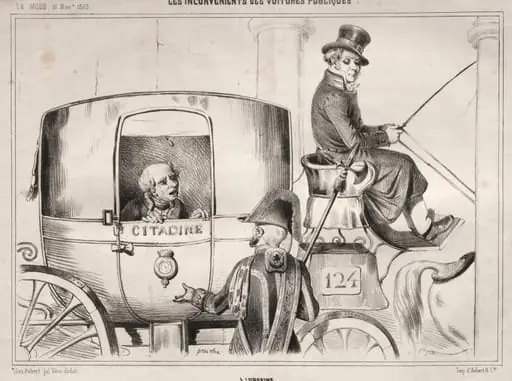 Actualités: Les Inconvénients des voitures publique: L'Urbaine
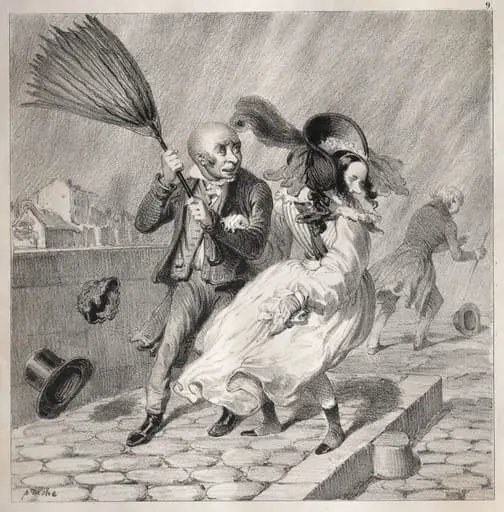 Bambochades: Vois-tu que mon baromêtre est au beau!...c'est un riche temps pour les biens de la terre!!!
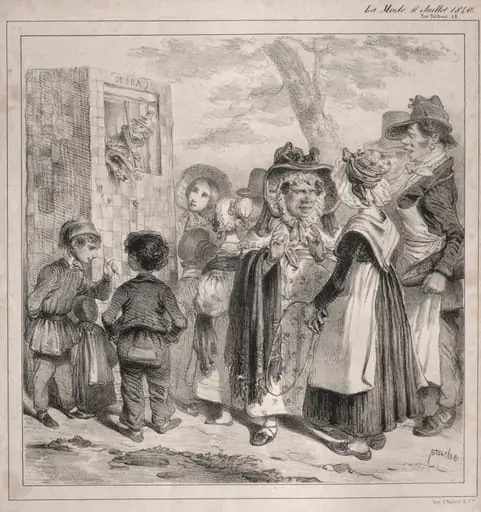 Voyez-vous ma Chère! c'est la police qui fait jouer ces polichinels là, pour détourner l'attention...
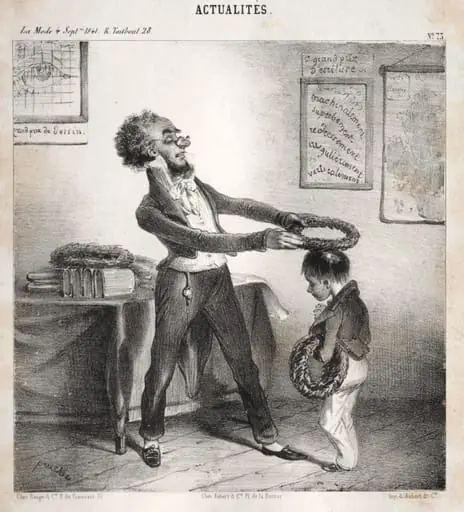 Actualités: Les distributions de Prix
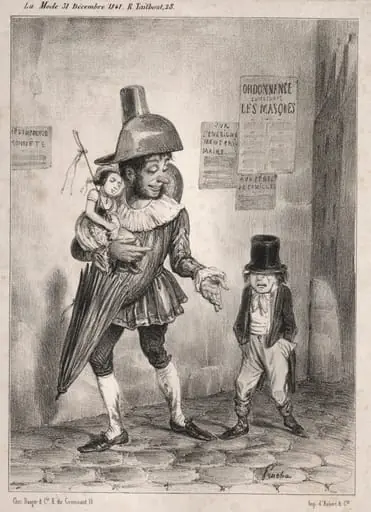 Pochades de carnaval: Vois-tu, si ton maître est bien content de toi et si tu as le prix de sagesse cette année! je te laisserai deguiser en paillasse! ...l'année prochaine!!
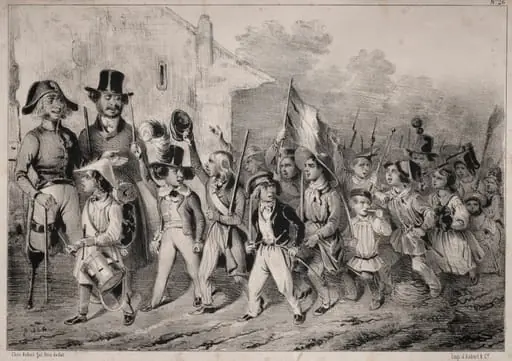 Actualités: Bon! Les moutards en veulent sussi! quand on parle de guerre! comme toute ca prend feu! ... On voit que c'est de la plante indigène!... ca promet!!
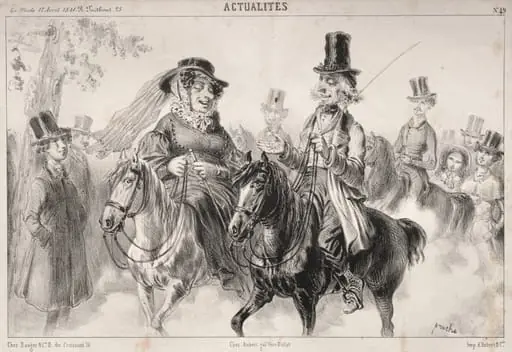 Actualités: Dis donc Madame Miroton il paraitrait que c'est nous qui donnons le ton à Longchamps cette année....
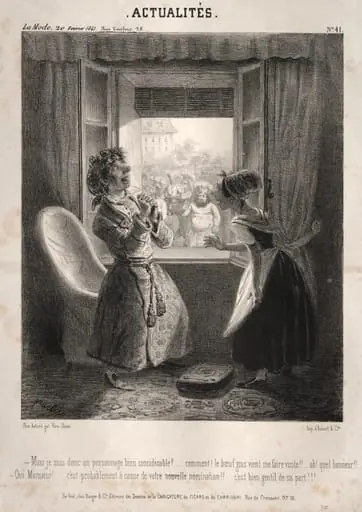 Actualités: ---Mais je suis donc un personnage bien considerable?
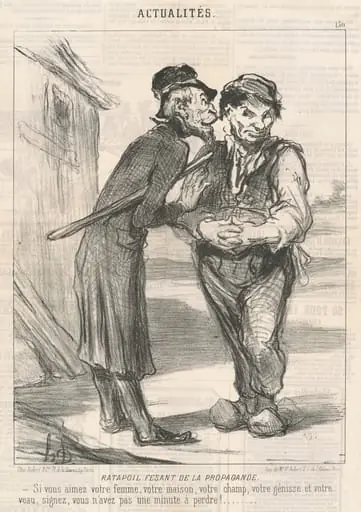
- Ratapoil Fesant de la Propaganda: Si vous aimez votre femme, votre maison, votre champ, votre génisse et votre veau, signez, vous n'avez pas une minute de perdre!
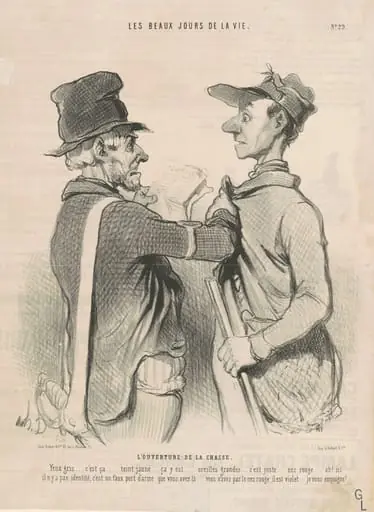 L'ouverture de la chasse
 Monsieur, vu l'absence complète ...
 Entre recors
 Dites donc, président, impossible d'attraper un lièvre...
 Onze degrés centigrades!
 La Rencontre sous bois
 Une Rencontre agréable
 Eh bien! Mon brave anglais ...
 Décidément on ne peut pas...
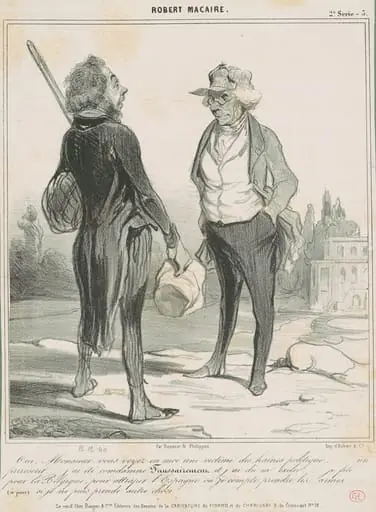 Oui, monsieur, vous voyez en moi une victime
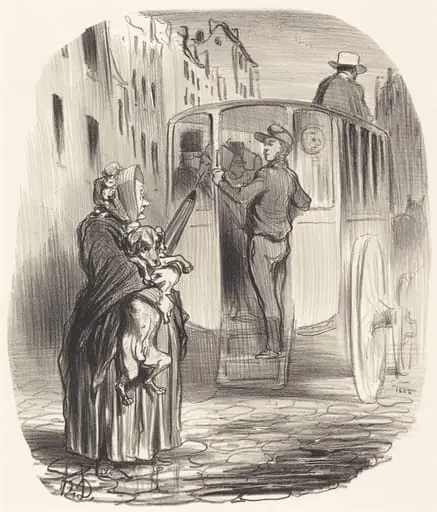 Désolé, citoyenne... je ne reçois pas de chiens...