Artwork
Ratapoil Fesant de la Propaganda: Si vous aimez votre femme, votre maison, votre champ, votre génisse et votre veau, signez, vous n'avez pas une minute de perdre!
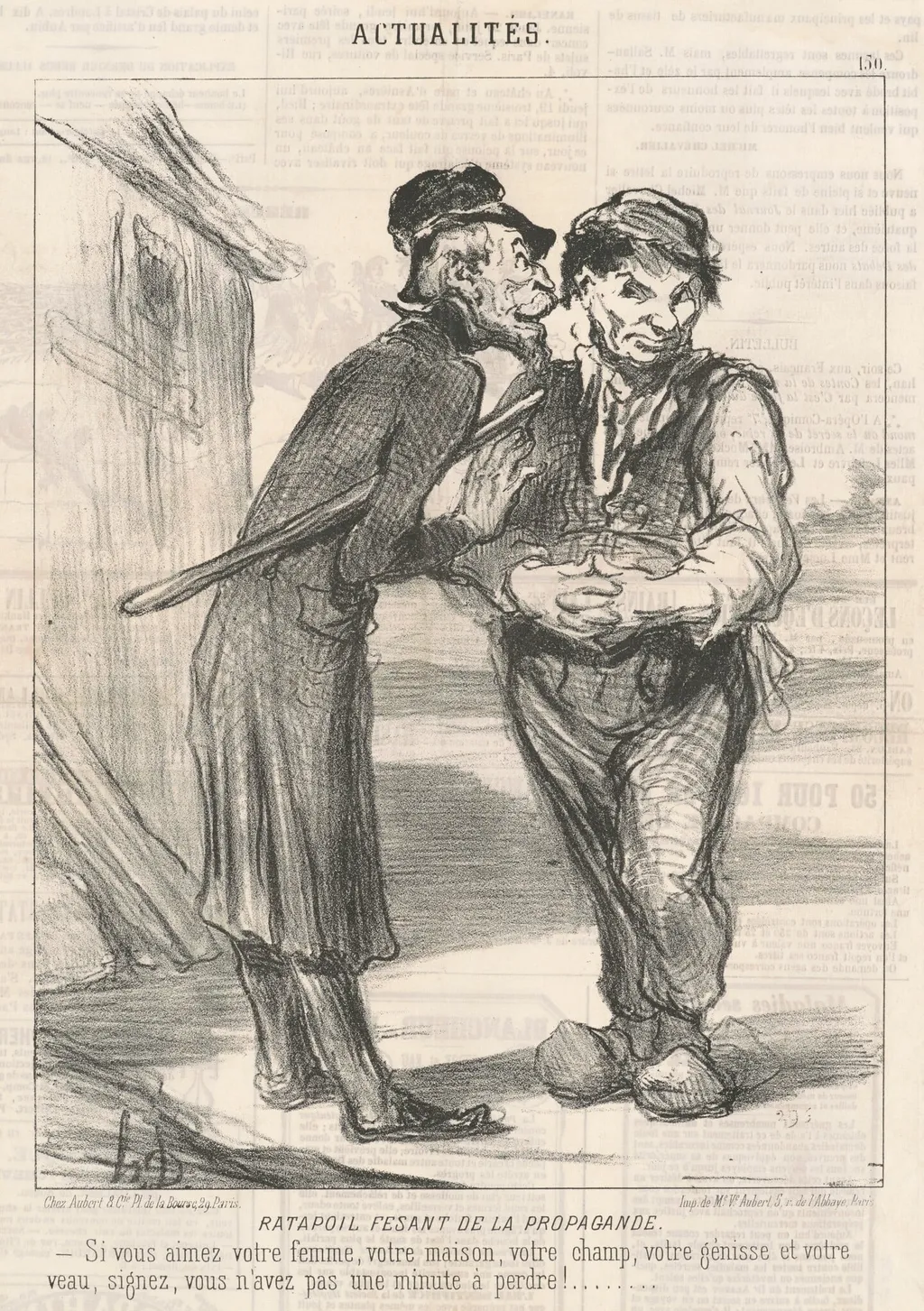
Ratapoil Fesant de la Propaganda: Si vous aimez votre femme, votre maison, votre champ, votre génisse et votre veau, signez, vous n'avez pas une minute de perdre! is an ink print by the Impressionist artist Honoré Daumier. It dates from 19 and is held in the collection of the National Gallery of Art.
About this work
Overview
The image presents a quiet but tense moment of persuasion, framed as a civic appeal that masks pressure under the guise of personal responsibility.
Created in 1851 by Honoré Daumier, this lithograph is part of a series targeting political coercion in post-revolutionary France. Rendered in the accessible medium of stone lithography, it was distributed widely among the public to critique authoritarian tactics. The image presents a quiet but tense moment of persuasion, framed as a civic appeal that masks pressure under the guise of personal responsibility.
Subject & Meaning
The scene shows a man in a long coat offering a document to another, who stands hesitantly. The text on the paper demands immediate signature, threatening loss of home, livestock, and family. A third figure walks away, suggesting resistance or indifference.
The work mocks the Ratapoil, a fictionalized group representing state enforcers who used emotional appeals to manipulate public compliance during Louis-Napoléon Bonaparte’s rise to power.
Technique & Style
Daumier employed lithography for its affordability and rapid reproduction, allowing his critiques to reach a broad audience. His figures are rendered with exaggerated, elongated features and minimal detail, emphasizing expression over realism. The stark contrast between the bold, handwritten text and the muted background draws attention to the coercive message, reinforcing the satirical tone through visual simplicity and directness.
History & Provenance
Produced during the political turmoil following the 1851 coup d'état, the print was part of Daumier’s ongoing campaign against the authoritarian regime. Though many of his works were seized or destroyed by censors, this piece survived through private collections. Its survival reflects both its potency as satire and the underground circulation of dissenting imagery in mid-19th-century France.
Context
In the wake of the Second Republic’s collapse, authorities used propaganda to frame loyalty as a moral duty tied to domestic stability. Daumier’s image parodies this rhetoric by equating political allegiance with the preservation of personal property. The work aligns with broader public skepticism toward state manipulation, particularly among rural and working-class communities targeted by such campaigns.
Legacy
Daumier’s lithographs, including this one, established a precedent for political satire in visual media. His use of everyday scenes to expose institutional pressure influenced later cartoonists and illustrators. Though not widely exhibited in his lifetime, the print remains a key example of how print culture could challenge power through wit, simplicity, and accessibility.
Own this work as a print
Artist & collection
Artist
Honoré-Victorin Daumier (French: ; 26 February 1808 – 10 or 11 February 1879) was a French painter, sculptor, and printmaker, whose many works offer commentary on the social and political life in France, from the…








- Allant aux renseignements politiques ...
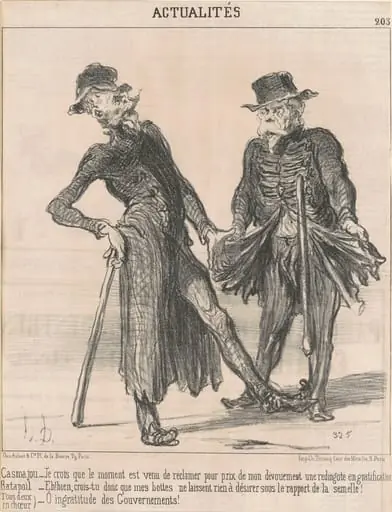 Casmajou -- Ratapoil (tous deux en choeur)
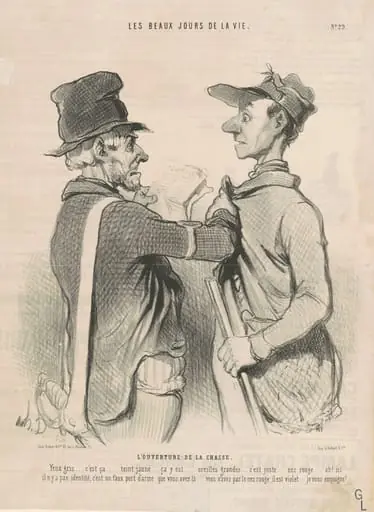 L'ouverture de la chasse
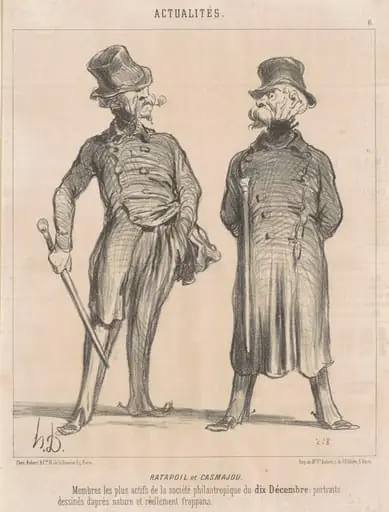 Ratapoil et Casmajou
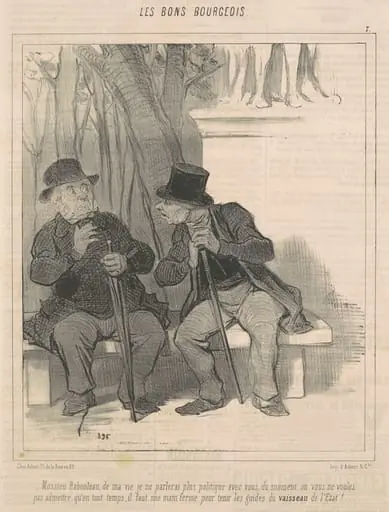 Mossieu Rabourdeau ... je ne parlerai plus politique avec vous ..
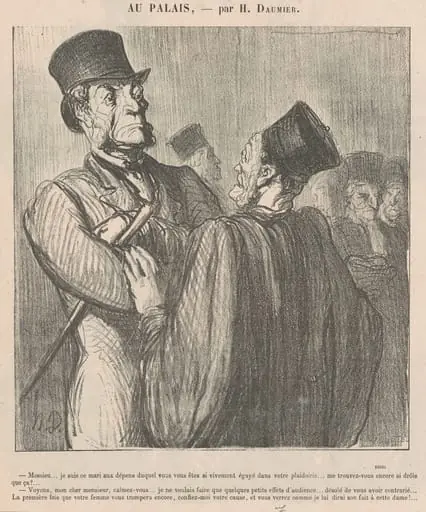 Mossieu ... je suis ce mari aux dépens duquel
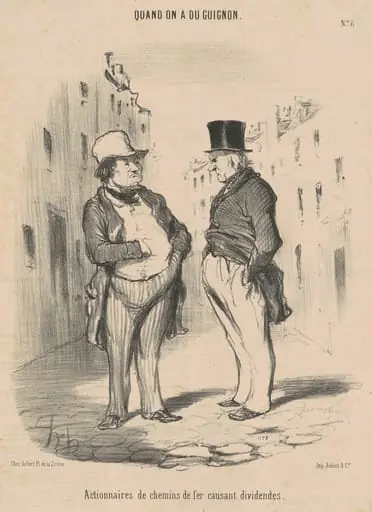 Actionnaires de chemins de fer causant dividendes
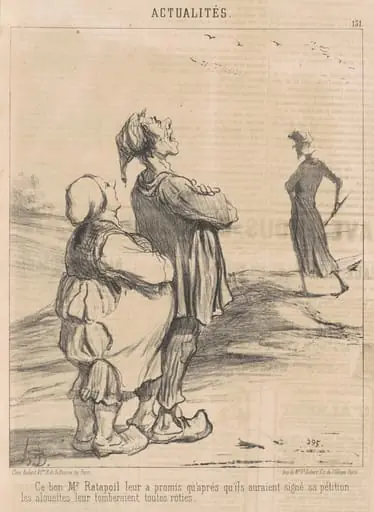 Ce bon M. Ratapoil leur a promis ...
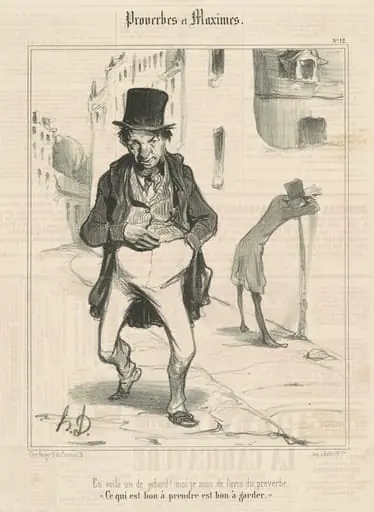 En voila un de jobard! ...