Artwork
The Surrender of John Frederick, Elector of Saxony, After the Battle of Mühlberg
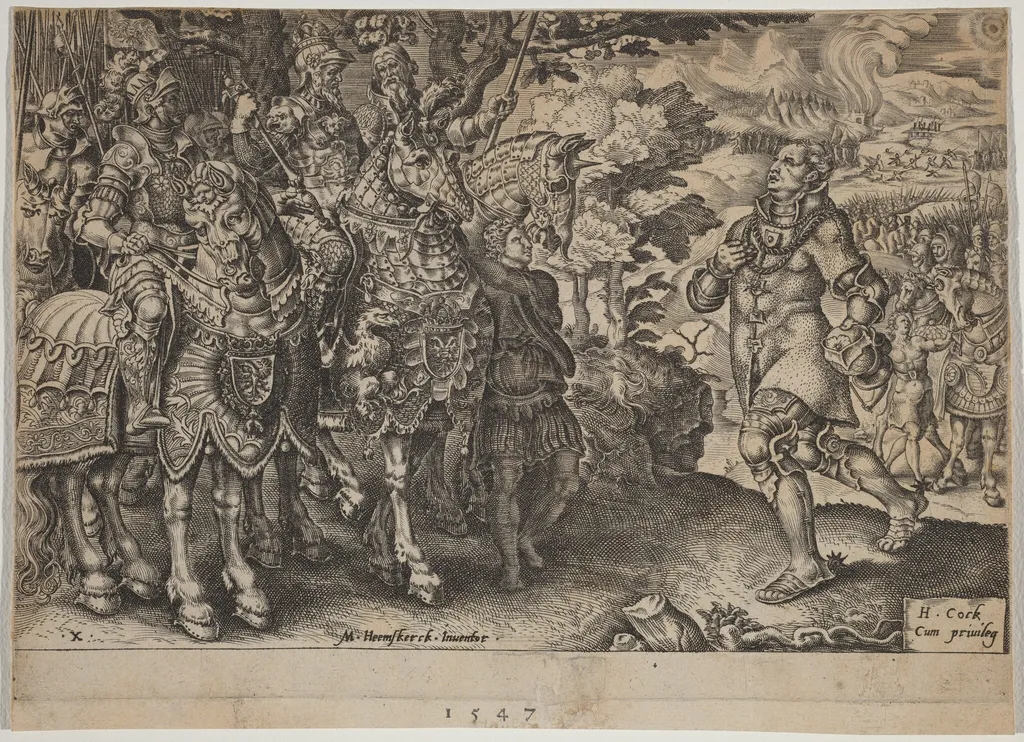
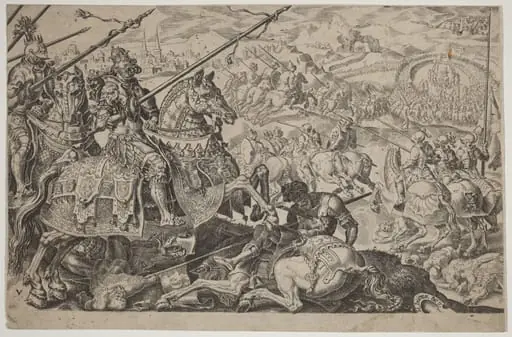
The Surrender of John Frederick, Elector of Saxony, After the Battle of Mühlberg is an ink print by the Renaissance artist Dirck Volckertz Coornhert. It dates from 1547 and is held in the collection of the National Gallery of Art.
- Inscription
- Inscribed:lower left in plate: X; lower center in plate: M. Heemskerck. Inventor.; lower right in plate [in cartellino]: H. Cock/ cum privileg; lower margin center: 1547; by later hand, verso lower center, in graphite: The Duke of Saxony surrendering to Caesar/MS
About this work
Overview
The image captures the immediate aftermath of the 1547 conflict, focusing on the moment when the defeated elector yields to his opponents.
Dirck Volckertz Coornhert’s 1547 print, titled The Surrender of John Frederick, Elector of Saxony, After the Battle of Mühlberg, combines engraving and etching on a single plate. The image captures the immediate aftermath of the 1547 conflict, focusing on the moment when the defeated elector yields to his opponents. The composition is dense, populated by numerous figures and a turbulent sky that underscores the chaos of the scene.
Subject & Meaning
At the centre of the work a mounted figure raises his hands in capitulation, representing John Frederick himself. Surrounding him are armed soldiers, some on foot, others on horseback, who appear to dominate the space. The surrounding landscape, filled with tiny combatants scrambling over rocks and trees, conveys the broader defeat of the Saxon forces and the political shift that followed the battle.
Technique & Style
Coornhert employed a combination of engraving’s precise incised lines and the softer tonal qualities of etching, creating a stark contrast between sharply defined armor and the more atmospheric background. The vigorous, intersecting lines generate a sense of movement, while the crowded arrangement of figures produces a claustrophobic intensity that emphasizes the turmoil of surrender.
History & Provenance
The print was produced shortly after the Battle of Mühlberg, a decisive engagement in the Schmalkaldic War. Although the original plate no longer bears any textual inscription, contemporary copies have survived in several European print collections, attesting to its circulation as a visual record of the event and as a political commentary on the fate of the Elector of Saxony.
Own this work as a print
Artist & collection


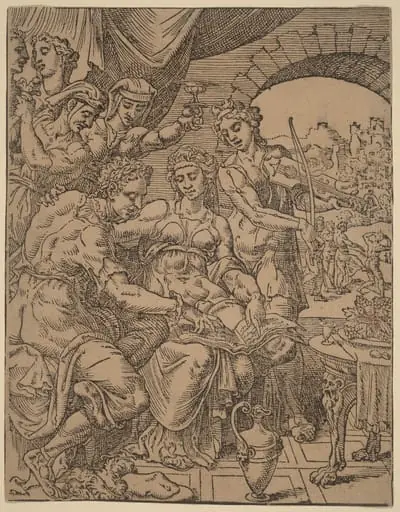
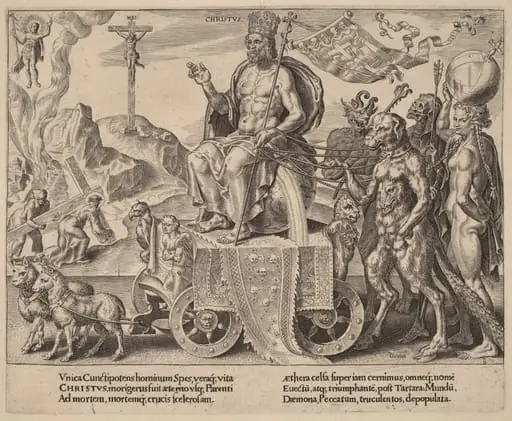
- The Triumph of Saul and David
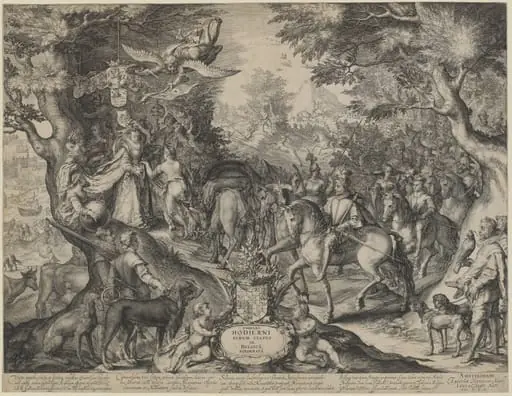 Allegory of Flourishing State of the United Provinces
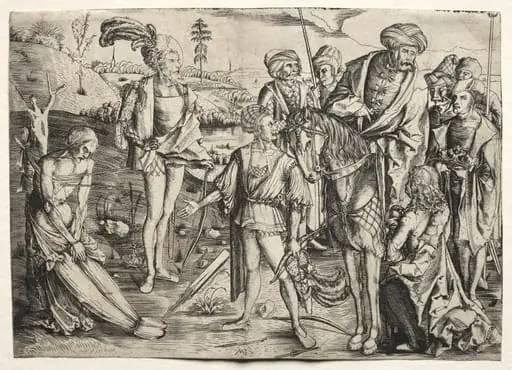 The Story of the Dead King and his Three Sons
 David Armed before Saul
 The Triumph of the Unicorn
 David's Brother Relating to Him Goliath's Challenge
 Conversion of Saul
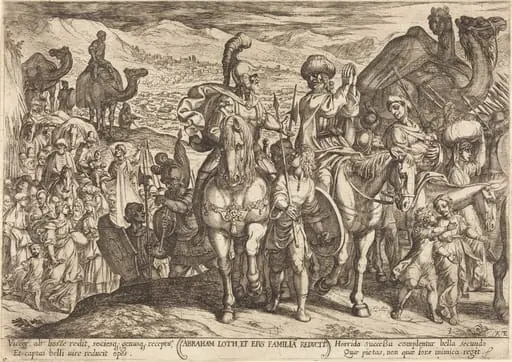 Lot and His Family recalled home by Abraham
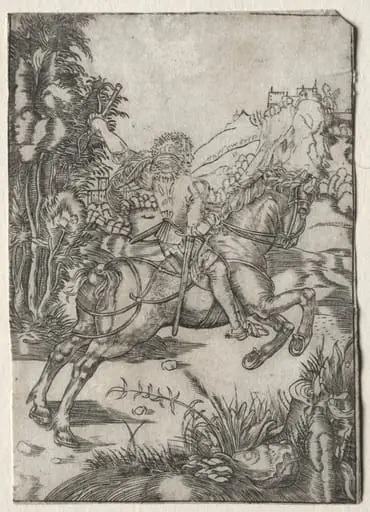 The Little Courier
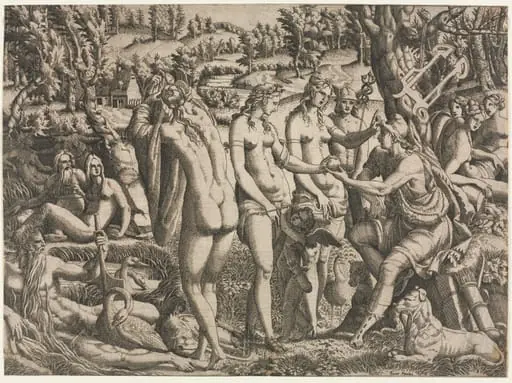 The Judgment of Paris
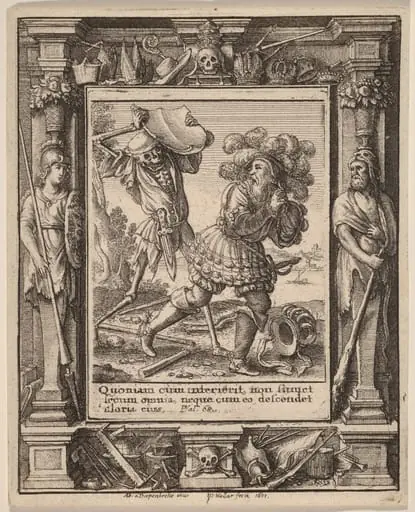 Count
Count