Artwork
Still Life with a Hanging Bunch of Grapes, Two Medlars, and a Butterfly
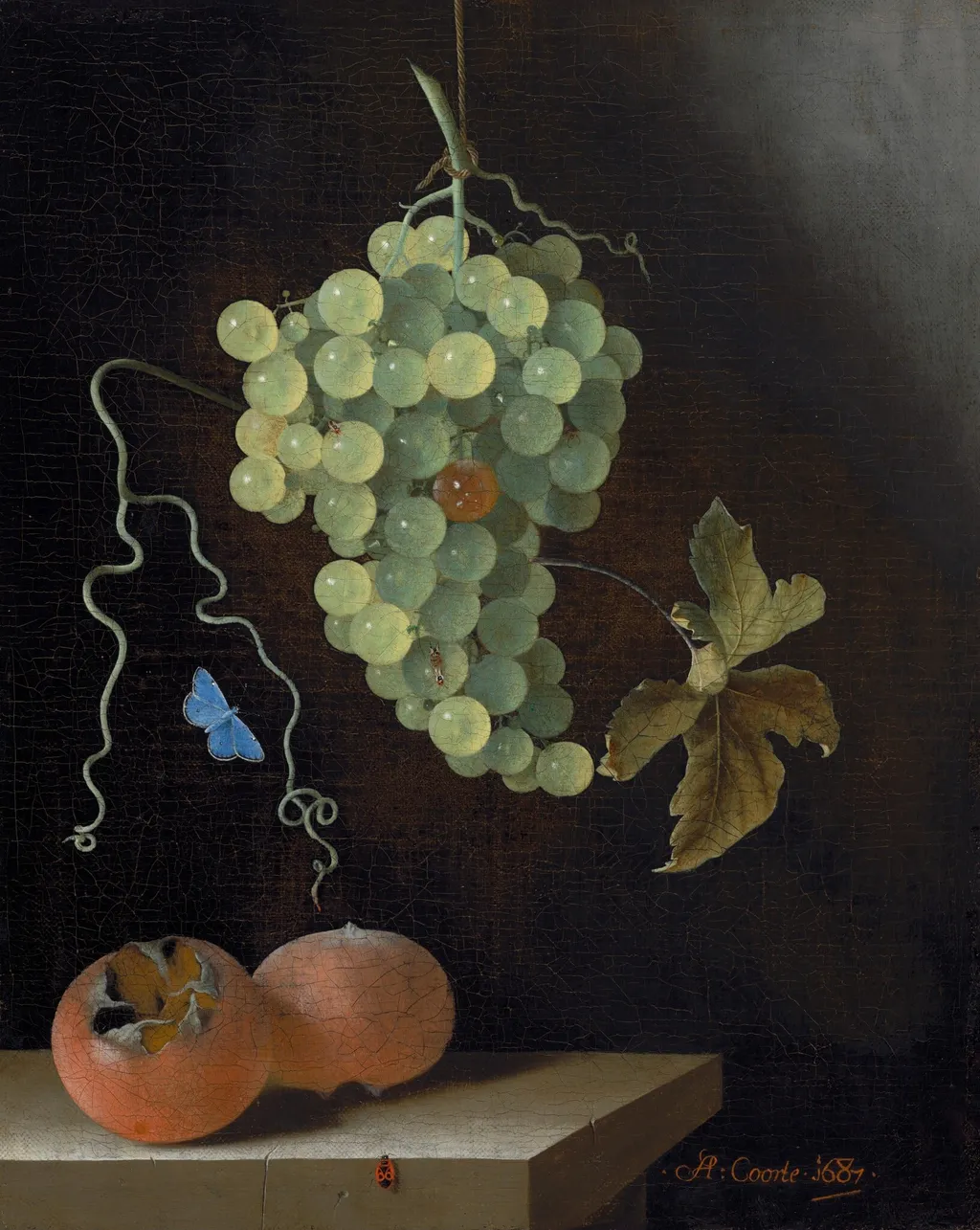
Still Life with a Hanging Bunch of Grapes, Two Medlars, and a Butterfly is an oil painting by the Baroque artist Adriaen Coorte. It dates from 1687 and is held in the collection of the National Gallery of Art.
- Inscription
- Inscribed:lower right, date underlined: ·A:Coorte·i687·
About this work
A hanging bunch of grapes, two medlars, and a butterfly, set out small and plain. Adriaen Coorte gave close attention to the texture of the fruit and the butterfly's wings, finding weight in modest, everyday things. Oil on canvas, 1687.
Technique & Style
The artist's handling of the medium emphasizes the tactile textures of the fruit skins and the delicate translucency of the insect's wings.
Executed in 1687, this still life is an oil painting on canvas measuring 38.1 by 30.5 centimeters. The work features a minimalist composition characteristic of Adriaen Coorte's style, isolating a hanging bunch of grapes, two medlars, and a butterfly against a dark, undefined background. The artist's handling of the medium emphasizes the tactile textures of the fruit skins and the delicate translucency of the insect's wings.
The formal arrangement relies on a vertical orientation to display the suspended grapes, creating a stark contrast between the organic forms and the void surrounding them. While specific details regarding the current physical condition or technical underlayers are not provided in the available records, the medium and support remain consistent with late seventeenth-century Dutch practices.
History & Provenance
The painting is dated 1687 on its original support, placing its creation in the late seventeenth century. It was likely in the collection of Johann Anton André by 1838, when it appeared as lot 68 in the Offenbach catalogue describing a still life signed and dated 1687 by A.S. Coorte. By 1982 the work was with London dealer Irving Allen, who sold it that year to a private collection via Richard Green Gallery.
It remained in the London art market until its acquisition by the National Gallery of Art, Washington, D.C., in October 2020.
The painting is held by the National Gallery of Art, Washington, D.C., accessioned as 2020.1.1. It was acquired in October 2020 from Richard Green Gallery, London, which had purchased it from a private collection in 1982, previously belonging to Irving Allen (London, by 1982). Earlier, it was likely in the collection of Johann Anton André in Offenbach-am-Main by 1838, documented in André’s 1838 catalogue as no. 68.
Legacy
The painting entered the National Gallery of Art collection in 2020 after passing through the Richard Green Gallery and a private London collection, underscoring its recognized status in modern scholarship. Its provenance, documented from Johann Anton André in 1838 to a 1982 London market appearance, reflects a continuous scholarly interest that has sustained its reputation as a representative example of Coorte’s still‑life oeuvre. The work’s inclusion in major catalogues and its display alongside other Coorte pieces have reinforced its legacy as a benchmark for Dutch 17th‑century fruit painting, influencing subsequent studies of the genre.
Overview
Adriaen Coorte's Still Life with a Hanging Bunch of Grapes, Two Medlars, and a Butterfly, painted in 1687, exemplifies the artist's distinctive approach to the genre. This oil on canvas work presents a modest arrangement of natural elements, characteristic of Coorte's preference for small-scale, intimate compositions. Active during the Dutch Golden Age, Coorte cultivated a focused style that diverged from the more elaborate still lifes prevalent in his era, emphasizing quiet observation.
Subject & Meaning
The painting features a simple grouping: a bunch of grapes suspended, two medlars, and a butterfly. Coorte's selection of these everyday subjects underscores his interest in the unadorned beauty of nature. The composition's restraint directs the viewer's attention to the individual forms and textures, elevating these humble elements through meticulous depiction rather than grand narrative or symbolic complexity.
Context
Active from the 1680s into the early 1700s, Adriaen Coorte pursued a still-life style that recalled earlier artistic trends rather than conforming to the opulent arrangements common in the Dutch Golden Age. His surviving works, though limited, consistently demonstrate a preference for isolated objects and a quiet intensity. This focused, almost minimalist approach distinguished Coorte within the broader, often more lavish, tradition of Dutch still-life painting.
Own this work as a print
Artist & collection
Artist
Adriaen Coorte (ca. 1665 – after 1707) was a Dutch Golden Age painter of still lifes, who signed works between 1683 and 1707. He painted small and unpretentious still lifes in a style more typical of the first half of…

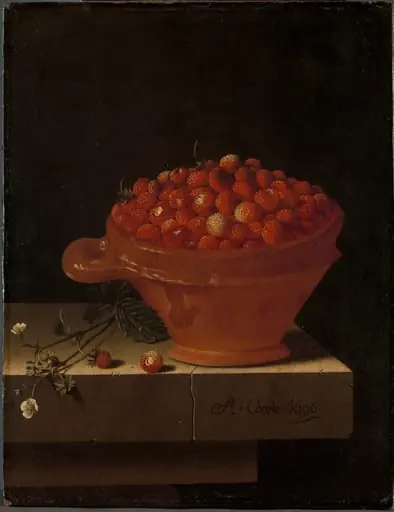
- Still Life with Grapes and other Fruit
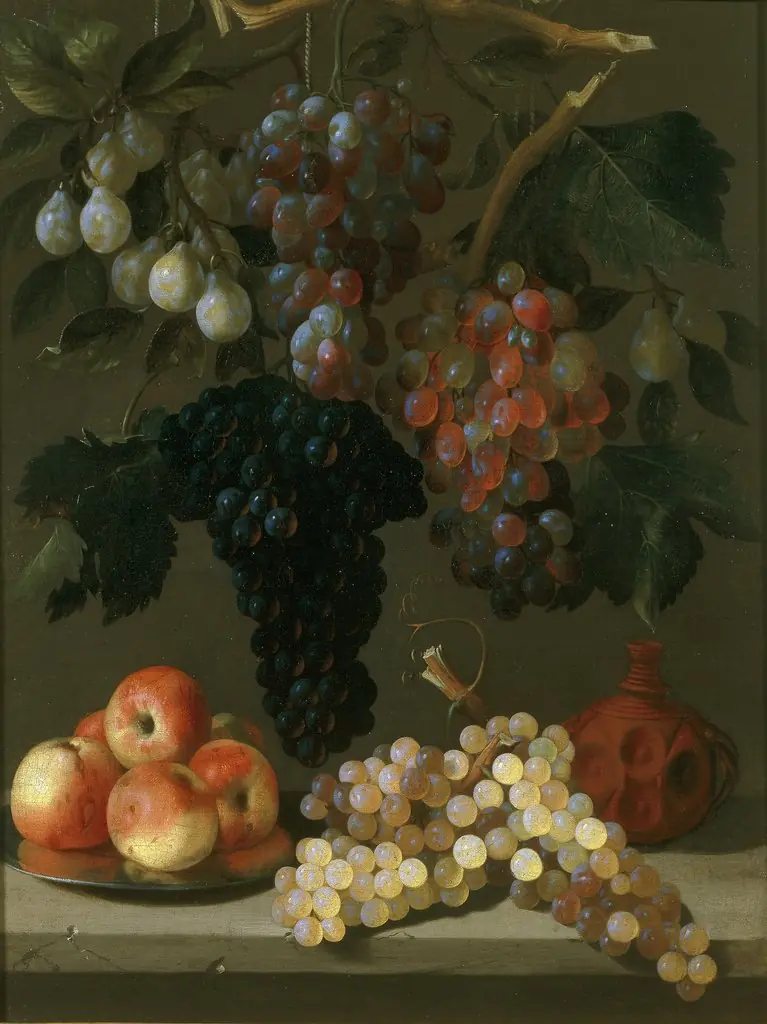 Still Life with Grapes, Apples and Plums
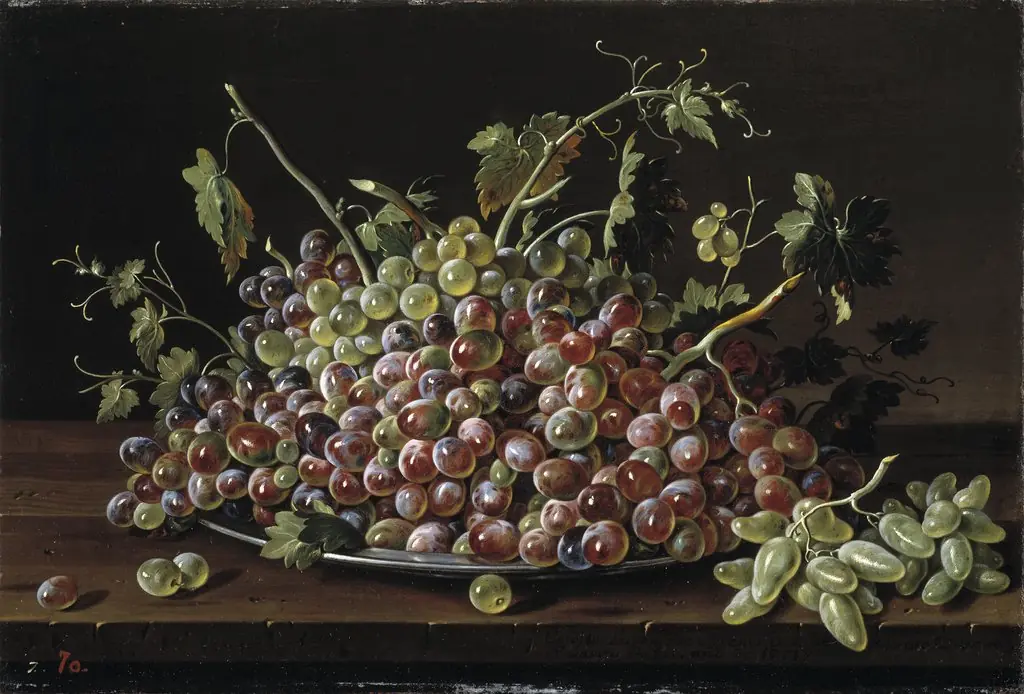 Still Life with Grapes
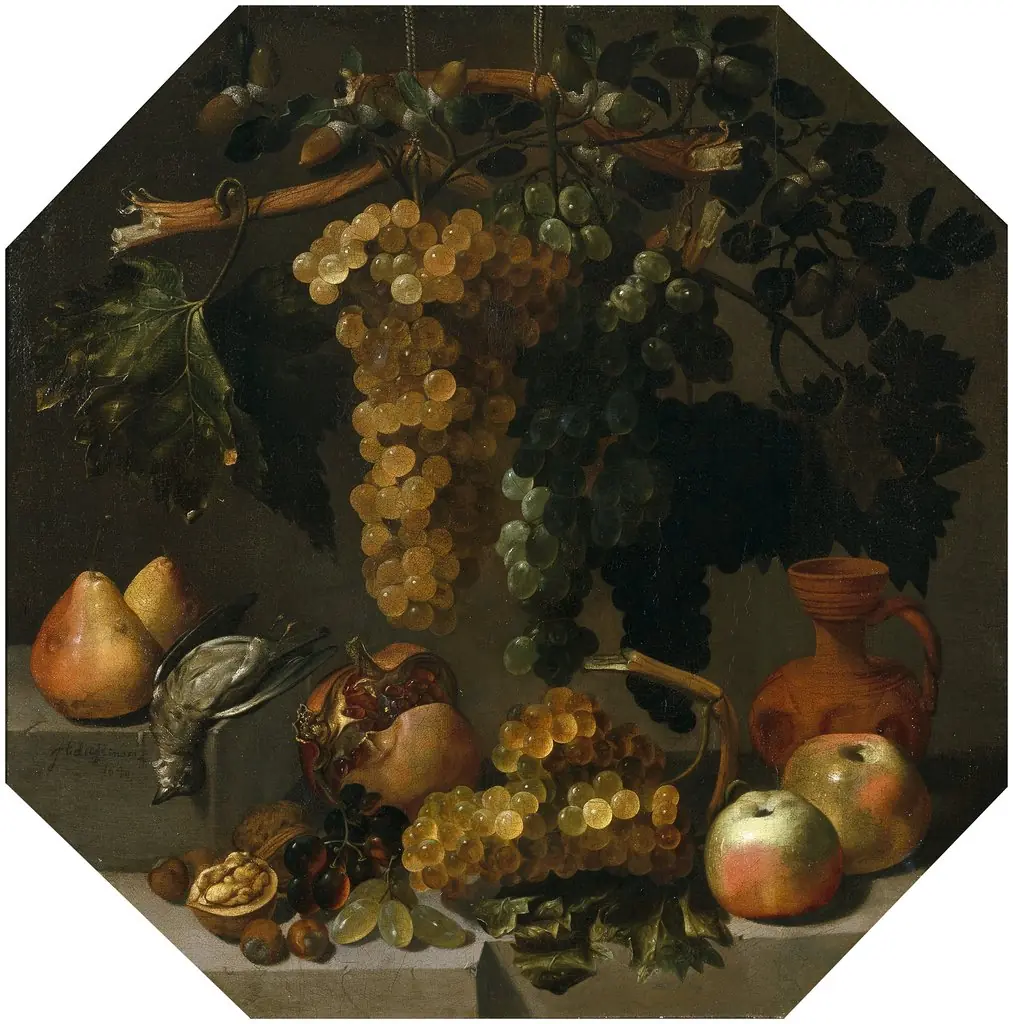 Octagonal Still Life with Bunches of Grapes
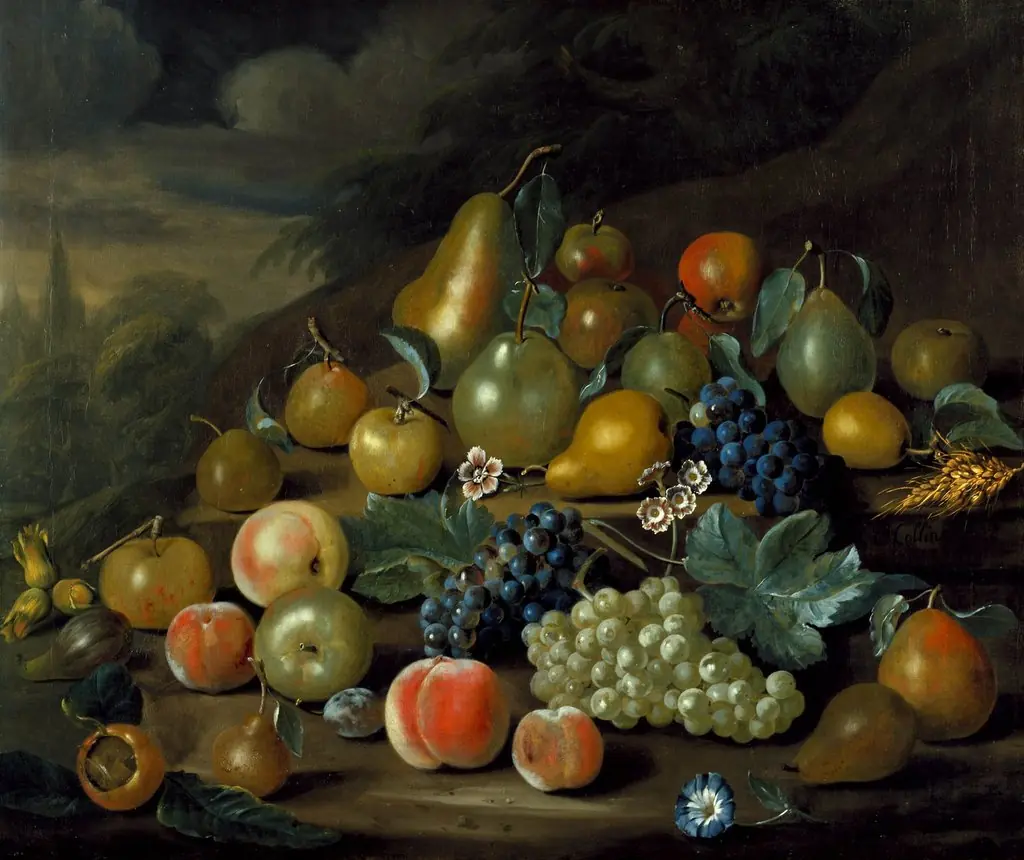 A Still Life of Pears, Peaches and Grapes
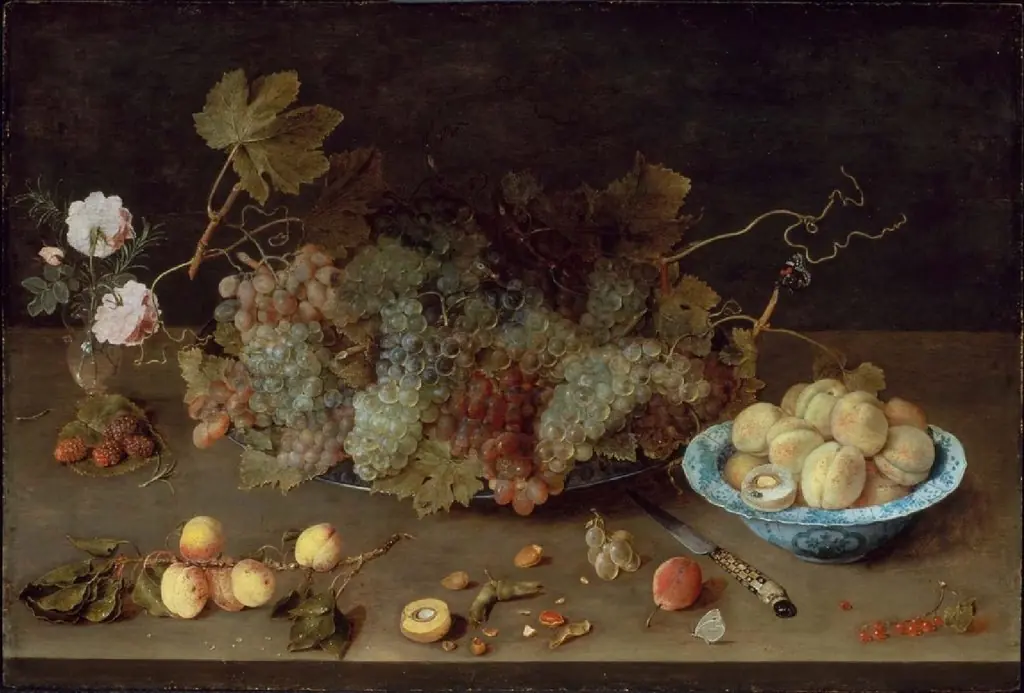 Still Life with Grapes on a Platter
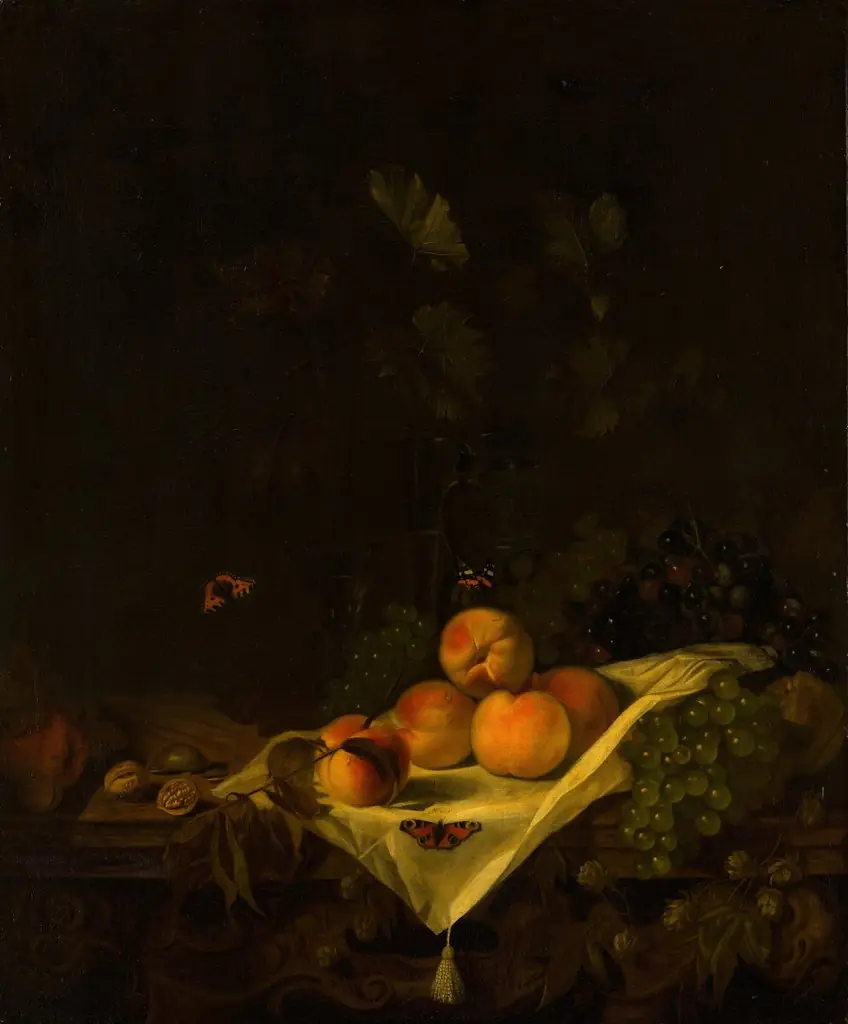 Still life with peaches and grapes
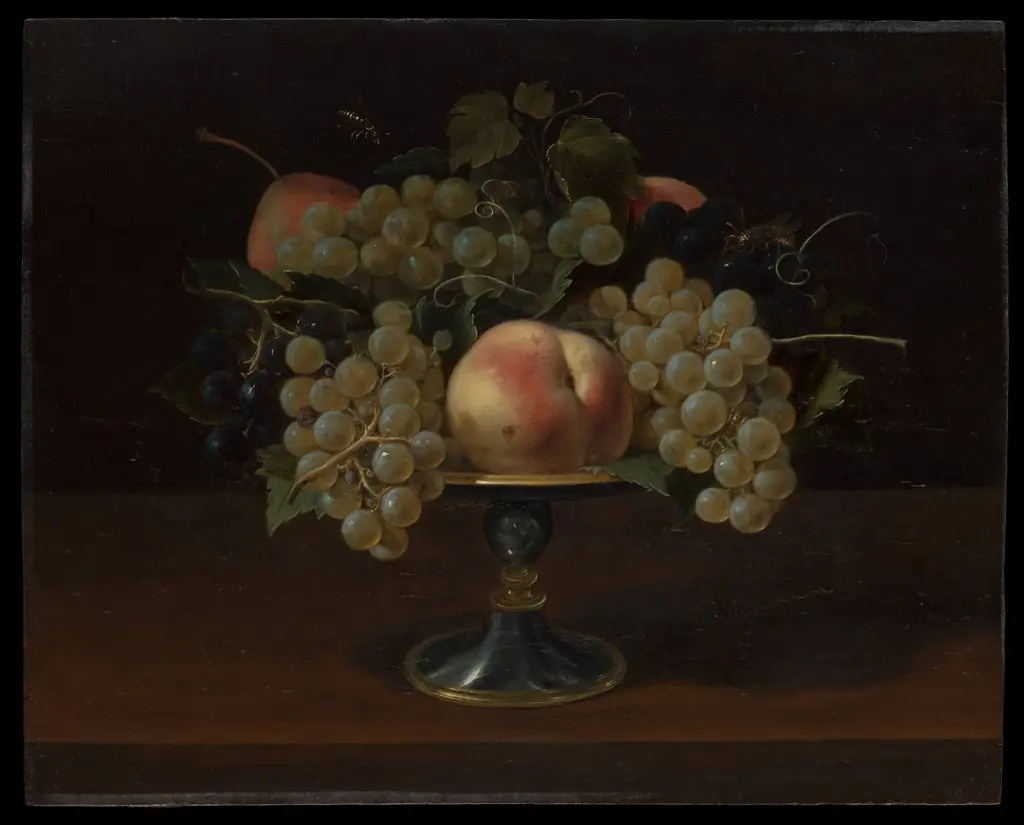 Still Life of Grapes and Peaches
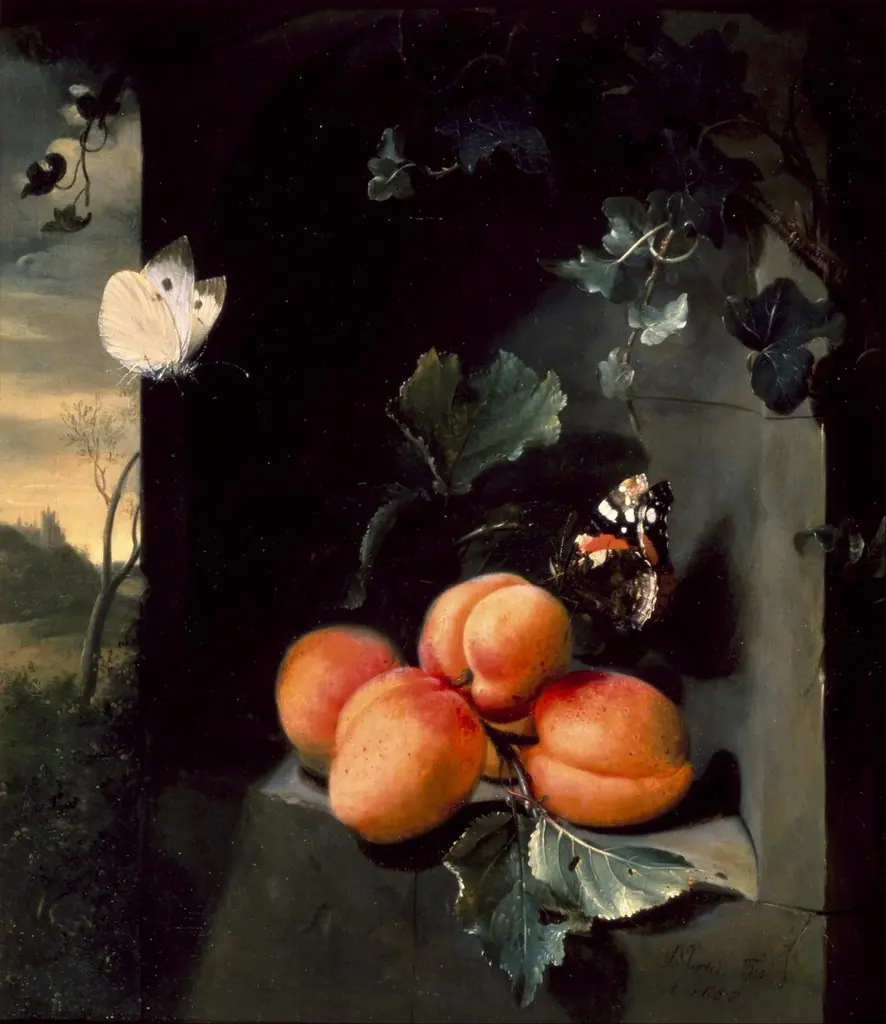 Still Life with Apricots and Butterflies