Artwork
In der hängematte II (In the Hammock II)
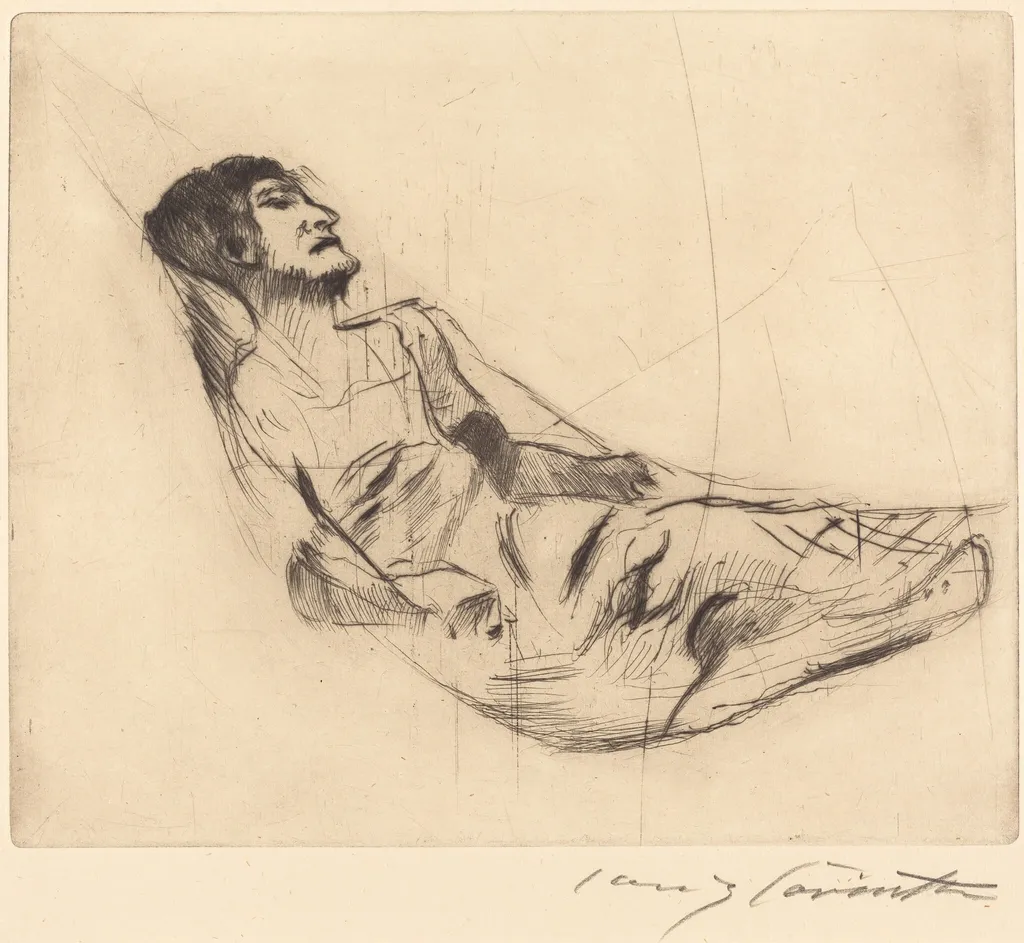
In der hängematte II (In the Hammock II) is an ink print by Lovis Corinth. It dates from 1920 and is held in the collection of the National Gallery of Art.
- Inscription
- Inscribed:lower right in graphite: Lovis Corinth; lower left verso in graphite by unknown hand: Schw. 450
About this work
Overview
It belongs to a series of intimate figural works produced in the final decade of his career, following a stroke in 1911 that reshaped his artistic approach.
Created in 1920, In der hängematte II is a drypoint print by Lovis Corinth on laid paper. It belongs to a series of intimate figural works produced in the final decade of his career, following a stroke in 1911 that reshaped his artistic approach. The print exemplifies his shift from naturalistic detail toward a more visceral, emotionally charged style, blending elements of impressionism and expressionism through direct, tactile mark-making.
Subject & Meaning
The print depicts a reclining nude figure in a hammock, limbs loosely extended, head tilted back, eyes closed. The posture suggests rest, vulnerability, and quiet introspection. Rather than idealizing the body, Corinth presents it with unflinching physicality, flesh rendered through dense, gestural lines that emphasize weight and relaxation.
The absence of narrative context invites contemplation of solitude and bodily presence, common themes in his later work.
Technique & Style
Corinth employed drypoint to create rich, velvety black lines that bite deeply into the paper, producing a tactile intensity. The contours of the body and hammock are defined by bold, overlapping strokes, with minimal background detail to focus attention on form. Subtle tonal gradations suggest light and shadow without traditional chiaroscuro, relying instead on the density of ink and the texture of the laid paper to convey volume and atmosphere.
History & Provenance
Corinth produced this print during his tenure as president of the Berlin Secession, a position he assumed after Max Liebermann. Though he remained active in Berlin’s art circles, his post-stroke work increasingly turned inward, focusing on personal subjects like family and self-portraiture. In der hängematte II was likely made in his studio in Zandvoort or Berlin, where he spent his final years refining a more expressive, less polished aesthetic.
Context
In the aftermath of World War I, German art grappled with trauma, identity, and the body’s fragility. Corinth’s late prints, including this one, reflect a broader cultural turn toward psychological realism. Unlike the angular distortions of pure Expressionism, his work retains a grounded physicality, merging emotional resonance with observational truth.
His focus on private moments aligned with a wider interest in domestic intimacy among artists of the era.
Legacy
Corinth’s drypoints from this period are now recognized for their raw immediacy and technical innovation. In der hängematte II exemplifies how he transformed printmaking into a medium of personal expression, moving beyond reproduction toward emotional authenticity. His influence on later generations of German artists lies in his willingness to confront the body’s impermanence with unadorned honesty, bridging late 19th-century realism and 20th-century modernism.
Own this work as a print
Artist & collection
Artist
Lovis Corinth (21 July 1858 – 17 July 1925) was a German artist and writer whose mature work as a painter and printmaker realized a synthesis of impressionism and expressionism.

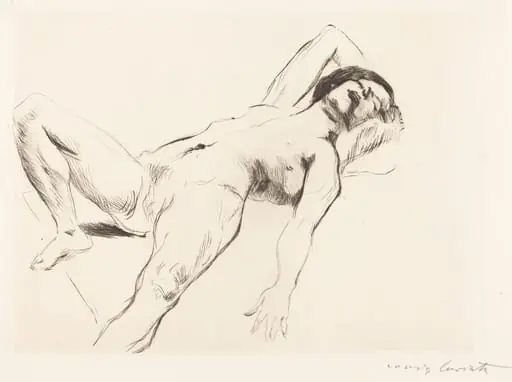 Liegender Weiblicher Akt I (Reclining Female Nude I)
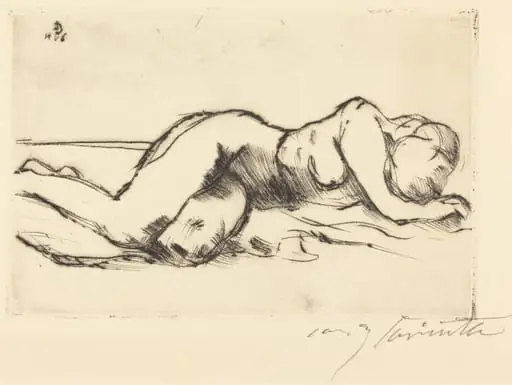 Weiblicher Akt (Female Nude)
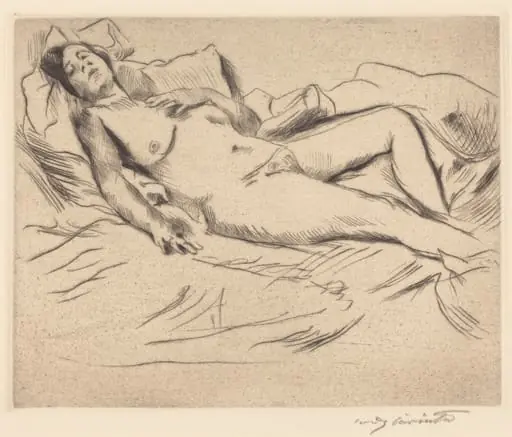 Schlafende (Sleeping Woman)
 Man Resting
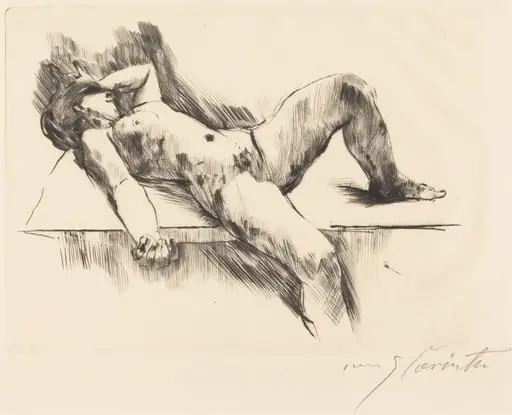 Liegender Weiblicher Akt III (Reclining Female Nude III )
 Dreaming Girl
 Liegender Weiblicher Akt.—Studie zu "Joseph und Potiphar" (Reclining Female Nude—Study for "Joseph and Potiphar's Wife")
 Reclined Woman Sleeping (Femme couchee sommeillant)
 Susanna im Bade (Susanna in the Bath)
 A Child on a Couch, No.2
- Liegender Weiblicher Akt II (Reclining Female Nude II )
 Ruhende Dreiviertel Akt (Reclining Female Nude)