Artwork
Liegender Weiblicher Akt I (Reclining Female Nude I)
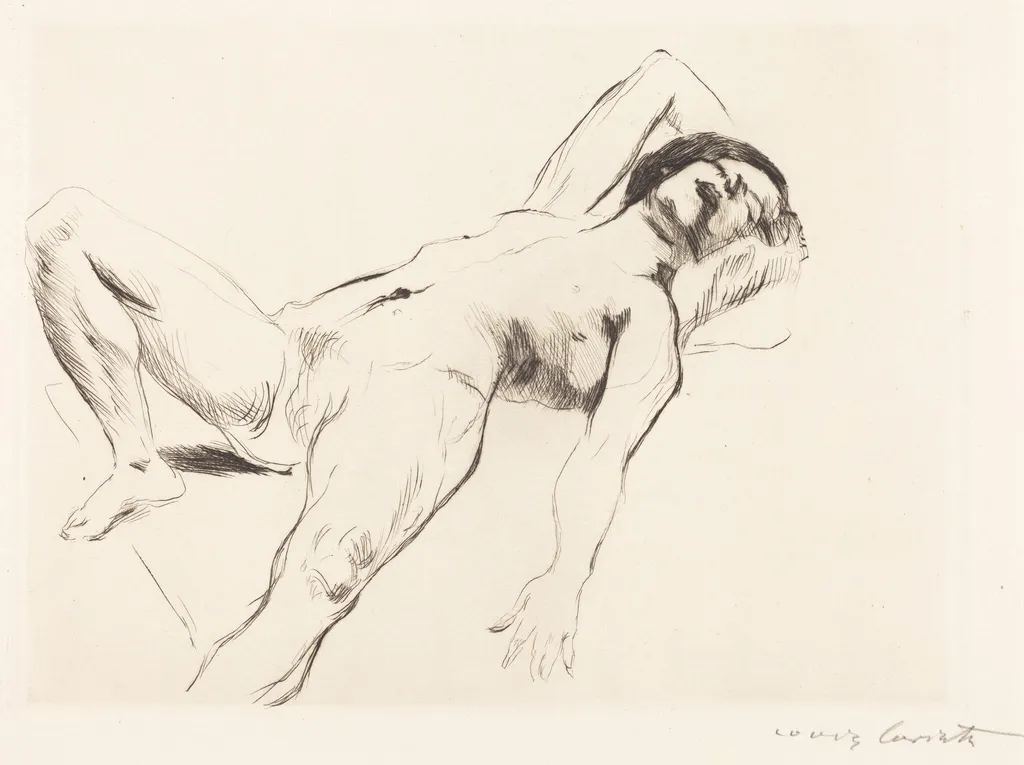
Liegender Weiblicher Akt I (Reclining Female Nude I) is an ink print by Lovis Corinth. It dates from 1912 and is held in the collection of the National Gallery of Art.
- Inscription
- Inscribed:lower right in graphite: Lovis Corinth; lower left verso in graphite by unknown hand: Schw. 89
About this work
Overview
Lovis Corinth’s 1912 drypoint print, Liegender Weiblicher Akt I, presents a reclining female nude on wove paper. Executed in black, the work exemplifies Corinth’s printmaking practice during a period of stylistic transition, shortly after his 1911 stroke.
Subject & Meaning
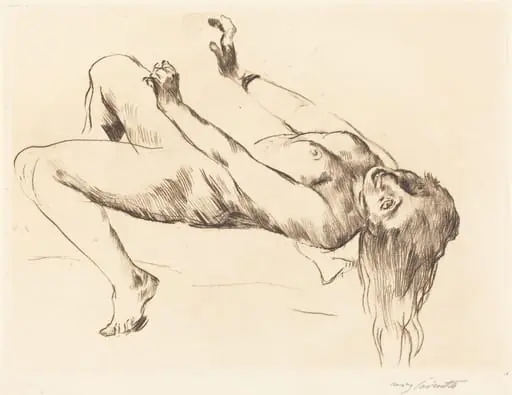
The image shows a woman lying on her back, head tipped upward, arms lifted above her head, and knees drawn close to her torso. Her closed eyes and slight smile convey a tranquil, introspective mood, inviting quiet contemplation of the nude form.
Technique & Style
Created with the drypoint method, Corinth incised bold, expressive lines into the paper’s surface, producing a rich, tactile texture. The stark black lines emphasize the figure’s curves and contours, reflecting the artist’s shift toward a synthesis of impressionistic light and expressionist vigor.
History & Provenance
Corinth, trained in Paris and Munich, became a leading figure in the Berlin Secession. After a debilitating stroke in 1911, his work adopted a more emotive, color‑focused language; this print belongs to that late phase, though its specific ownership trail remains undocumented.
Context
The early 1910s marked a period of experimentation for German artists, with many exploring the nude as a vehicle for personal expression. Corinth’s print aligns with contemporary trends that merged naturalistic observation with heightened emotional content, situating the work within the broader currents of pre‑World War I modernism.
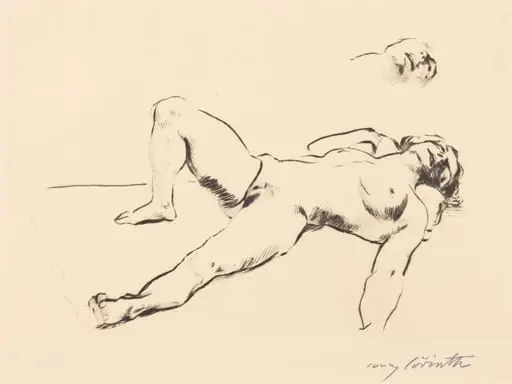
Own this work as a print
Artist & collection
Artist
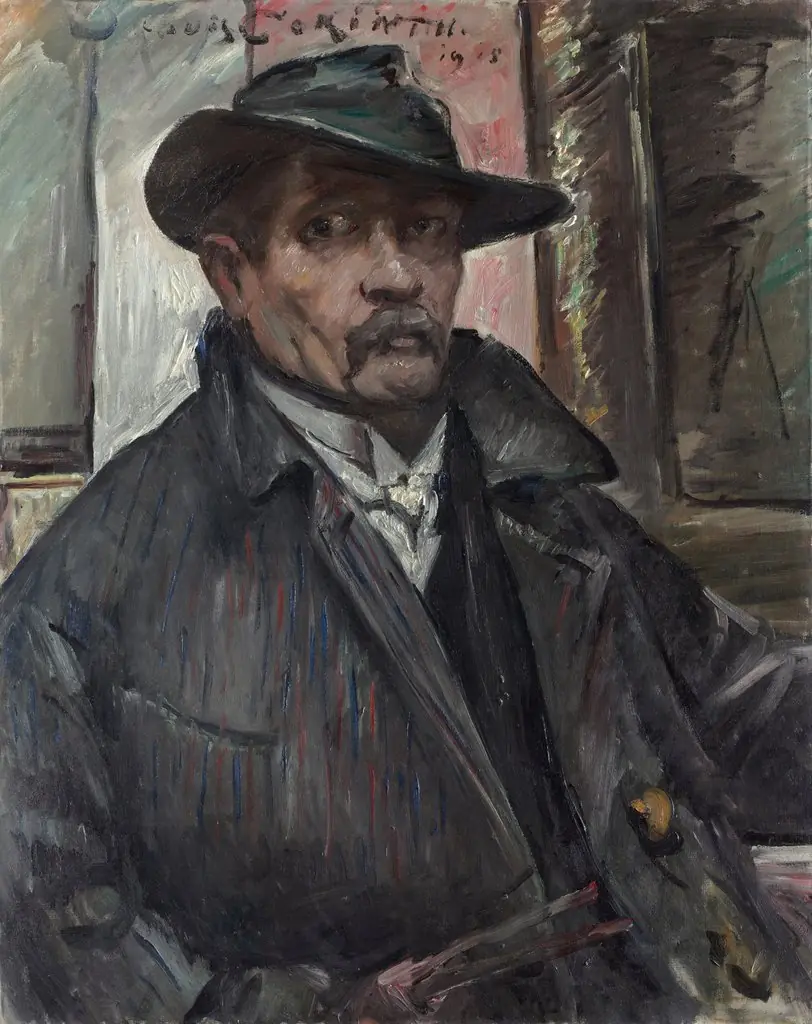
Lovis Corinth (21 July 1858 – 17 July 1925) was a German artist and writer whose mature work as a painter and printmaker realized a synthesis of impressionism and expressionism.

- Liegender Weiblicher Akt II (Reclining Female Nude II )
 Liegender Weiblicher Akt.—Studie zu "Joseph und Potiphar" (Reclining Female Nude—Study for "Joseph and Potiphar's Wife")
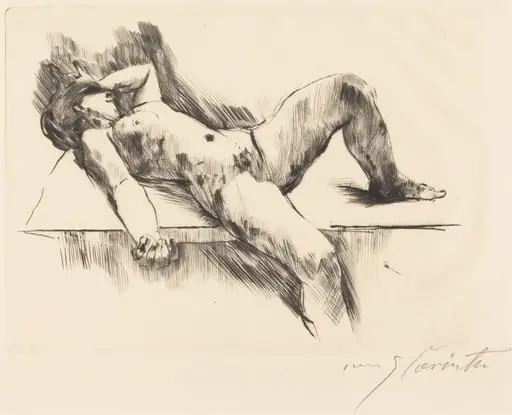 Liegender Weiblicher Akt III (Reclining Female Nude III )
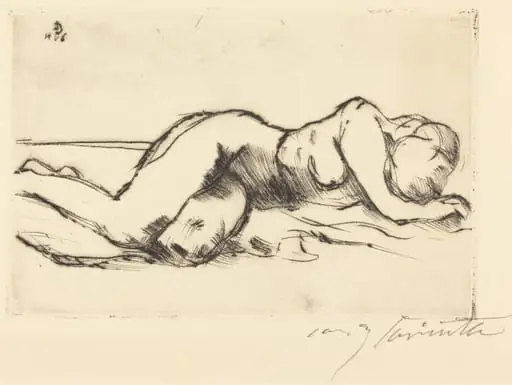 Weiblicher Akt (Female Nude)
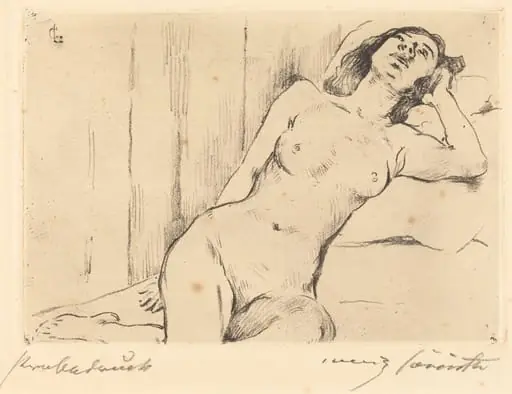 Ruhende Dreiviertel Akt (Reclining Female Nude)
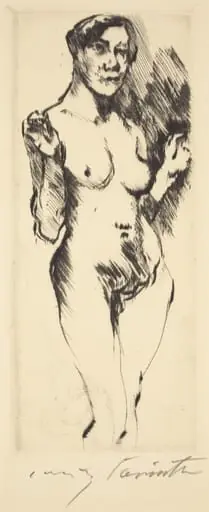 Stehende Weibliche akte (Standing Female Nude)
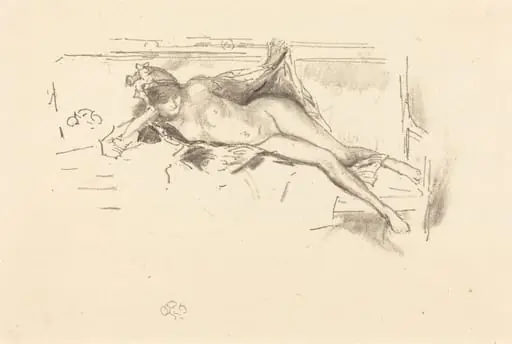 Nude Model, Reclining
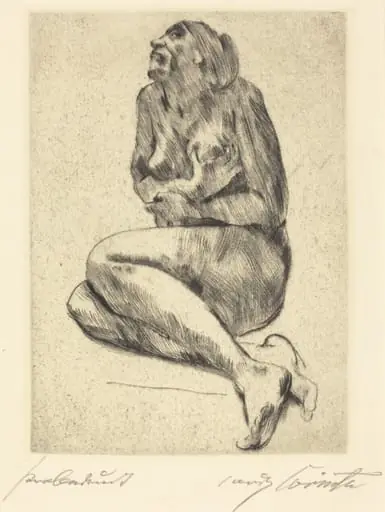 Kauernder weiblicher akt (Crouching Female Nude)
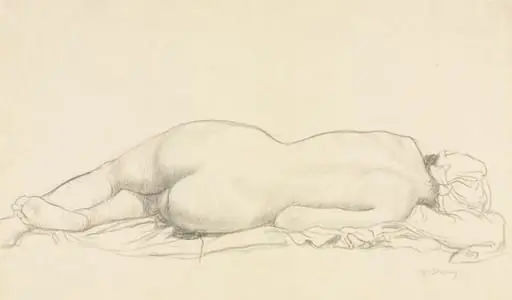 Reclining Nude