Artwork
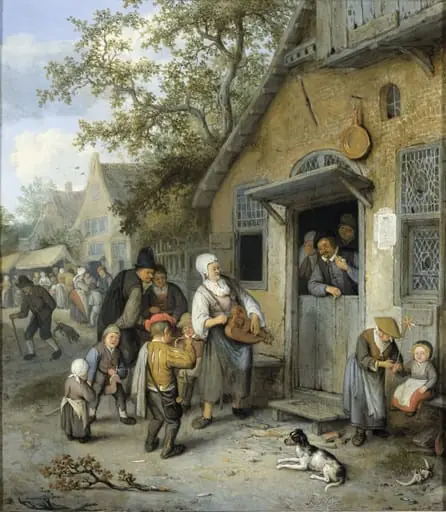
Village inn
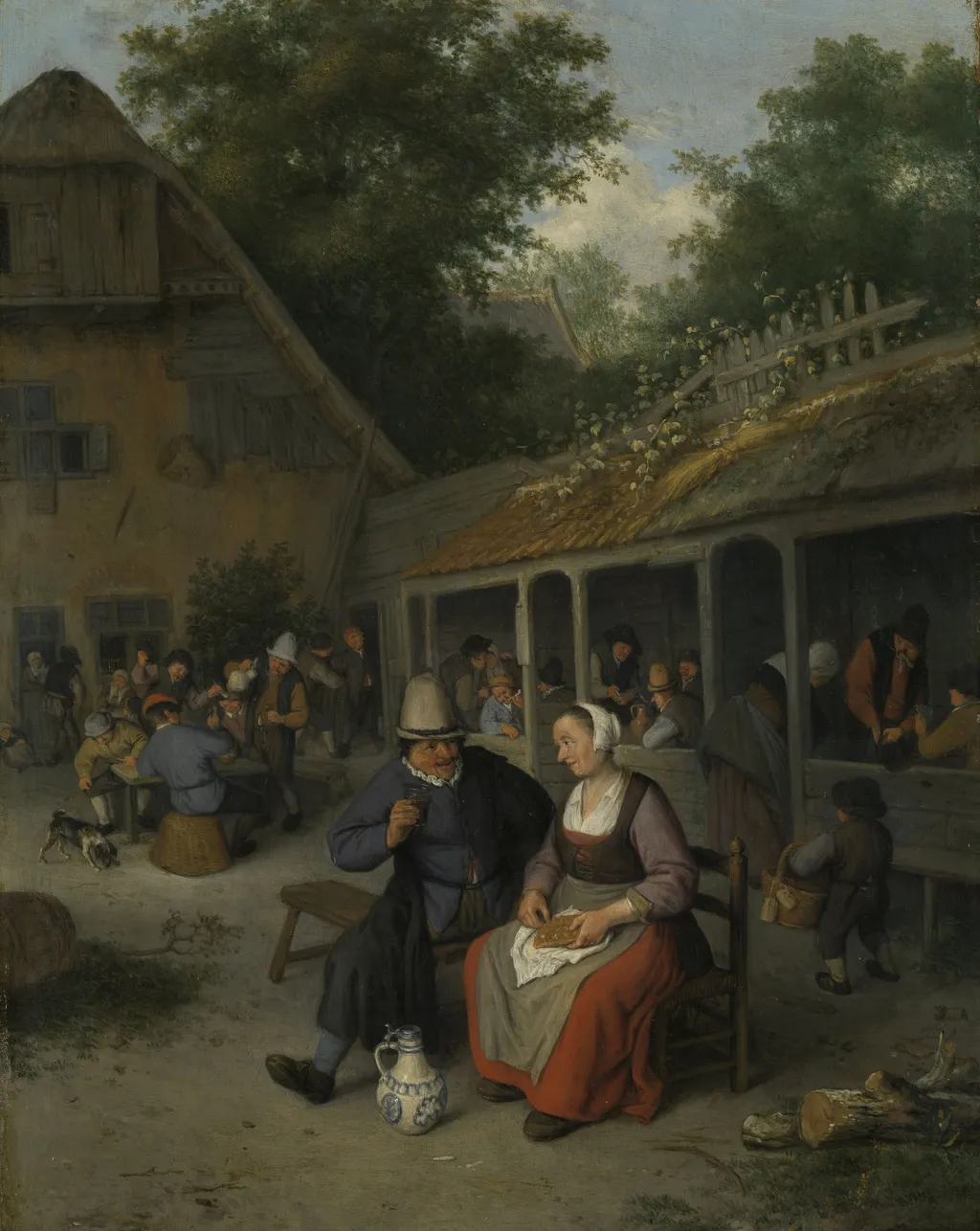
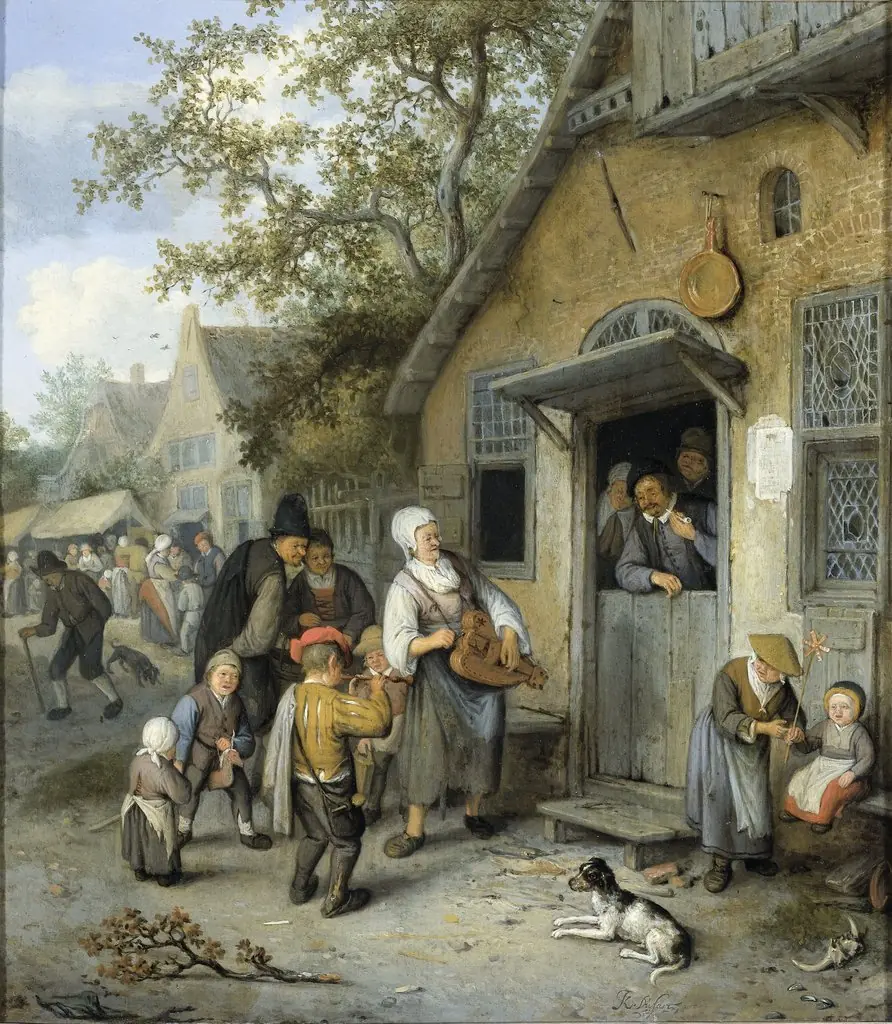
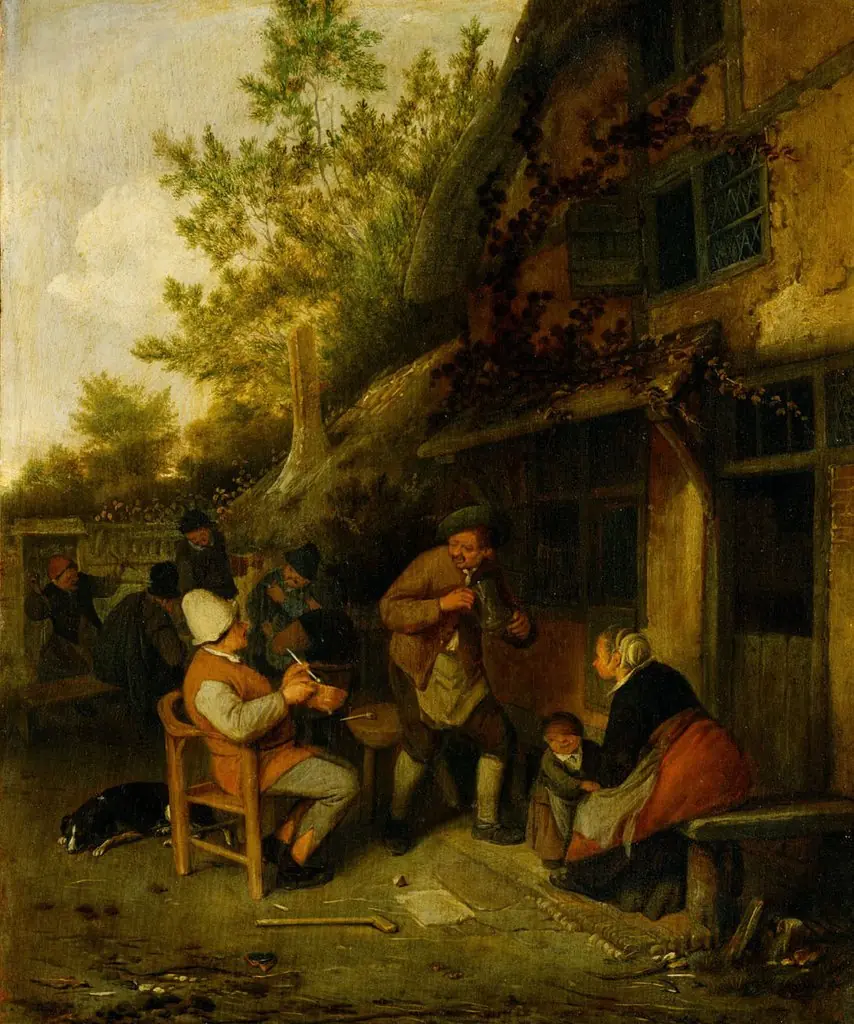
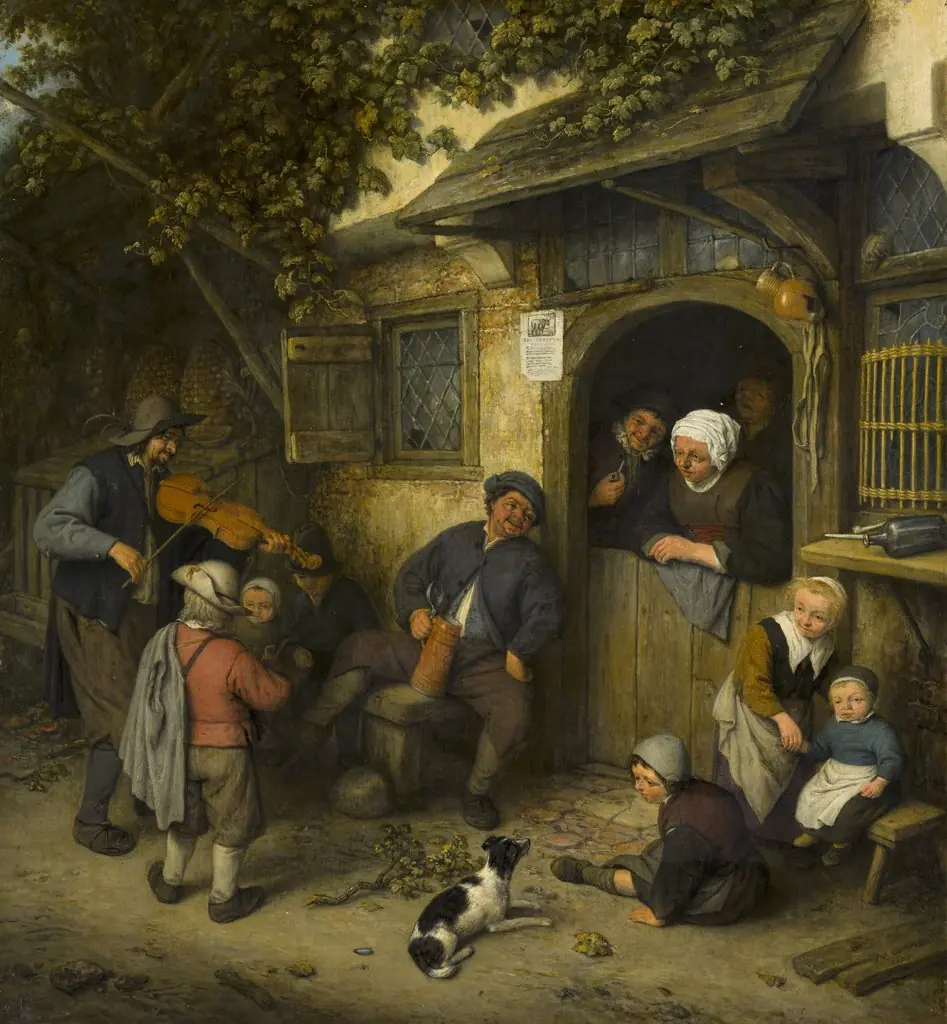
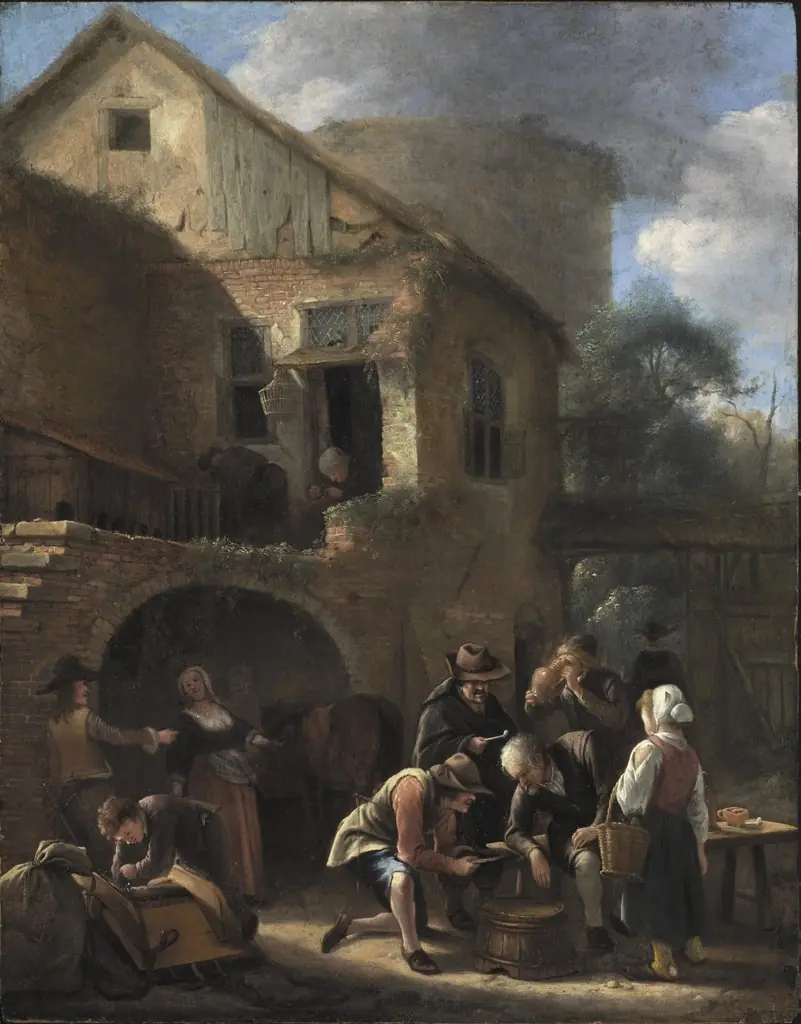
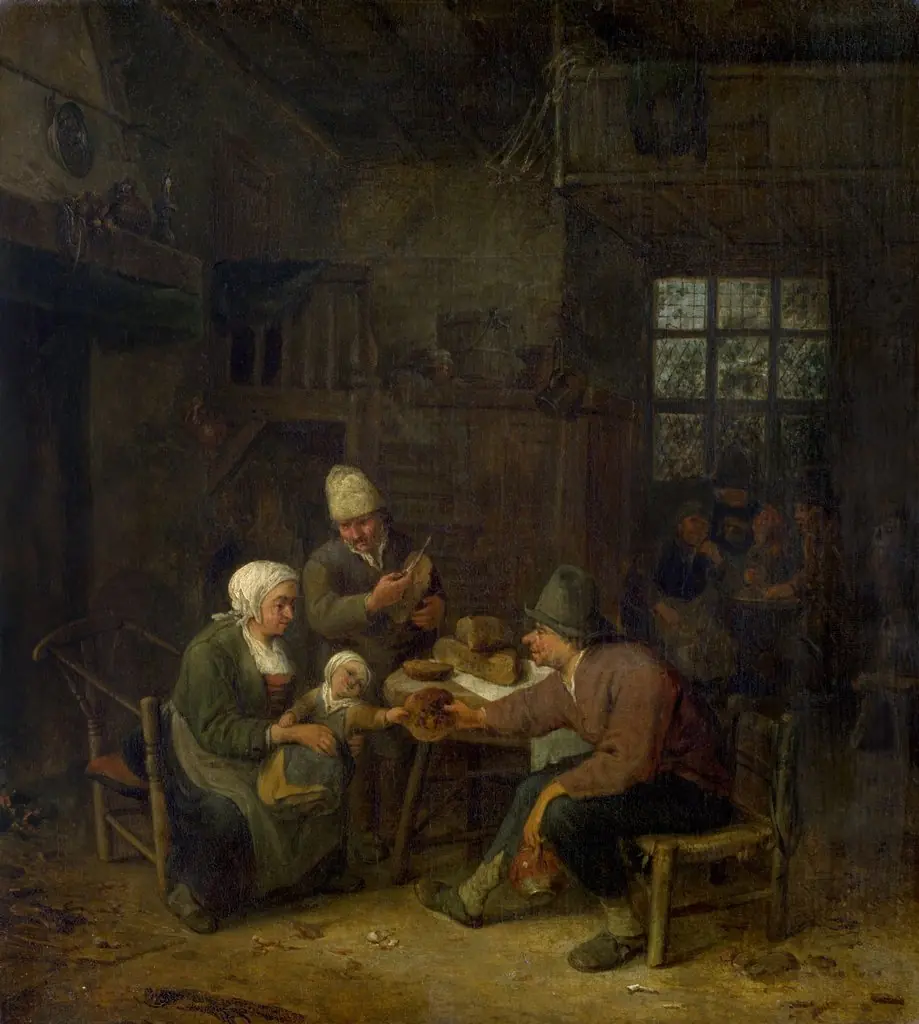
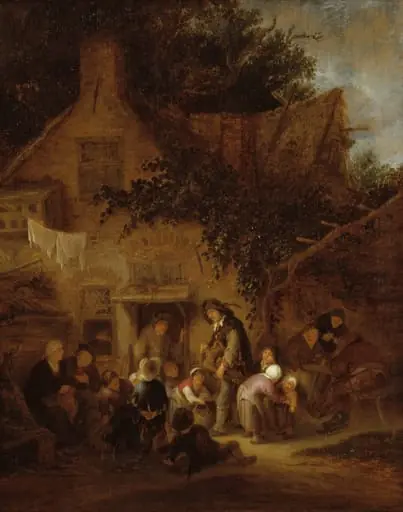
Village inn is an oil painting by the Dutch Golden Age artist Cornelis Dusart. It dates from 1696 and is held in the collection of the Rijksmuseum.
About this work
Technique & Style
Its handling emphasizes delicate modeling of light and shadow to articulate figures and interior space, consistent with Dutch genre conventions of the period.
The work is painted in oil on a wooden panel, executed in 1690 by Cornelis Dusart. Its handling emphasizes delicate modeling of light and shadow to articulate figures and interior space, consistent with Dutch genre conventions of the period. The composition’s modest dimensions (42 × 33 cm) frame a quiet tavern scene, where subdued tonalities and refined brushwork render textures from rough-hewn timber to polished metal vessels. The panel support suggests a durable, traditional structure typical of late seventeenth-century Dutch cabinet paintings.
History & Provenance
Cornelis Dusart created the oil-on-panel painting Village inn in 1690. The work measures 42 cm in height and 33 cm in width. It is currently held by the Rijksmuseum within the Kabinet van Heteren Gevers collection.
The collection was established by Adriaan Leonard van Heteren Gevers, who is recorded as the owner of this specific piece.
Cornelis Dusart's painting Village inn, created in 1690, is held in the collection of the Rijksmuseum in Amsterdam. The work resides specifically within the Kabinet van Heteren Gevers, a distinct holding named after its former owner, Adriaan Leonard van Heteren Gevers. While the source material does not list specific past exhibitions or accession numbers, the painting's provenance is anchored by its association with the van Heteren Gevers collection and its current institutional home at the Rijksmuseum.
Legacy
The painting Village inn by Cornelis Dusart, created in 1690, continues to be studied within the context of Dutch Golden Age genre scenes for its detailed depiction of rural domestic life. Its presence in the Rijksmuseum's Kabinet van Heteren Gevers collection has ensured ongoing scholarly and public engagement with Dusart's body of work, particularly in exhibitions examining genre painting in the late 17th century. The artwork's composition and technique have been referenced in academic analyses of tavern interiors as social microcosms in Dutch art.
Overview
Cornelis Dusart, a Haarlem‑born painter active in the late 17th century, executed the oil painting Village Inn in 1696. The work exemplifies Dutch genre painting of the Golden Age, portraying a lively interior scene of a rural tavern. It is part of the Rijksmuseum’s permanent collection.
Subject & Meaning
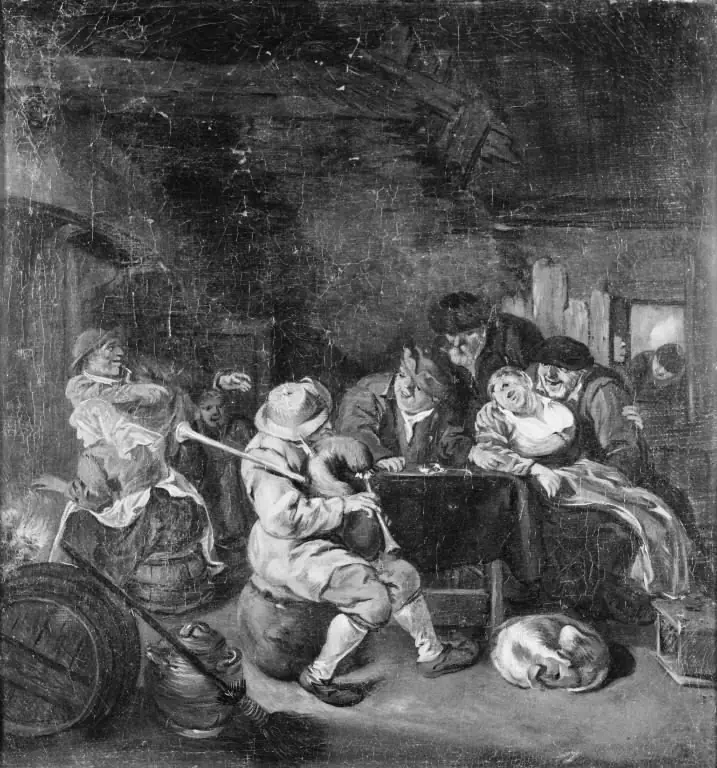
The canvas captures a bustling inn where villagers gather around a low table and a counter. An elderly couple occupies the foreground, one smoking a pipe, the other holding bread, while other patrons converse, stand, or lean on the furnishings. A dog rests near the left wall, adding a domestic touch to the communal atmosphere.
Context
The painting belongs to a broader Dutch tradition that favored scenes of everyday activity, especially rural and tavern settings. Such works reflected contemporary interest in moralizing narratives and the observation of common folk, aligning with the market‑driven art culture of the Dutch Golden Age.
Own this work as a print
Artist & collection
Artist
Cornelis Dusart (April 24, 1660 – October 1, 1704) was a Dutch genre painter, drawer (artists), and printmaker.