Artwork
Tulcea veche
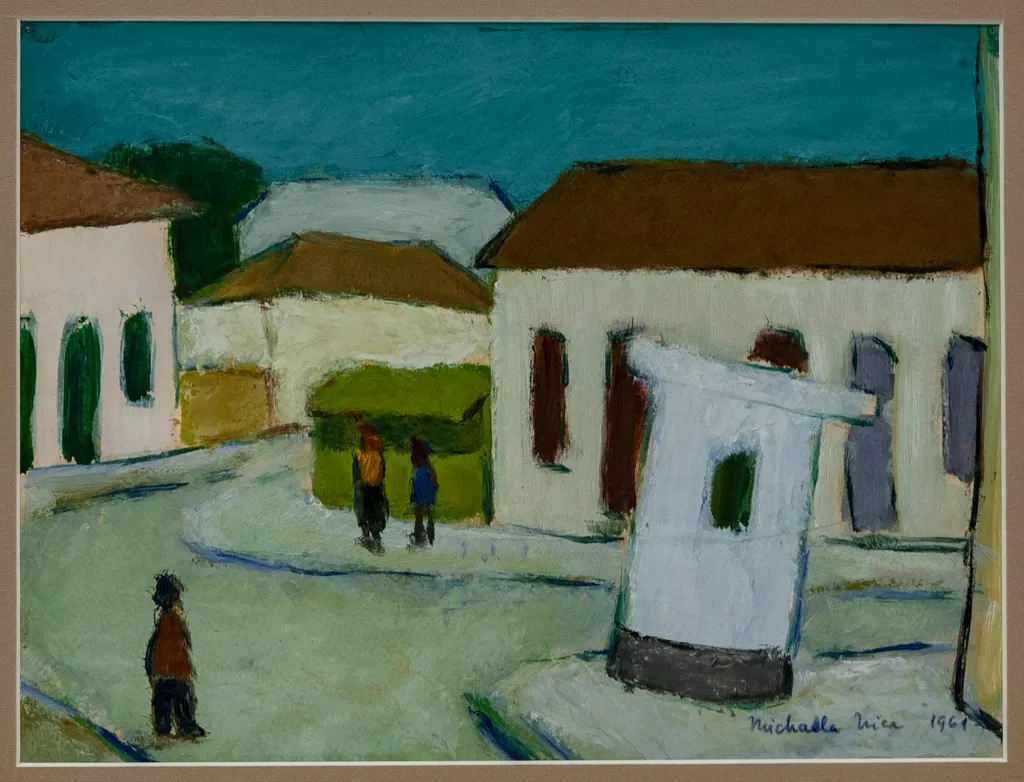
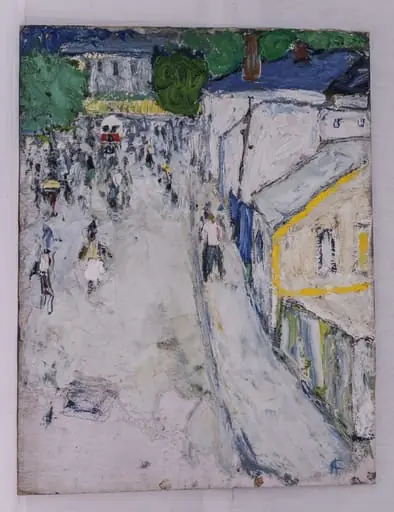
Tulcea veche is an unspecified painting by Crăciun Nica Mihaela. It dates from 1961 and is held in the collection of the Gavrila Simion Eco-Museum Research Institute Tulcea.
About this work
Overview
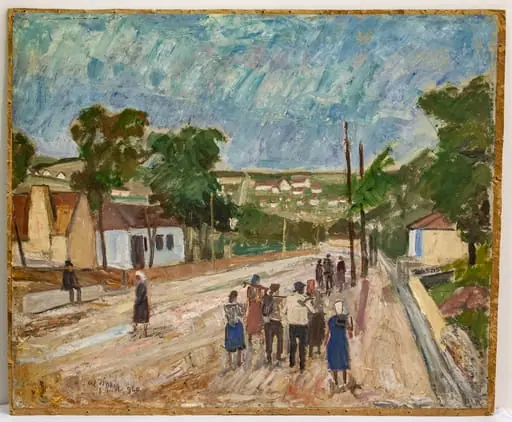
Its composition centers on a modest architectural setting with minimal human presence, conveying a sense of stillness and everyday life.
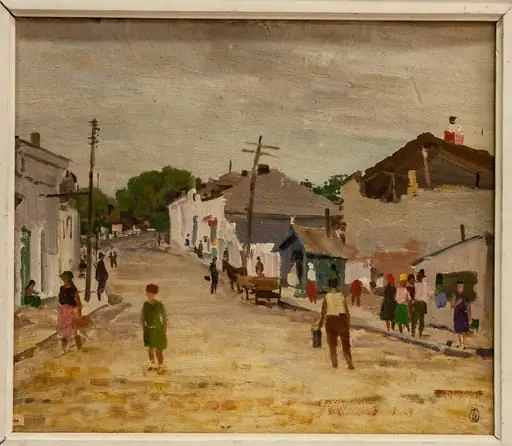
Created in 1961 by Crăciun Nica Mihaela, Tulcea veche is a painted depiction of a quiet urban street in Tulcea, Romania. The work is part of the collection at the Museum of Ethnography. Its composition centers on a modest architectural setting with minimal human presence, conveying a sense of stillness and everyday life. The painting’s physical texture and restrained palette distinguish it from more idealized representations of the period.
Subject & Meaning
The scene portrays three figures moving or standing along a narrow street beneath a green awning. Two figures walk away from the viewer, suggesting movement through time or space, while a solitary figure in the foreground remains still, perhaps observing. The absence of narrative detail invites contemplation of solitude and routine. The setting reflects ordinary urban life in mid-20th century Romania, without romanticization or dramatic emphasis.
Technique & Style
The painting employs impasto, with thickly applied paint creating a tactile surface that emphasizes the solidity of the buildings. Brushstrokes are deliberate and visible, lending a rough, almost sculptural quality to the architecture. Colors are subdued, earthy browns, muted whites, and soft greens, contrasting with a vivid blue sky that dominates the upper third. This contrast enhances the grounded, earthbound feel of the scene.
History & Provenance
Tulcea veche was completed in 1961 and entered the collection of the Museum of Ethnography shortly thereafter. Its acquisition reflects institutional interest in documenting regional life during the early decades of communist Romania. The work has remained in the museum’s holdings since, with no record of public exhibition beyond institutional displays. Its preservation suggests recognition of its documentary and stylistic value.
Context
Painted during a period of state-directed cultural policy, the work avoids overt political messaging. Instead, it quietly records the physical environment of a Danube River port town, aligning with broader efforts to document vernacular architecture and daily life. Unlike official art promoting industrial progress, this piece focuses on quiet, unremarkable moments, offering a subtle counterpoint to dominant aesthetic norms.
Legacy
Tulcea veche remains a modest but significant example of Romanian regional painting from the 1960s. Its use of impasto and focus on everyday scenes distinguish it from both academic traditions and socialist realism. While not widely exhibited, it contributes to understanding how local artists navigated state expectations while preserving personal observation. The work endures as a quiet testament to ordinary life in a specific time and place.
Artist & collection
Artist
Crăciun Nica Mihaela painted scenes from daily life in Romania. In 1961 they made Tulcea veche, a painting of the old part of Tulcea on the Danube, and in 1981 Peisaj transilvan, a print of the Transylvanian…
Museum
Gavrila Simion Eco-Museum Research Institute Tulcea
Continue through works from the same source collection.