Movement
Socialist Realism
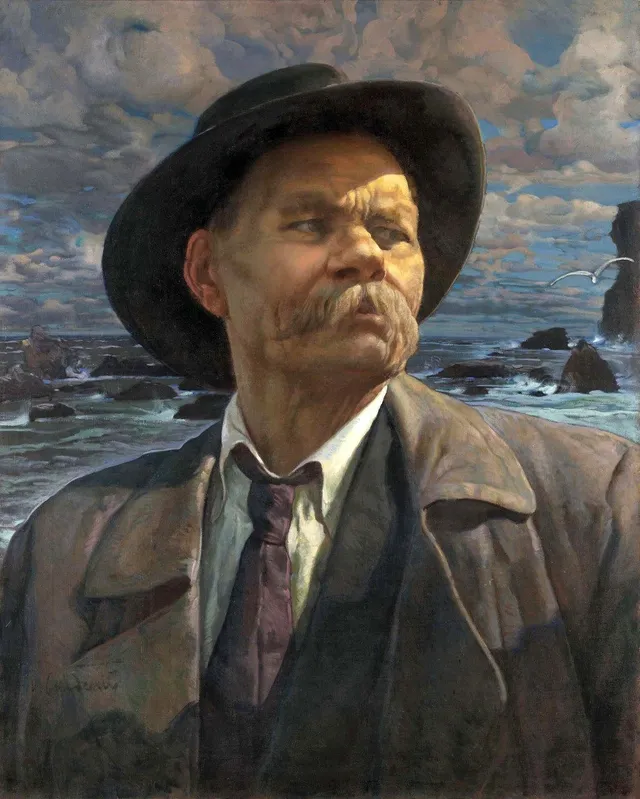
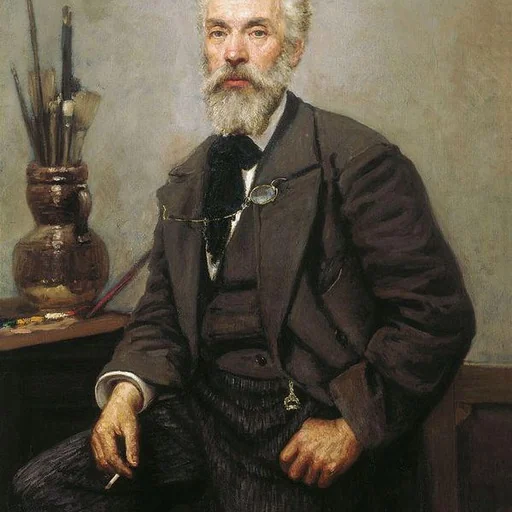
Socialist Realism is an art movement dating from 1932. The gallery holds 1 work in this movement, including works by Wojciech Weiss, Isaak Brodsky and Konstantin Savitsky. Browse Socialist Realism paintings, portraits, pictures and artworks from the world's public-domain museum collections.
Socialist Realism was the official artistic doctrine of the Soviet Union, imposed under Joseph Stalin in 1932 when a Central Committee decree dissolved the country's independent art groups and folded their members into state-run unions. It was formally codified at the First Congress of Soviet Writers in 1934, where the writer Maxim Gorky helped define its guiding principles—that art be proletarian, typical, realistic, and partisan (partiinost). Stalin famously called artists "engineers of human souls," and the style was conceived as a weapon of mass education. Rather than inventing a new visual language, it revived the legible academic naturalism of the nineteenth-century Peredvizhniki (the Wanderers), explicitly repudiating the experimental Russian avant-garde of Malevich, Tatlin, and the Constructivists, whose practitioners were marginalized or silenced.
Visually, Socialist Realism is defined by clear, accessible figuration and an unflagging optimism. Workers, collective farmers, soldiers, and leaders are rendered as robust, heroic, idealized types, set in scenes of labor, struggle, and triumph that narrate the building of communism. Compositions are monumental and didactic; the palette is bright and the brushwork polished. The slogan "national in form, socialist in content" allowed regional inflection while keeping the ideological message fixed.
Its canonical practitioners include Isaak Brodsky, whose Lenin in Smolny (1930) and warm portrait of Maxim Gorky—held in this collection—set the template for the leader cult; Aleksandr Gerasimov, the favored portraitist of Stalin; and Aleksandr Deineka, whose The Defence of Petrograd (1928) and The Defence of Sevastopol (1942) brought dynamic, mural-scale energy to the style. In sculpture, Vera Mukhina's stainless-steel Worker and Kolkhoz Woman, created for the 1937 Paris World's Fair, became its emblematic monument.
After 1945 the doctrine was exported across the Eastern Bloc and into Asia, shaping art in Poland, Romania, China, and North Korea, where Mao Zedong echoed Stalin's view of the artist's duty. Eastern European painters such as Romania's Corneliu Baba and Poland's Wojciech Weiss navigated its demands uneasily, often criticized as "formalist." The official style provoked its own antithesis in the Soviet Nonconformist art that emerged after Stalin's death, even as Socialist Realism remained the U.S.S.R.'s governing aesthetic until the late 1980s.
Key artists

Works
Frequently asked questions
What is Socialist Realism?
Socialist Realism is an art movement. The official art doctrine of the Soviet Union (and later China and other communist states), mandated from 1934.
Who are the key Socialist Realism artists?
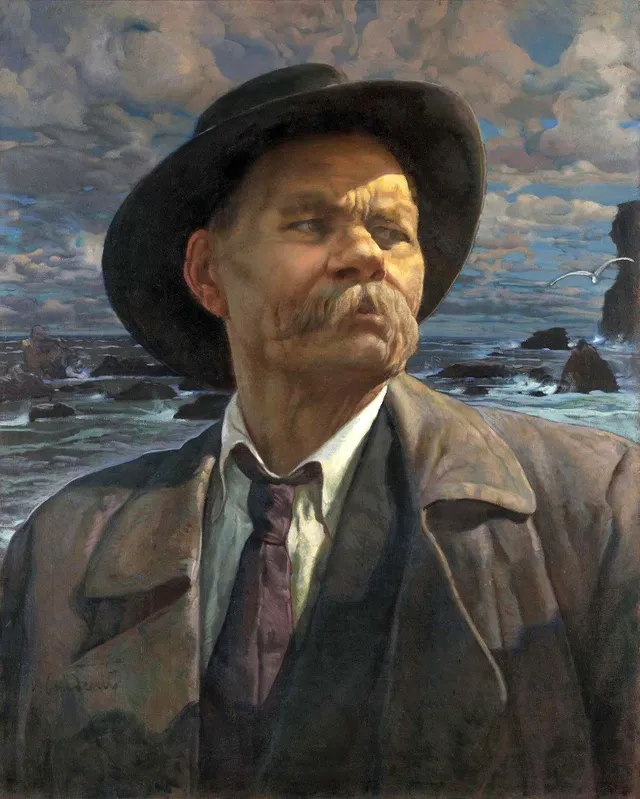
Key Socialist Realism artists in the collection include Wojciech Weiss, Isaak Brodsky and Konstantin Savitsky.
When did Socialist Realism take place?
Socialist Realism dates from around 1932.
Where can I see Socialist Realism works?
Socialist Realism works in the collection are held by Tretyakov Gallery.