Artwork
Girl with Camera Lying on Grass
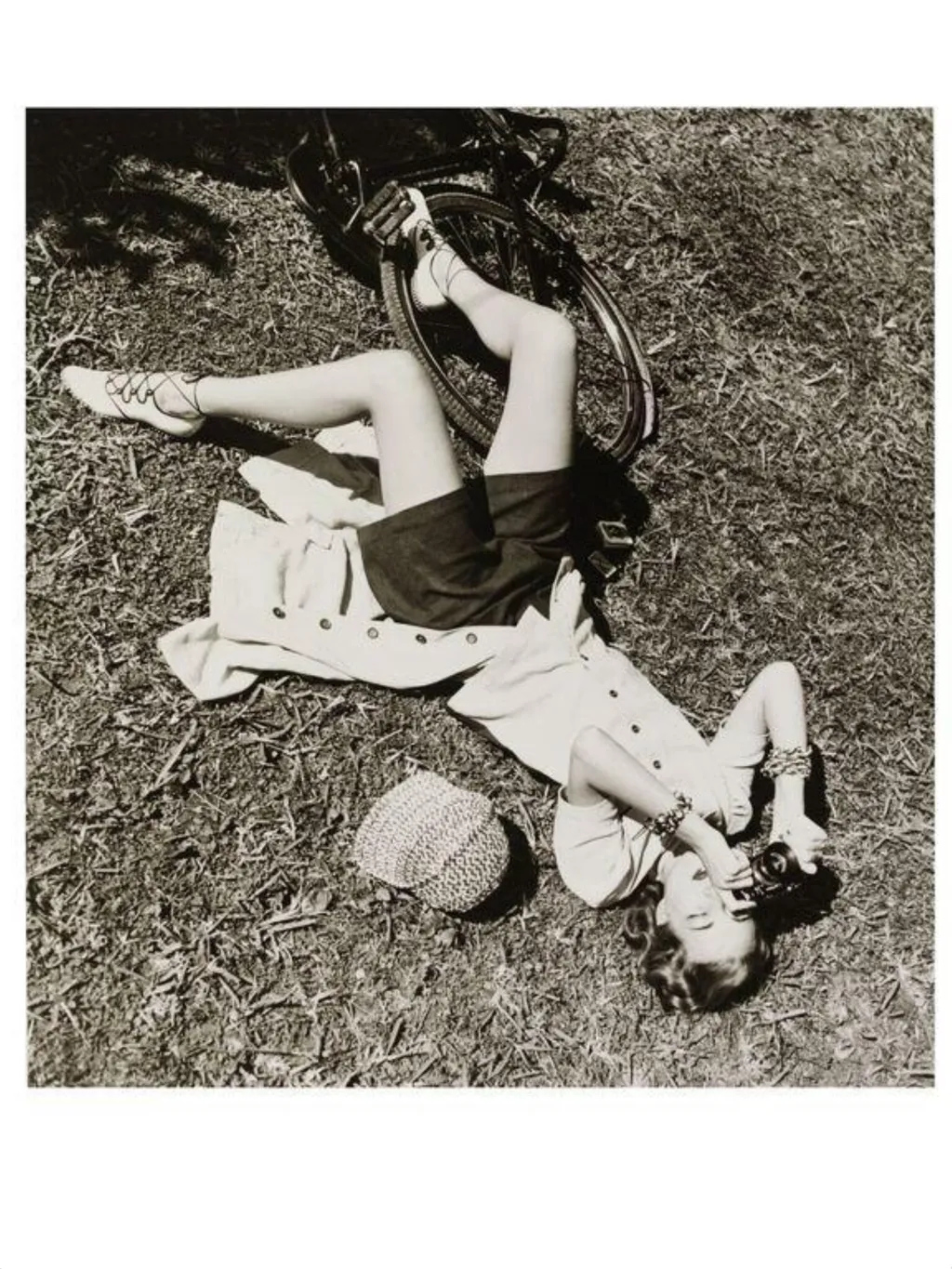
Girl with Camera Lying on Grass is a photographic photography by louise dahl-wolfe. It dates from 1938 and is held in the collection of the Victoria and Albert Museum. Taken in 1938, this photograph captures two individuals reclining on grass, their bodies loosely entwined in a moment of rest.
About this work
One wears a short-sleeved shirt and dark pants, while the other has on a light button-up shirt and rolled-up pants.
This photo shows two people lying on grass, tangled together. One wears a short-sleeved shirt and dark pants, while the other has on a light button-up shirt and rolled-up pants. A bicycle wheel is nearby, and one person holds a camera. The scene looks casual, almost like they fell or flopped down in the dirt.
The camera suggests one person might be a photographer. The clothes look like the 1930s, simple, practical, and a little rumpled.
Check out dahl-wolfe, louise next, she took this photo in 1938.
Overview
Taken in 1938, this photograph captures two individuals reclining on grass, their bodies loosely entwined in a moment of rest. A camera rests in the hand of one figure, while a bicycle wheel lies nearby, suggesting a pause after travel. The elevated vantage point frames the scene with quiet intimacy, emphasizing the casual, unposed nature of the moment.
Subject & Meaning
The two figures, dressed in simple, slightly disheveled 1930s attire, appear to be engaged in a private, everyday pause. The presence of the camera implies one may be a photographer, yet the scene resists narrative clarity, neither posing nor performing. The image conveys quiet companionship and the fleeting stillness of leisure, grounded in the physicality of the moment rather than symbolic intent.
Technique & Style
The photograph employs a high-angle perspective to flatten the composition, drawing attention to the interplay of limbs and fabric against the textured ground. Natural light softens edges, enhancing the sense of spontaneity. Grain and slight blur suggest handheld shooting, reinforcing the immediacy of the capture without theatrical framing or studio intervention.
History & Provenance
The photograph was taken by Louise Dahl-Wolfe in 1938, during a period when she was developing her distinctive approach to candid portraiture. It emerged from her personal practice rather than commercial assignments, reflecting her interest in authentic human presence. The work remained in private hands until later inclusion in archival collections documenting her early work.
Context
Made during the Great Depression, the image reflects a cultural moment when leisure was modest and often improvised. Clothing, posture, and setting align with middle-class recreation in rural or suburban spaces. Dahl-Wolfe’s focus on unguarded moments aligned with emerging documentary tendencies in photography, distancing her from staged glamour of the era.
Legacy
Though not widely exhibited in her lifetime, this photograph exemplifies Dahl-Wolfe’s early commitment to naturalism and emotional subtlety. It prefigures her later fashion work by demonstrating her eye for organic composition and psychological nuance. Today, it is recognized as a quiet precursor to mid-century documentary photography’s emphasis on authenticity.
Artist & collection
Artist
Louise Dahl-Wolfe carried a twin-lens Rolleiflex in her bag like a house key and shot rolls of film between errands.