Artwork
The Dream of Saint Joseph
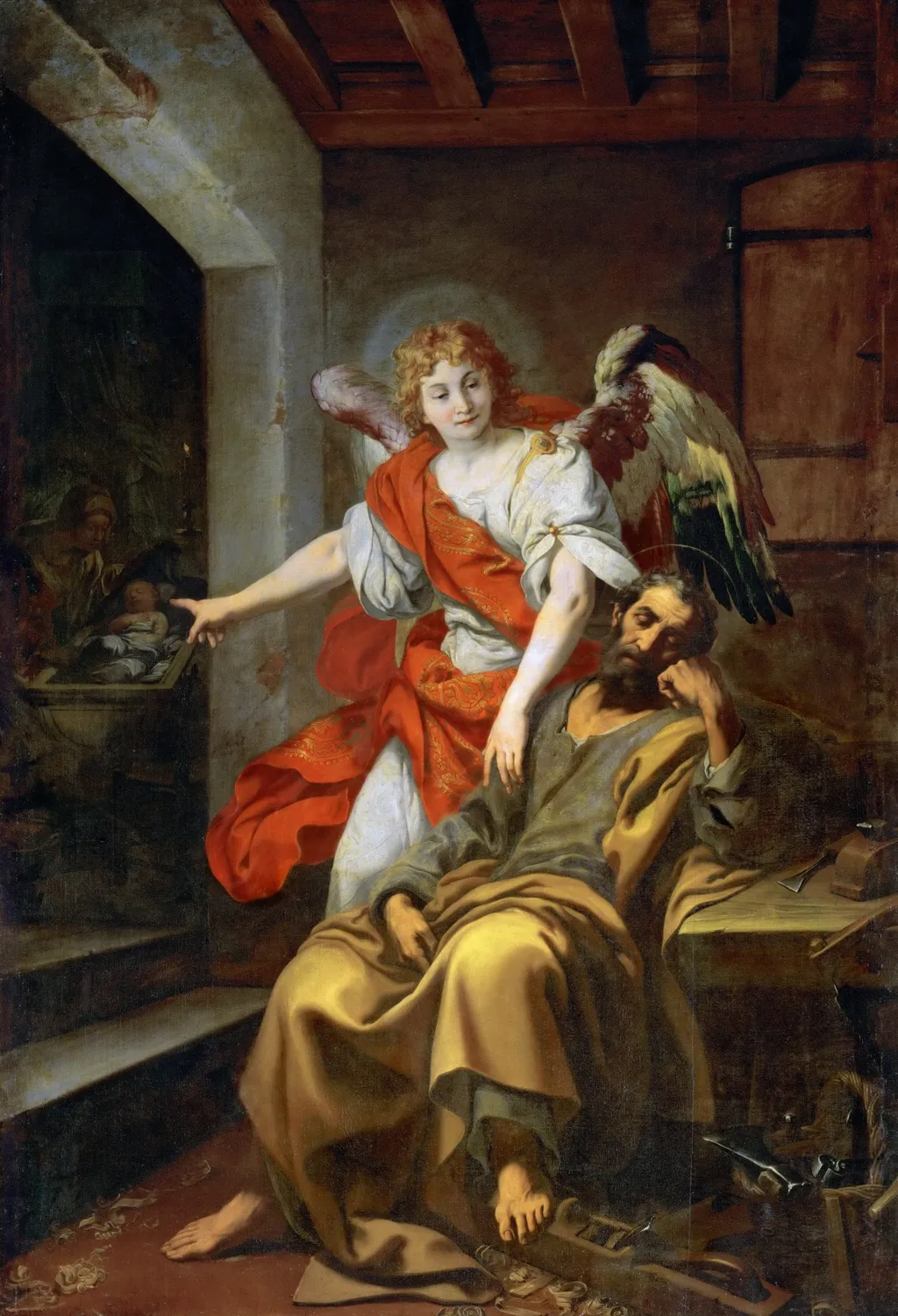
The Dream of Saint Joseph is an unspecified painting by the Early Baroque Italian artist Daniele Crespi. It dates from 1620 and is held in the collection of the Kunsthistorisches Museum.
About this work
Overview
It is held by the Kunsthistorisches Museum in Vienna, where it has been documented since 1783, and bears the accession number GG_271.
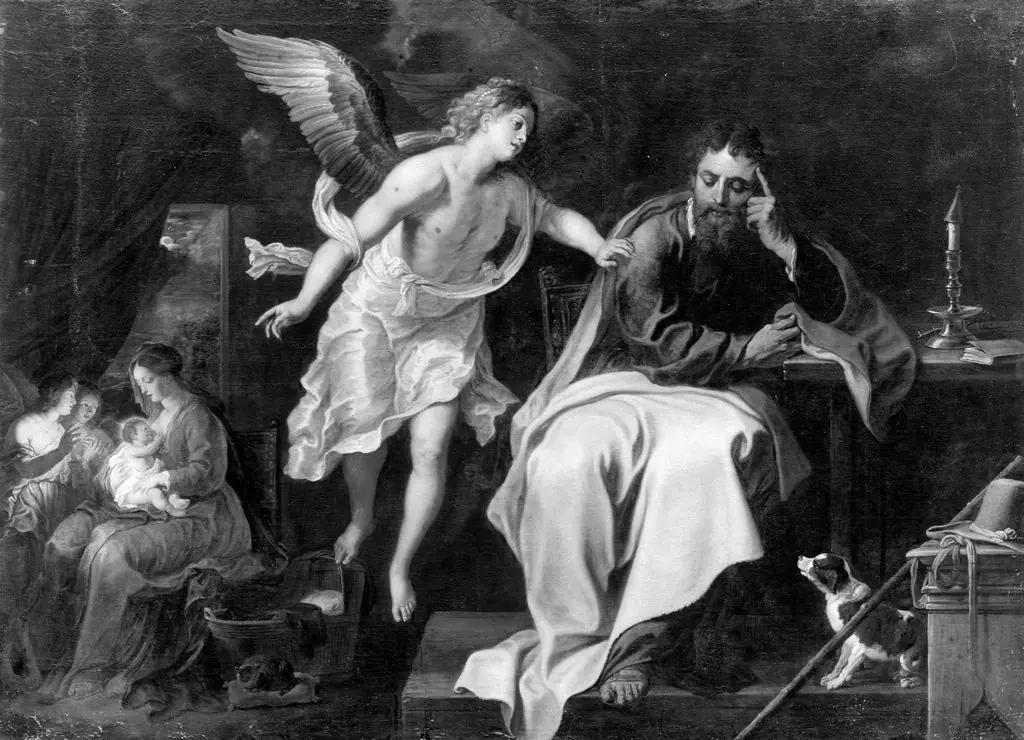
The Dream of Saint Joseph conventions of the 1620s. It depicts the moment from the Gospel of Matthew when an angel appears to Joseph in sleep, warning him of Herod's intent to kill the infant Jesus and instructing him to flee into Egypt. The painting measures 297 by 203 centimetres and is executed in oil on canvas. It is held by the Kunsthistorisches Museum in Vienna, where it has been documented since 1783, and bears the accession number GG_271. The work exemplifies Crespi's ability to merge dramatic narrative with intimate psychological observation, making it a significant example of early Baroque religious painting in Lombardy.
Subject & Meaning
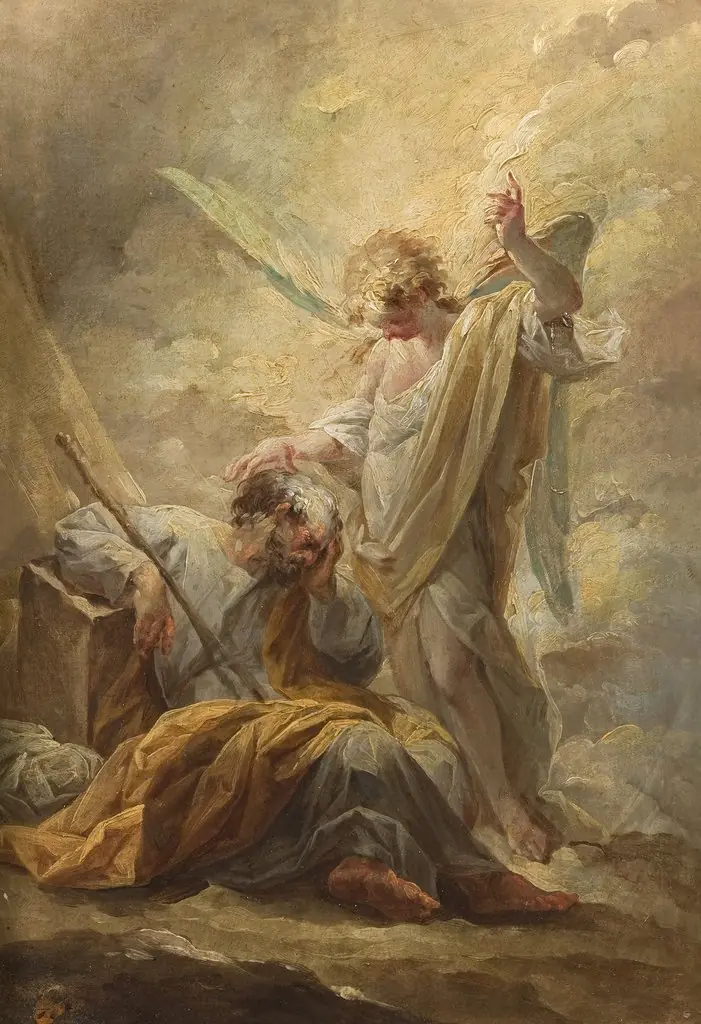
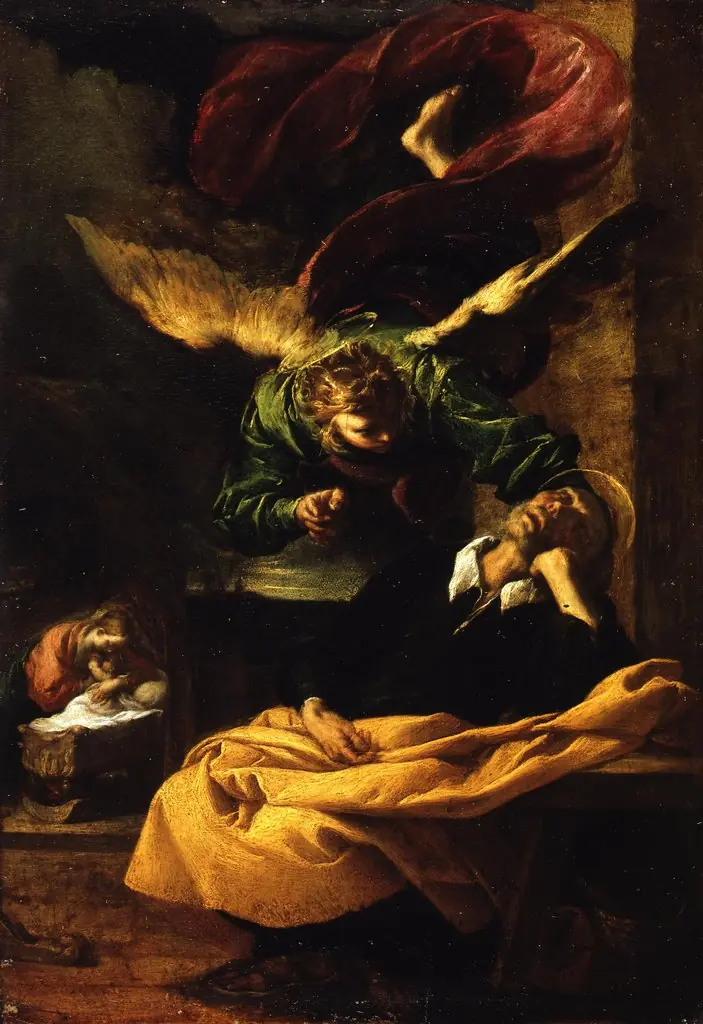
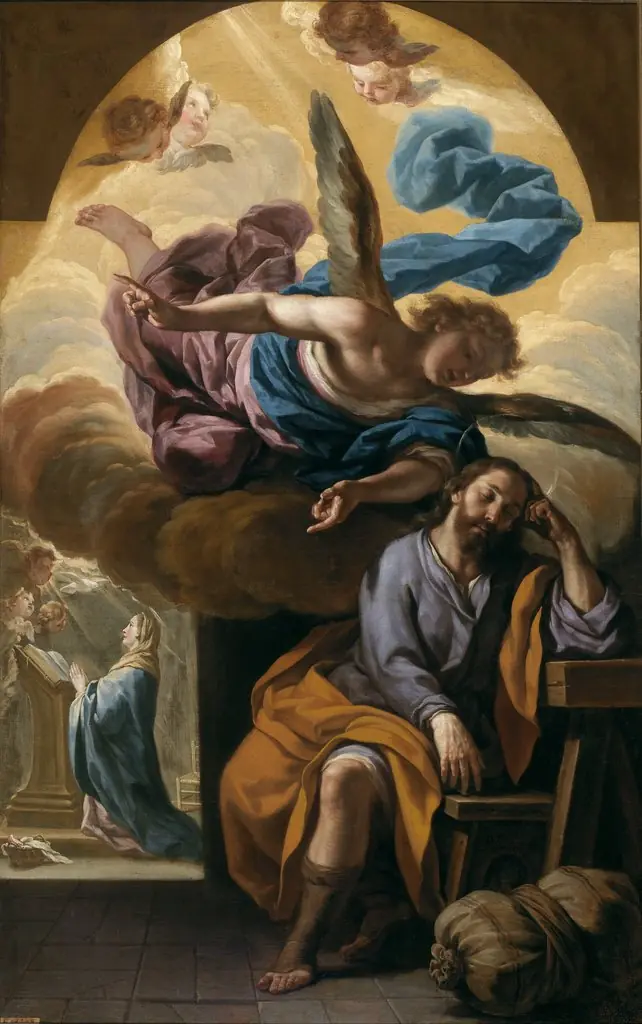
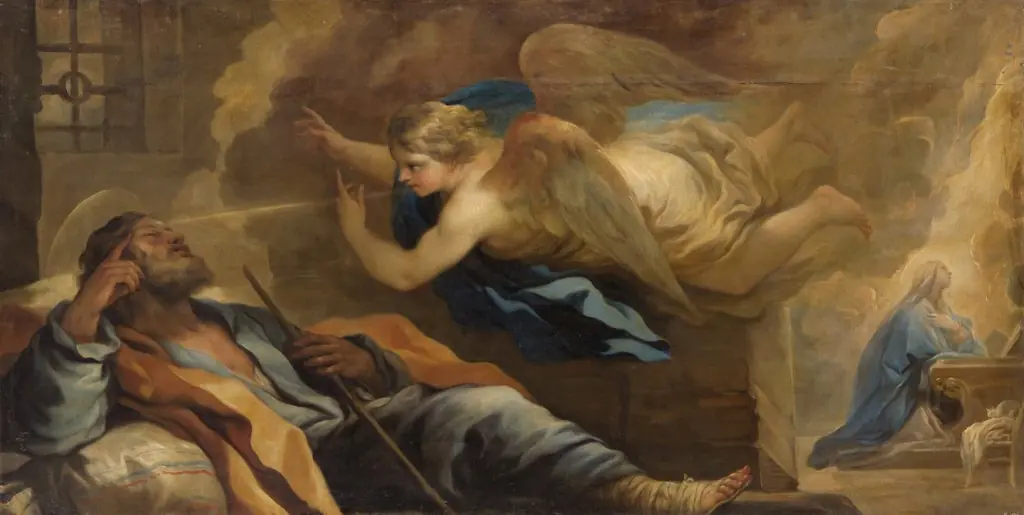
The painting illustrates the second of Saint Joseph's four dreams recorded in the Gospel of Matthew, specifically Matthew 2:13, in which an angel warns Joseph to take Mary and Jesus and escape to Egypt to avoid Herod's massacre. In the foreground, Joseph sleeps slumped in a wooden chair, his head resting on his left hand and his right hand open in his lap, with carpentry tools, including an axe and chisel, visible on a workbench beside him. An angel in white robes with a flowing red sash stands beside him, gesturing toward the background, where Mary tends to the infant Jesus in a cradle. This composition emphasises Joseph's role as protector and his obedient acceptance of divine instruction, even in sleep. The angel's multicoloured wings, rendered in white, brown, and green, and the striking vermillion of the sash, draw the eye and underscore the supernatural intrusion into the domestic workshop. The patterned rug on the floor and the dim interior with wooden ceiling beams and stone archway ground the miraculous event in a tangible, humble setting, characteristic of Counter-Reformation emphasis on accessibility and emotional engagement.
Technique & Style
Crespi employed oil on canvas for this large-scale work, with dimensions of 297 by 203 centimetres, allowing for monumental impact while maintaining intimate detail. The palette is dominated by deep browns, warm golds, and a striking vermillion red, with strong directional light entering from the upper left to illuminate the central figures and cast deep shadows in the corners. The brushwork displays a smooth, polished finish on skin and drapery, contrasting with more textured handling in the background, a technique that directs focus toward the human drama. The composition creates diagonal movement from the angel's extended arm through Joseph's reclining form, generating visual dynamism within the confined interior. The handling of light follows Caravaggesque precedents in its dramatic chiaroscuro, yet Crespi's approach is somewhat more refined and less starkly theatrical than that of his Roman contemporaries, reflecting the particular character of Lombard Baroque painting.
History & Provenance
The painting is dated to 1620 by the corpus source, though Wikimedia Commons metadata suggests a broader range of circa 1620 to circa 1630. It was created during Crespi's mature period, before his premature death in 1630. The work has been documented in the imperial gallery in Vienna since 1783, indicating it entered Habsburg collections by that date at the latest, though the precise earlier provenance remains unrecorded in the available sources. It is now held by the Kunsthistorisches Museum in Vienna under accession number GG_271. No specific exhibition history is documented in the provided sources beyond its continuous presence in the museum's holdings.
Context
Daniele Crespi was a leading painter of the Lombard school, active in Milan, whose career was cut short by his death during a plague epidemic in 1630. His work synthesised the naturalism of Caravaggio with the emotional spirituality demanded by the Counter-Reformation, particularly under the influence of the Borromeo reforms in Milan. The Dream of Saint Joseph belongs to a period of intense artistic production in the city, where Crespi competed with and was influenced by contemporaries such as Cerano and Morazzone. The subject of Joseph's dream was relatively uncommon in Italian painting, making Crespi's treatment notably original in its focus on the psychological state of the sleeping saint rather than on overt narrative action. The painting's presence in Vienna by 1783 reflects the systematic acquisition of Italian Baroque works by the Habsburg collections, which sought to represent the full scope of European artistic achievement. Critical reception in modern scholarship has emphasised Crespi's distinctive combination of Caravaggesque lighting with a more gentle, contemplative mood, distinguishing his work from the harsher naturalism of his Roman counterparts.
Legacy
The Dream of Saint Joseph remains one of Crespi's most accessible and frequently reproduced works, circulating widely through museum databases and print reproductions. Its inclusion in the Kunsthistorisches Museum's permanent display ensures continued public engagement, while its reproduction by institutions such as Bridgeman Images attests to its sustained commercial and educational currency. The painting has served as a focal point for religious reflection, as demonstrated by its use in contemporary Christian art meditation, where its depiction of Joseph's receptive stillness is interpreted as emblematic of holy obedience. In art historical literature, the work is regularly cited as exemplary of Crespi's narrative skill and his contribution to Lombard Baroque painting, though his broader reputation has been somewhat overshadowed by his early death and by the greater documentation surrounding his Milanese rivals. The painting's afterlife is thus one of steady, rather than spectacular, recognition, valued for its technical accomplishment and its sensitive treatment of a rarely depicted biblical episode.
Own this work as a print
Artist & collection
Artist
Daniele Crespi (1598 – 19 July 1630) was an Italian painter and draughtsman. He is regarded as one of the most original artists working in Milan in the 1620s. He broke away from the exaggerated manner of Lombard…