Artwork
Plainville, Conn. From The South West
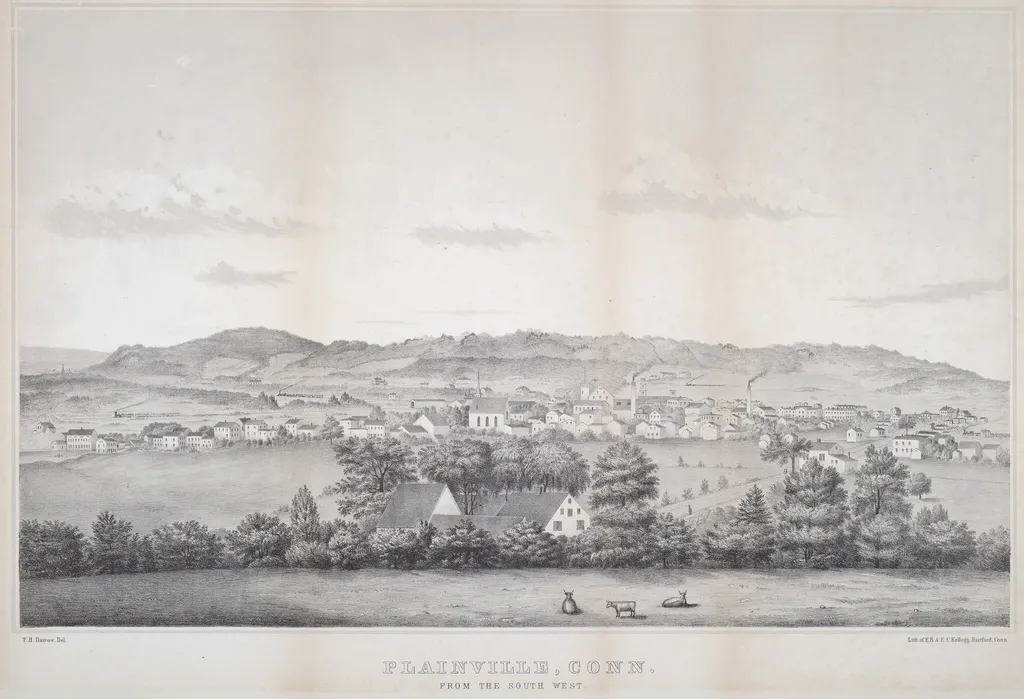
Plainville, Conn. From The South West is an ink print by the Impressionist artist Titus H. Darrow. It dates from 1855 and is held in the collection of the National Gallery of Art. Plainville, Conn.
- Inscription
- Inscribed:On stone: lower center, PLAINVILLE, CONN./FROM THE SOUTH WEST.; lower right, Lith. of E.B. & E.C. Kellogg, Hartford, Conn.; lower left, T.H. Darrow, Del.
About this work
Overview
Plainville, Conn. From The South West is a mid‑nineteenth‑century lithographic print attributed to American artist Titus H. Darrow, dated around 1855. Executed as a single‑color lithograph, the work captures a tranquil New England village scene, rendered in a light, sketch‑like manner that emphasizes atmosphere over precise detail.
Subject & Meaning
The image presents a modest settlement nestled among rolling hills, with a cluster of small homes, a church steeple, and distant factory silhouettes on the horizon. A prominent farmhouse, framed by trees, occupies the foreground, while a pair of cows recline beneath a lone tree in an open field, suggesting a harmonious blend of rural labor and community life.
Technique & Style
Darrow employed the lithographic process, drawing directly onto a limestone plate with greasy medium before transferring the image onto paper. The resulting print displays a fluid, sketch‑like handling of line and tone, using subtle gradations of light and shadow to convey depth. This approach reflects the popular 19th‑century aesthetic of economical yet expressive printmaking.
History & Provenance
Created circa 1855, the lithograph likely served as a visual record of Plainville’s landscape during a period of modest industrial growth. While specific ownership details are scarce, the work has been catalogued among Darrow’s output of American topographical prints, illustrating the era’s interest in documenting regional towns through affordable reproductions.
Own this work as a print
Artist & collection

- View of Poestenkill, New York
 Montreal from the Mountain and View of the St. Lawrence River
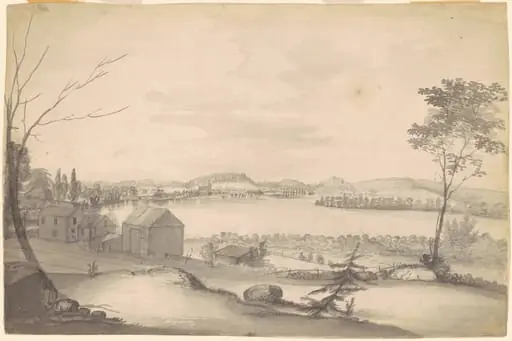 Study for "View of Springfield on the Connecticut River"
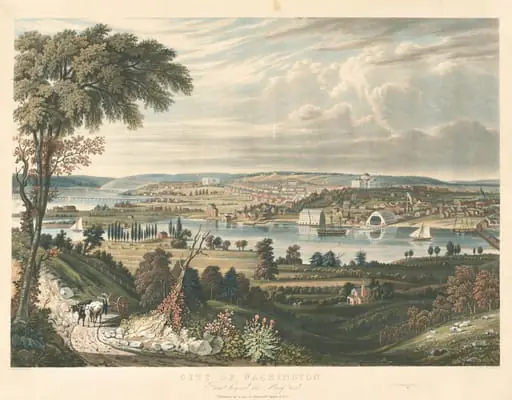 City of Washington: From beyond the Navy Yards
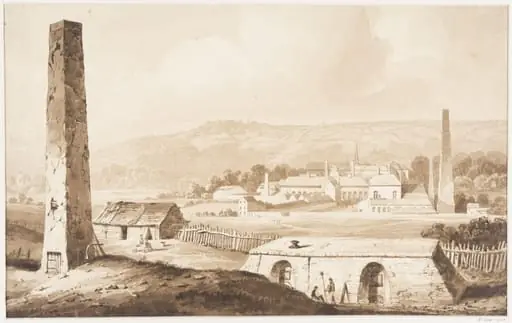 Landscape with factory buildings
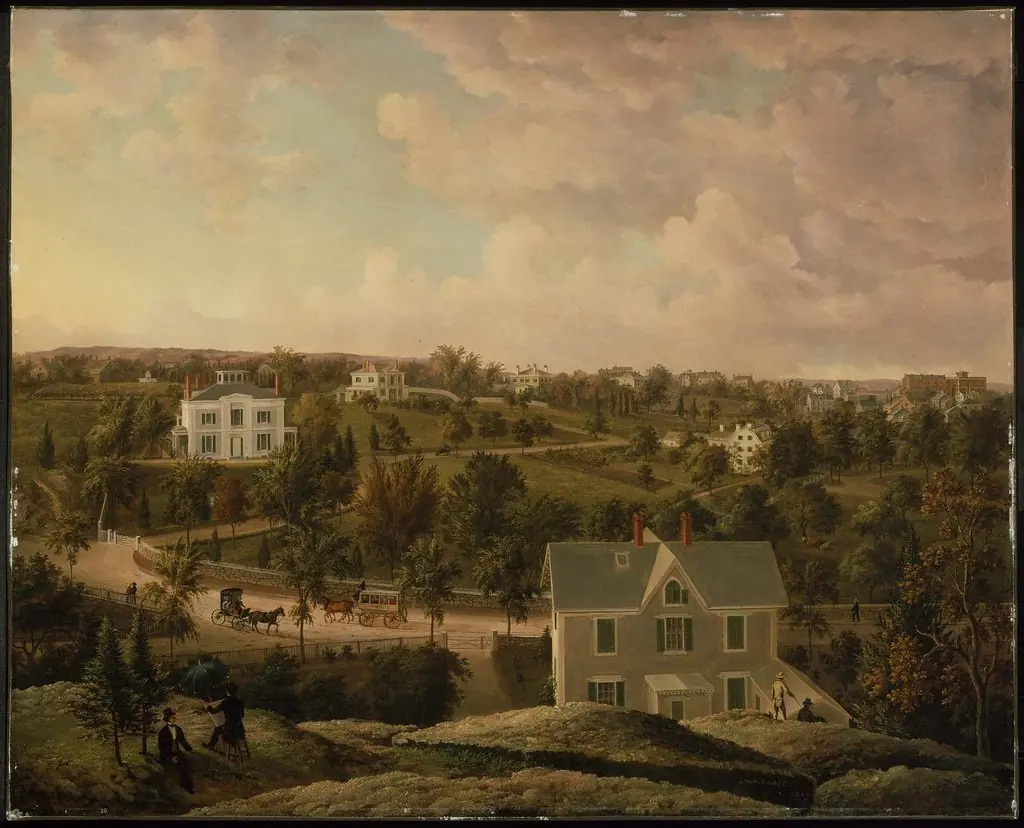 View of Roxbury
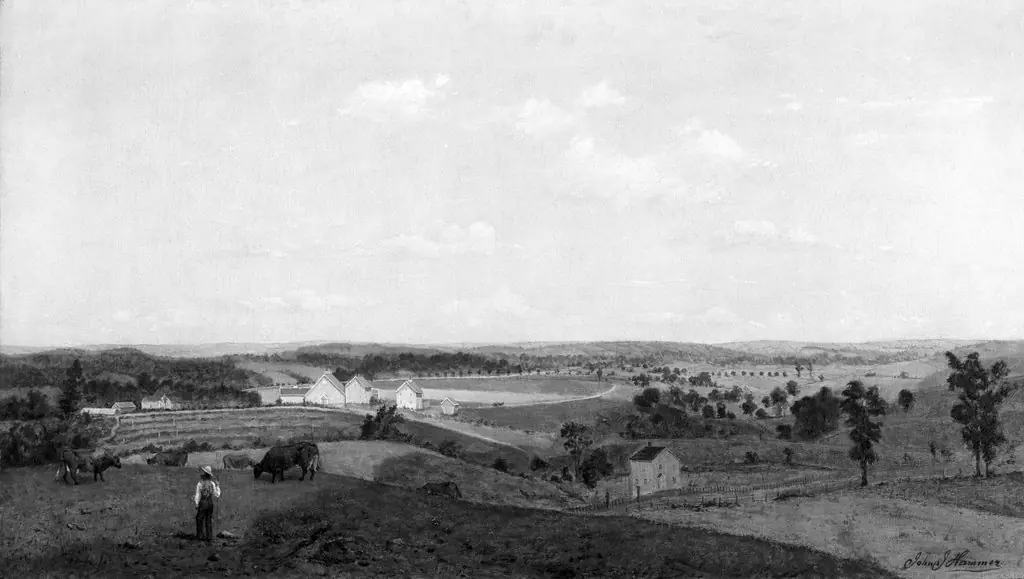 A Peaceful Day in the Mohawk Valley
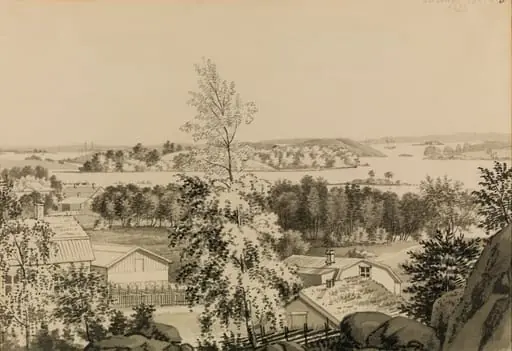 Näkymä Sörnäisistä etelään
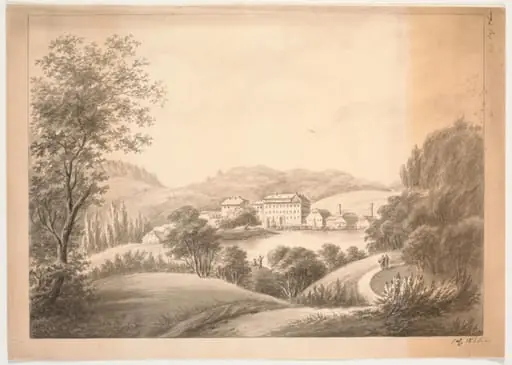 Flere tætliggende bygninger, bl.a. en hovedbygning og mindre huse med skorstene, ved vandløb eller sø, omgivet af træer og bakker
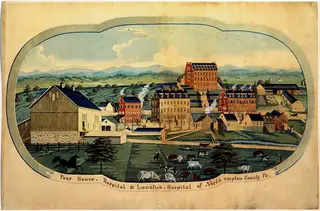 Poor House, Hospital & Lunatick-Hospital of Northampton County, Pa.
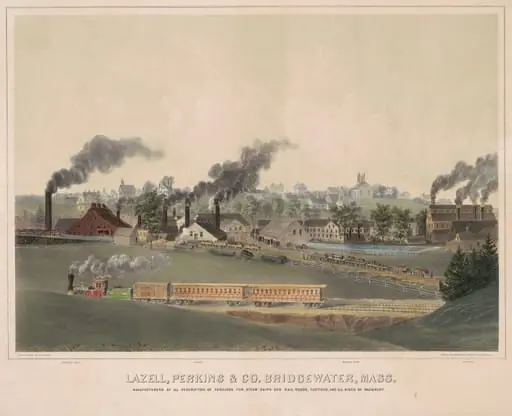 Lazell, Perkins & Co., Bridgewater, Mass.
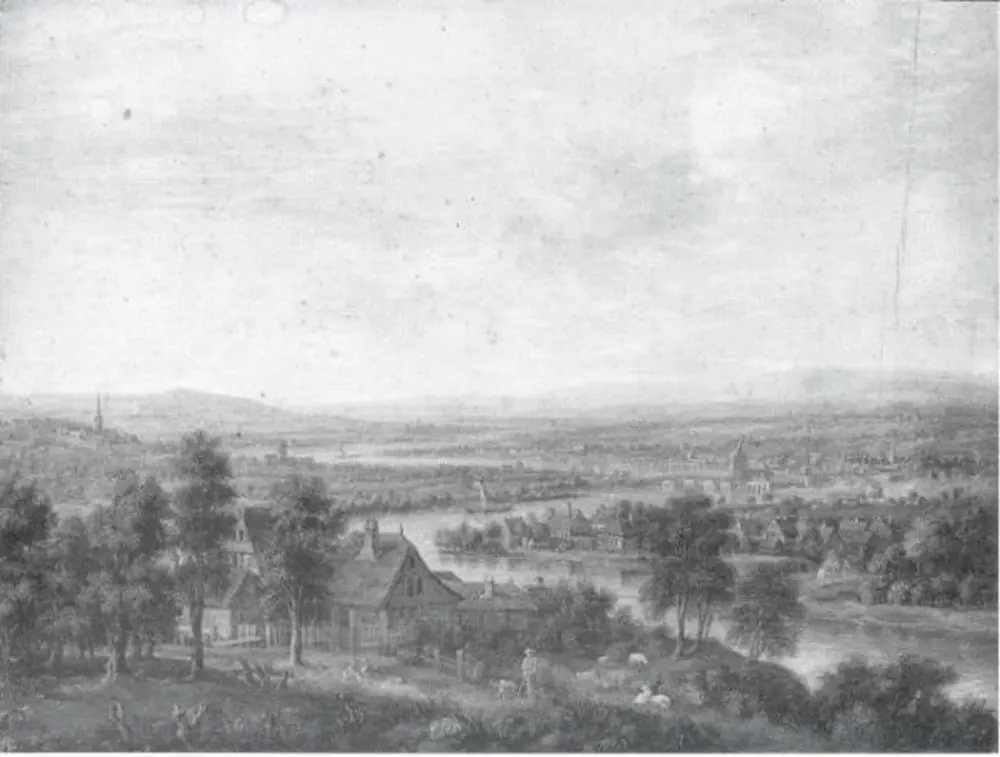 Landscape with the River Main