Artwork
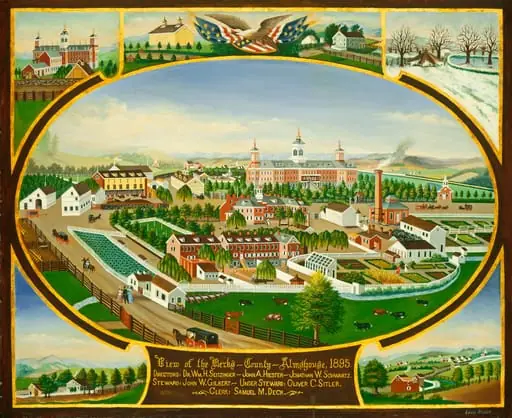
Poor House, Hospital & Lunatick-Hospital of Northampton County, Pa.
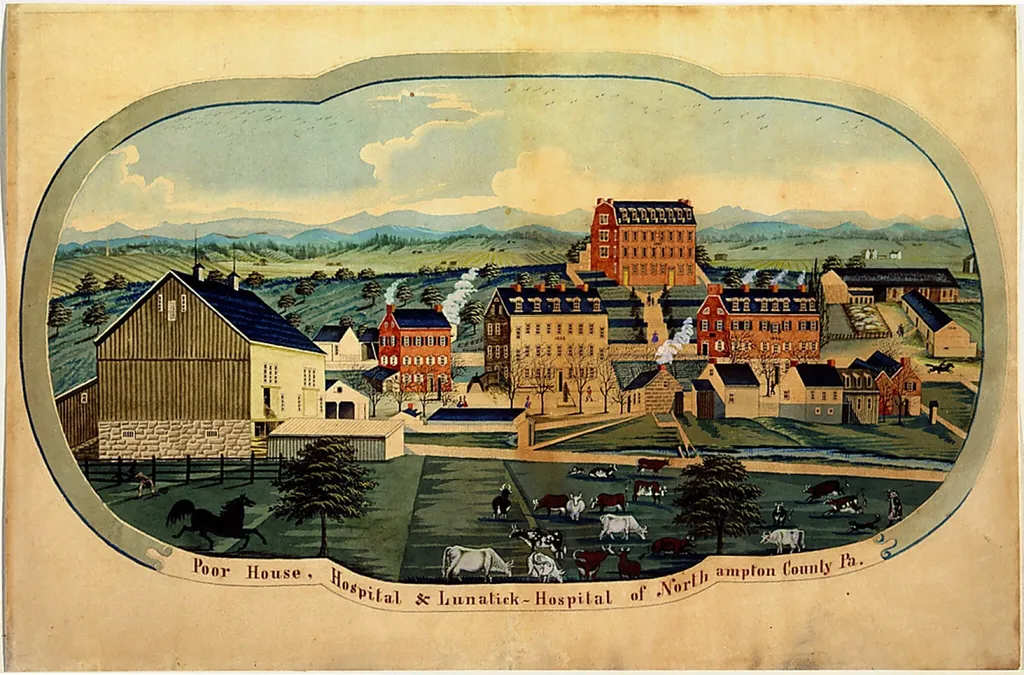
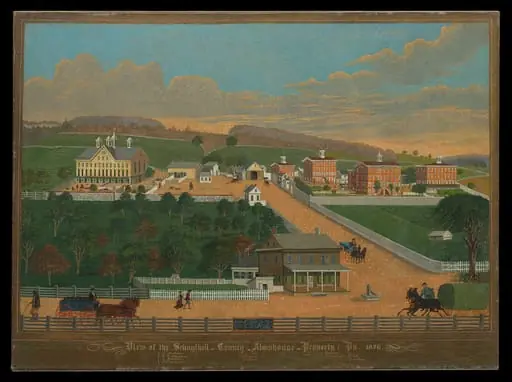
Poor House, Hospital & Lunatick-Hospital of Northampton County, Pa. is a watercolor drawing by the Impressionist artist Charles C. Hofmann. It dates from 1865 and is held in the collection of the National Gallery of Art. Created around 1865, this watercolor by Charles C.
- Inscription
- Inscribed:across bottom: Poor House, Hospital & Lunatick-Hospital ofNorthampton County, Pa.
About this work
Overview
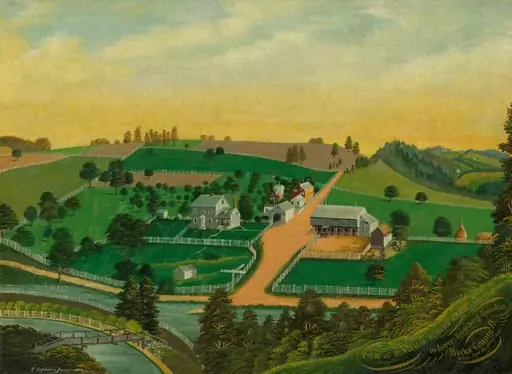
The scene presents a rural institutional compound with barns, residential structures, and a prominent hospital-like building.
Created around 1865, this watercolor by Charles C. Hofmann depicts a complex of public buildings in Northampton County, Pennsylvania. The scene presents a rural institutional compound with barns, residential structures, and a prominent hospital-like building. Rendered in soft, clear tones, the composition emphasizes order and functionality, reflecting the era’s approach to social welfare infrastructure in a pastoral setting.
Subject & Meaning
The structure labeled 'Poor House, Hospital & Lunatick-Hospital' served as a combined facility for the indigent, sick, and mentally ill. Hofmann’s depiction avoids stigma, framing the site as a calm, self-sustaining community. The presence of livestock, a wagon, and cultivated land suggests agricultural labor was part of daily life, reinforcing contemporary ideals of moral rehabilitation through work and routine.
Technique & Style
Hofmann employed transparent watercolor washes to achieve a luminous, airy quality. Fine brushwork defines architectural details and foliage, while muted earth tones ground the scene. The even lighting and balanced perspective convey stability, avoiding dramatic shadows or emotional intensity. This restrained technique aligns with documentary aims, prioritizing clarity over expression.
History & Provenance
The work likely originated as a commissioned record of a county-run institution, common in mid-19th century Pennsylvania as local governments expanded public care systems. Its survival suggests it was preserved within municipal or family archives. No public exhibition history is documented, but its detail implies it was used for administrative or educational purposes rather than artistic display.
Context
In the 1860s, rural poorhouses were the primary safety net for vulnerable populations before state-funded asylums emerged. These institutions often combined housing, medical care, and labor, blending charity with social control. Hofmann’s depiction mirrors reformist ideals of the time, orderly, hygienic, and integrated into the landscape, reflecting a belief in environment as therapeutic.
Legacy
The painting stands as a quiet historical record of 19th-century social infrastructure. It offers insight into how communities visually framed care for marginalized groups, not as places of neglect, but as functional, even dignified, extensions of rural life. Today, it contributes to the understanding of institutional design and public welfare before modern social services.
Own this work as a print
Artist & collection