Artwork
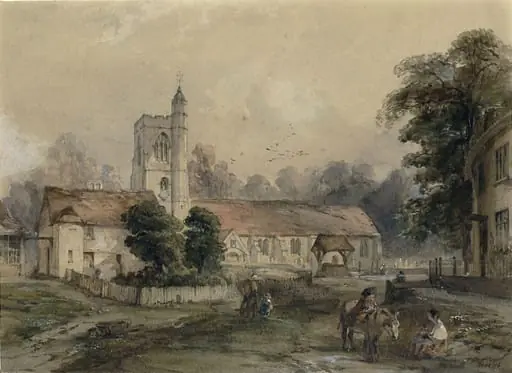
Harborne Church, near Birmingham
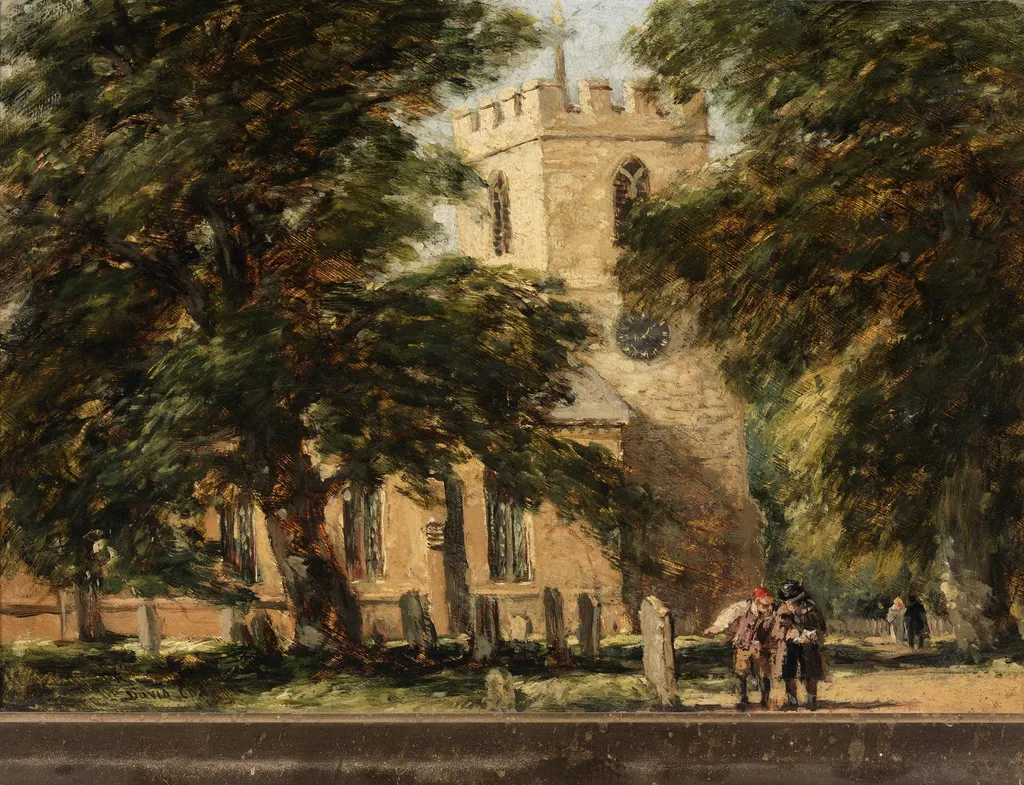
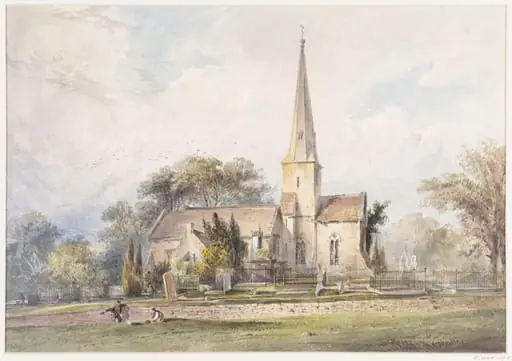
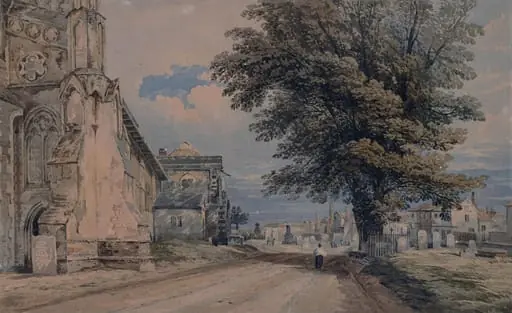
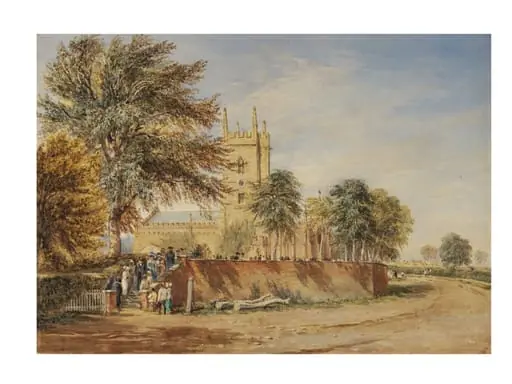
Harborne Church, near Birmingham is an oil painting by the Plein Air artist David Cox. It dates from 1831 and is held in the collection of the National Gallery of Ireland.
About this work
Overview
This work is one of more than 300 oil paintings he produced, reflecting his sustained engagement with the English countryside.
David Cox created Harborne Church, near Birmingham circa 1831 using oil paint, a medium he turned to later in his career after establishing his reputation with watercolours. Though associated with the Birmingham School of landscape artists, Cox’s approach to outdoor observation anticipated later developments in naturalistic painting. This work is one of more than 300 oil paintings he produced, reflecting his sustained engagement with the English countryside.
Subject & Meaning
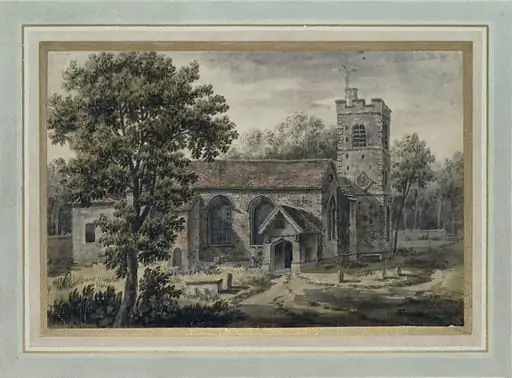
The painting portrays Harborne’s parish church nestled within a quiet rural setting, framed by a large tree that dominates the foreground. Two small figures walk along a path, their presence subtly grounding the scene in human experience without disrupting its stillness. The composition suggests a quiet reverence for everyday landscapes, emphasizing harmony between architecture, nature, and the passage of time rather than dramatic narrative.
Technique & Style
Cox employed loose, textured brushwork to convey the softness of foliage and the weathered surface of stone. Warm tones in the sunlight contrast with cooler shadows, creating a sense of atmospheric depth. The brushstrokes are deliberate yet unpolished, avoiding idealized detail in favor of observed light and form. This method prioritizes sensory immediacy over precision, aligning with emerging tendencies toward direct observation in landscape painting.
History & Provenance
The painting entered the collection of the National Gallery of Ireland at an unknown date, likely through acquisition or donation in the 19th or early 20th century. Its presence there reflects broader interest in British landscape art beyond London’s institutional circles. No record of early ownership or exhibition history is widely documented, but its inclusion in a national collection affirms its recognized place in Cox’s oeuvre.
Context
Painted during a period of rapid industrialization, Harborne Church offers a quiet counterpoint to urban expansion. Cox’s focus on rural ecclesiastical architecture resonated with contemporary ideals of pastoral stability. While other artists emphasized grandeur or romantic ruin, Cox favored modest, lived-in scenes, capturing the quiet dignity of ordinary English villages at a time when their character was increasingly under pressure.
Legacy
Though Cox is often remembered for his watercolours, this oil painting illustrates his evolving technique and commitment to plein air practice. His handling of light and texture influenced later generations of British landscape painters, particularly those drawn to spontaneous observation. Harborne Church stands as a quiet testament to his role in bridging traditional landscape conventions with more immediate, sensory approaches to nature.
Own this work as a print
Artist & collection
Artist
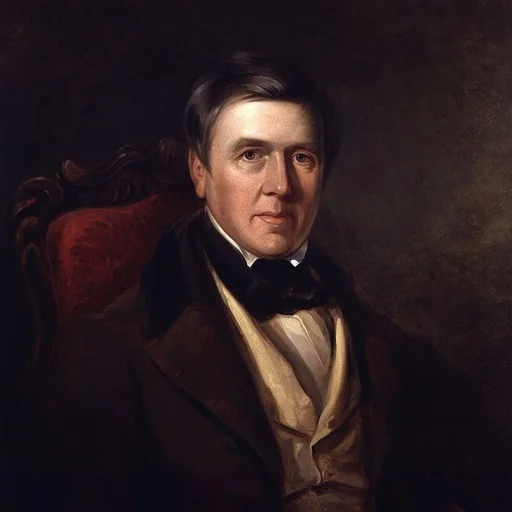
David Cox (29 April 1783 – 7 June 1859) was an English landscape painter, one of the most important members of the Birmingham School of landscape artists and an early precursor of Impressionism.

![Trees [verso], by David Cox](https://artifactworldgallery.com/img/david-cox--trees-verso--2f59ba73e183df09-w320.webp)
![Chatsworth [recto], by David Cox](https://artifactworldgallery.com/img/david-cox--chatsworth-recto--3f4d97adb21a8333-w320.webp)