Artwork
Proezas de Reinaldo frente a los egipcios
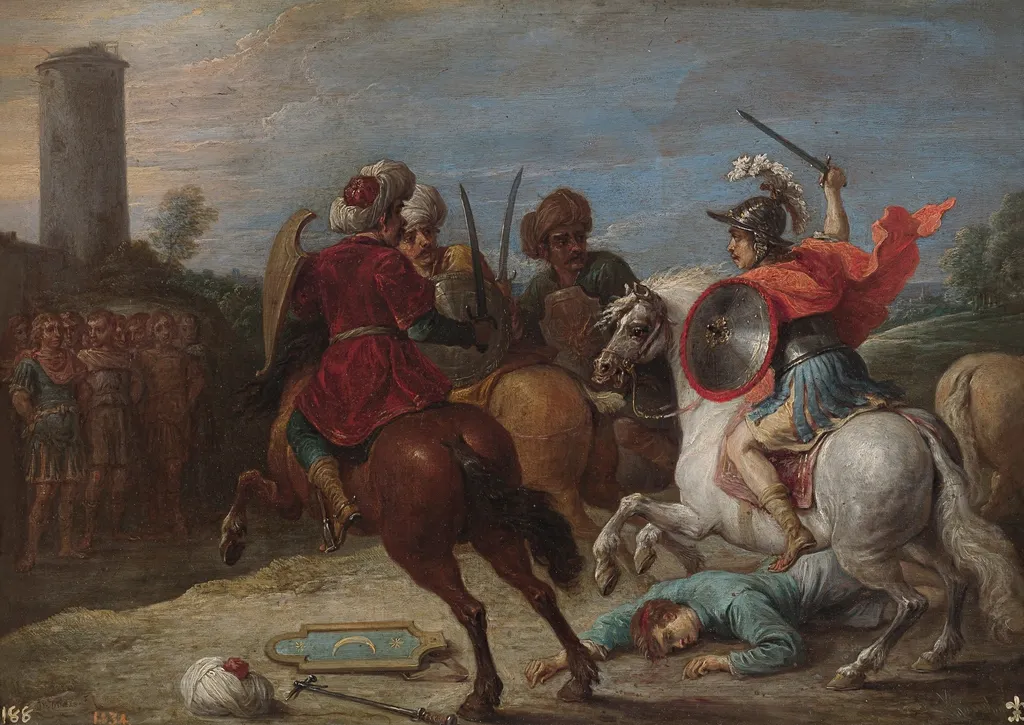
Proezas de Reinaldo frente a los egipcios is an oil painting by the Flemish Baroque painting artist David Teniers the Younger. It dates from 1628 and is held in the collection of the Museo del Prado.
About this work
Subject & Meaning
It entered the Spanish royal collection through successive monarchs and was housed in several royal palaces, including the Aranjuez and La Granja palaces.
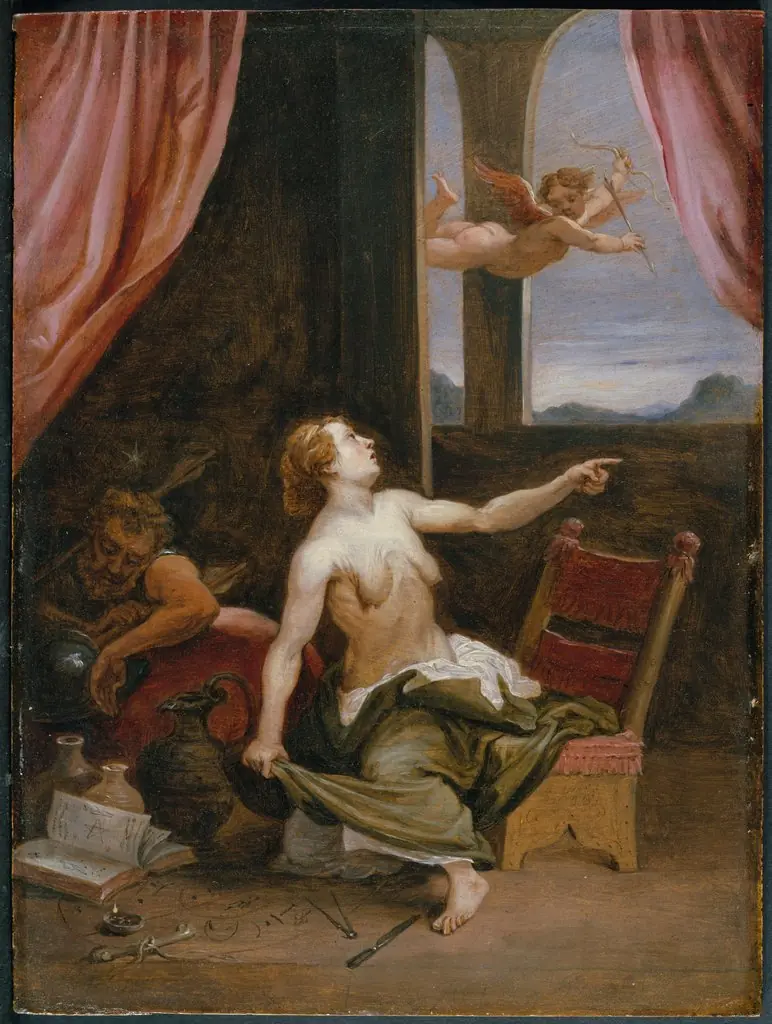
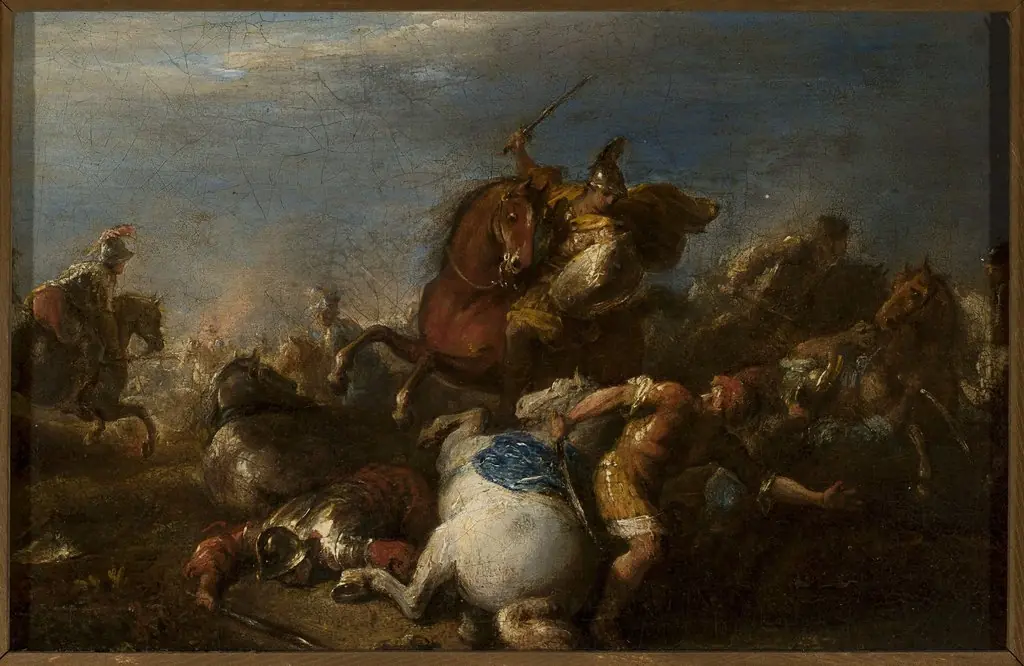
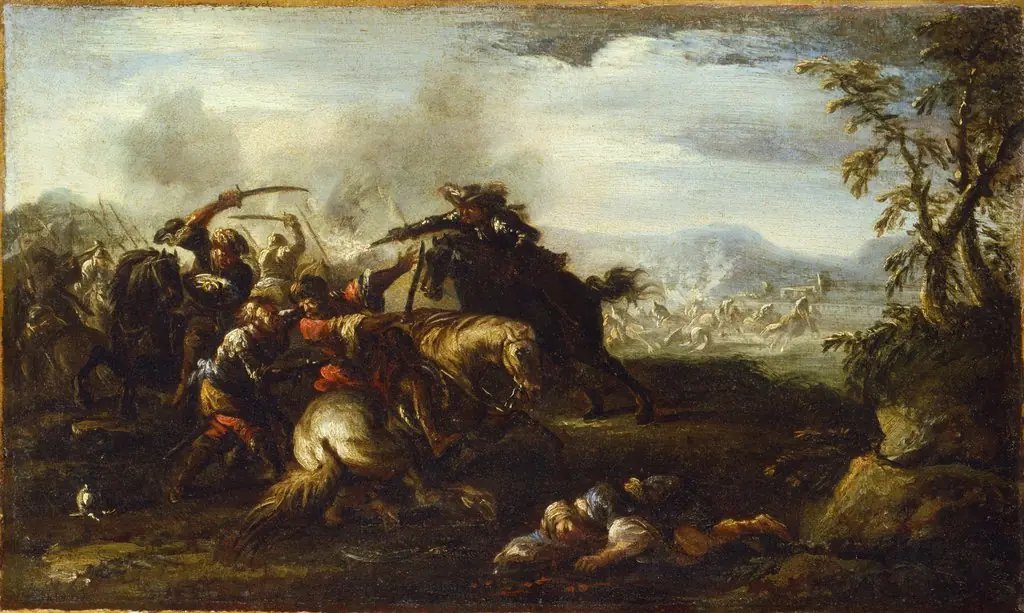
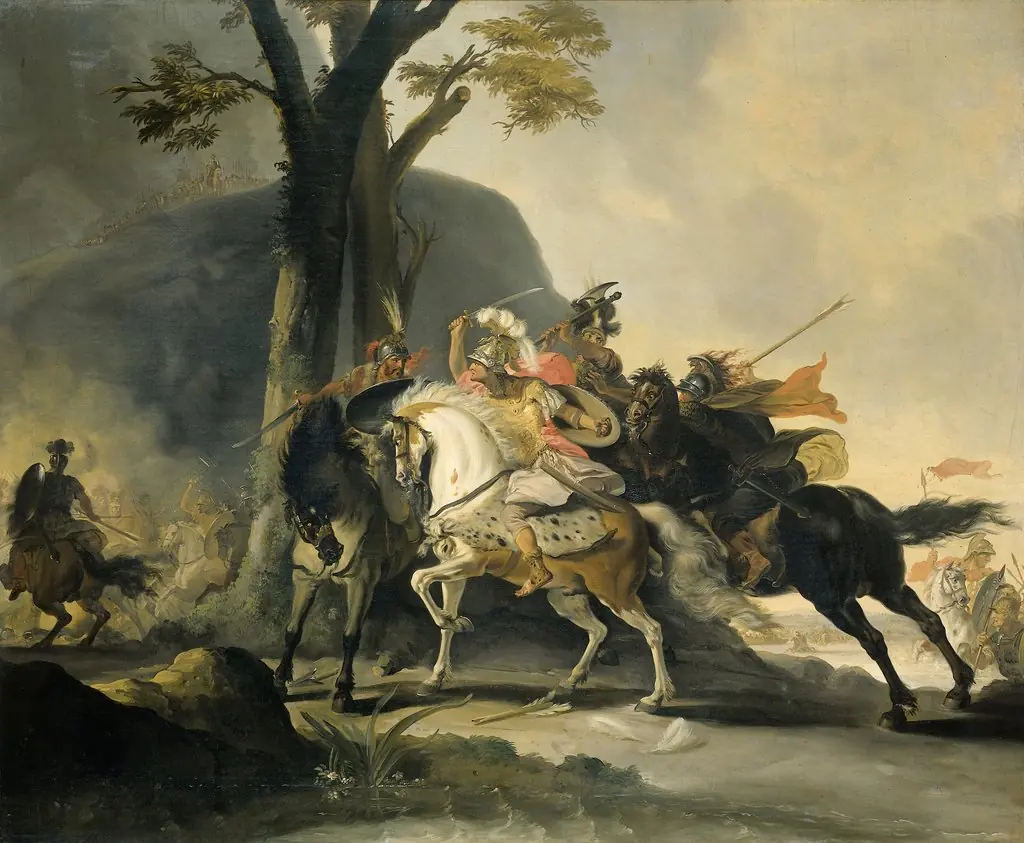
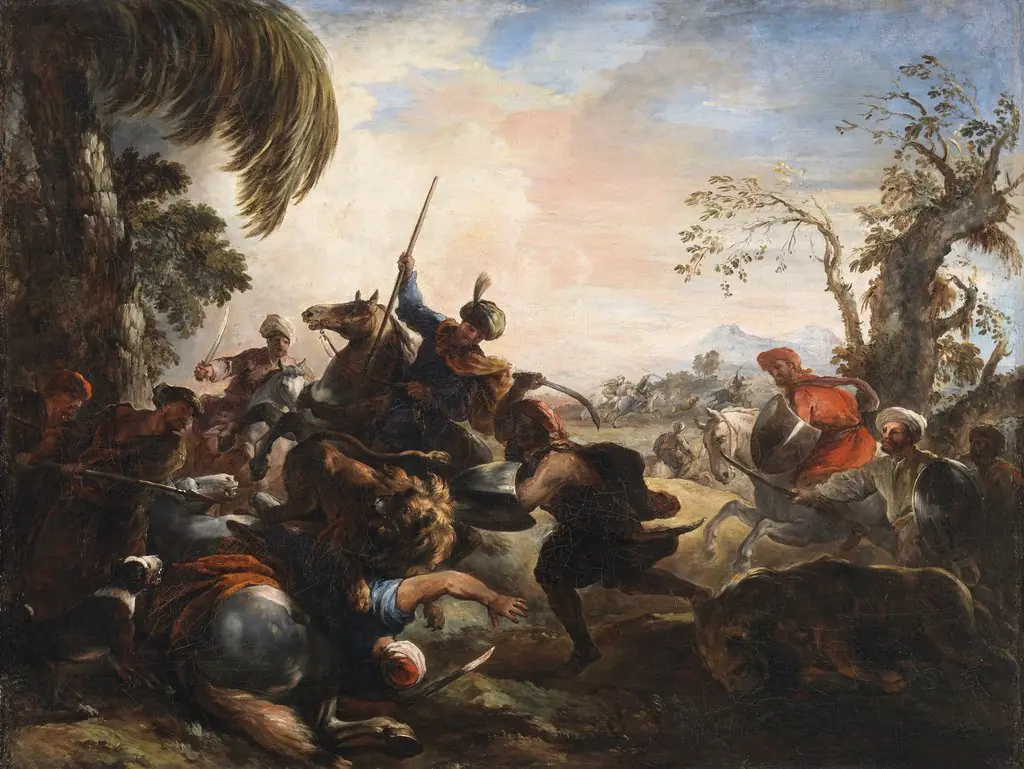
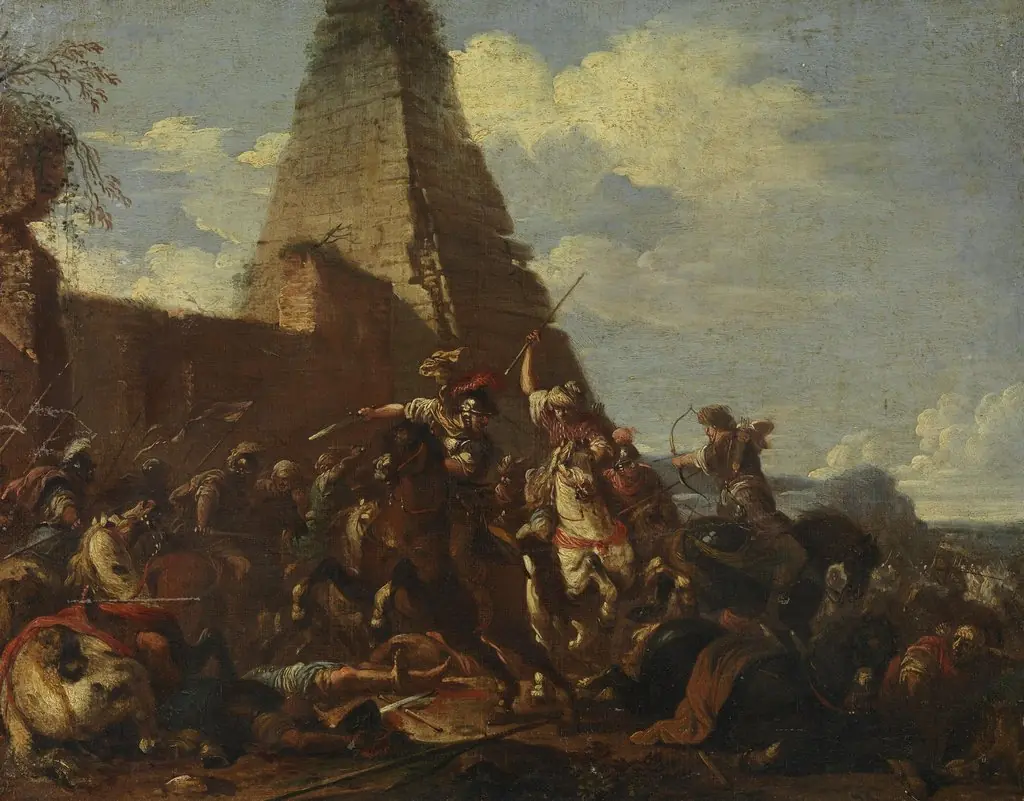
The work portrays the legendary hero Rinaldo in combat against Egyptian forces, clothed in armor, bearing a shield and sword. This scene draws from the epic Jerusalem Delivered and emphasizes heroic valor. The painting was created by David Teniers the Younger in 1628 using oil on copper, measuring 27 cm by 39 cm. It entered the Spanish royal collection through successive monarchs and was housed in several royal palaces, including the Aranjuez and La Granja palaces.
Technique & Style
Proezas de Reinaldo frente a los egipcios is an oil painting executed on a copper support, a technique characteristic of David Teniers the Younger's small-scale works. The artwork measures 27 cm in height and 39 cm in width. Stylistically, the composition depicts the knight Rinaldo in full body armor, wielding a shield and sword, set against a narrative derived from Torquato Tasso's Jerusalem Delivered. The integration of copper leaf with oil paint contributes to the piece's distinct surface quality and durability.
History & Provenance
The painting was created in 1628 by David Teniers the Younger as an oil work on copper, depicting Rinaldo in body armor with shield and sword. It entered the Spanish royal collection through the patronage of Philip V, following earlier ownership by his predecessors Ferdinand VII, Charles III, and Elisabeth Farnese, linking the subject to the narrative of Jerusalem Delivered.
The work remained in the royal palaces of Aranjuez and La Granja de San Ildefonso before being installed at the Museo del Prado, where it is recorded as part of the museum's holdings.
Proezas de Reinaldo frente a los egipcios is held in the collection of the Museo del Prado. According to the available records, the painting has also been associated with the Royal Palace of Aranjuez and the Royal Palace of La Granja de San Ildefonso, reflecting its history within the Spanish royal collections.
The work passed through a sequence of Spanish monarchs, having been owned by Philip V of Spain, Elisabeth Farnese, Charles III of Spain, and Ferdinand VII of Spain, before entering the museum's holdings.
No specific inventory or accession number is recorded in the available sources, and no exhibition history beyond its association with these royal residences and the Museo del Prado is documented.
Context
Painted by David Teniers the Younger around 1628 or 1629, Proezas de Reinaldo frente a los egipcios exemplifies the artist's early engagement with literary subjects derived from Torquato Tasso's Jerusalem Delivered. Executed in oil on a copper leaf support, the work measures 27 by 39 centimeters, reflecting the small-scale, highly finished cabinet pictures characteristic of Teniers' early career. The painting's depiction of Rinaldo in armor aligns with the Baroque fascination with chivalric romance and heroic narrative.
Historically significant for its royal provenance, the work entered the Spanish crown collection under Philip V and Elisabeth Farnese, later passing to Charles III and Ferdinand VII, before reaching its current location at the Museo del Prado.
Overview
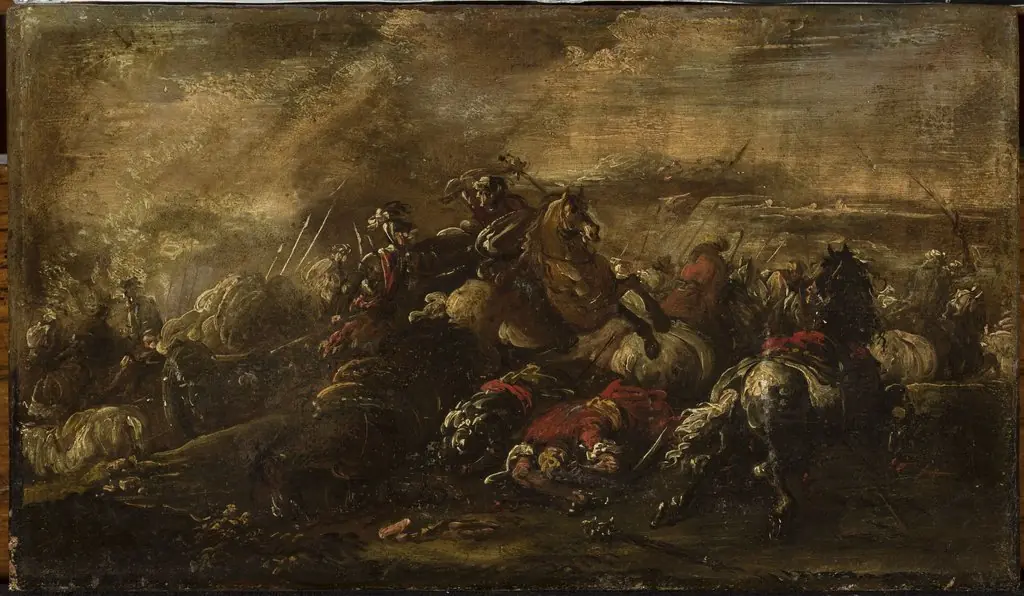
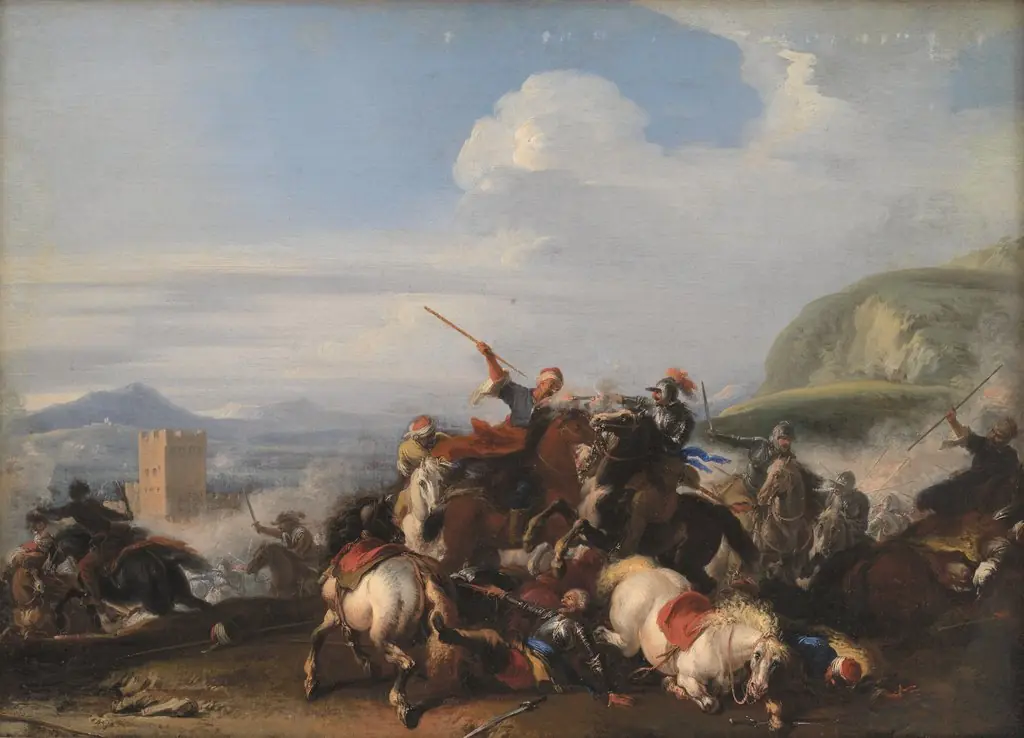
David Teniers the Younger’s 1628 oil on canvas, titled Proezas de Reinaldo frente a los egipcios, is part of the Prado Museum’s collection. The work presents a dynamic equestrian scene in which four mounted figures charge across a landscape, their vivid costumes contrasting with a muted, hazy sky. The composition is anchored by a fallen figure whose broken lute and tangled yarn introduce a note of disruption amid the action.
Own this work as a print
Artist & collection
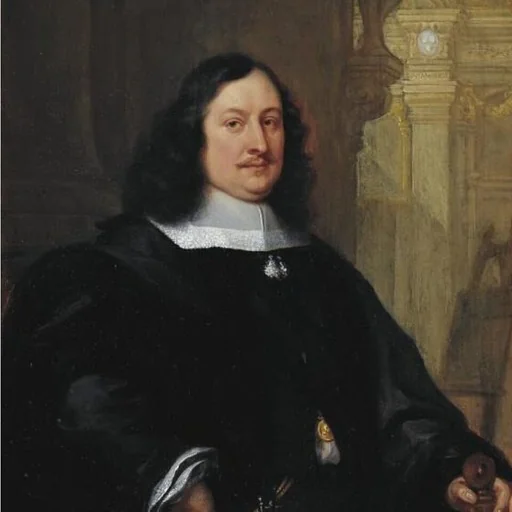
Artist
David Teniers the Younger or David Teniers II was a Flemish Baroque painter, printmaker, and artist.