Artwork
Archduke Leopold Wilhelm in his Gallery
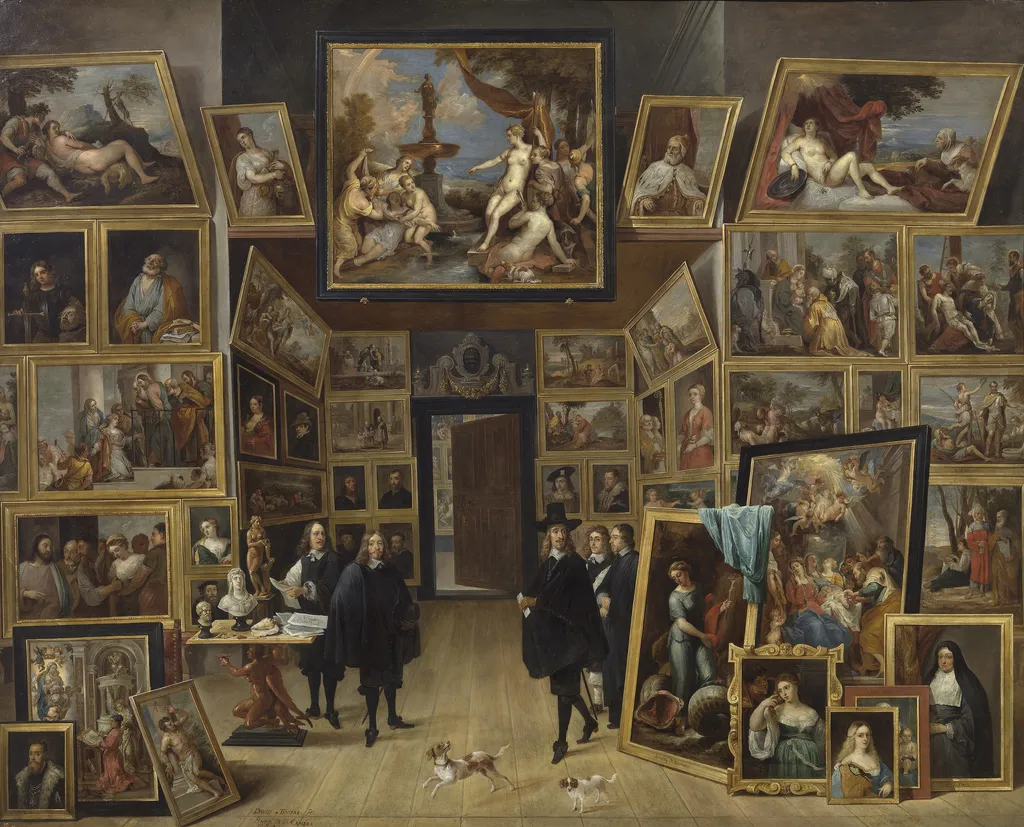
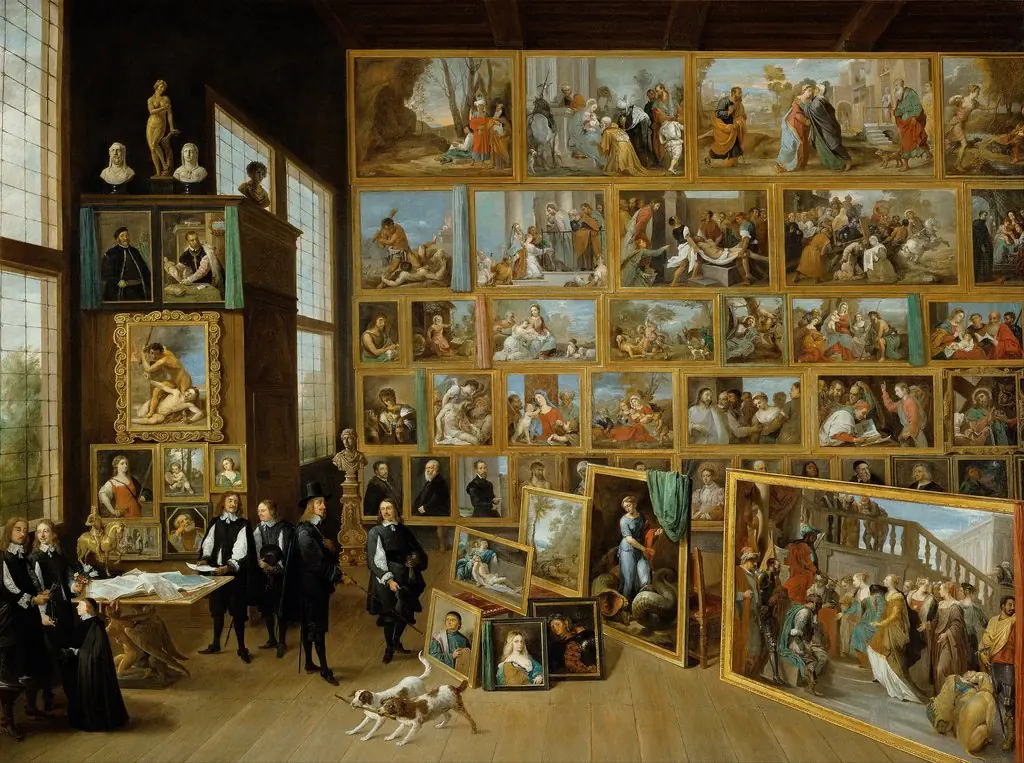
Archduke Leopold Wilhelm in his Gallery is an oil painting by the Flemish Baroque painting artist David Teniers the Younger. It dates from 1649 and is held in the collection of the Museo del Prado.
About this work
In a Brussels gallery around 1649, Archduke Leopold Wilhelm stands amid walls crowded with Titians and Veroneses, his court painter David Teniers the Younger placed at the far left. Painted in oil on copper as a diplomatic gift for Philip IV of Spain, the work records one of Europe's most ambitious Italian collections before the Archduke carried it back to Vienna in 1656.
Subject & Meaning
This composition functions as a visual inventory of the Archduke’s prized possessions, celebrating his role as a discerning connoisseur and patron.
The painting depicts Archduke Leopold Wilhelm in his Brussels gallery, surrounded by his extensive Italian art collection. He stands with companions admiring the works, while the artist David Teniers the Younger is shown at a table inspecting engravings, underscoring the collaborative documentation of the collection. The gallery is filled with recognizable masterpieces, such as Titian's Diana and Callisto, The Three Philosophers, and Danaë, arranged in rows on the walls and propped on chairs for close inspection.
This composition functions as a visual inventory of the Archduke’s prized possessions, celebrating his role as a discerning connoisseur and patron. The iconography of the gallery, with its layered display and figures engaged in appreciation, symbolizes Habsburg wealth, cultural sophistication, and political prestige. Commissioned as a gift for Philip IV of Spain, the work also served to assert the Archduke’s stature, particularly after his acquisition of paintings from the Duke of Hamilton's estate.
Technique & Style
The painting is executed in oil on a copper support, a medium favored by Flemish Baroque artists for its smooth surface and durability, with dimensions of 104.8 × 130.4 cm. The composition is carefully structured to display the collection: rows of paintings line the rear walls, a central doorway reveals further works, and additional canvases lean against chairs in the foreground. This arrangement creates a deep, layered space while emphasizing the documentary purpose of the work. Teniers’ handling is meticulous and detailed, capturing the textures of frames, canvases, and the figures’ attire with precision, typical of his Flemish Baroque style. No information on the current condition is provided in the sources.
History & Provenance
Dating of the painting is contested: the work is inscribed 1649 in the Museo del Prado records, but the Wikipedia entry gives 1651. Archduke Leopold Wilhelm commissioned the work from David Teniers the Younger as a gift for King Philip IV of Spain, possibly to showcase the Archduke's recent Italian acquisitions from the estate sale of the Duke of Hamilton. It was part of a series documenting the collection before Teniers published the Theatrum Pictorium, the first illustrated art catalog.
The painting entered the Spanish royal collection under Ferdinand VII and is now owned by the Museo del Prado.
The painting is held in the Museo del Prado, Madrid, where it is part of the permanent collection. The work was previously owned by Ferdinand VII of Spain before entering the Prado's holdings. No inventory or accession number is recorded in the available sources.
It was featured in the 2006–2007 exhibition 'David Teniers and the Theatre of Painting' at the Courtauld Institute of Art.
Context
David Teniers the Younger, court painter to Archduke Leopold Wilhelm, created this gallery view as part of a series documenting the Archduke's collection. Its primary scholarly significance lies in its direct link to the Theatrum Pictorium (1659), often considered the first illustrated art catalogue, which Teniers produced after the Archduke moved his collection to Austria. The painting was commissioned as a gift for Philip IV of Spain, underscoring its diplomatic function.
Housed in the Museo del Prado since the 19th century, the work remains a key subject for studies of Flemish Baroque gallery painting and early art historiography. An exhibition at the Courtauld Institute of Art (2006–2007) specifically examined Teniers's role in visualizing and cataloguing princely collections.
Overview
This 1651 painting by David Teniers the Younger depicts Archduke Leopold Wilhelm amidst his extensive Italian art collection. Executed in oil on copper, the work offers a detailed view of the Archduke's gallery in Brussels. A significant example of Flemish Baroque art, it is currently housed in the Prado Museum in Madrid, serving as a historical document of a notable European art collection.
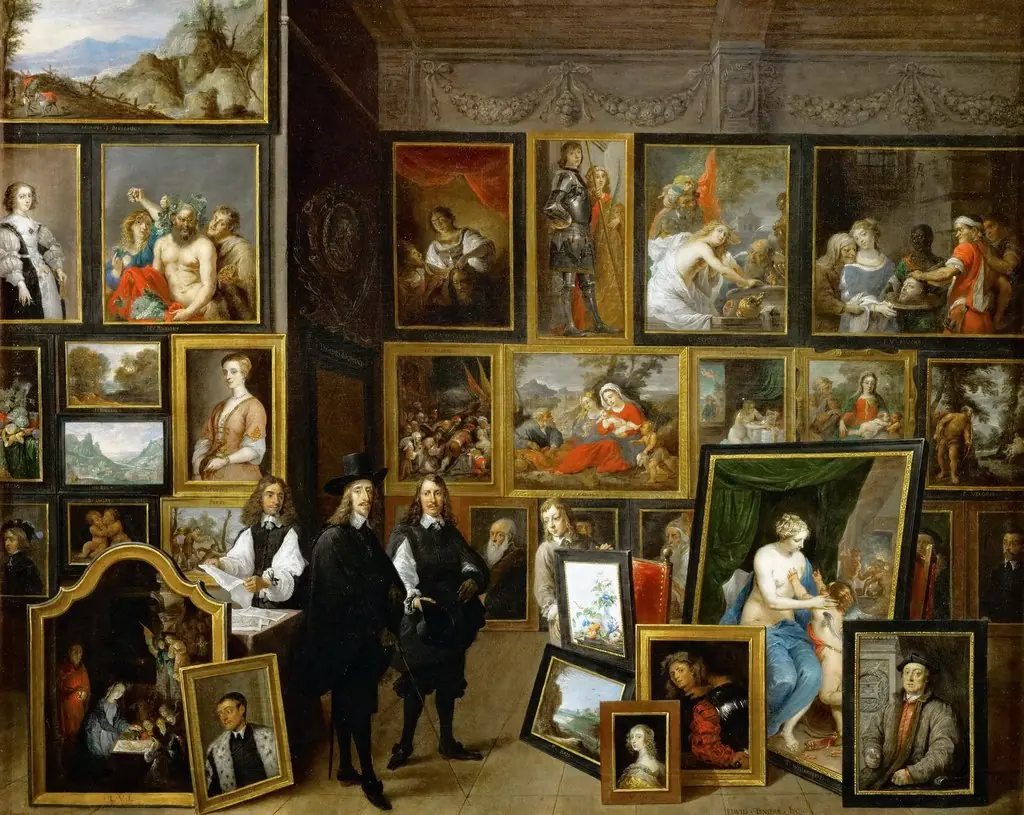
Own this work as a print
Artist & collection
Artist
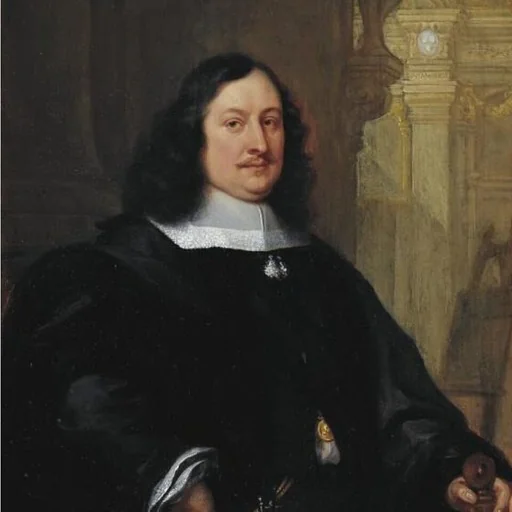
David Teniers the Younger or David Teniers II was a Flemish Baroque painter, printmaker, and artist.

 Appelles painting Campaspe
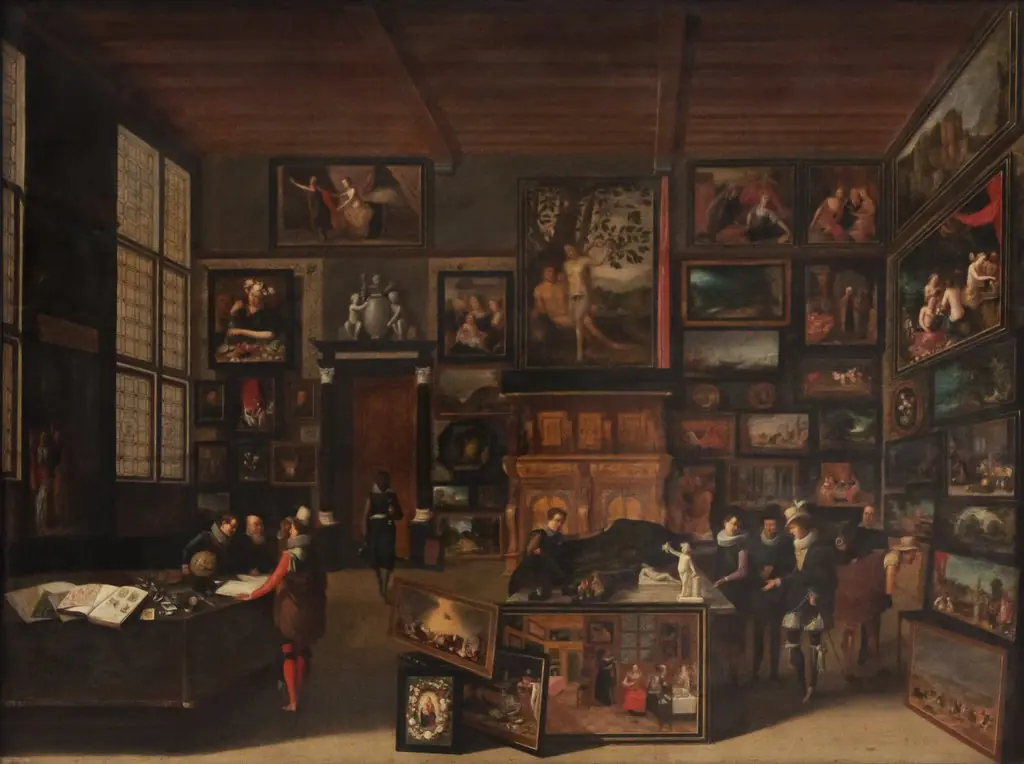 The Art Gallery of Jan Snellinck
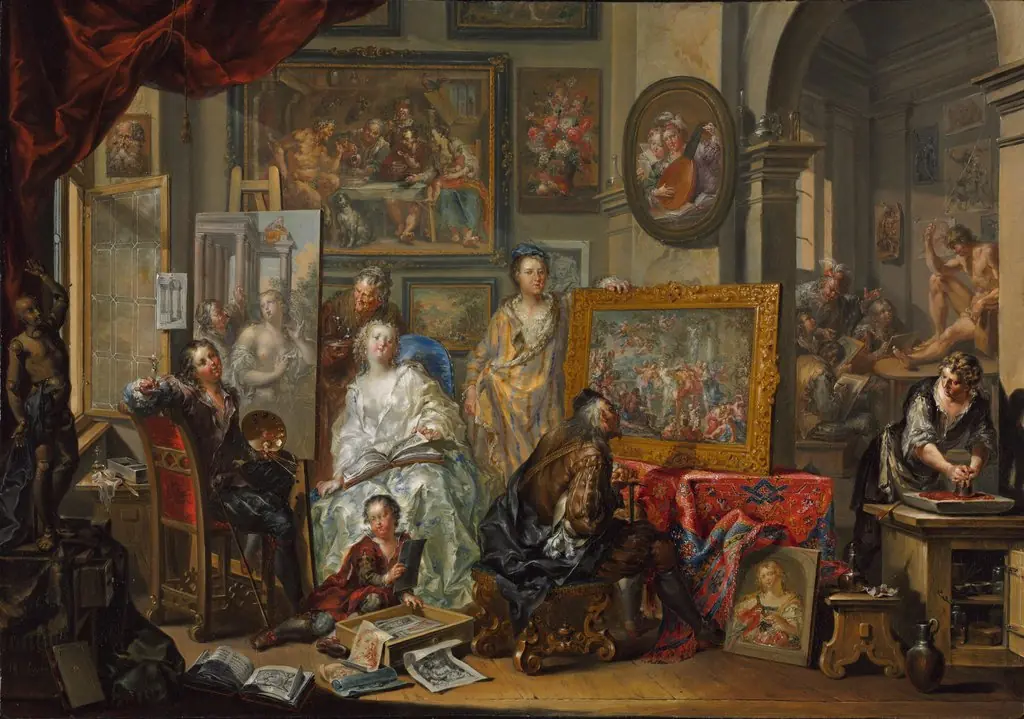 The Artist's Studio
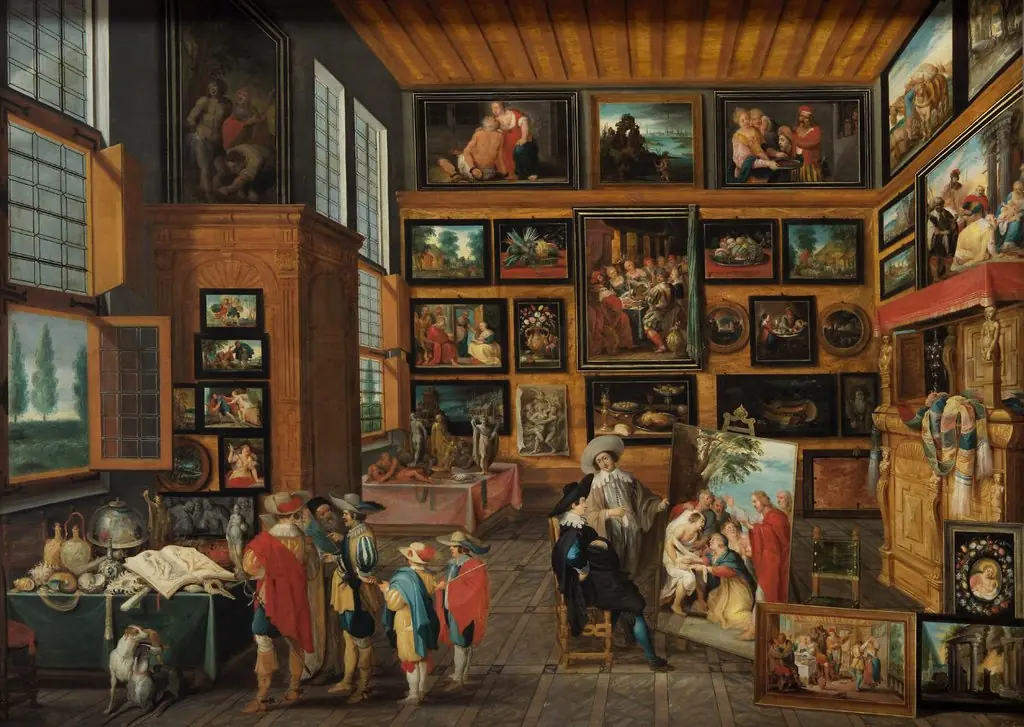 Art and Rarity Cabinet
 A Picture Gallery with an Artist Painting a Woman and a Girl. Allegory of the Art of Painting
 Picture Gallery with Views of Modern Rome
 The Artist's Studio
 Chamber of Art and Curiosities
 The Art Gallery of Josephus Augustinus Brentano