Artwork
Peasants Dancing and Feasting
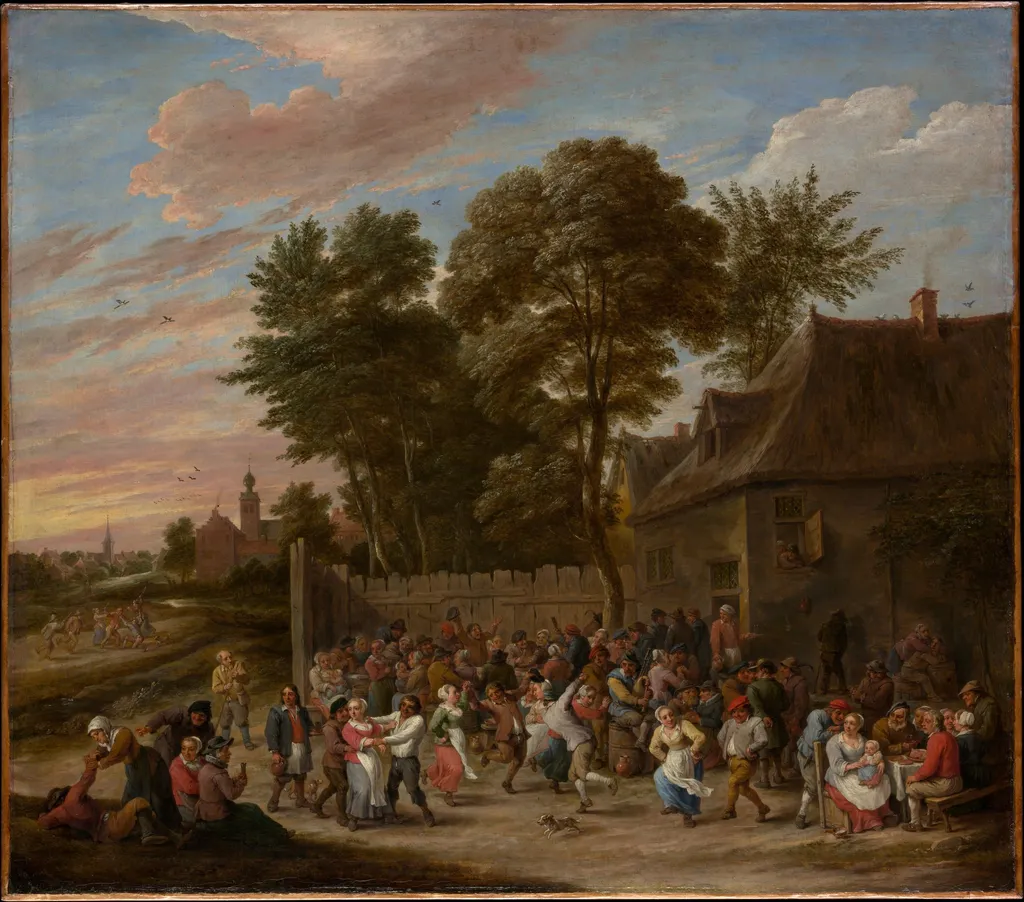
Peasants Dancing and Feasting is an oil painting by the Flemish Baroque painting artist David Teniers the Younger. It dates from 1660 and is held in the collection of the Metropolitan Museum of Art.
About this work
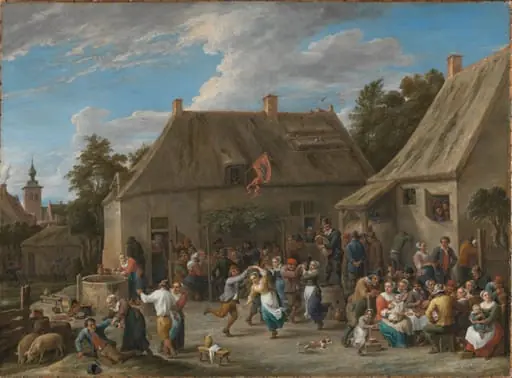
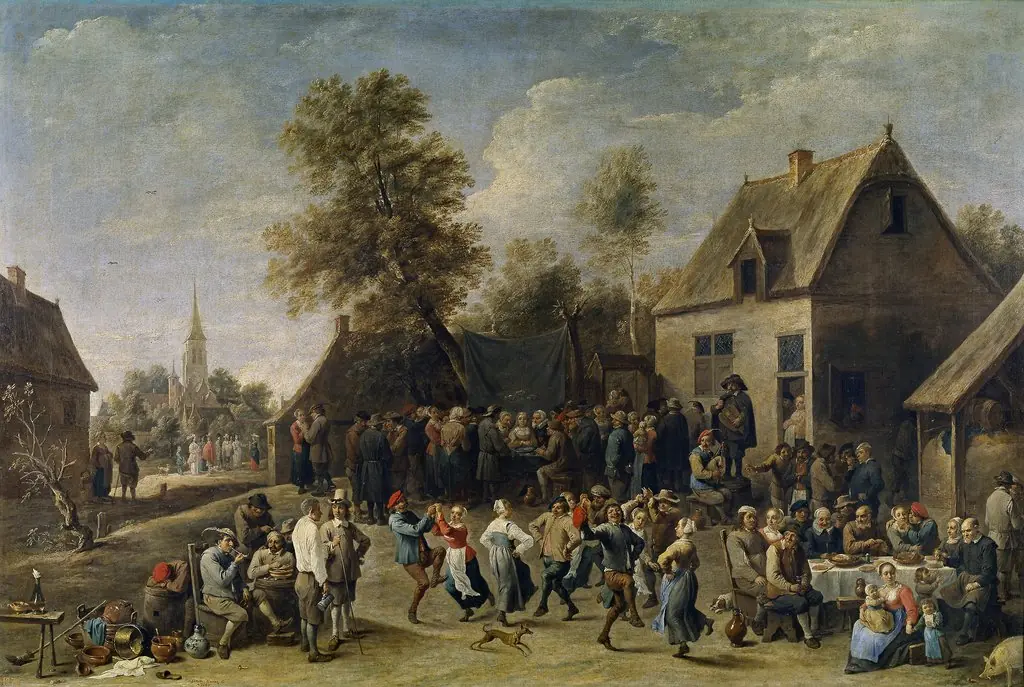
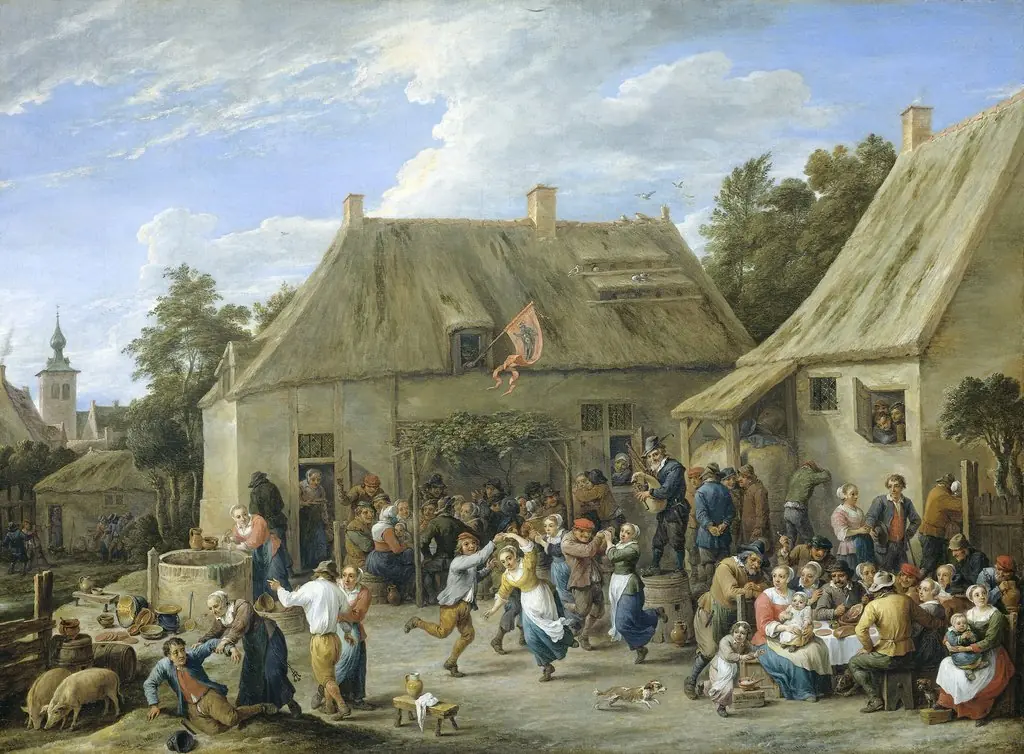
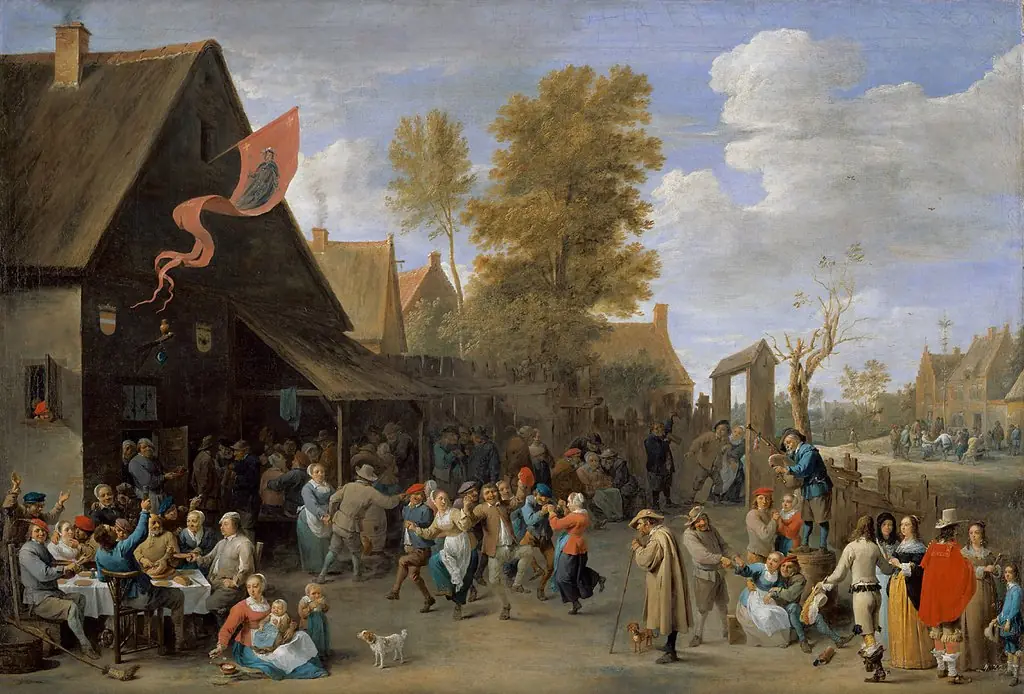
A village celebrates at dusk, the crowd dancing, drinking, and talking by a wooden fence. A woman in white dances with a man while others sit at tables or look on, and a dog rests nearby. A big tree, a thatched house, and a distant steeple stand under a pink and blue sky. David Teniers the Younger, 1660.
Subject & Meaning
The work portrays a lively rural gathering in an inn, where peasants are shown dancing and feasting.
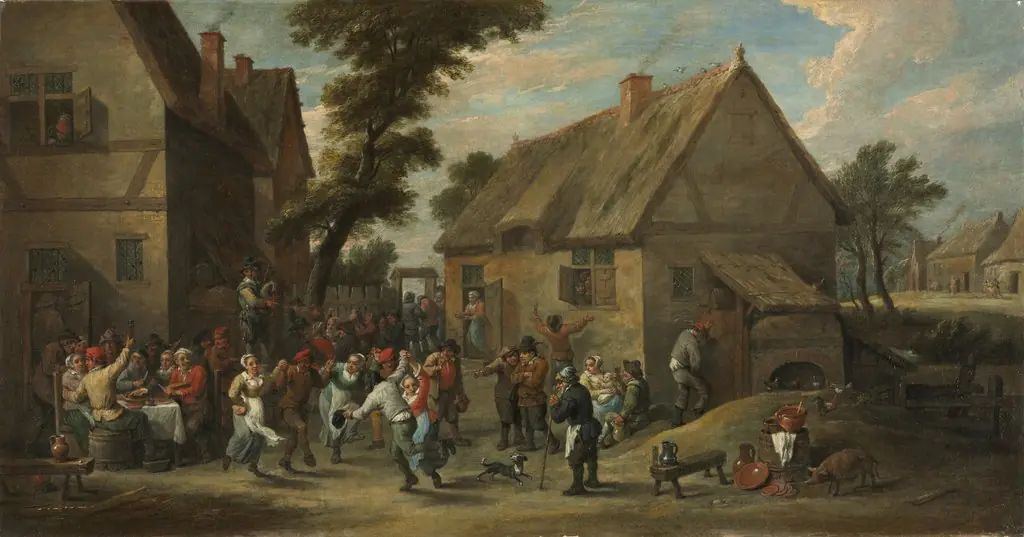
The work portrays a lively rural gathering in an inn, where peasants are shown dancing and feasting. Figures of a man, a woman, and a child are present, along with an inn sign and a church steeple in the background, indicating a communal celebration rooted in everyday life. The scene’s iconography, eating, dancing, and the modest interior, symbolizes the simple joys and collective spirit of 17th‑century peasant culture, suggesting a moralized view of rustic virtue and social harmony.
As a genre scene, the painting captures a festive moment that reflects contemporary attitudes toward peasant festivities and their place within broader societal narratives.
Technique & Style
Peasants Dancing and Feasting is an oil painting on canvas executed by David Teniers the Younger in 1660. The work is a genre scene that depicts a lively peasant fête, with figures engaged in dance, eating, and merrymaking before an inn backdrop that includes a steeple and a child. The support is a woven canvas, and the medium is oil paint, which allows for the detailed rendering of textures and the vibrant coloration typical of Teniers’ genre compositions.
Overview
Painted in 1660, Peasants Dancing and Feasting is a genre scene by David Teniers the Younger that captures a rustic village celebration at dusk. The composition centers on a dynamic gathering of men, women, and children engaged in dancing, drinking, and conversation before a wooden fence. Teniers arranges the figures to create a sense of bustling movement, with some seated at tables while others stand or circulate through the space.
A large tree and a small thatched-roof house in the background frame the activity, establishing a distinct rural setting. Executed in oil paint, the work exemplifies the artist's mature style within the Flemish Baroque tradition, where he specialized in depicting peasant life with both observation and a touch of satire. This period of Teniers' career is characterized by a refined handling of light and texture, often used to animate everyday social interactions.
The painting reflects the broader 17th-century Flemish interest in genre subjects, elevating common village festivities into detailed, narrative compositions that balance humor with a realistic portrayal of contemporary customs.
Own this work as a print
Artist & collection
Artist
David Teniers the Younger or David Teniers II was a Flemish Baroque painter, printmaker, and artist.