Artwork
Frascati
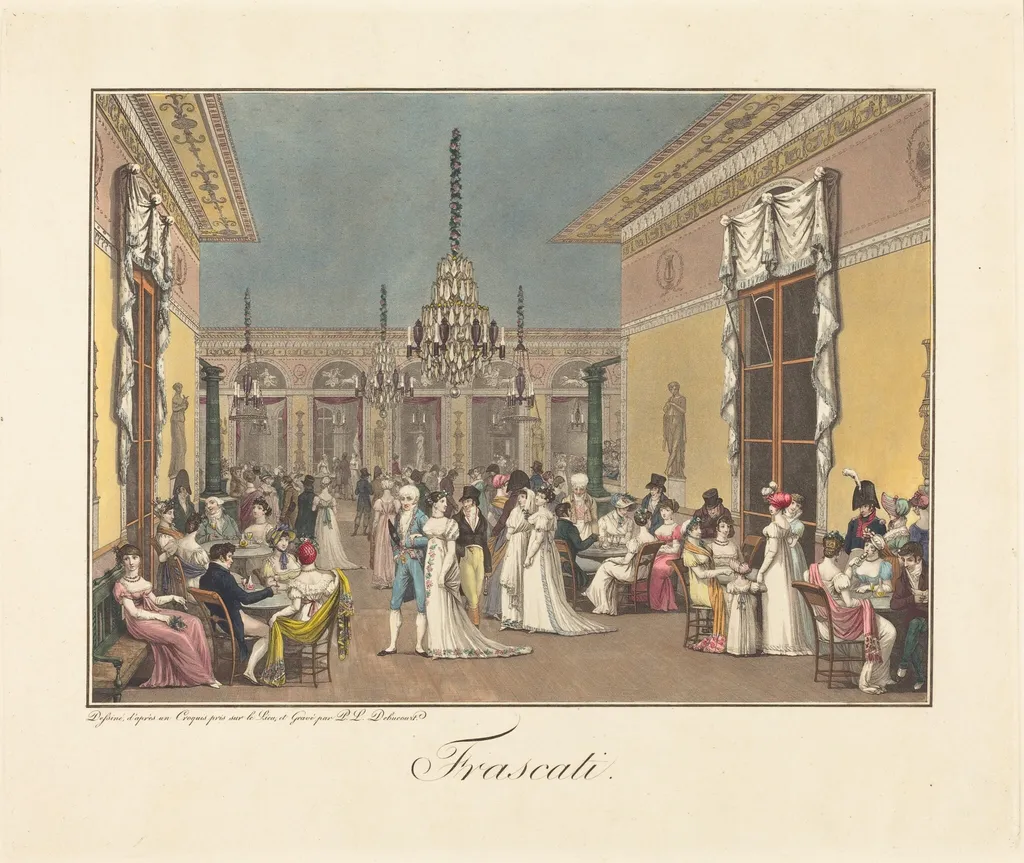
Frascati is an ink print by the Romanticist artist Philibert-Louis Debucourt. It dates from 1807 and is held in the collection of the National Gallery of Art.
About this work
Overview
The work depicts an interior scene bustling with elegantly dressed figures, illuminated by natural light through tall windows and a central chandelier.
Frascati, executed in 1807 by French printmaker Philibert‑Louis Debucourt, is a hand‑colored etching and aquatint on wove paper. The work depicts an interior scene bustling with elegantly dressed figures, illuminated by natural light through tall windows and a central chandelier. Its composition balances detailed line work with tonal washes, creating a vivid snapshot of early‑nineteenth‑century social life.
Subject & Meaning
The print portrays a salon filled with men and women in contemporary attire, engaged in conversation, tea drinking, and leisurely gestures. The arrangement of furnishings, tables bearing teacups and fans, walls painted in muted yellows and blues, conveys a refined domestic setting. The lively interaction among the figures suggests a celebration of fashionable society and the pleasures of genteel gathering.
Technique & Style
Debucourt combined precise etching lines with aquatint shading to render both the crisp outlines of clothing and the softer atmospheric effects of light. Hand‑applied color highlights the bright dresses and the dark window frames, enhancing depth and contrast. This hybrid approach allows for detailed texture while maintaining the fluid tonal qualities characteristic of early 19th‑century French printmaking.
History & Provenance
Created during the Napoleonic era, Frascure reflects the period’s interest in documenting contemporary urban life. The print was produced in Debucourt’s workshop, known for its high‑quality hand‑colored editions, and circulated among collectors of fashionable genre scenes. Its survival in museum collections attests to its continued relevance as a visual record of the era’s interior aesthetics.
Context
The early 1800s saw a rise in prints that captured everyday social rituals, catering to a growing middle‑class market eager for affordable art. Debucourt’s work aligns with this trend, offering a glimpse into the domestic interiors and sartorial tastes that defined post‑revolutionary French society.
Legacy
Frascure remains a reference point for scholars studying the intersection of print technology and social representation in the early nineteenth century. Its combination of technical finesse and narrative detail continues to inform understandings of period fashion, interior design, and the evolution of hand‑colored printmaking.
Own this work as a print
Artist & collection
Artist
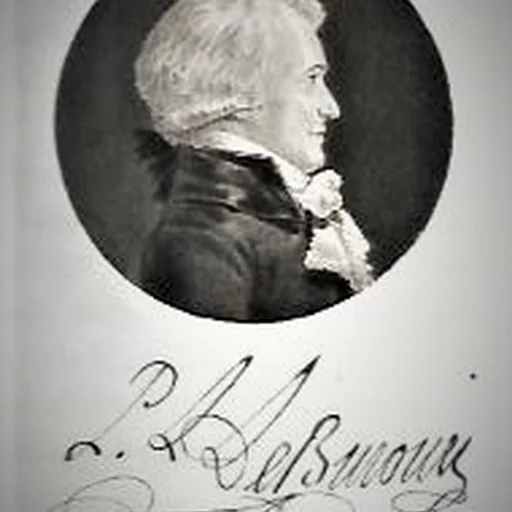
Philibert-Louis Debucourt (1755–1832) was a French artist, born in Paris.

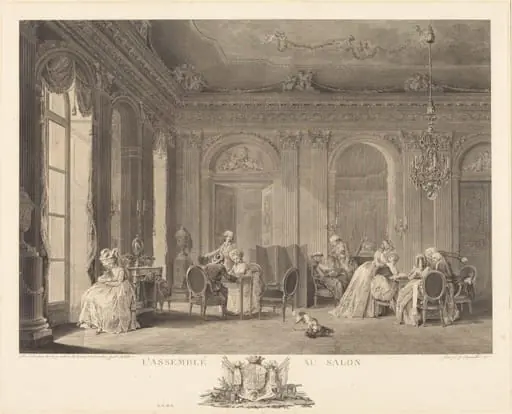
- L'assemblee au salon
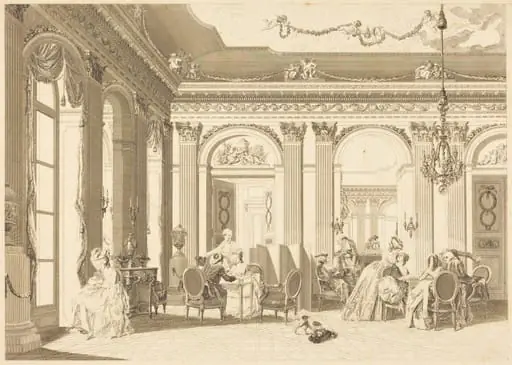 L'assemblee au salon
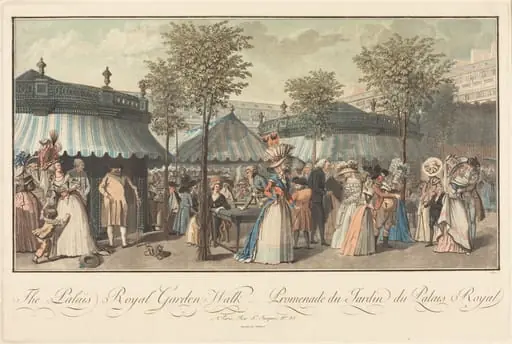 The Palais Royal--Garden's Walk
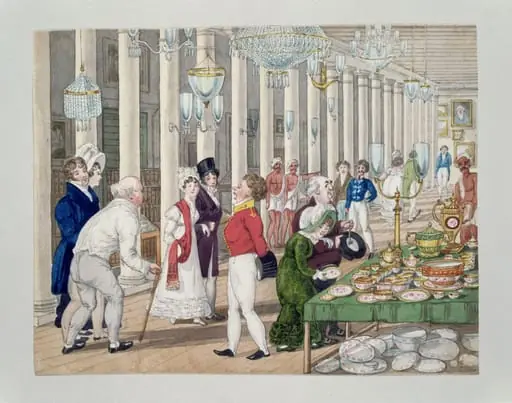 Tom Raw visits Taylor & Co.'s emporium in Calcutta
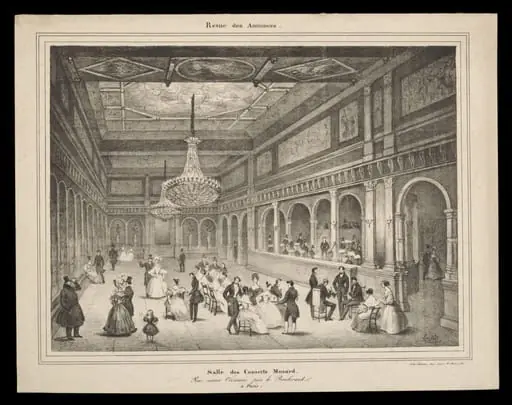 H Beard Print Collection
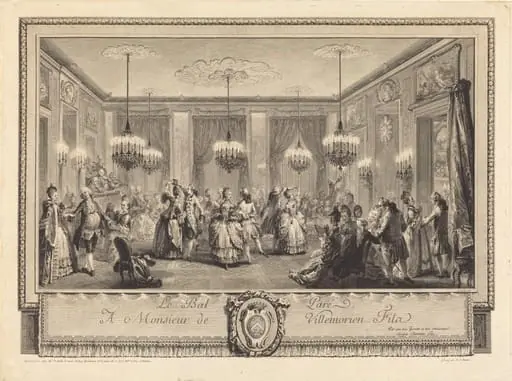 Le bal paré
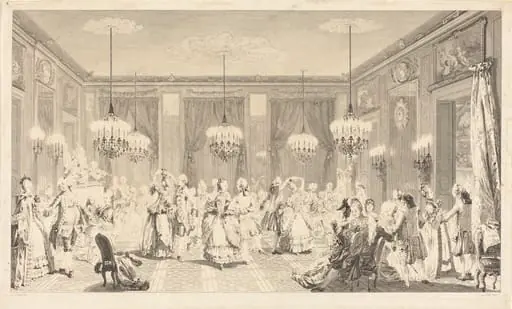 Le bal pare
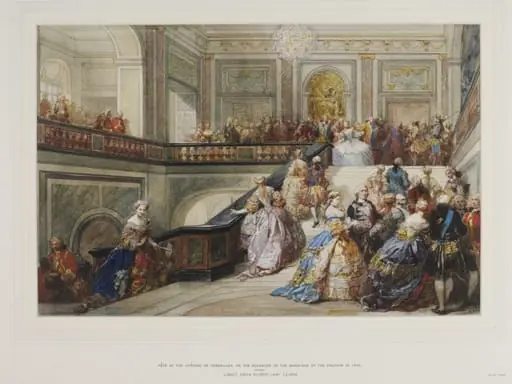 Fete at the Chateau de Versailles in 1745 on the occasion of the marriage of the Dauphin
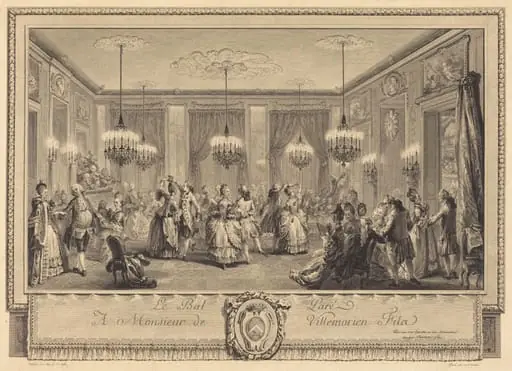 Le bal pare
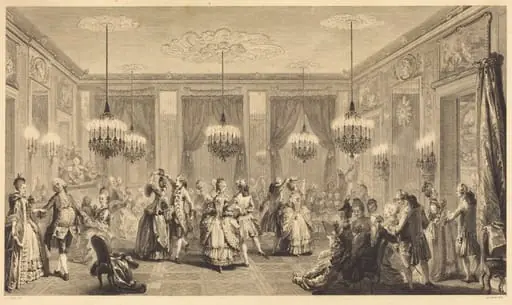 Le bal paré
 Vauxhall Gardens
 La Reine annonçant à Mme Bellegarde, des Juges, et la liberté de son mari en mai 1777