Artwork
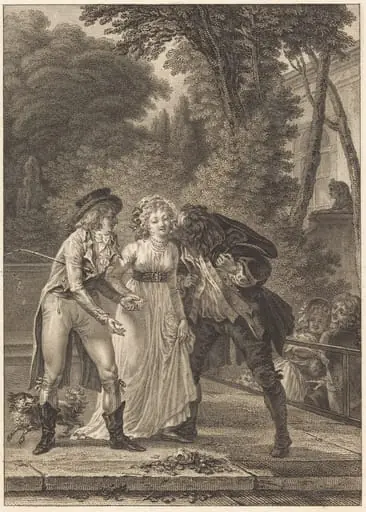
L'Escalade, ou les Adieux du Matin
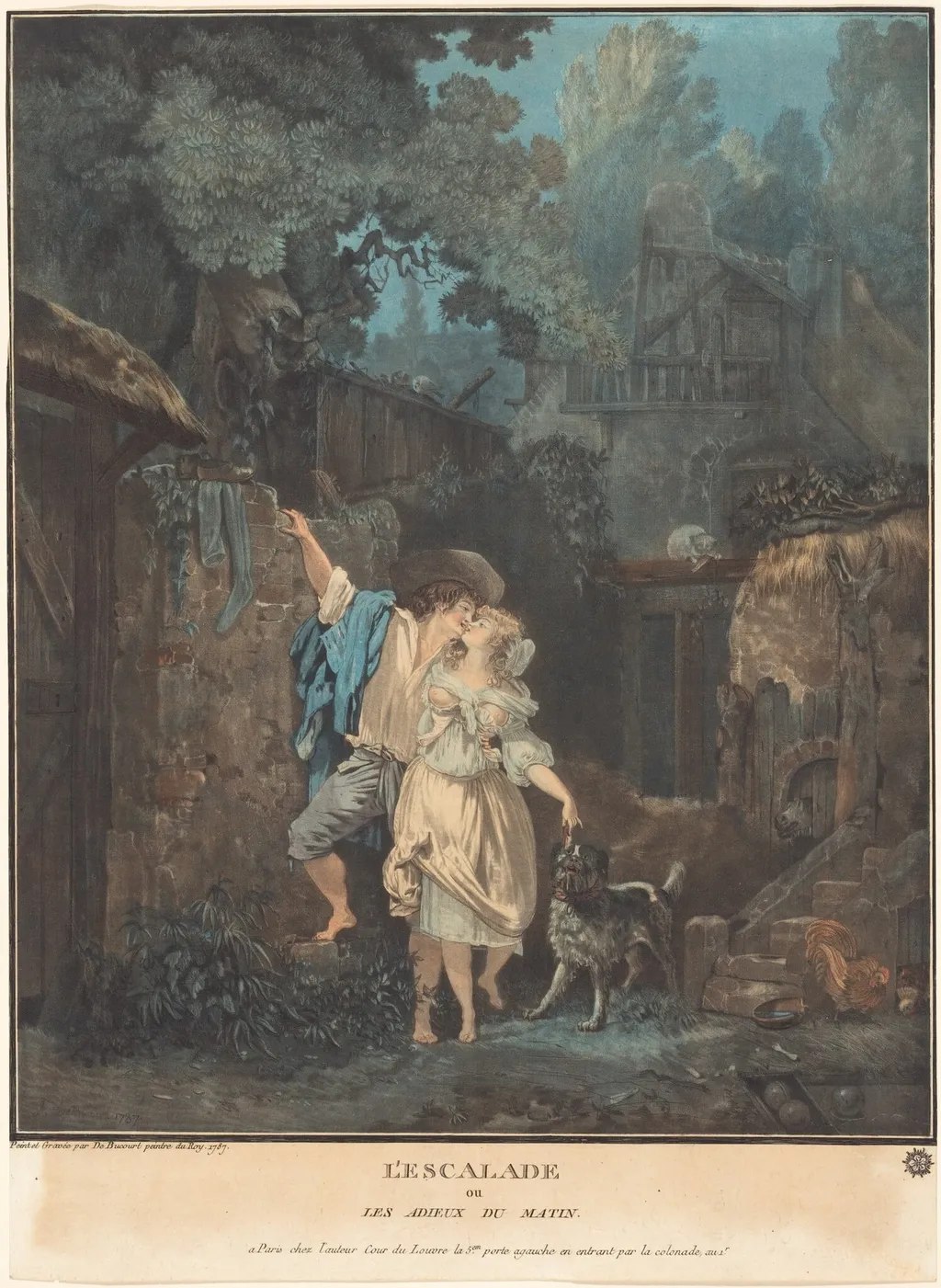
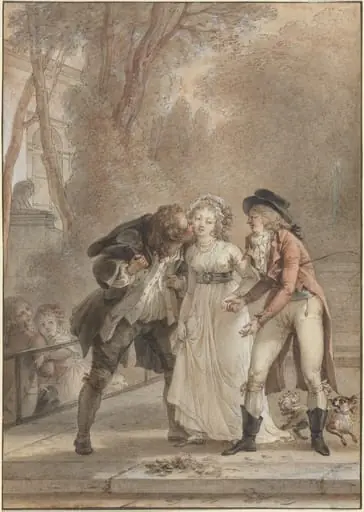
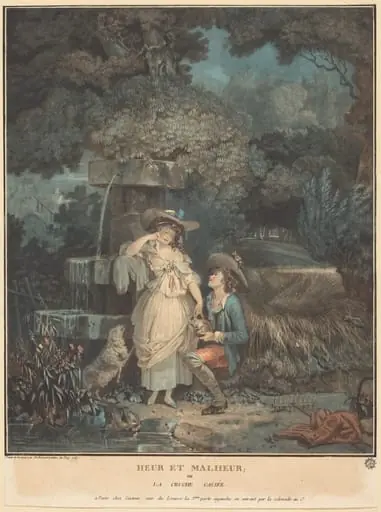
L'Escalade, ou les Adieux du Matin is an ink print by the Romanticist artist Philibert-Louis Debucourt. It dates from 1787 and is held in the collection of the National Gallery of Art.
- Inscription
- Inscribed:recto: in plate, in image, at lower left: Le DeBucourt 1787; in plate, below image, at left: Peint et Gravée par DeBucourt. Peintre du Roy. 1787; in plate, below image, at center: L'ESCALADE / OU / LES ADIEUX DU MATIN / a Paris chez l'auteur Cour du Louvre la 5.em porte agauche en entrant par la colonnade au1er
- Markings
- Marked:recto: flower stamp in black [unidentified, Lugt 2832]; verso: National Gallery of Art
About this work
Overview
Produced during the late Ancien Régime, this piece exemplifies Debucourt's mastery of the color print medium, a technique he helped popularize in France.
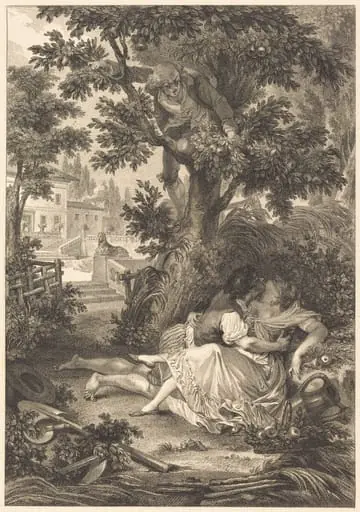
L'Escalade, ou les Adieux du Matin is a color etching and wash manner print created by Philibert-Louis Debucourt in 1787. The work depicts a domestic farewell scene set outside a rustic dwelling at dawn. A barefoot man, dressed in a blue coat and wide-brimmed hat, stands facing a woman who holds an infant, while a dog accompanies them near the threshold.
The composition includes specific details of rural life, such as laundry hanging on a line and chickens pecking at the ground, grounding the emotional moment in a tangible, everyday environment. Produced during the late Ancien Régime, this piece exemplifies Debucourt's mastery of the color print medium, a technique he helped popularize in France. The artist utilized the wash manner to achieve soft tonal transitions and atmospheric depth, moving beyond the linear constraints of traditional etching.
This work reflects the 18th-century French interest in genre scenes that blend sentimental narrative with precise observation of contemporary customs. It stands as a significant example of Debucourt's contribution to the evolution of reproductive and original printmaking, bridging the gap between high art and accessible visual culture before the French Revolution.
Subject & Meaning
The composition depicts a man and a woman parting outside a modest farmhouse. The man, barefoot and dressed in a blue coat with a wide‑brimmed hat, stands beside the woman who cradles a child; a dog wanders nearby. Inside the doorway, a cat watches, while chickens peck on the ground, suggesting a moment of everyday farewell, possibly linked to a local morning ritual.
Technique & Style
Debucourt employed a layered approach typical of his color etchings, combining line work with washes to achieve depth and tonal variation. The use of laid paper provides a subtle texture that enhances the atmospheric light, while the muted palette reinforces the scene’s calm, realistic tone.
History & Provenance
The print was produced in the late eighteenth century, a period when French artists increasingly explored genre scenes of rural life. It remains documented as part of Debucourt’s oeuvre of domestic subjects, though specific ownership records after its creation are limited.
Context
During the 1780s, French printmaking saw a rise in works that depicted ordinary moments with a refined, intimate sensibility. Debucourt’s L’Escalade aligns with this trend, offering a glimpse into provincial customs and the visual language of everyday French society on the eve of the Revolution.
Own this work as a print
Artist & collection
Artist
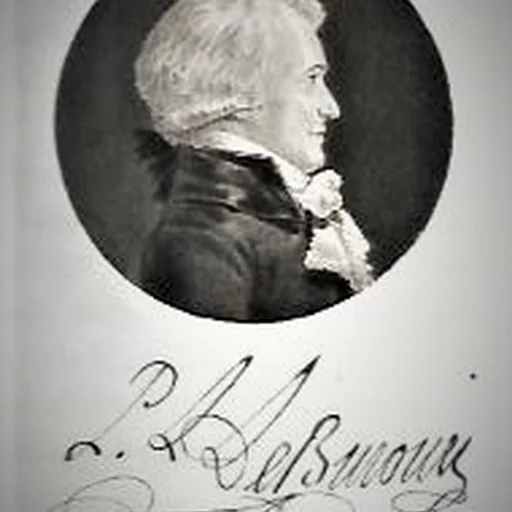
Philibert-Louis Debucourt (1755–1832) was a French artist, born in Paris.