Artwork
La Main
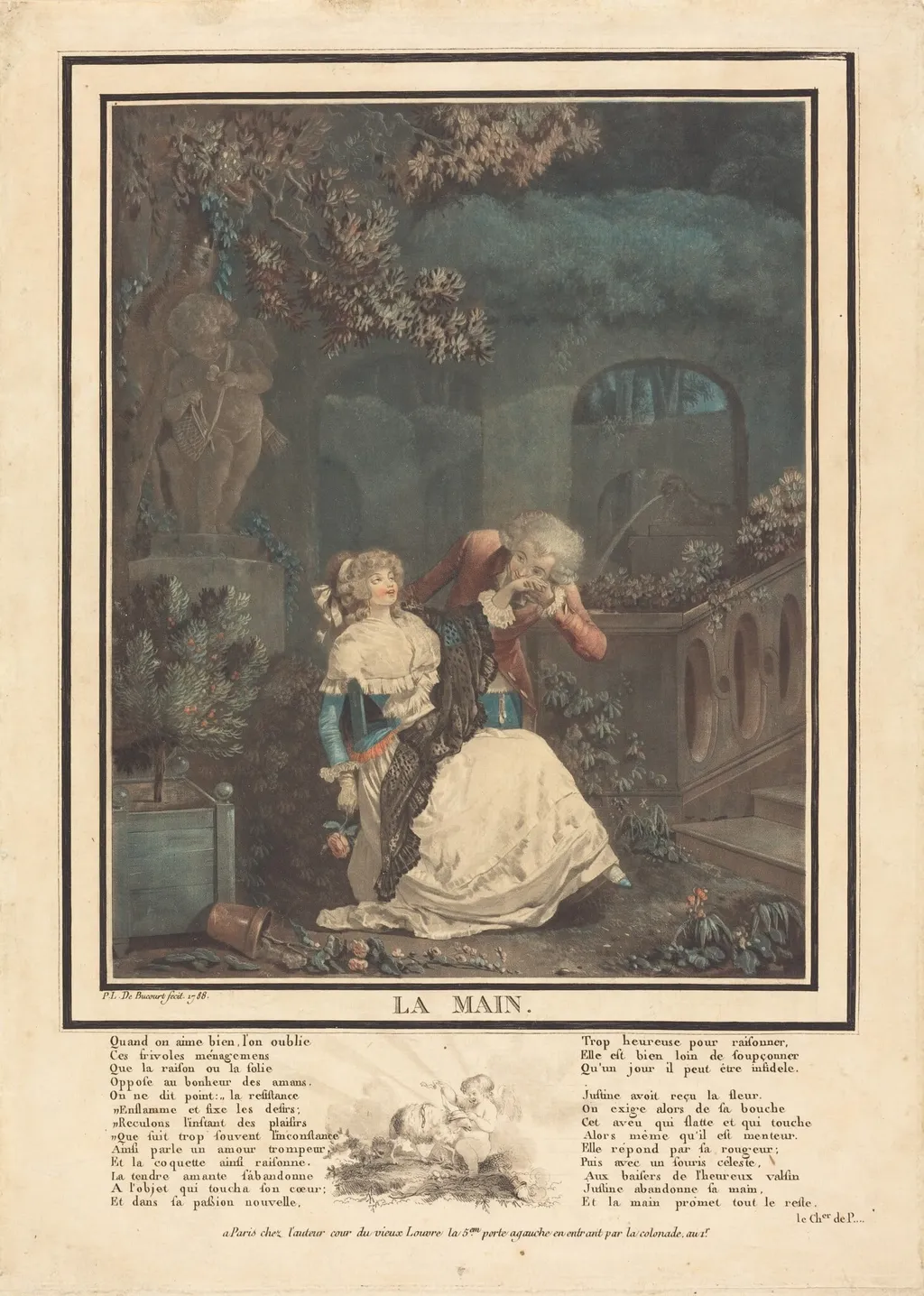
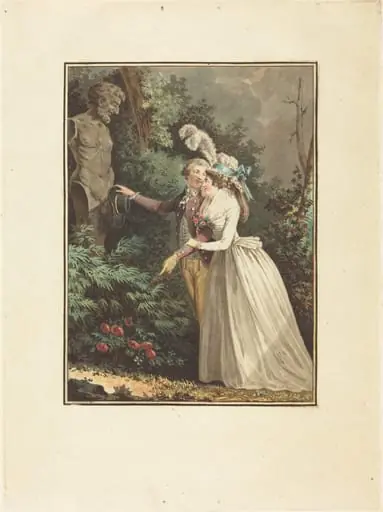
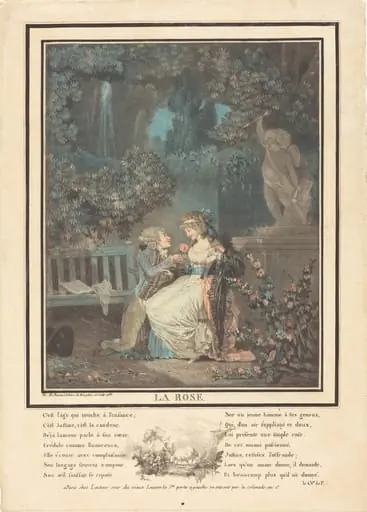
La Main is an ink print by the Romanticist artist Philibert-Louis Debucourt. It dates from 1788 and is held in the collection of the National Gallery of Art.
- Inscription
- Inscribed:recto: in plate, below image, at left: P.L. De Bucourt fecit. 1788; in plate, below image, at center: LA MAIN; in plate, at bottom center: a Paris chez l'auteur cour du vieux Louvre 5.me porte a gauche en entrant par la colonnade, au 1r.
- Markings
- Marked:recto: none; verso: National Gallery of Art
About this work
Her palm faces us, fingers half-curled, almost offering something, or maybe asking for it.
In this tiny etching, a woman in a white bonnet holds out a gloved hand. The ink bleeds softly at the edges, like watercolor. Her palm faces us, fingers half-curled, almost offering something, or maybe asking for it.
This was new in 1788. Artists rarely printed hands this way, so lifelike yet so delicate. The dark background makes her glove glow, like she’s lit from within.
Try looking up Debucourt, Philibert-Louis.
Overview
La Main, executed in 1788 by French printmaker Philibert‑Louis Debucourt, is a small color etching and wash on laid paper. The work presents a solitary female figure whose hand, gloved and extended, dominates the composition against a dark field. The delicate rendering of the hand, with soft ink edges that resemble watercolor, marks the piece as a notable example of late‑eighteenth‑century print experimentation.
Subject & Meaning
The central motif is a woman’s hand, palm outward and fingers partially curled, suggesting a gesture of offering or request. She wears a white bonnet and a glove that catches the viewer’s attention, while the surrounding darkness isolates the gesture, inviting contemplation of the act of giving or receiving without explicit narrative context.
Technique & Style
Debucourt combined traditional intaglio etching with a wash applied in color, allowing the ink to bleed subtly at the margins and create a luminous effect. The laid paper’s texture contributes to the tactile quality of the image. The contrast between the dark background and the illuminated glove demonstrates a nuanced handling of light within the print medium, uncommon for the period.
History & Provenance
Created in 1788, La Main reflects Debucourt’s interest in advancing print techniques during the pre‑Revolutionary era in France. While specific ownership records are limited, the work has been cited in scholarly surveys of eighteenth‑century French prints as an illustration of the artist’s innovative approach to rendering human anatomy in print form.
Own this work as a print
Artist & collection
Artist
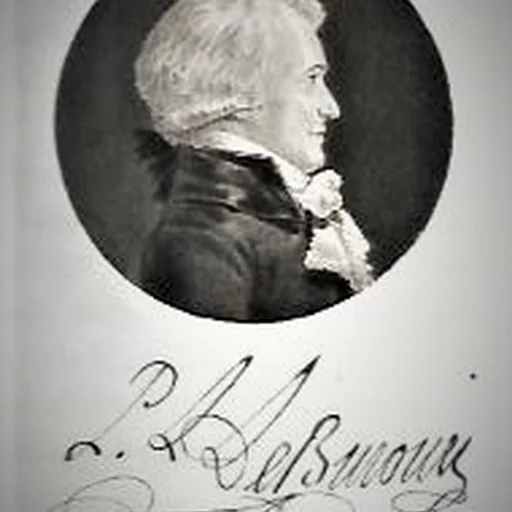
Philibert-Louis Debucourt (1755–1832) was a French artist, born in Paris.