Artwork
Forest Scene
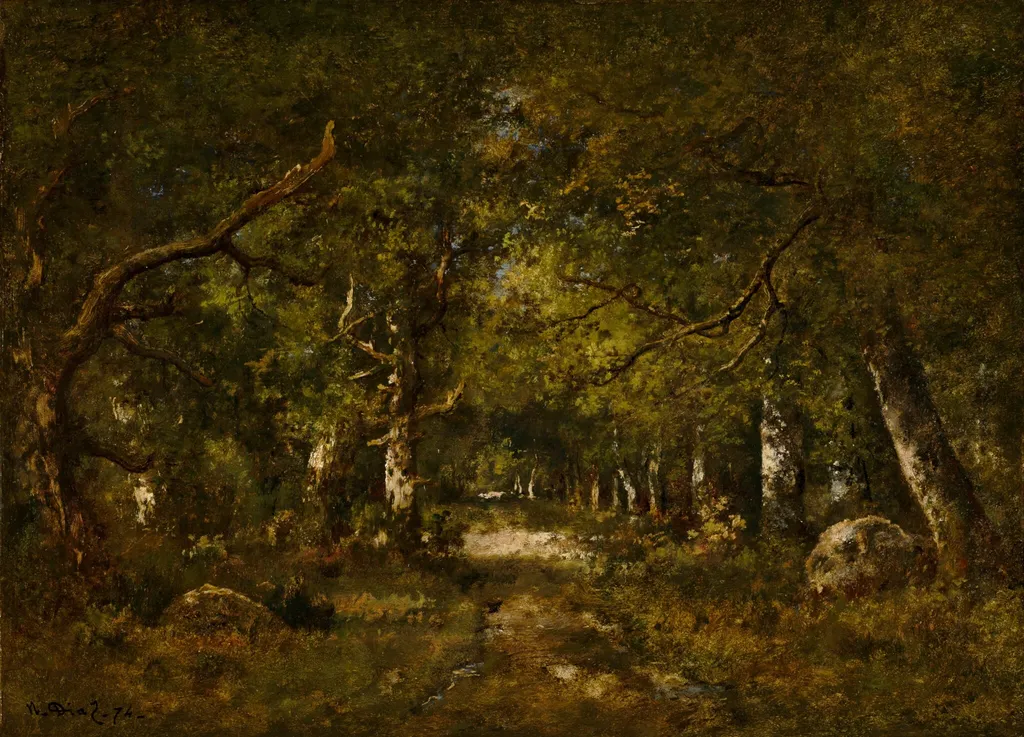
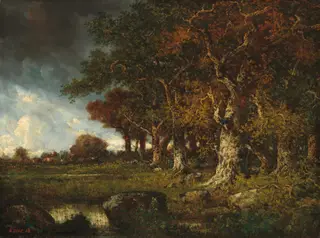
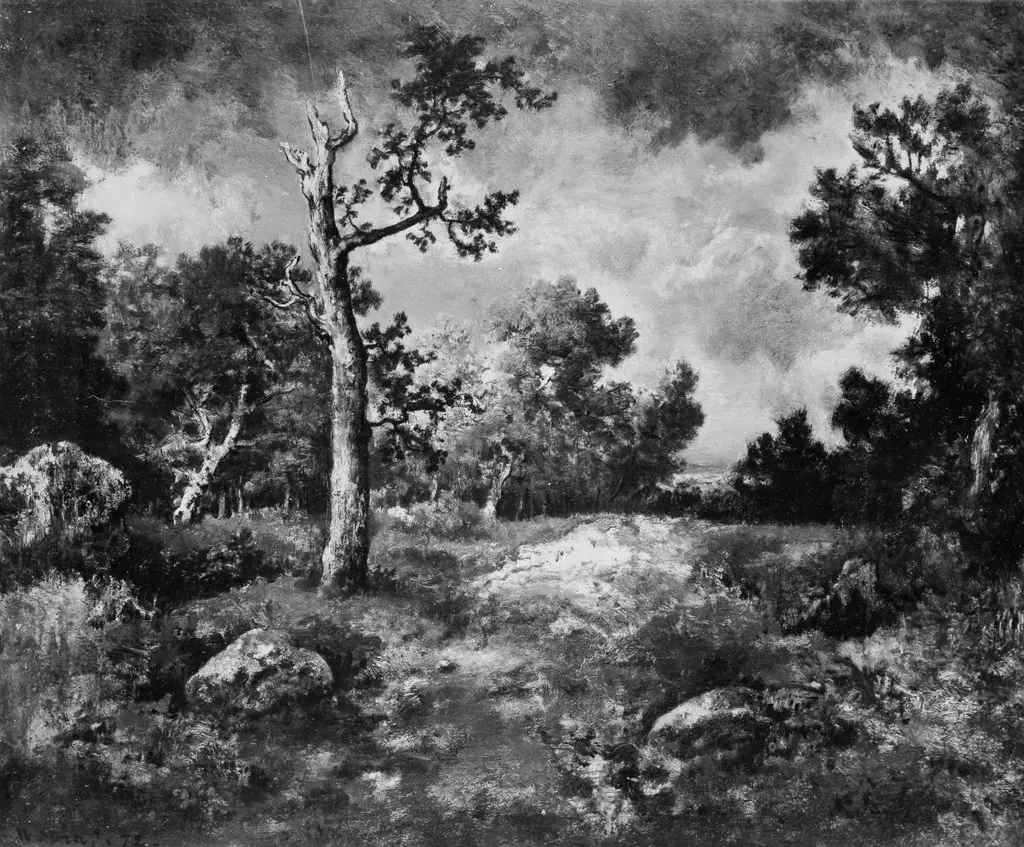
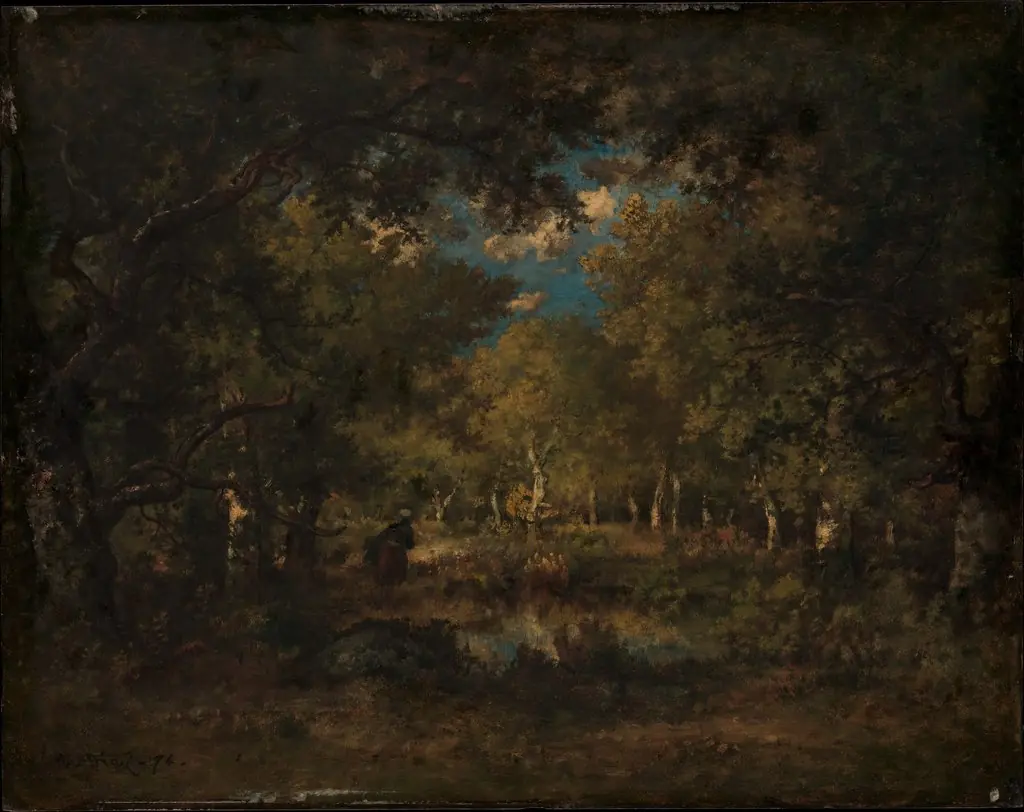
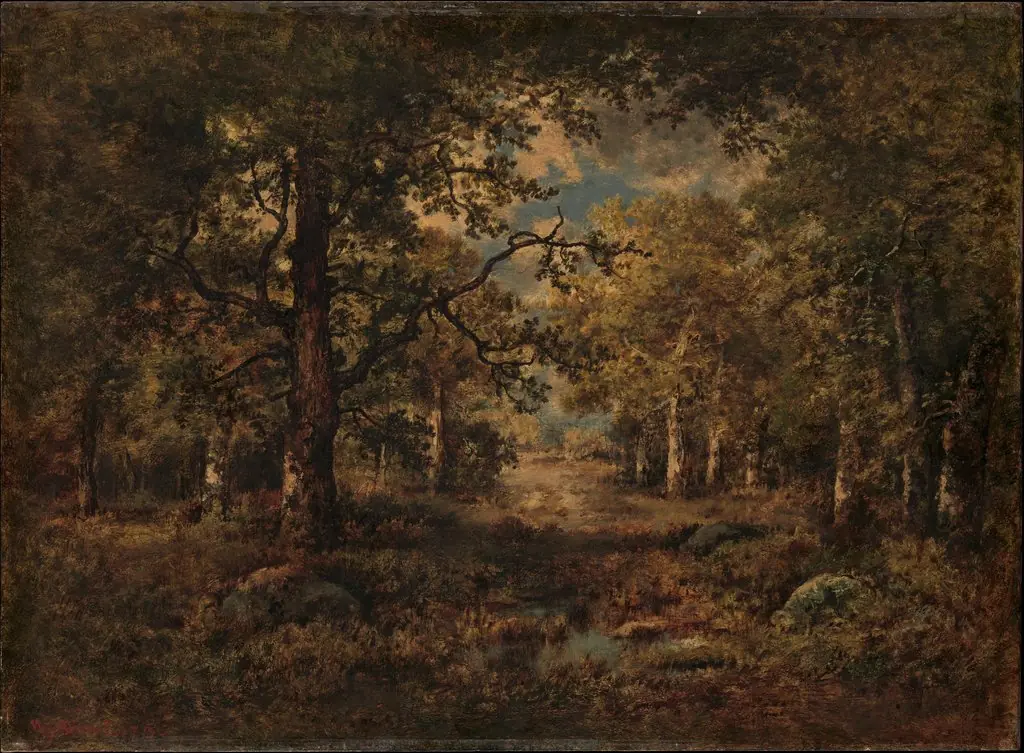
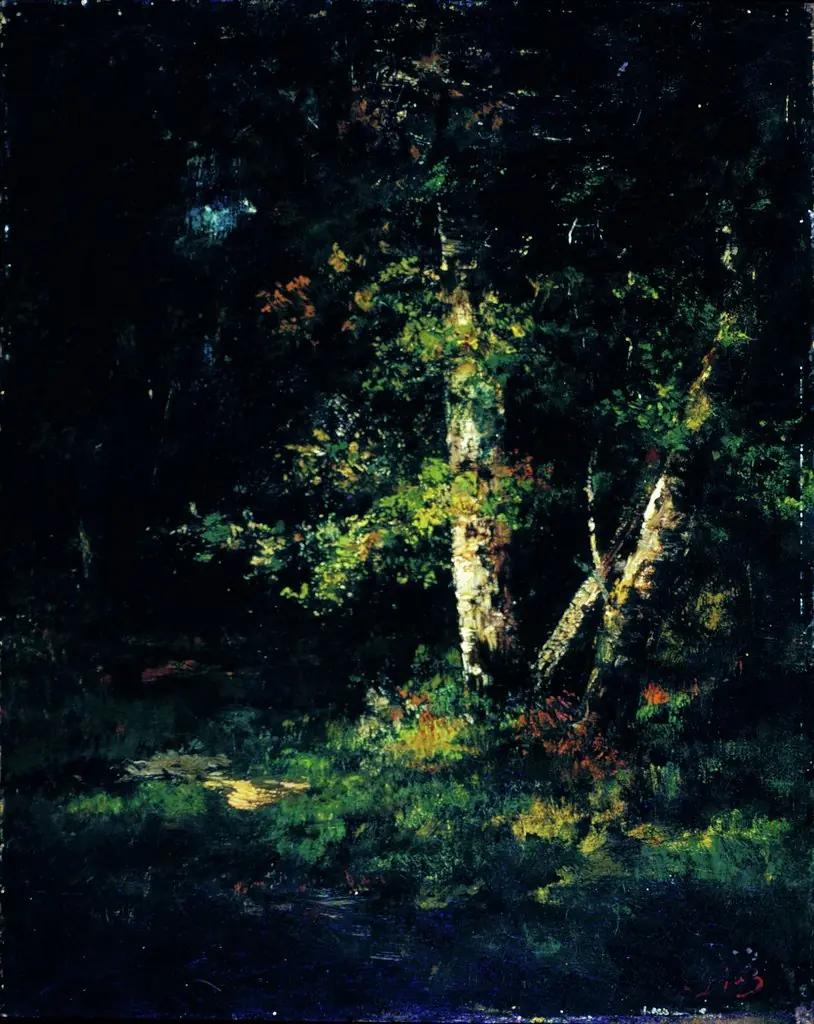
Forest Scene is an oil painting by the Barbizon school artist Narcisse Virgilio Díaz. It dates from 1874 and is held in the collection of the National Gallery of Art.
- Inscription
- Inscribed:lower left: N. Diaz - 74 -
About this work
History & Provenance
The documented ownership chain begins with James Staats Forbes in London, where it was listed as number 382 in his collection.
Narcisse Diaz de la Peña created the oil-on-wood landscape Forest Scene in 1874. The documented ownership chain begins with James Staats Forbes in London, where it was listed as number 382 in his collection. It subsequently passed through the Parisian dealer Boussod, Valadon et Cie. before being sold to M. Knoedler & Co. on 22 May 1905.
Knoedler sold the painting to Walter G. Jennings of New York on 8 January 1910, but it was returned to the dealer on 9 April 1912 and resold to R. Horace Gallatin on 7 June 1912. Gallatin held the piece until 1949, when he gave it to the National Gallery of Art in Washington, D.C. Knoedler's stock books recorded the work variously as Sous Bois and Underbrush, Forest of Fontainebleau. The available sources do not document any public exhibition history.
Legacy
Forest Scene (1874), an oil-on-wood landscape, entered the National Gallery of Art in 1949 as a gift from R. Horace Gallatin, following a documented chain of ownership that ran from James Staats Forbes through M. Knoedler & Co. to Gallatin. Recorded in Knoedler's stock books, the work situates Diaz de la Peña within the tradition of mid-nineteenth-century French Barbizon landscape painting.
Overview
Narcisse Diaz de la Peña's Forest Scene, completed in 1874, is an oil painting rendered on a wood panel. This artwork presents a natural landscape, focusing on the dense foliage and towering forms within a wooded area. It exemplifies the artist's engagement with natural subjects, a common theme in his oeuvre. The painting's intimate scale and direct depiction suggest a focused study of the environment.
Subject & Meaning
The painting primarily depicts a forest interior, characterized by tall trees that dominate the composition. While the specific location is not identified, the work emphasizes the textures and light within a natural setting. The artist's choice to focus on a singular tree or a small cluster within a larger forest invites contemplation of nature's details rather than a grand, expansive vista, highlighting the quiet beauty of the woodland.
Technique & Style
Created using oil paints on a wood panel, Forest Scene showcases Diaz de la Peña's approach to rendering natural forms. The use of wood as a support often lends a certain luminosity and stability to the painted surface, allowing for detailed brushwork and rich color application. This choice of medium was common among artists seeking to capture the nuances of light and shadow in landscape studies, contributing to the work's atmospheric quality.
Context
Forest Scene was created in 1874, a period when landscape painting was gaining significant traction and evolving within the art world. Artists like Diaz de la Peña, often associated with the Barbizon School, played a role in shifting artistic focus towards direct observation of nature. His work contributes to the broader movement that valued natural settings as worthy subjects for artistic exploration, moving away from historical or mythological narratives.
Own this work as a print
Artist & collection
Artist
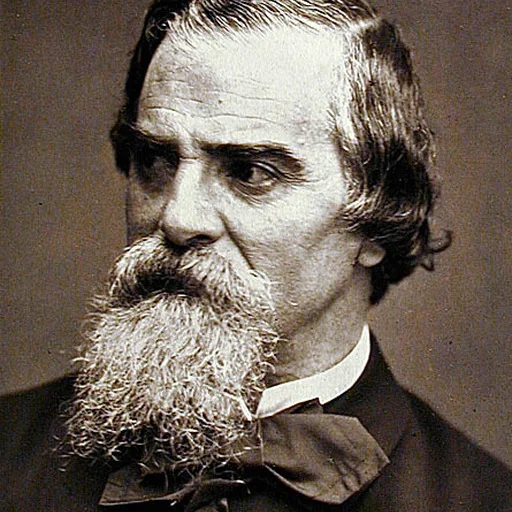
Narcisse Virgilio Díaz (1807–1876) was a French artist, born in Bordeaux.