Artwork
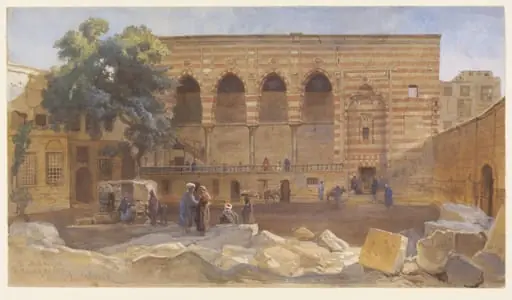
Tombs of the Caliphs, Cairo. about 1880-1900
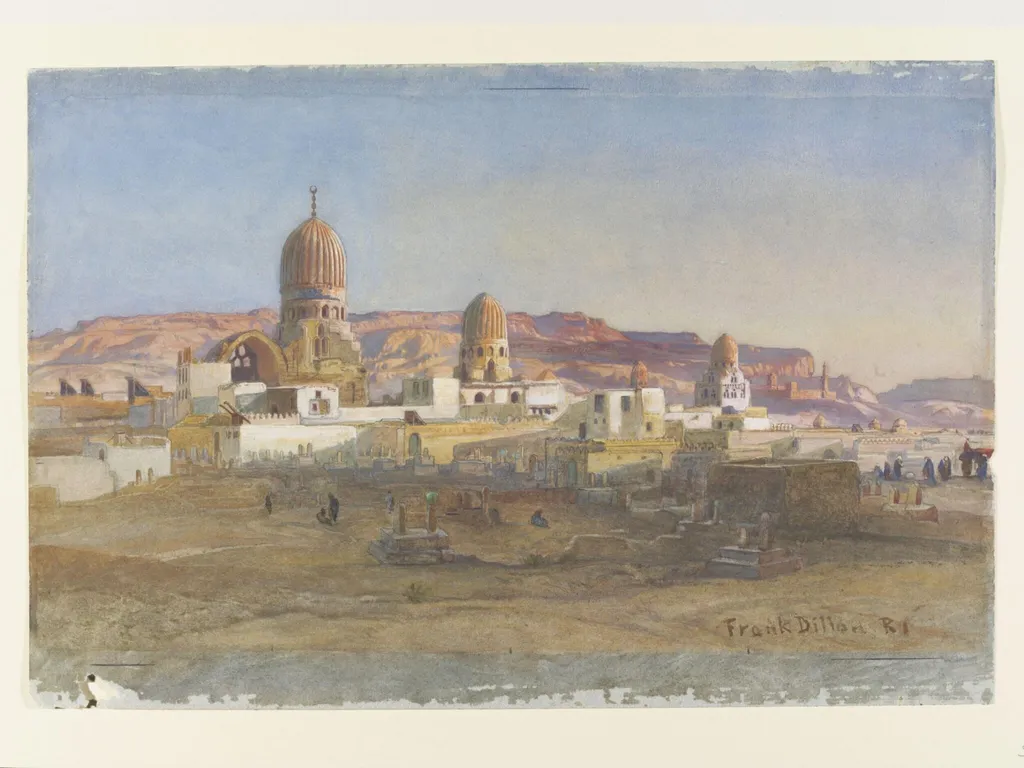
Tombs of the Caliphs, Cairo. about 1880-1900 is a watercolor work on paper by the Romanticist artist Frank Dillon. It dates from 1800 and is held in the collection of the Victoria and Albert Museum.
About this work
He added locals in costume to show how big the buildings were and to make the scenes feel real.
This watercolor shows Cairo’s grand tombs from around 1880. Frank Dillon painted them to save their fading beauty for architects and visitors alike. He added locals in costume to show how big the buildings were and to make the scenes feel real.
The artist worked fast. He wanted these images to act like ads. He hoped people would care enough to protect these old places.
Look up the Victoria and Albert Museum to see more of Dillon’s work.
Overview
Frank Dillon’s watercolour, created between 1880 and 1900, depicts the monumental tombs of Cairo’s historic Islamic necropolis. Executed in a precise, documentary style, the painting records the architecture’s intricate forms at a time when many such structures faced neglect and alteration.
Subject & Meaning
The work captures the exterior of the grand tombs, populated by figures dressed in traditional costume. These human elements provide a sense of scale and convey everyday life within the historic setting, underscoring Dillon’s intent to present the monuments as living parts of the city’s cultural fabric.
Technique & Style
Rendered in watercolor, the image combines swift brushwork with careful attention to architectural detail. Dillon balances accurate line work for structural elements with softer washes for atmospheric effects, a method typical of 19th‑century architectural illustration intended for both study and public appeal.
History & Provenance
Dillon, a British architect and member of Owen Jones’s reformist circle, produced the painting while advocating for the preservation of Cairo’s Islamic monuments. His travels across the Mediterranean and Japan informed his comparative approach to decorative arts, and the piece later entered the collection of the Victoria and Albert Museum.
Context
During the late nineteenth century, European architects increasingly looked beyond Europe for inspiration, documenting exotic architecture before it was altered by modernization. Dillon’s watercolours served both as records for architects seeking new design ideas and as visual arguments for the conservation of threatened heritage sites.
Own this work as a print
Artist & collection
Artist
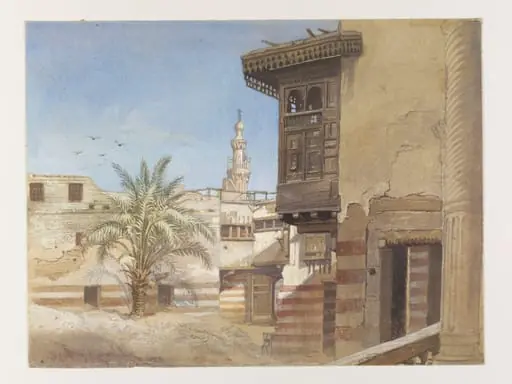
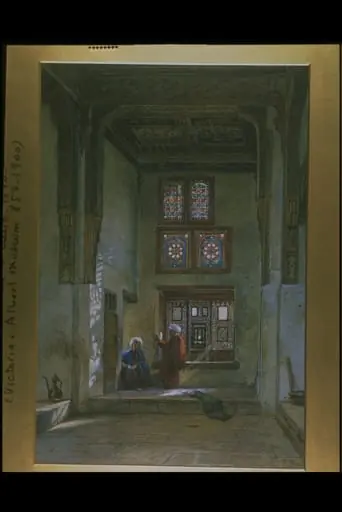
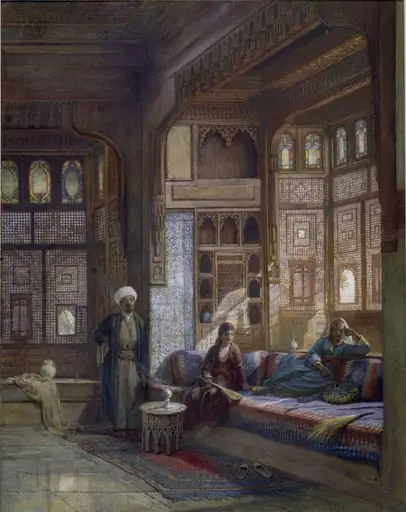
Frank Dillon painted Cairo’s alleys and interiors in watercolour during the late 1800s.

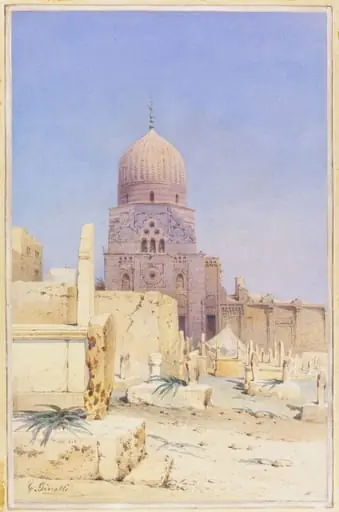 Mosque/Tomb in Cairo
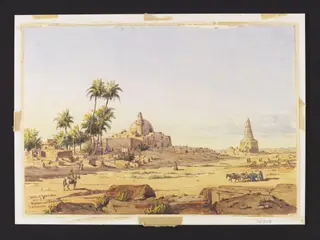 Tomb of Zobeida wife of Haroon ool Rashid in distance
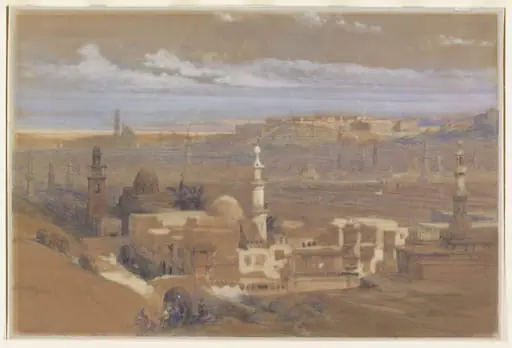 Grand Cairo
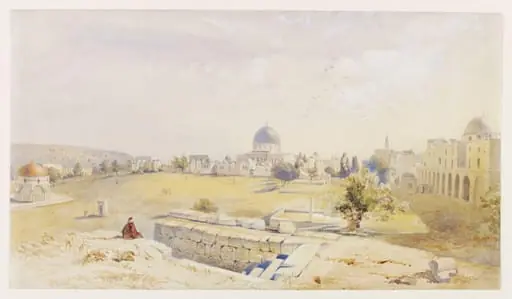 Jerusalem. Mount Moriah The Site Of The Temple now occupied by the Mosque of Omar
![Arabs and camels beside a Tomb, Algeria[?], by Victor-Pierre Huguet](https://artifactworldgallery.com/img/victor-pierre-huguet--arabs-and-camels-beside-a-tomb-algeria--d8831a130920c80b-w320.webp) Arabs and camels beside a Tomb, Algeria[?]
Arabs and camels beside a Tomb, Algeria[?]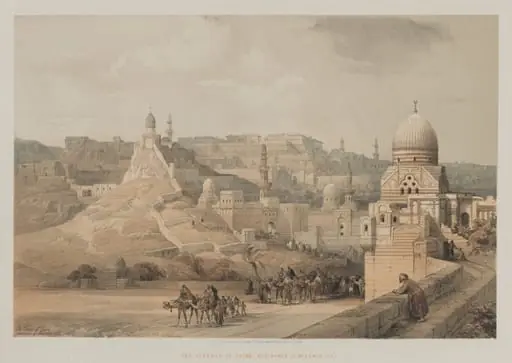 Egypt and Nubia, Volume III: The Citadel of Cairo, Residence of Mehemet Ali
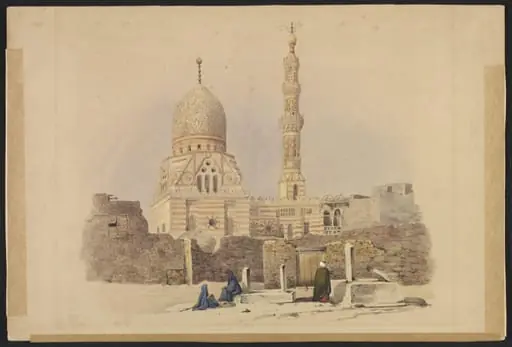 Mosk of Kaed Bey Cairo -
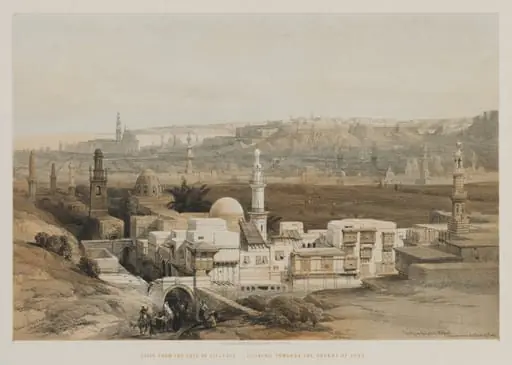 Egypt and Nubia, Volume III: Cairo from the Gate of Citzenib, Looking towards the Desert of Suez
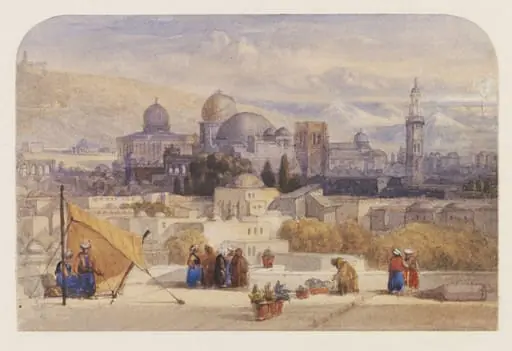 Jerusalem from the Terrace of the Latin Convent
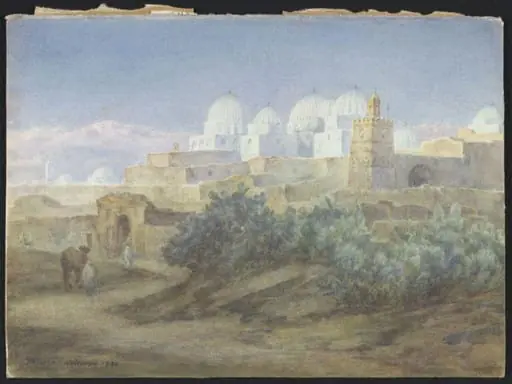 Kairouan