Artwork
Insidiosus Auceps (The Crafty Bird-Catcher)
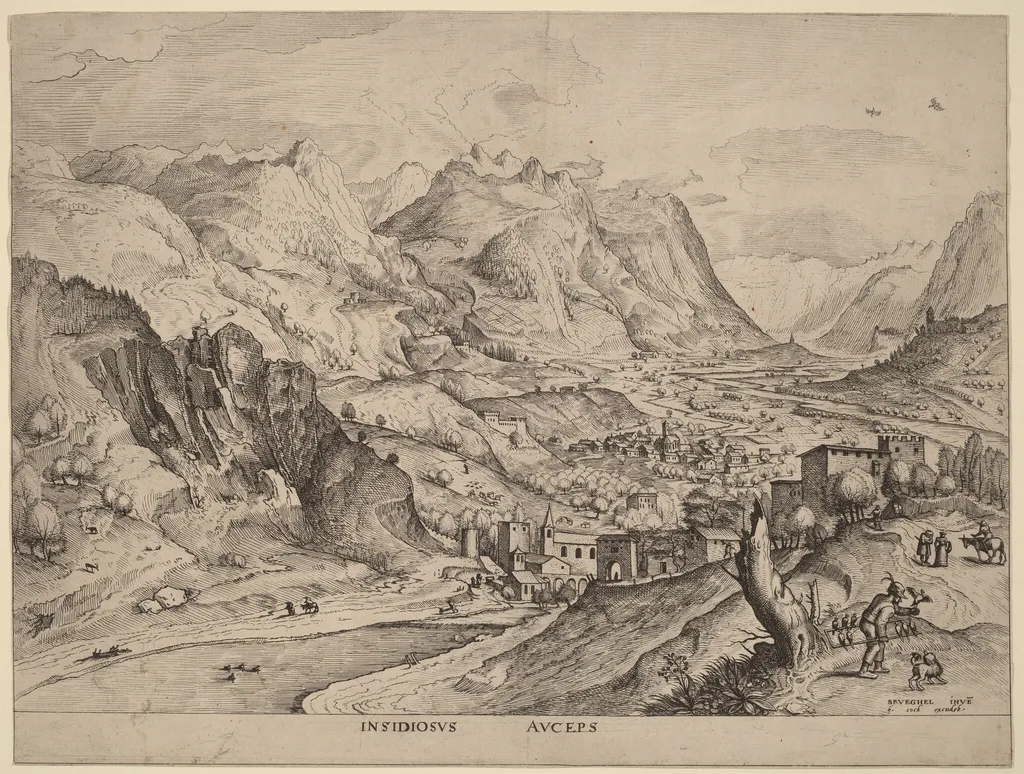
Insidiosus Auceps (The Crafty Bird-Catcher) is an ink print by the Renaissance artist Lucas van Doetechum. It dates from 1556 and is held in the collection of the National Gallery of Art.
- Inscription
- Inscribed:lower right, in plate, in image: BRVEGHEL INVE / h. cock excudeb.; in lower margin, in plate: INSIDIOSVS AVCEPS
About this work
Overview
Insidiosus Auceps, translated as The Crafty Bird‑Catcher, is an engraving produced around 1556 by the Dutch artist Lucas van Doetechum.
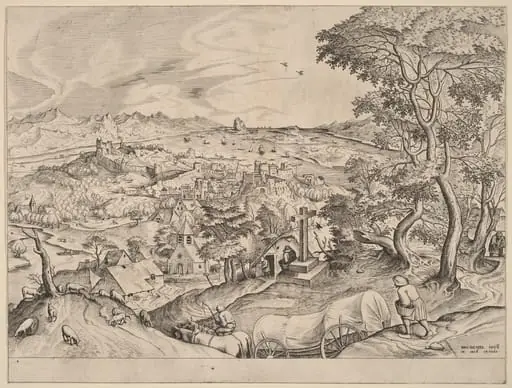
Insidiosus Auceps, translated as The Crafty Bird‑Catcher, is an engraving produced around 1556 by the Dutch artist Lucas van Doetechum. Executed on paper with copper plates, the work presents a panoramic view of a rugged mountainous landscape punctuated by a modest settlement and a distant body of water. The composition balances natural topography with human habitation, reflecting the artist’s interest in both scenery and narrative.
Subject & Meaning
The image juxtaposes a steep, rocky terrain with a small village whose church steeple rises amid clustered dwellings. Though titled after a bird‑catcher, the engraving does not depict the figure directly; instead, the title suggests a metaphorical link between the cunning of the hunter and the precariousness of life set against the harsh environment. The scene may allude to themes of survival and human ingenuity within nature.
Technique & Style
Van Doetechum employed a combination of etching and engraving, allowing fine line work for delicate foliage and broader, deeper cuts for the craggy rock faces. The interplay of light and shadow is rendered through cross‑hatching, creating a sense of depth that aligns with Renaissance ideals of realistic spatial representation. The meticulous detailing of trees, water, and architectural elements demonstrates the period’s emphasis on observation.
History & Provenance
The print emerged in the mid‑16th century, a time when Northern European artists were expanding the market for affordable reproductions of complex scenes. While specific ownership records are scarce, copies of Insidiosus Auceps have appeared in several 17th‑century collections of prints, indicating its circulation among connoisseurs and its inclusion in contemporary print portfolios.
Context
Created during the Northern Renaissance, the engraving reflects the era’s fascination with topographical accuracy and the integration of moral or allegorical titles. Van Doetechum’s work aligns with other Dutch printmakers who blended landscape observation with symbolic content, contributing to a broader visual discourse that linked geography, narrative, and didactic purpose.
Own this work as a print
Artist & collection


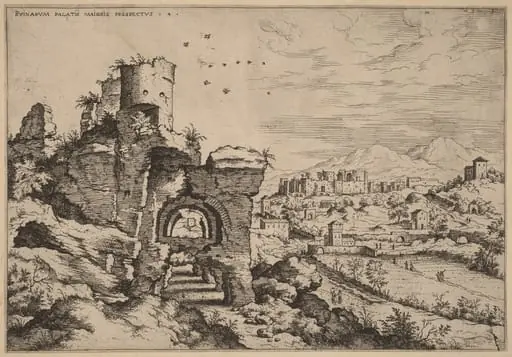 Ruins on the Palatine, Looking toward the Baths of Caracalla
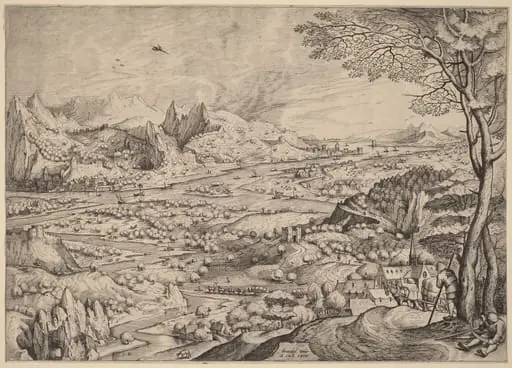 Solicitudo Rustica (Rustic Concerns)
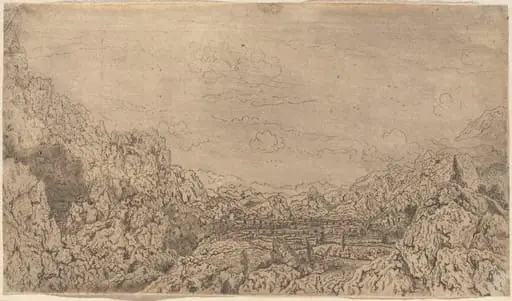 The Enclosed Valley
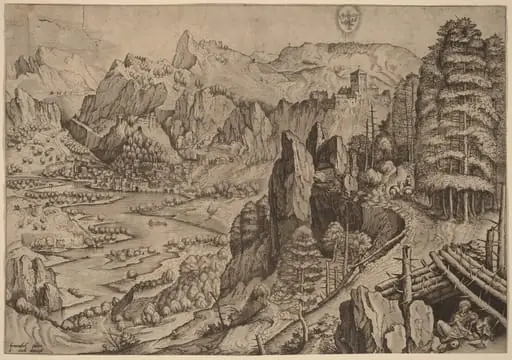 Magdalena Poenitens (The Penitent Magdalene)
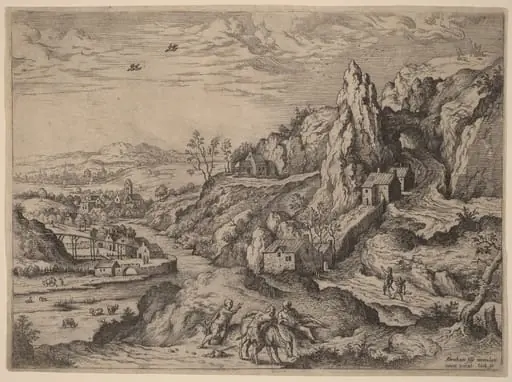 Sacrifice of Abraham
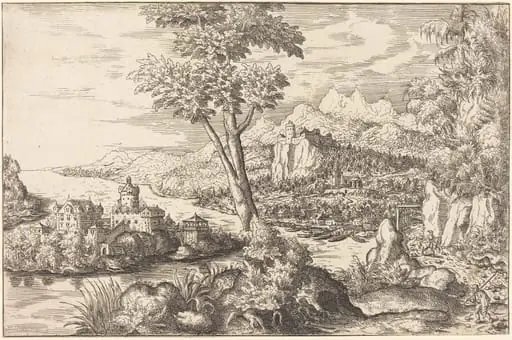 Landscape with Three Men
 Landscape with Castle
 Returning Home from the Hunt
 Mountainous Landscape with Figures and a Monastary
 Ovindoli negli Abruzzi