Artwork
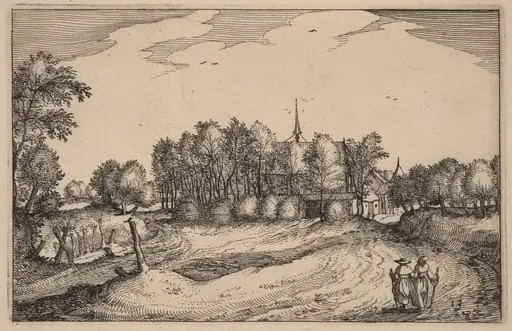
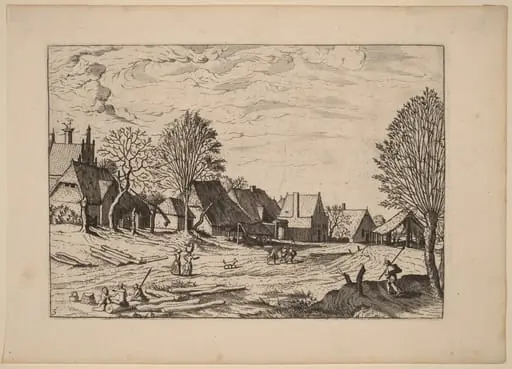
Pagus Nemorosus (Wooded Village)
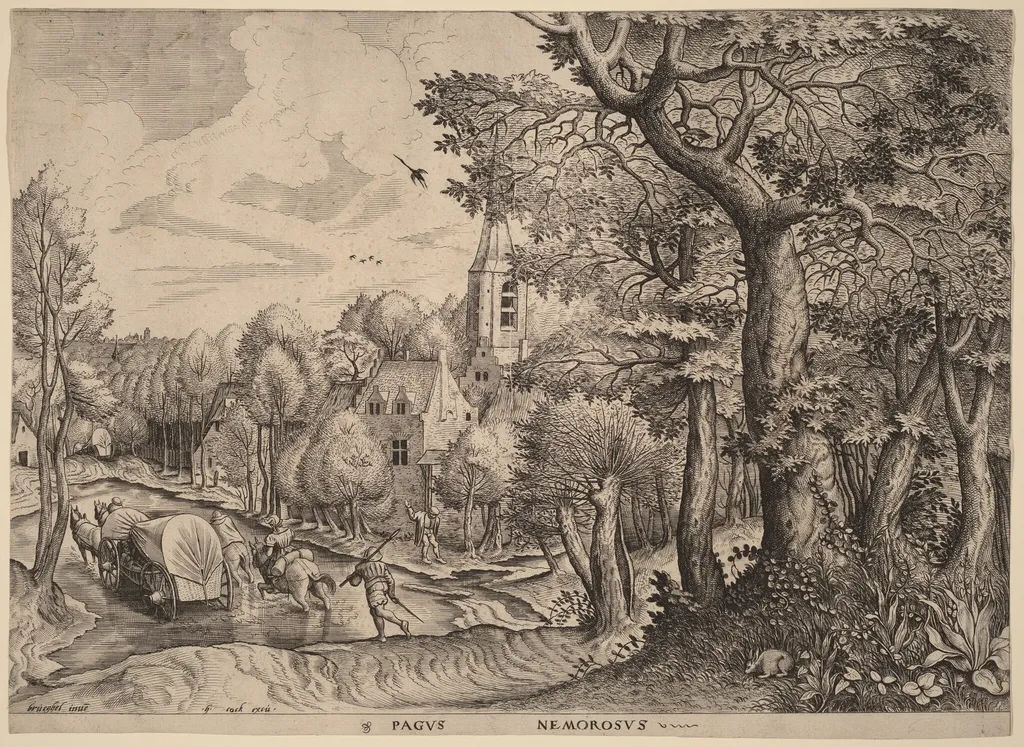
Pagus Nemorosus (Wooded Village) is an ink print by the Renaissance artist Johannes van Doetechum the Elder. It dates from 1556 and is held in the collection of the National Gallery of Art.
- Inscription
- Inscribed:lower left, in image, in plate: brueghel inue; lower left, in image, in plate: .h. cock excu.; in lower margin, in plate: PAGVS NEMOROSVS
About this work
Overview
Pagus Nemorosus (Wooded Village) is a 16th-century print created by Johannes van Doetecum the Elder around 1556, utilizing etching and engraving techniques on laid paper.
Subject & Meaning
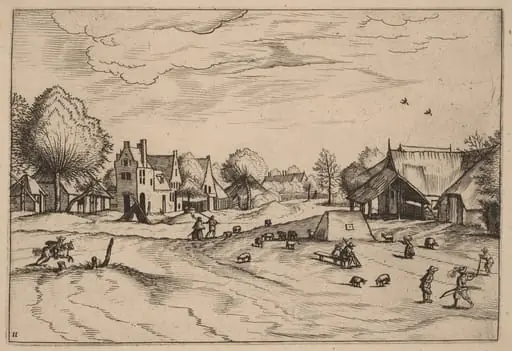
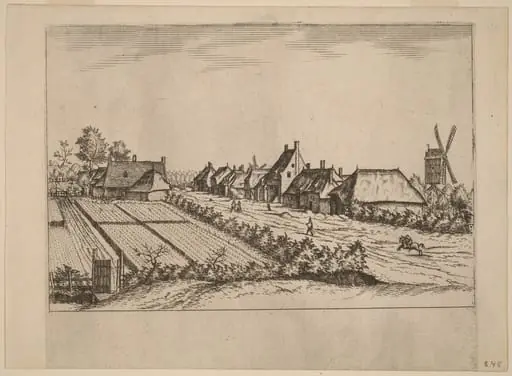
The print portrays a serene wooded village scene, complete with a church tower, winding path, farmland, and villagers tending to daily activities amidst a detailed natural setting. The depiction reflects the period's fascination with topographical and genre imagery.
Technique & Style
Characterized by fine lines, the print showcases Doetecum's meticulous attention to detail, capturing intricate textures of leaves and shadows. This level of precision was technically challenging for the era.
History & Provenance
Johannes van Doetecum the Elder, a Dutch engraver-cartographer, produced the work during his time in Deventer, before relocating to Haarlem in 1578. He often collaborated with his brother Lucas and later, his sons, in his printmaking endeavors.
Context
Pagus Nemorosus exemplifies the 16th-century Dutch interest in detailed representations of everyday life and landscapes, aligning with Doetecum's known works, including reproductions of Pieter Bruegel the Elder's genre scenes and Dutch city maps.
Own this work as a print
Artist & collection

Artist
Johannes van Doetechum the Elder
Joannes van Doetecum the Elder (1530 – 1605) was a Dutch engraver-cartographer known for his etched works after genre scenes by Pieter Bruegel the Elder and maps of various cities in the Netherlands.

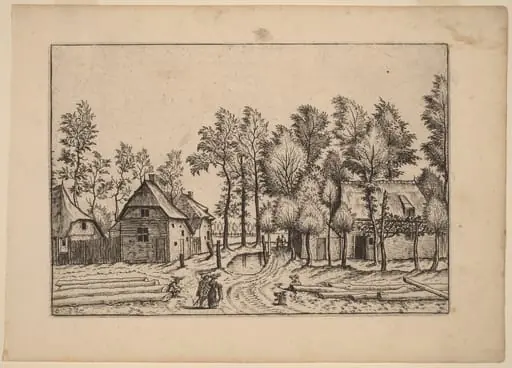
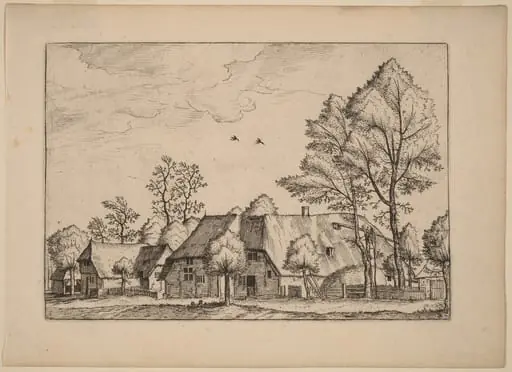
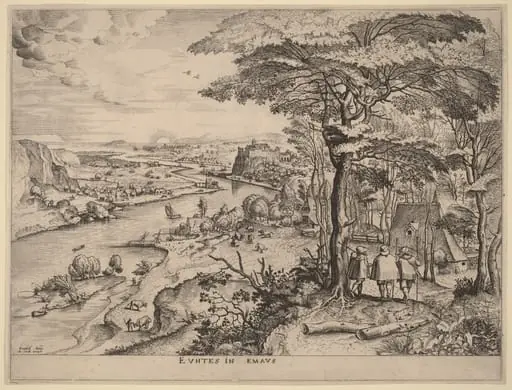
- Euntes in Emaus (The Pilgrims to Emmaus)
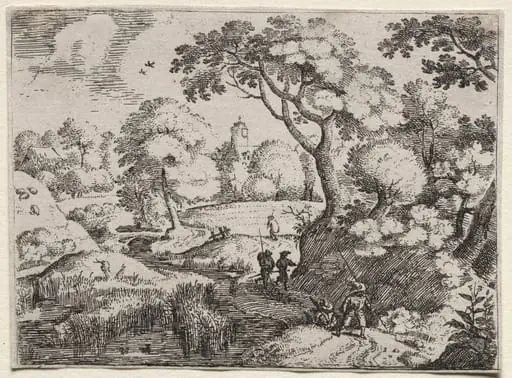 Six Landscapes: Path Between Swamp and Wooded Bank
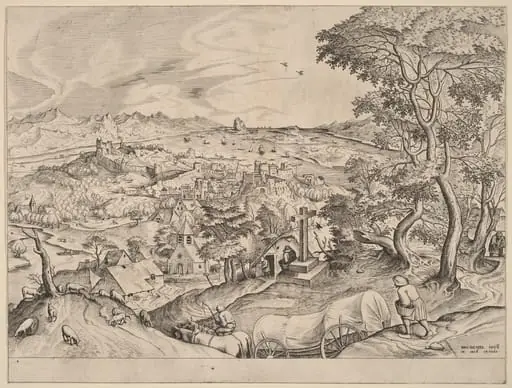 Plaustrum Belgicum (The Belgian Wagon)
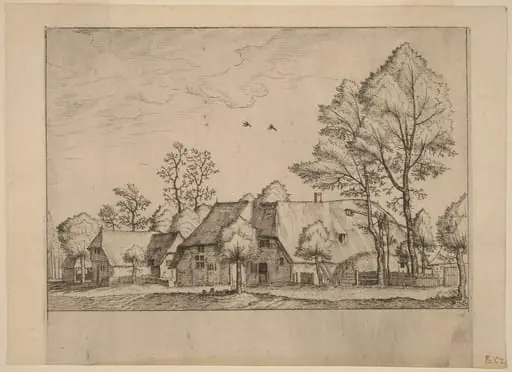
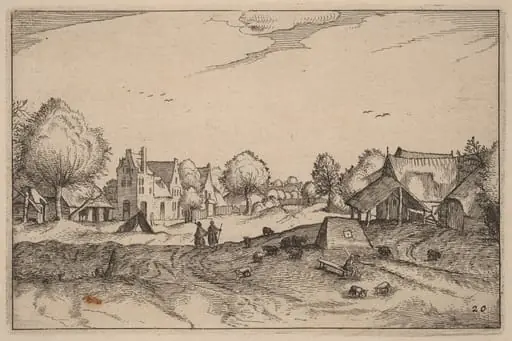 Village Road
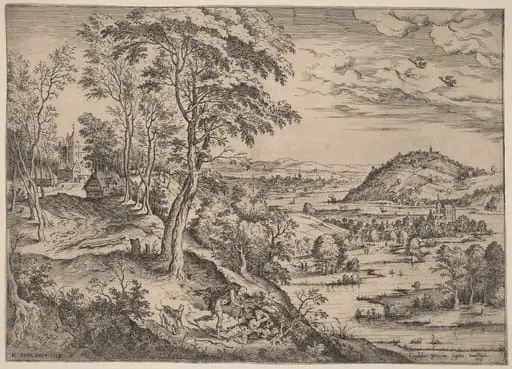 Cephalus and Procris
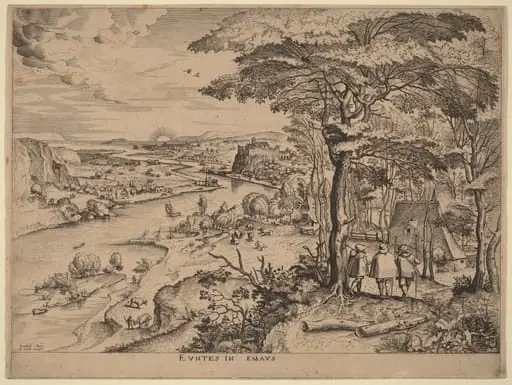 Euntes in Emaus (The Pilgrims to Emmaus)
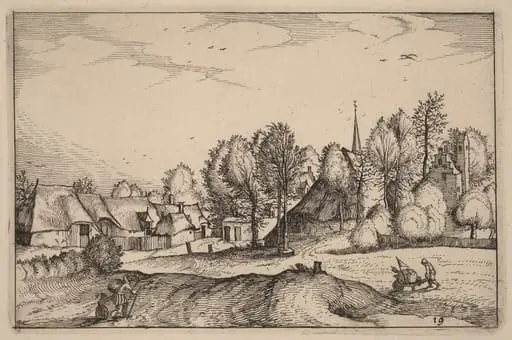 Road into a Village
 A Convent
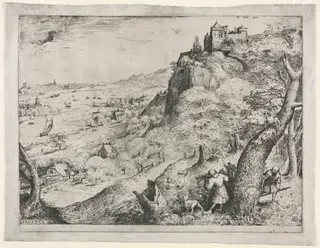 The Rabbit Hunt
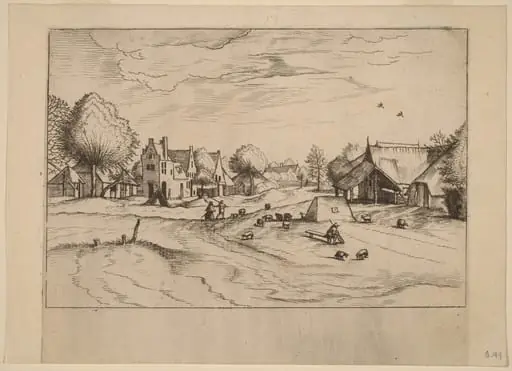 Country Village with Sheep and Sitting Shepherd
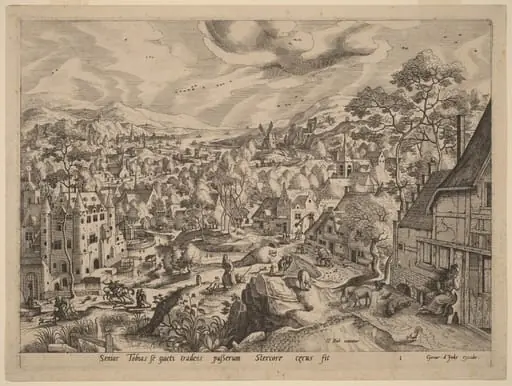 Bird Dropping Blinding Tobit
 Village Street