Artwork
Ogmore Castle, Glamorganshire
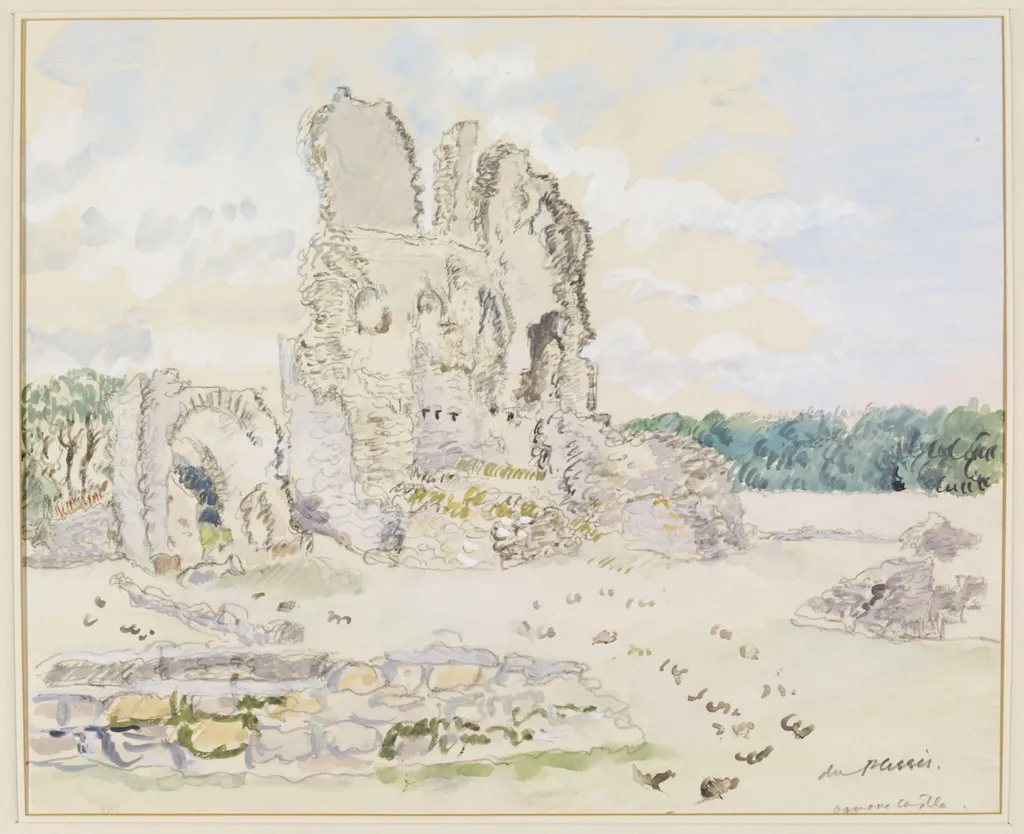
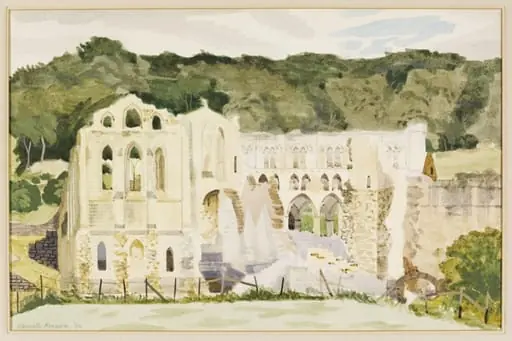
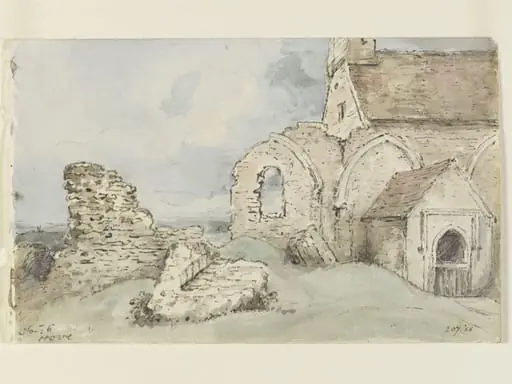
Ogmore Castle, Glamorganshire is a watercolor work on paper by H. E. Du Plessis. It dates from 1940 and is held in the collection of the Victoria and Albert Museum. This watercolour, created in 1940, captures the eastern elevation of the west wall of Ogmore Castle’s keep in Glamorganshire.
About this work
Overview
It was made as part of the 'Recording Britain' initiative, a wartime effort to preserve visual records of the nation’s architectural heritage.
This watercolour, created in 1940, captures the eastern elevation of the west wall of Ogmore Castle’s keep in Glamorganshire. It was made as part of the 'Recording Britain' initiative, a wartime effort to preserve visual records of the nation’s architectural heritage. The project, supported by the Pilgrim Trust and led by Sir Kenneth Clark, enlisted artists to document sites deemed culturally significant amid the uncertainties of conflict.
Subject & Meaning
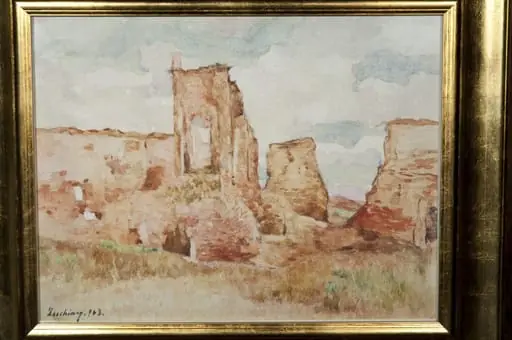
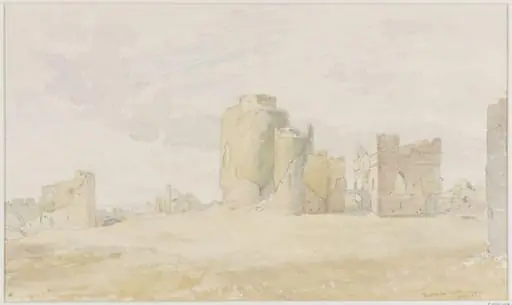
The painting focuses on the decaying stone structure of the castle, its fragmented walls and weathered surfaces suggesting centuries of erosion and neglect. Positioned on a gentle hillside, the ruin overlooks a quiet landscape of winding river and scattered trees. The image conveys a quiet sense of endurance, not as a monument of power but as a quiet witness to time’s passage, reflecting the project’s aim to honor ordinary, fading elements of the British countryside.
Technique & Style
The artist employed loose, fluid watercolour strokes to suggest texture without precise detail. The castle’s rugged stonework is rendered in muted tones, contrasting with the lighter washes of sky and distant fields. Soft, sketchy lines define the trees and river, avoiding sharp outlines. The composition leans into atmospheric suggestion rather than architectural precision, emphasizing mood over documentation.
History & Provenance
Created during the Second World War, this work was produced under the 'Recording Britain' scheme, which commissioned 97 artists to produce over 1,500 watercolours between 1939 and 1942. The piece entered the collection of the Victoria and Albert Museum, where it remains part of a broader archive intended to safeguard visual records of Britain’s landscape during a period of national upheaval.
Context
The 'Recording Britain' project emerged as a cultural response to wartime threats, both physical and psychological. By documenting rural buildings, vernacular architecture, and overlooked ruins, the initiative sought to affirm a sense of continuity and identity. Ogmore Castle, though long in ruin, represented a tangible link to England’s medieval past, making it a fitting subject for preservation through art.
Legacy
The watercolour endures as part of a significant archival collection that reshaped how Britain’s heritage was valued during crisis. Unlike grand monuments, these works highlighted quiet, vulnerable sites, offering a counter-narrative to wartime propaganda. Today, the 'Recording Britain' series is studied for its historical insight and its quiet, humanistic approach to documenting place.
Artist & collection
Artist
A South Wales watercolor artist active around 1940, H. E. Du Plessis painted the everyday buildings and lanes of Glamorganshire. Brush in hand, he recorded places like the low stone Jesus Hospital in Bray and the…