Artwork
Freshwater Bay, Isle of Wight
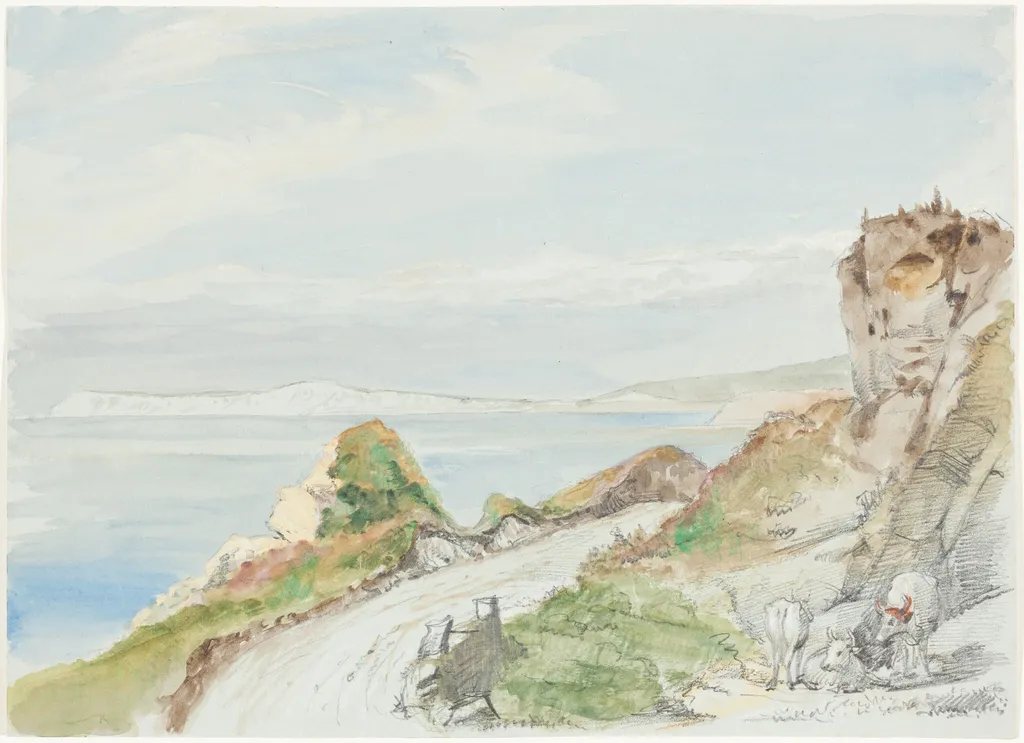
Freshwater Bay, Isle of Wight is a gouache drawing by the Romanticist artist George, Sir Hayter. It dates from 1839 and is held in the collection of the National Gallery of Art.
- Inscription
- Inscribed:upper left verso in graphite: 13 July 39. Freshwater Bay
About this work
Overview
Created in 1839 by Sir George Hayter, this work is a watercolor drawing titled Freshwater Bay, Isle of Wight. Executed on blue wove paper, the piece combines watercolor, gouache, graphite, and touches of red and white chalk. The composition captures a brief, impressionistic view of a coastal landscape, rendered with a quick, sketch‑like approach.
Subject & Meaning
The scene depicts the shoreline of Freshwater Bay, where rugged cliffs rise sharply from the sea. Softly rendered hills in muted greens, browns, and blues frame a pale sky, while a small boat rests near the water’s edge. The work conveys a fleeting observation of nature, emphasizing atmosphere over precise detail.
Technique & Style
Hayter employed a mixture of watercolor, gouache, and graphite, accentuated with red and white chalk on a blue ground. The blue paper acts as a tonal base, allowing the pigments to glow subtly. Loose, gestural lines and textured brushwork suggest an on‑site execution, with the artist building layers through rapid washes and glazing.
History & Provenance
The drawing was produced during Hayter’s early career, a period when he was exploring topographical subjects for travel publications. Though originally intended as a study rather than a finished piece, it entered a private collection in the late 19th century before being acquired by a public institution in the early 20th century, where it remains on view.
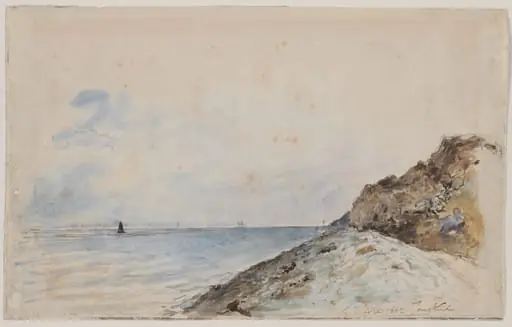
Own this work as a print
Artist & collection



- Le Havre
 Untitled
 Entrance to the Bosphorus from the Black Sea
 Tloss
Tloss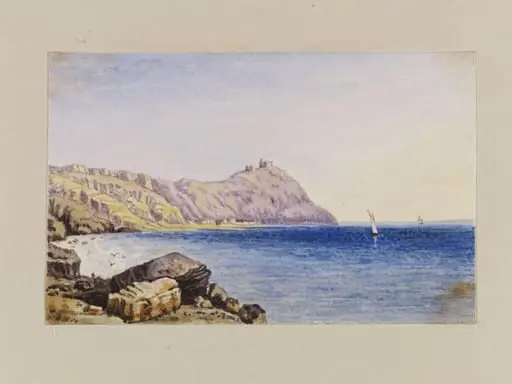 Carmel
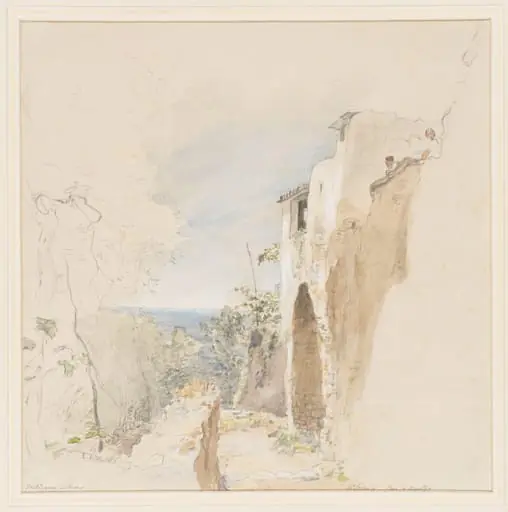 Coast View near Sorrento, Bay of Naples
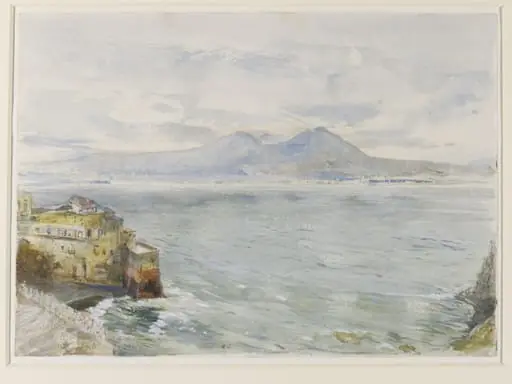 Vesuvius and the Bay of Naples from Posilipo
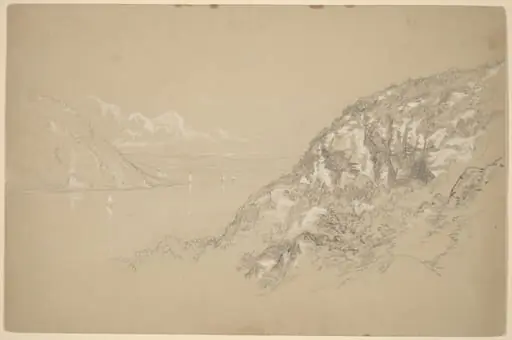 Hudson Highlands
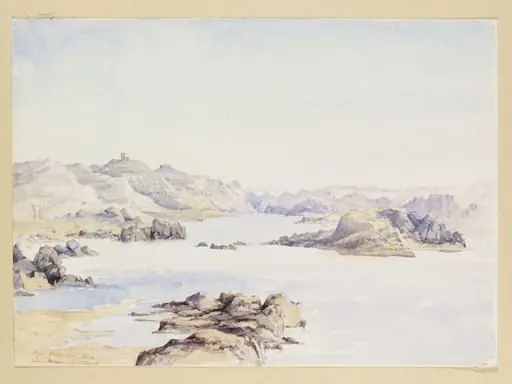 From Elephantine between Asouan and the 1st Cataract
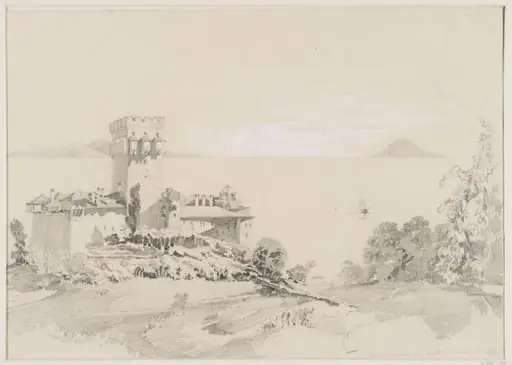 Stavronikéta, on the E. side of Athos; I<sup>s</sup> of Thasos & Samothrace in the distance
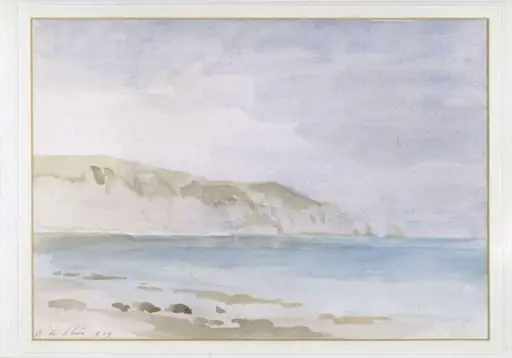 A Grey Day; or A Calm Day: Dover Harbour
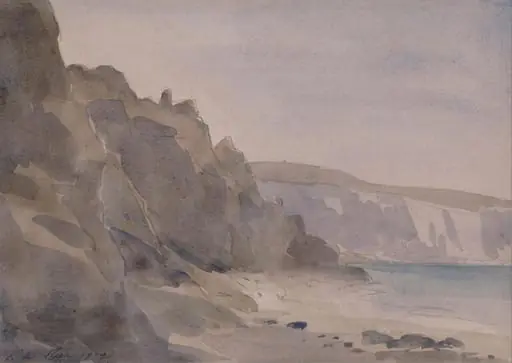 Alum Bay