Artwork
Benjamin Franklin
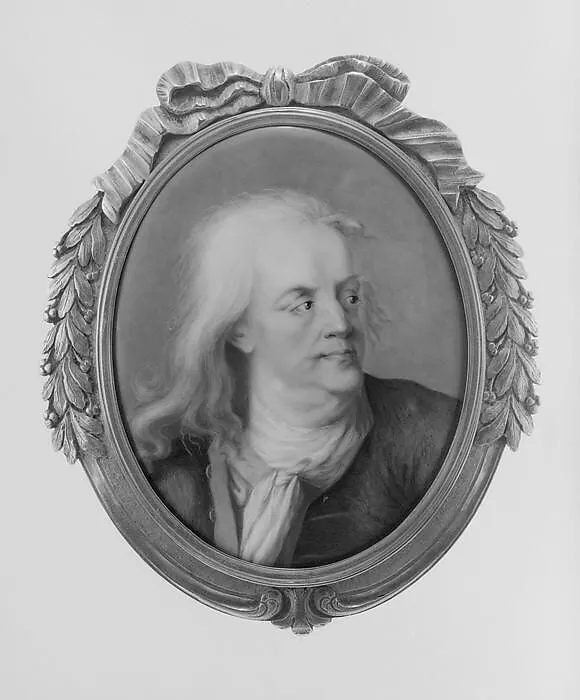
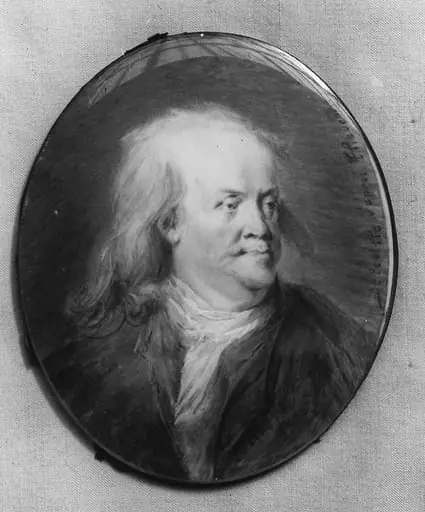
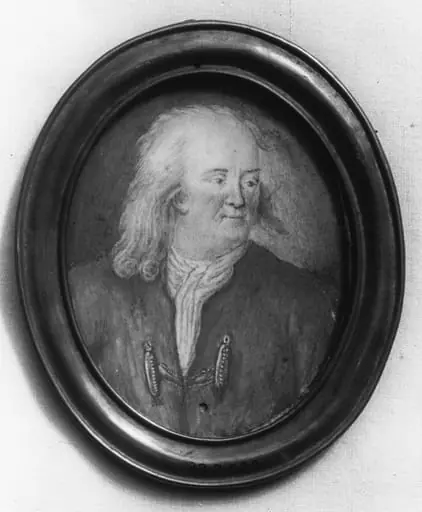
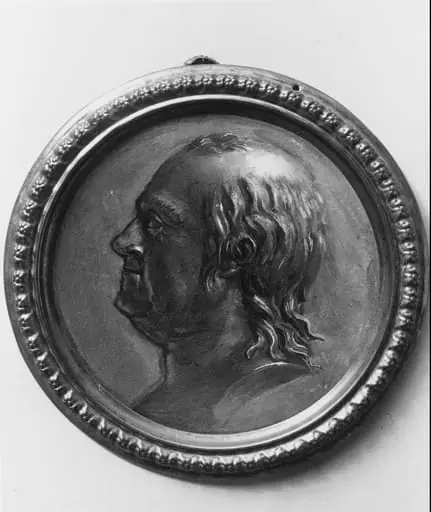
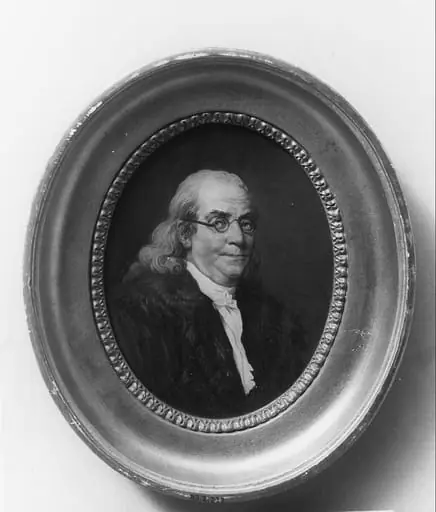
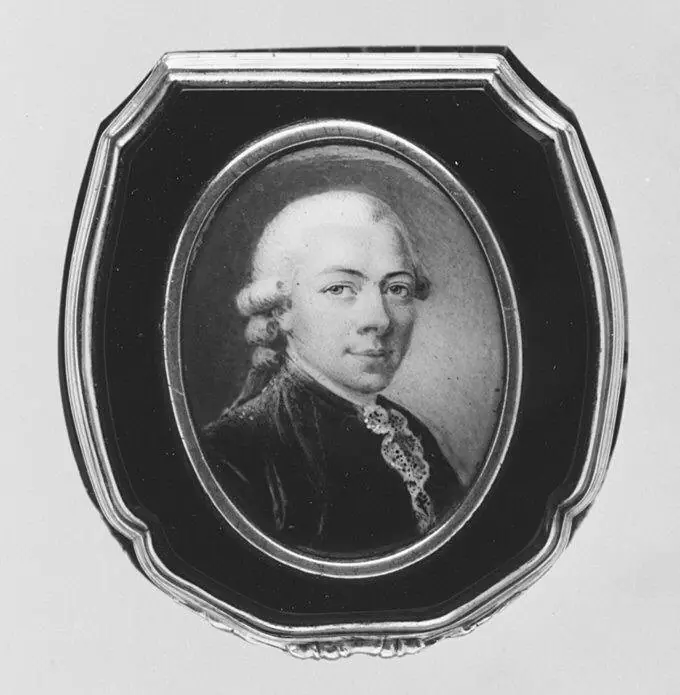
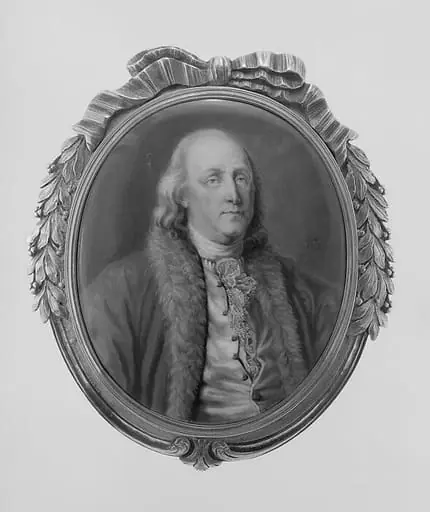
Benjamin Franklin is a copper painting by the Rococo painting artist Dulieu du Chenevoux. It dates from 1785 and is held in the collection of the Metropolitan Museum of Art.
About this work
Subject & Meaning
Franklin is shown in the conventions of late eighteenth-century portraiture, with the work classified as a portrait whose main subject is Franklin himself.
The portrait depicts Benjamin Franklin, the American statesman, scientist, and diplomat, rendered as a bust-length likeness on an enameled copper support. Franklin is shown in the conventions of late eighteenth-century portraiture, with the work classified as a portrait whose main subject is Franklin himself. The painting belongs to a tradition of commemorative images produced to circulate Franklin's likeness across Europe following his diplomatic missions in France during the 1780s.
As a small-scale, durable enamel on copper, the object is suited to private display, reflecting Franklin's status as a celebrated figure of the American Enlightenment and a symbol of transatlantic intellectual exchange.
Technique & Style
The portrait was executed in enamelled copper, a support typical of late-18th-century miniature portraiture; the copper panel measures about 8.2 cm by 6.8 cm and was painted by Louis-Marie Dulieu de Chenevoux in 1785. The enamel technique layers translucent pigments to achieve fine detail and a luminous surface that renders Franklin's likeness with restrained realism. As part of The American Wing's collection at the Metropolitan Museum of Art, the work is treated as a preserved miniature.
History & Provenance
The enameled copper portrait of Benjamin Franklin by Louis-Marie Dulieu de Chenevoux, completed in 1785, is held in the collection of the Metropolitan Museum of Art, where it is classified within The American Wing. The work measures approximately 8.2 by 6.8 cm. No specific accession number or exhibition history is documented in the available sources.
Legacy
The 1785 enameled copper portrait of Benjamin Franklin by Louis-Marie Dulieu de Chenevoux is part of the Metropolitan Museum of Art's American Wing. As a small, durable enamel miniature, it belongs to the tradition of commemorative images that circulated Franklin's likeness following his diplomatic missions in France. Its display alongside other colonial-era works reinforces Franklin's reputation as a unifying figure of early American identity and his status as a symbol of the period's scientific and diplomatic achievement.
Overview
This small, oval portrait depicts Benjamin Franklin in profile, his features gently illuminated against a dark ground. He appears composed and reflective, dressed in a simple coat and white cravat. Rendered on enameled copper, the artwork captures the statesman's likeness with a subtle glow, characteristic of its unique material.
Context
At the time of this portrait's creation, Benjamin Franklin resided in France, serving as a crucial diplomat for the newly independent United States. His mission involved securing vital French support and alliances against Great Britain during the American Revolutionary War. This image thus reflects a pivotal moment in both Franklin's life and the early history of the American republic.
Artist & collection
Artist
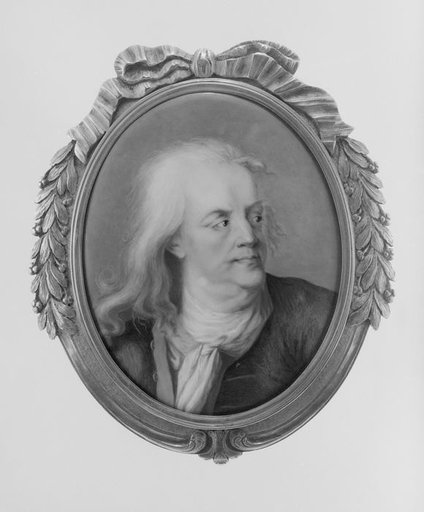
Dulieu du Chenevoux was a French painter and miniaturist born in Lyon in 1752. He worked in the genre of portrait miniature, a form much in demand in late eighteenth-century France.