Artwork
Portrait of a Gentleman
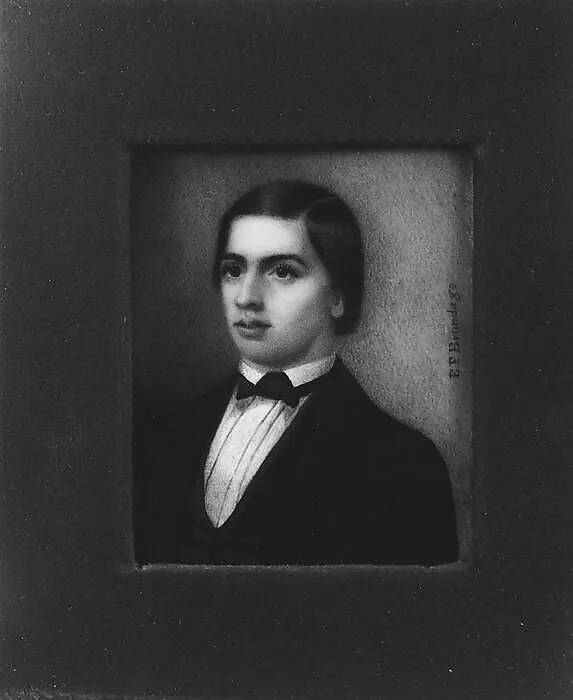
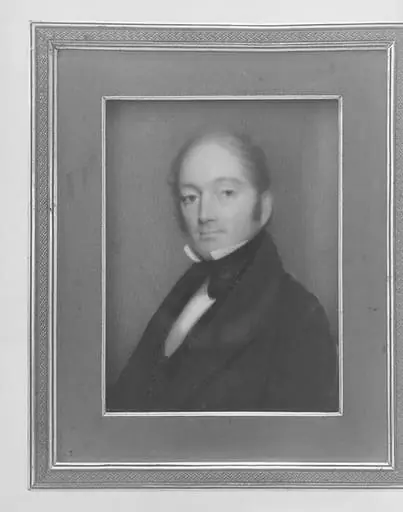
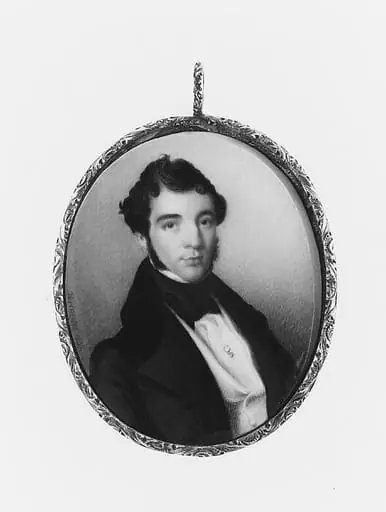
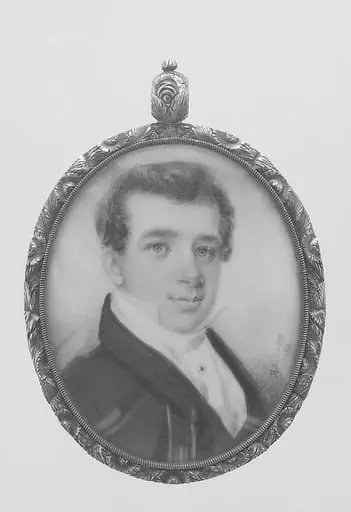
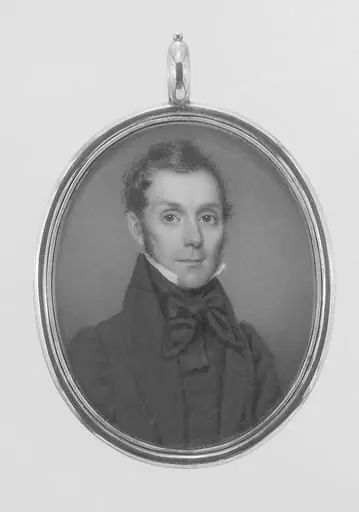
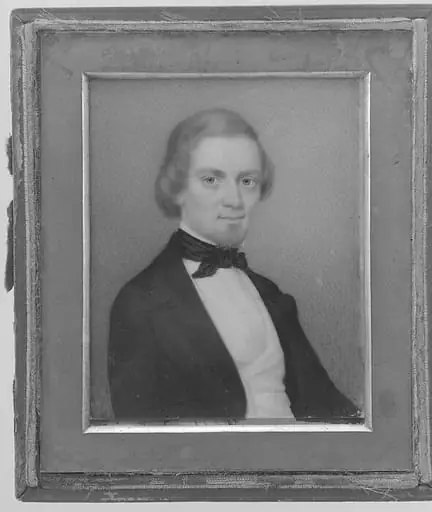
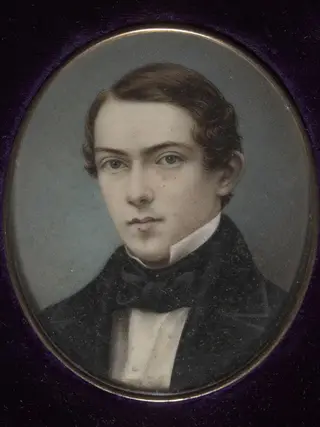
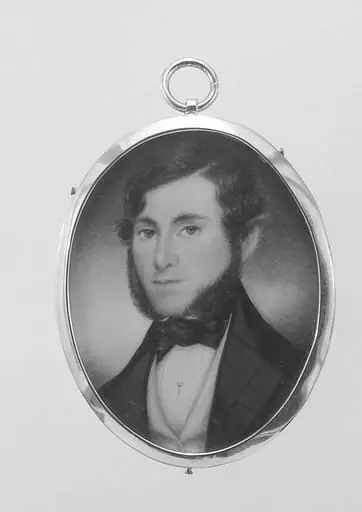
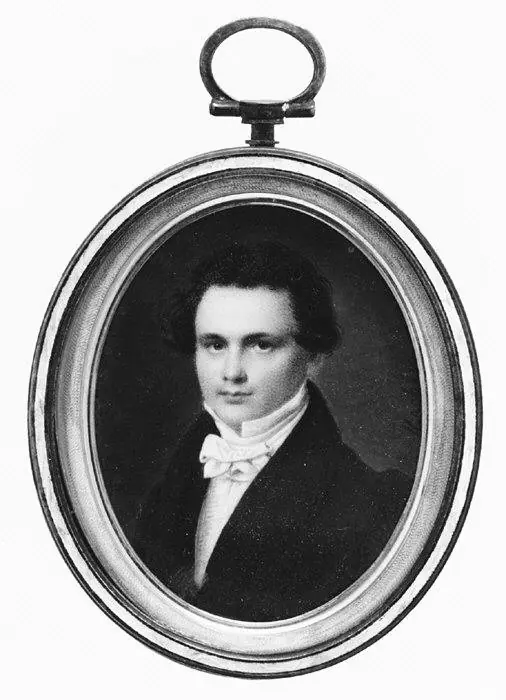
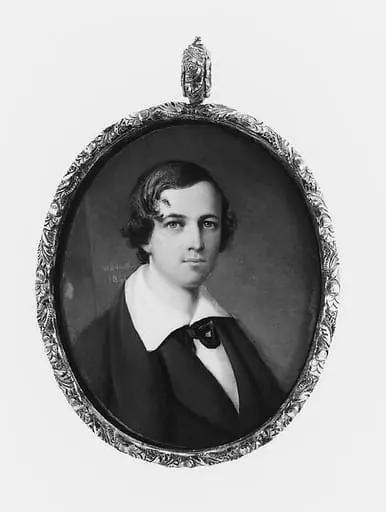
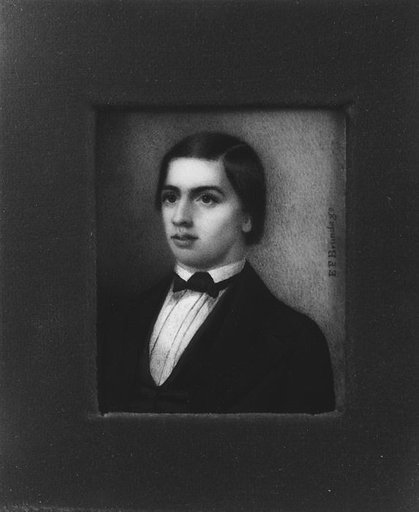
Portrait of a Gentleman is a watercolor painting by the American Folk Art artist Ebenezer F. Brundage. It dates from 1845 and is held in the collection of the Metropolitan Museum of Art.
About this work
Technique & Style
The composition is tightly framed, focusing attention on the sitter's head and shoulders against a plain background to emphasize individual likeness.
Executed in 1845, the miniature employs watercolor on a thin ivory support, a common choice for early American portrait miniatures. The handling is precise, with delicate brushwork used to render facial features and costume details, a hallmark of Brundage's style. The composition is tightly framed, focusing attention on the sitter's head and shoulders against a plain background to emphasize individual likeness.
Stylistically, the work adheres to the neoclassical conventions of the period, characterized by smooth modeling and a restrained palette. The ivory's inherent translucency likely enhances the luminosity of the watercolor layers, contributing to the miniature's refined appearance.
History & Provenance
The Portrait of a Gentleman, a watercolor on ivory created by Ebenezer F. Brundage in 1845, is held in the collection of the Metropolitan Museum of Art in New York, within the museum's American Wing. Its provenance traces back to former owners E. Grosvenor Paine and Edward Sheppard. The piece is cataloged as a portrait of a man.
While the sources confirm its current location and previous ownership, no specific exhibition history or accession number is detailed in the provided documentation.
Overview
Portrait of a Gentleman is a watercolor miniature created by Ebenezer F. Brundage around 1845. This small-scale work depicts an unidentified man, presented in a formal pose. The portrait is executed on ivory, a common material for such intimate artworks during the mid-19th century, reflecting the period's aesthetic preferences for personal mementos.
Context
Miniature portraits like this one served as cherished personal keepsakes throughout the 19th century. Their small dimensions made them ideal for intimate display, often carried in lockets or small cases. This format allowed individuals to keep images of loved ones close, reflecting a widespread cultural practice before the advent of photography made portraiture more accessible and less exclusive.
Artist & collection
Artist
Ebenezer F. Brundage painted miniature portraits on ivory, wallet-sized, keeping steady work through the 1840s among New York merchants and their stiff collars. Portrait of a Gentleman shows a dapper sitter rendered in…