Artwork
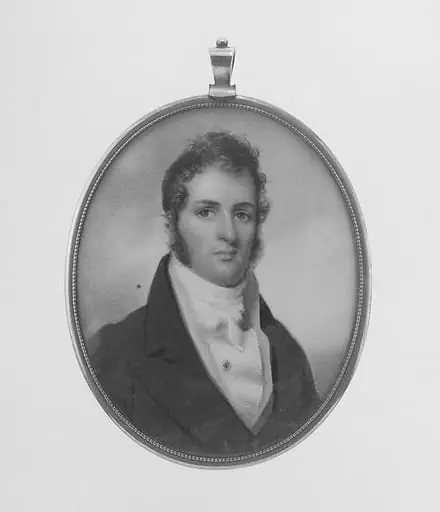
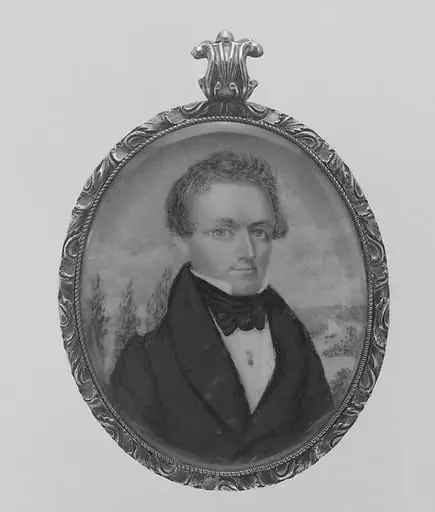
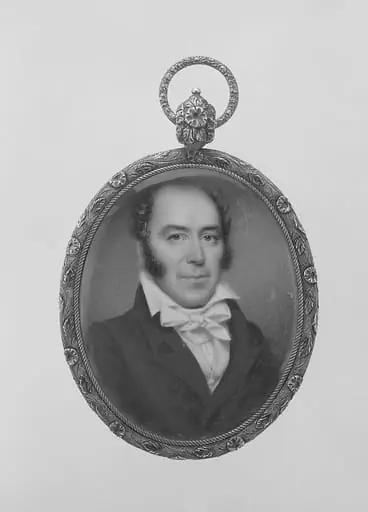
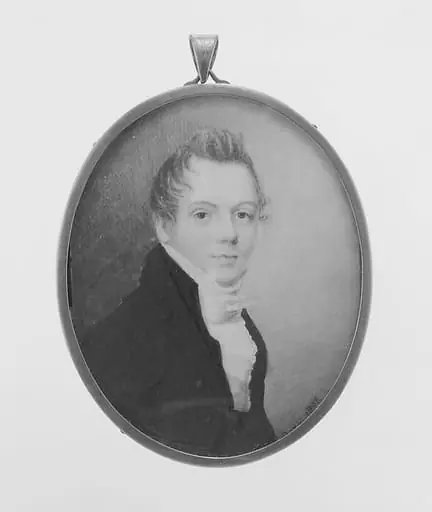
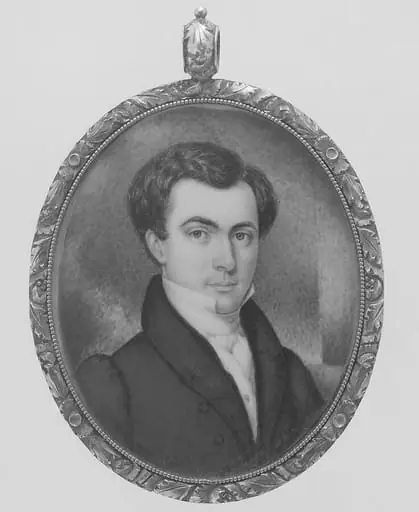
Portrait of a Gentleman
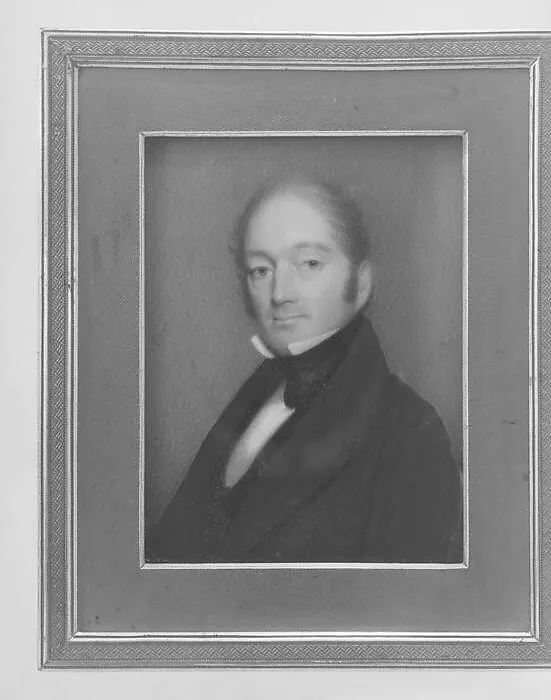
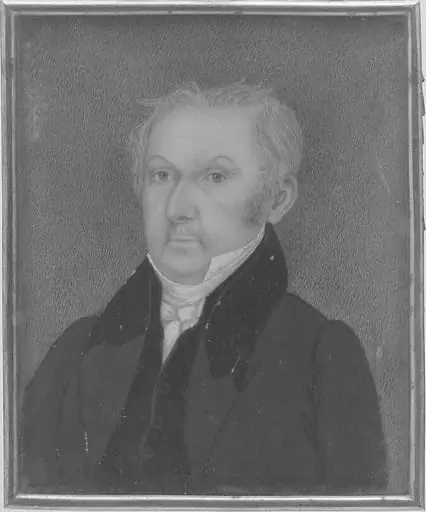
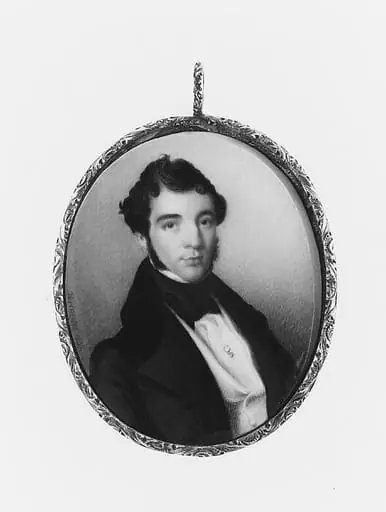
Portrait of a Gentleman is a watercolor painting by the Romanticist artist James Whitehorne. It dates from 1835 and is held in the collection of the Metropolitan Museum of Art.
- Accession no.
- 2006.235.94
- Credit line
- Fletcher Fund, 2006
About this work
Technique & Style
The attribution of the work associates it with James Whitehorne, whose handling of the watercolor medium on ivory defines the object's material identity.
Executed in 1835, this portrait utilizes watercolor applied to an ivory support, a medium characteristic of miniature painting traditions. The work measures 8.5 cm in height and 6.4 cm in width, presenting a compact format typical of the genre. Stylistically, the piece functions as a formal depiction of a male subject, adhering to the conventions of portraiture found within the American Wing's collection.
The attribution of the work associates it with James Whitehorne, whose handling of the watercolor medium on ivory defines the object's material identity.
History & Provenance
Portrait of a Gentleman is a watercolor on ivory painted in 1835 by James Whitehorne. Classified as a portrait within The American Wing of the Metropolitan Museum of Art, the work depicts a man and measures 8.5 cm by 6.4 cm. It entered the museum's collection, where it remains listed under the American decorative arts division. The available sources do not reference any prior public exhibitions, indicating that the painting has remained in the institution's holdings since its acquisition, and no commissioning or earlier ownership details are recorded.
Overview
James Whitehorne created this Portrait of a Gentleman around 1835. Rendered in watercolor on ivory, it presents a direct gaze from its male subject. This work exemplifies the miniature portraiture popular in the era, designed to be held and carried.
Its small scale and delicate execution reflect a common artistic practice of the period, often serving personal and commemorative functions.
Context
Miniature portraits like this one served as cherished personal mementos during the 19th century. Their compact size made them ideal for carrying close to the body, often enclosed in lockets or kept in pockets. These intimate artworks allowed individuals to retain a visual connection to loved ones, functioning as portable keepsakes that could be privately admired and treasured.
Artist & collection