Artwork
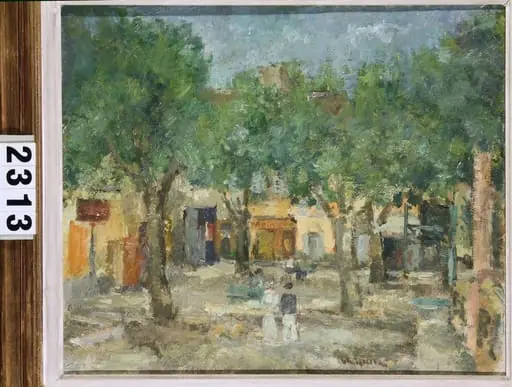
Partida de croquet
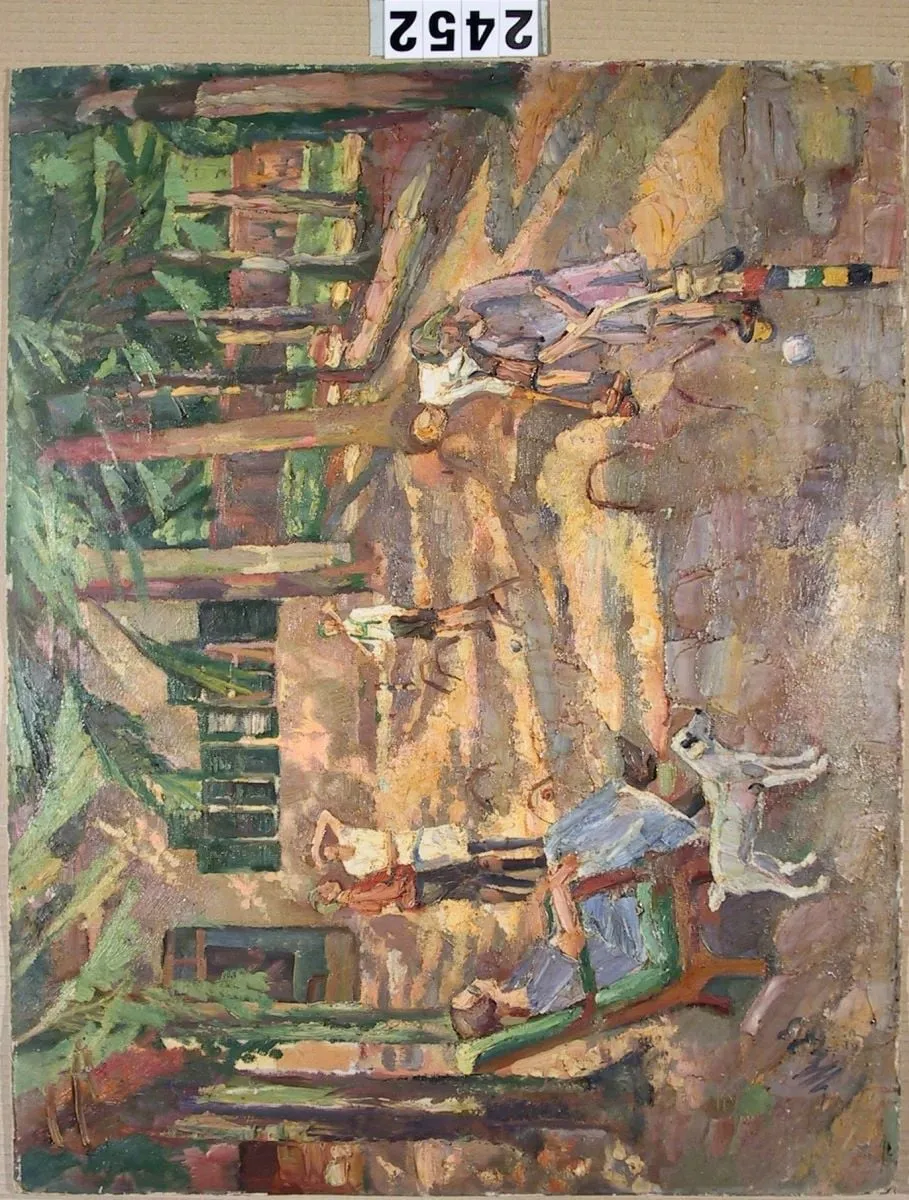
Partida de croquet is a print by Hans Eder. It dates from 1929 and is held in the collection of the Brukenthal National Museum.
About this work
Overview
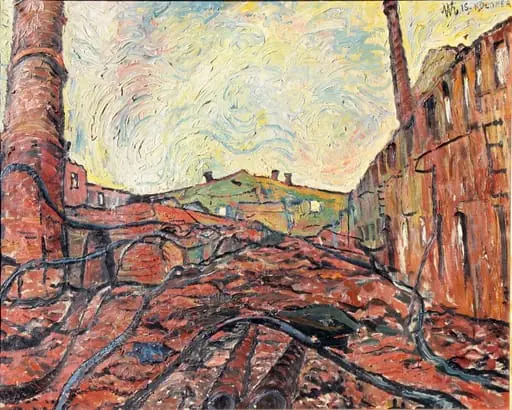
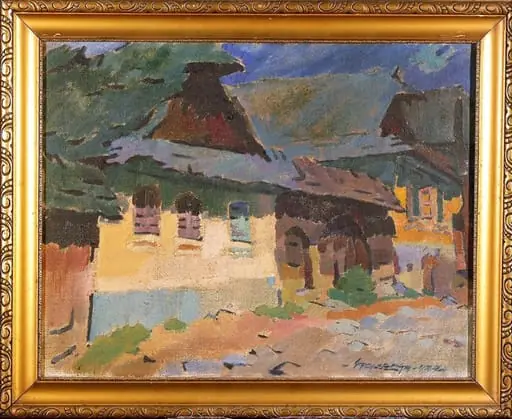
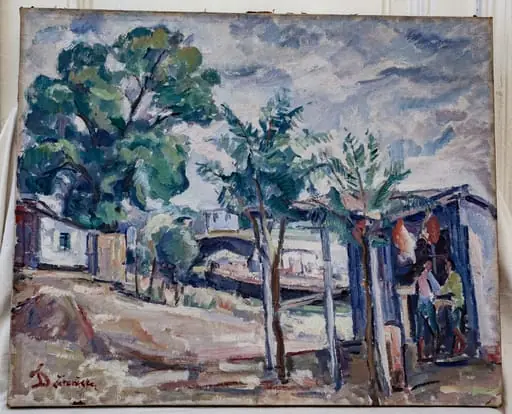
Partida de croquet, dated around 1929, is a painting by Hans Eder that captures a fragmented outdoor scene with minimal clarity. The composition resists conventional detail, favoring a tactile, almost chaotic application of paint. Its rough surface and muted palette suggest urgency or abandonment, as if the act of painting took precedence over finished representation.
Subject & Meaning
The scene hints at a game of croquet, though figures and equipment are barely discernible. A faint outline on the right may suggest a player, but identity and action remain ambiguous. The undefined architecture in the background, steps, a fence, offers no clear context. The work avoids narrative clarity, instead evoking memory or fleeting observation through absence and suggestion.
Technique & Style
Eder employed thick, uneven brushwork, building the surface with heavy impasto that feels deliberately unrefined. Colors, muddy greens, browns, and yellows, overlap without blending, creating a sense of visual friction. The paint is applied with physical force, leaving ridges and gaps that emphasize process over polish, aligning with early 20th-century experiments in material expression.
History & Provenance
Little is documented about the painting’s early ownership or exhibition history. It remains a lesser-known work within Eder’s oeuvre, possibly created during a period of personal or artistic transition. Its survival suggests it was retained by the artist or a close associate, rather than entering public collections early.
Context
Created in the late 1920s, the work emerges amid broader European movements that valued raw expression over academic precision. While not aligned with any formal group, its texture and ambiguity resonate with contemporaneous German Expressionist tendencies and the growing interest in paint as a physical medium rather than a transparent veil.
Legacy
Partida de croquet contributes to understanding Eder’s engagement with materiality and imperfection. Though not widely studied, it exemplifies how artists of the era explored the limits of representation through gesture and texture. Its unresolved form invites reflection on the value of the unfinished in modern art.
Artist & collection