Artwork
Café Singer
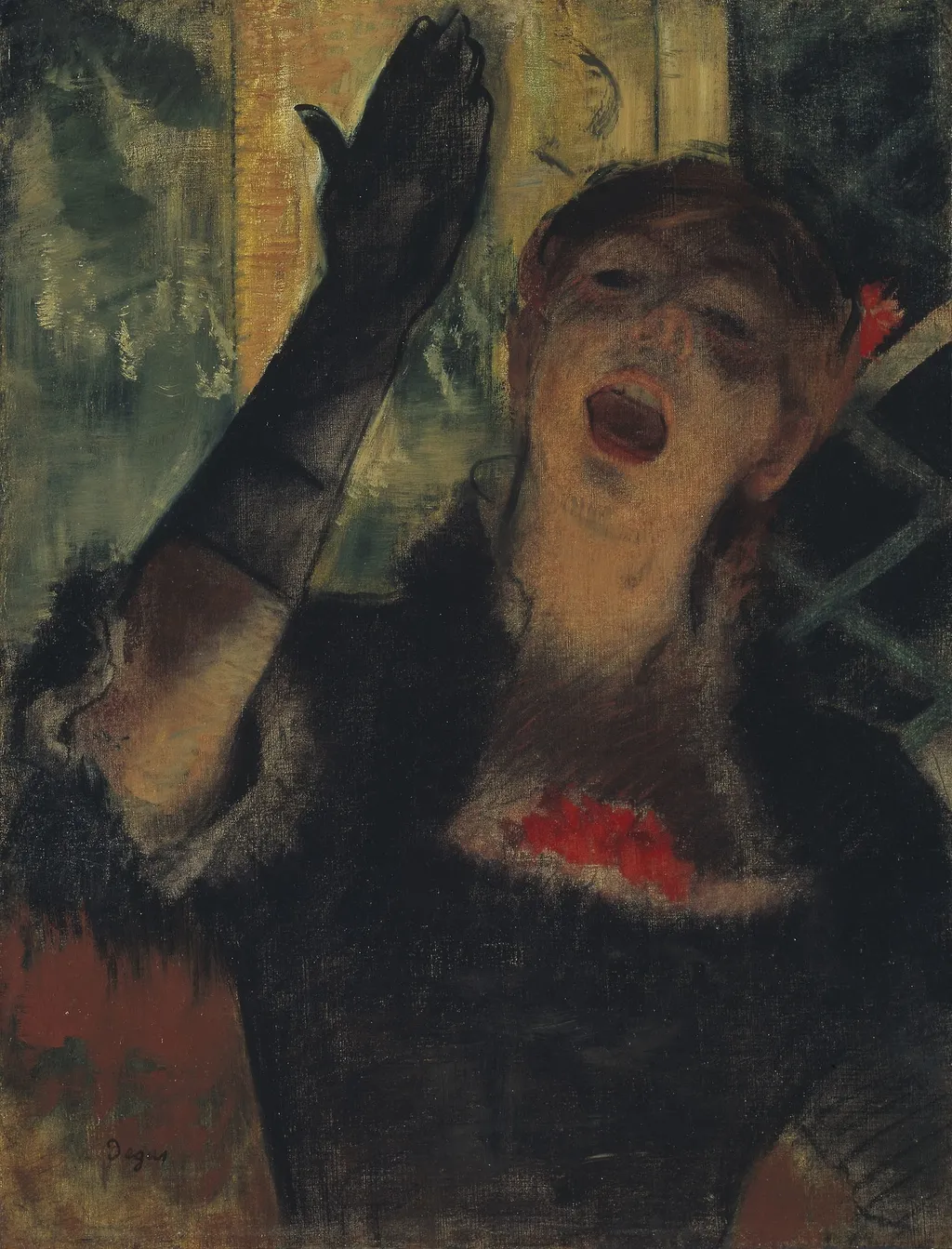
Café Singer is an oil painting by the Impressionist artist Edgar Degas. It dates from 1890 and is held in the collection of the Art Institute of Chicago.
About this work
Technique & Style
Edgar Degas executed Café Singer in 1879 using oil paint applied to a canvas support. The work measures 53.5 cm in height and 41.8 cm in width. As a painting depicting a woman singing, the piece reflects Degas's engagement with modern life subjects through traditional oil techniques on canvas.
History & Provenance
No further details regarding specific commissions, prior ownership chains, or the circumstances of its creation are provided in the available records.
Edgar Degas created the oil painting Café Singer in 1879. Executed on canvas, the work measures 53.5 cm in height and 41.8 cm in width. The piece depicts a woman singing and has been held in the collection of the Art Institute of Chicago.
No further details regarding specific commissions, prior ownership chains, or the circumstances of its creation are provided in the available records.
Edgar Degas's painting Café Singer, created in 1879, is held in the collection of the Art Institute of Chicago. The work is executed in oil paint on canvas and measures 53.5 cm in height by 41.8 cm in width. While the artwork has been documented as part of the museum's holdings depicting a woman singing, the provided sources do not specify an accession or inventory number, nor do they list any exhibition history for the piece.
Overview
Executed in 1890, this oil painting by Edgar Degas portrays a lone female performer mid-song. The composition isolates the singer against an indistinct interior, directing attention to her gesture and expression. Preserved in the Art Institute of Chicago, the work exemplifies Degas’s late exploration of urban entertainment and nocturnal lighting.
Subject & Meaning
The painting captures a café-concert singer, her mouth open in song and right arm lifted in emphasis. A single red blossom tucked into her dark hair and a black-gloved hand heighten the immediacy of the moment. Rather than romanticizing the performer, Degas conveys the effort and absorption required by public performance, revealing the transient intensity behind popular entertainment.
Context
In late nineteenth-century Paris, café-concerts offered affordable, informal entertainment to a mixed urban audience. Degas frequently attended these venues, drawn to their unpolished energy and the interplay of artificial light and movement. This painting belongs to a series in which he examined performers not as idealized figures but as laboring individuals within the modern city’s nocturnal economy.
Own this work as a print
Artist & collection
Artist
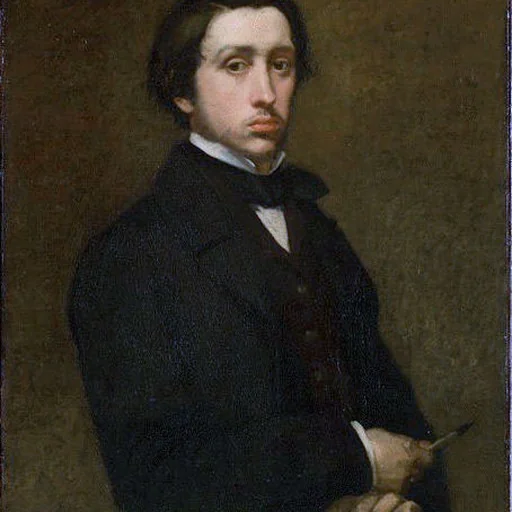
Born Hilaire-Germain-Edgar De Gas on 19 July 1834 in Paris, Edgar Degas came from an affluent banking family with aristocratic roots and spent his childhood among the cultivated circles of the French capital.

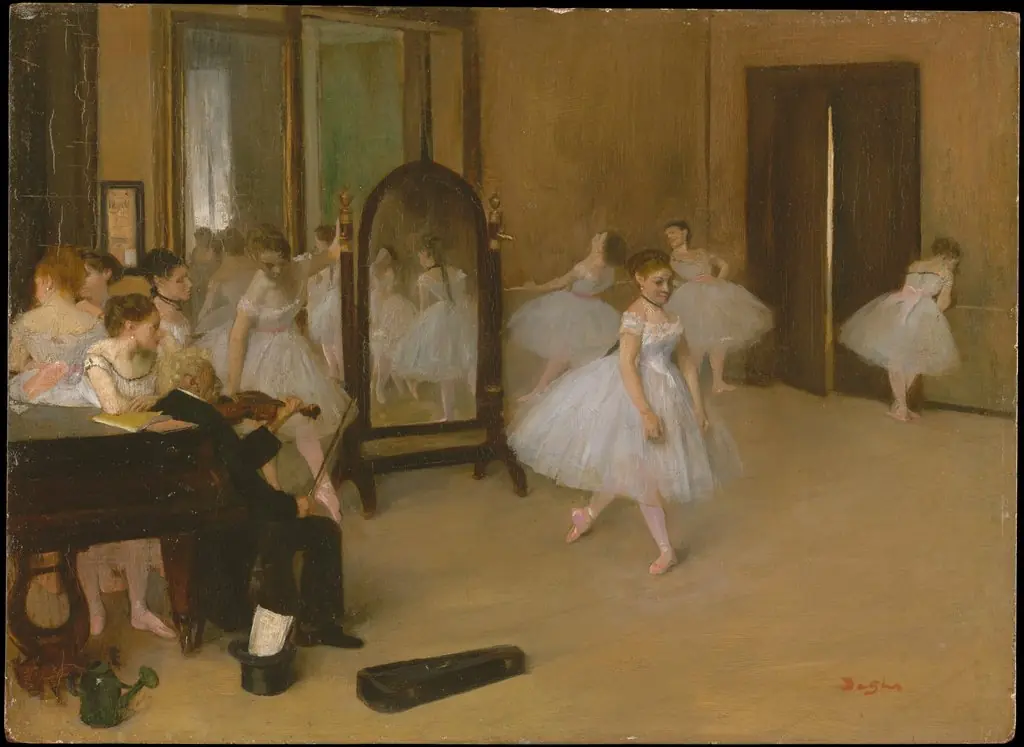
- Portrait after a Costume Ball (Portrait of Madame Dietz-Monnin)
 La Femme (frontispiece)
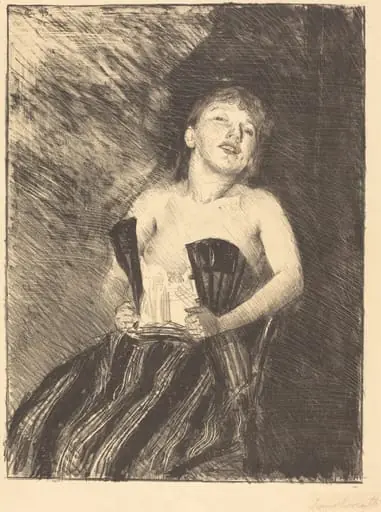 Mädchen im Korsett (Girl in a Corset)
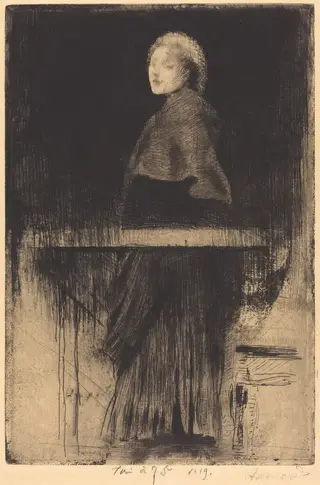 Woman in a Cape (La Femme à la Pelerine)
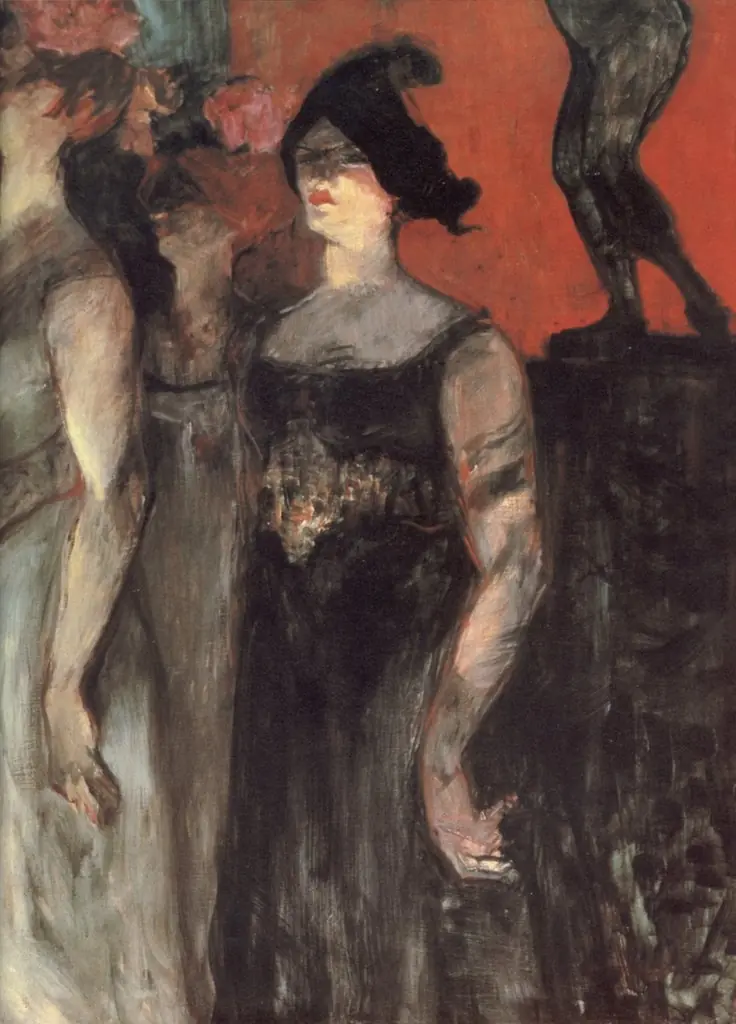 Messalina
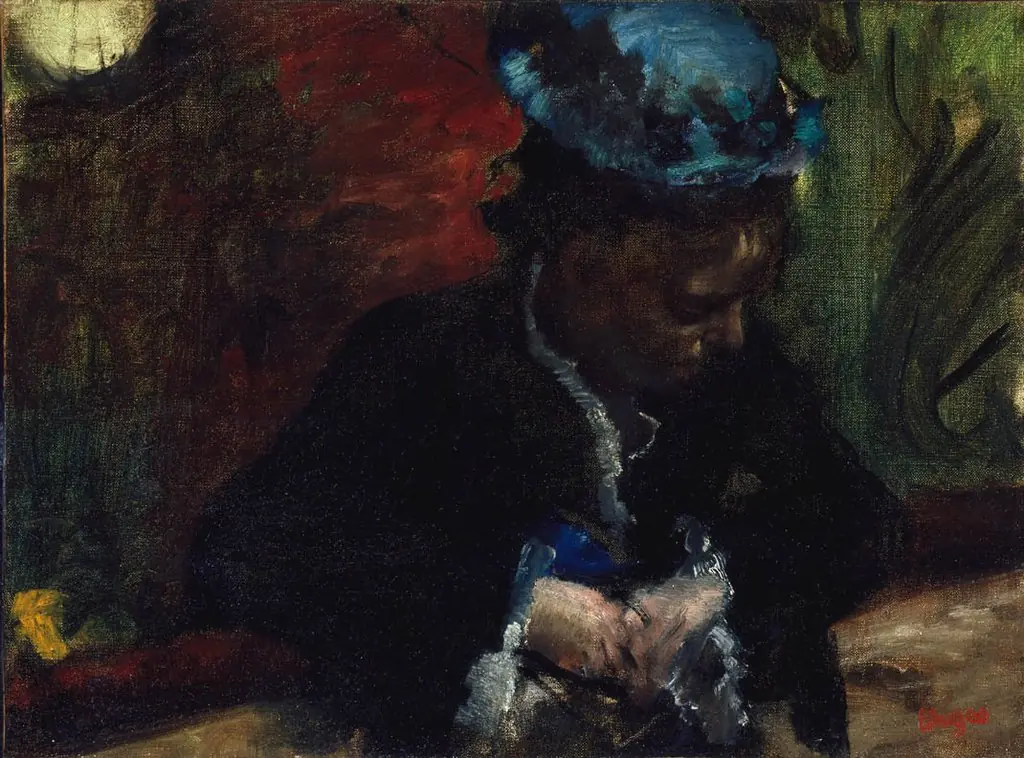 Au théâtre : femme assise au balcon
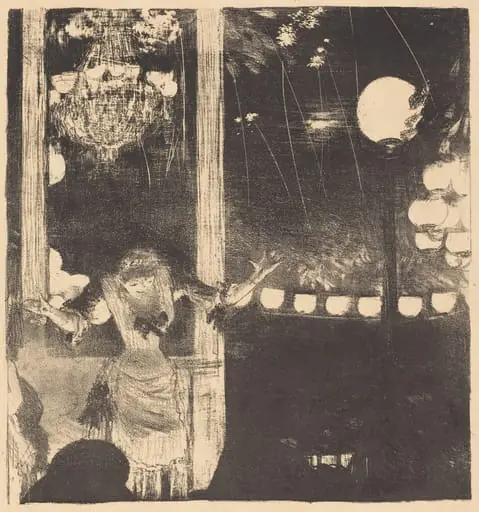 Mademoiselle Bécat at the Cafe des Ambassadeurs (Aux Ambassadeurs: Mlle Bécat)
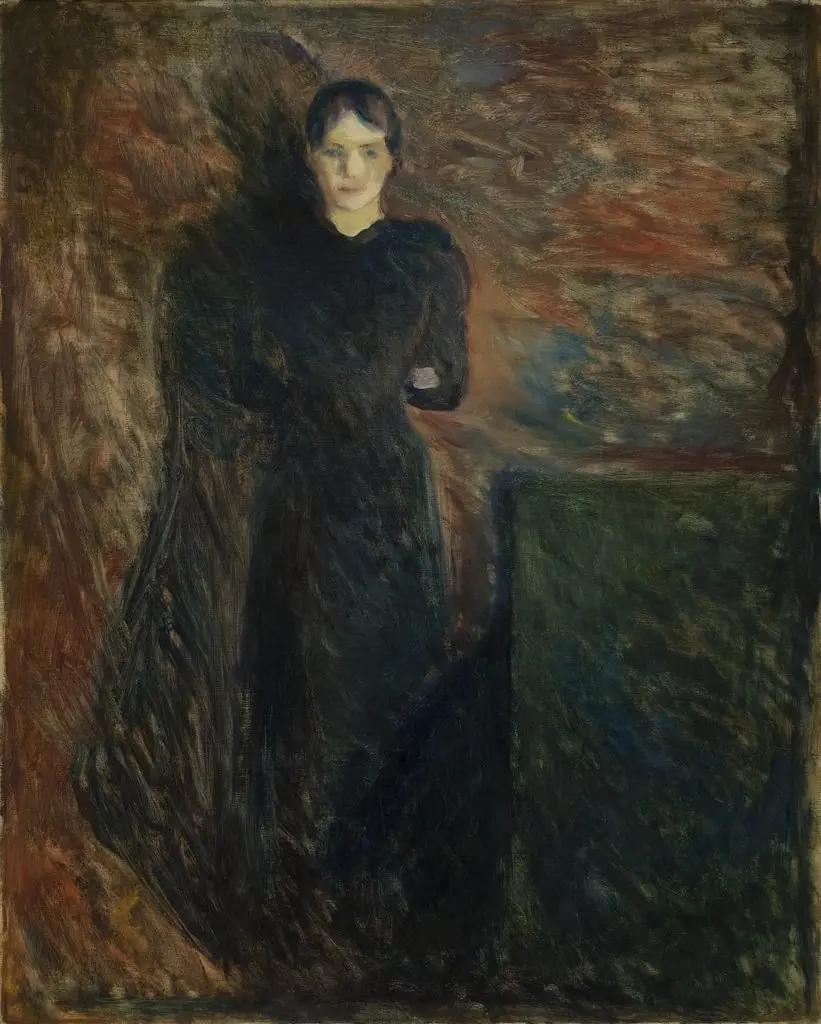 Olga Buhre
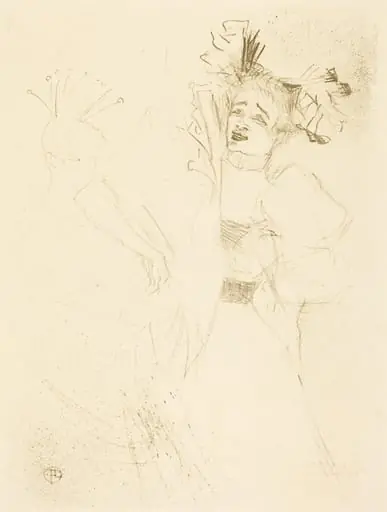 Lender Full Face in "Chilperic" (Lender de face dans "Chilpéric")
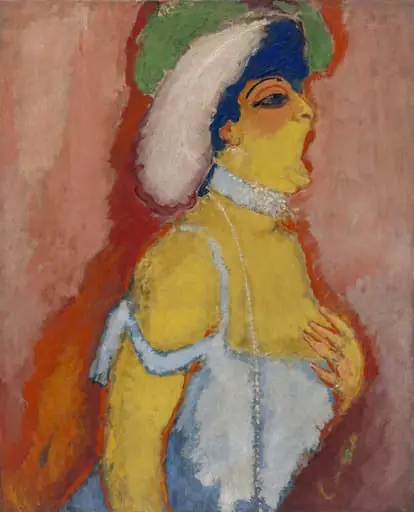 Untitled
 Lady in Black
 The Café-Concert