Artwork
Place de la Concorde
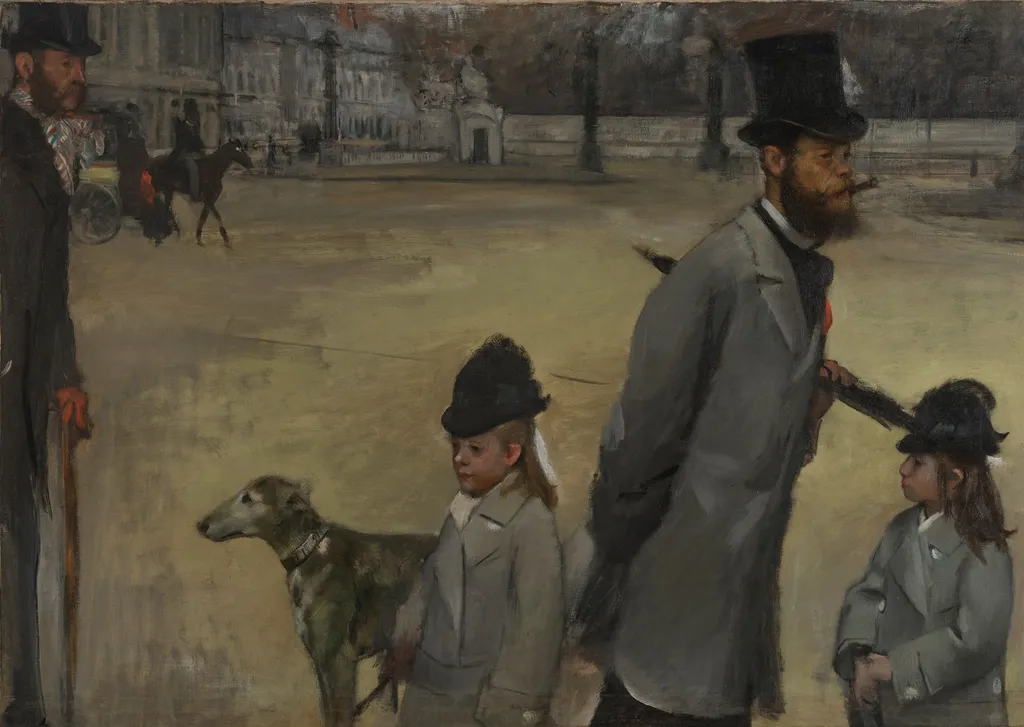
Place de la Concorde is an oil painting by the Impressionist artist Edgar Degas. It dates from 1875 and is held in the collection of the Hermitage Museum.
About this work
Subject & Meaning
The daughters are individualized: the older Eylau, named after the Napoleonic Battle of Eylau, stands confidently, while the younger Jeanine appears tentative.
Place de la Concorde (1875) by Edgar Degas depicts Viscount Ludovic-Napoléon Lepic strolling across the Place de la Concorde in Paris with his daughters Eylau and Jeanine and their greyhound. Lepic, shown in a top hat, overcoat, and carrying an umbrella while smoking a cigar, embodies the archetypal flâneur of modernized Haussmann-era Paris; a red rosette on his coat marks his rank in the Legion of Honour. The cropped figure at the left edge is often identified as the playwright Ludovic Halévy, a close friend of Degas.
The daughters are individualized: the older Eylau, named after the Napoleonic Battle of Eylau, stands confidently, while the younger Jeanine appears tentative. The background situates the family within the urban fabric of the capital, showing the Tuileries Garden behind a stone wall, the Hôtel de la Marine, and monuments to Lille and Strasbourg, the latter draped in black mourning for its loss to Prussia in the Franco-Prussian War.
Technique & Style
Place de la Concorde is an oil painting on canvas, executed in 1875. The support is a primed canvas that Degas later altered: after the paint had dried he folded a 6–7 cm strip behind the stretcher along the lower edge and cut the edge, probably removing the signature. Infrared and x-ray examination shows that the umbrella and the greyhound were fully painted beneath the two daughters, indicating compositional changes, and that the solitary left-hand figure was initially rendered with an exaggerated, lamppost-like elongation before being refined into a more natural form.
These adjustments, together with the extensive negative space, asymmetrical cropping, and figures gazing in unrelated directions, reflect Degas's engagement with photographic framing and instantaneous views. The work is now in the Hermitage Museum, where its survival was revealed after it had been considered lost since the Second World War.
History & Provenance
Place de la Concorde was painted by Edgar Degas in 1875 in France, in oil on canvas. Before the canvas left his studio Degas modified it, folding a six- to seven-centimetre strip behind the stretcher along the lower edge and trimming that edge, probably removing his signature. The painting later entered the collection of the Berlin collector Otto Gerstenberg, from whose holdings it was confiscated by Soviet forces during the post-war occupation of Germany and transferred to the Hermitage Museum in Saint Petersburg.
Long considered lost after the Second World War, it was publicly shown at the Hermitage in 1995 in the controversial exhibition "Hidden Treasures Revealed," and it remains in the museum's collection today.
Context
Place de la Concorde is frequently cited in scholarship as a pivotal example of Degas's engagement with modern urban life and photographic aesthetics. Art historians such as Aaron Scharf have linked its unconventional cropping, negative space, and asymmetrical composition to contemporary photography, specifically comparing it to Hippolyte Jouvin's instant views of Paris. Conversely, the scholar Kirk Varnedoe argues that these formal innovations stem from a broader artistic tradition of experimentation rather than direct photographic derivation.
The work is notable for its rarity within Degas's oeuvre, which predominantly focused on interiors and performers, marking a departure into Parisian exteriors during Haussmann's transformation of the city. Its complex history, including its disappearance after the Second World War and its 1995 reappearance as a Soviet-held treasure from the Otto Gerstenberg collection, has further fuelled academic discourse on its provenance and on post-war art restitution.
Legacy
Place de la Concorde has been widely cited for its innovative composition and technical experimentation, particularly its use of negative space, asymmetrical framing, and cropping, elements often linked to contemporary photographic practices. Its later history shaped its reputation: confiscated by Soviet forces after the Second World War, it was presumed lost until 1995, when it reappeared at the Hermitage Museum in the controversial exhibition Hidden Treasures Revealed. It has since remained in the Hermitage and become a focal point in discussions of provenance, restitution, and the cultural impact of wartime seizures, while art historians continue to cite its composition as a key example of Degas's engagement with modern urban life and visual culture.
Overview
Edgar Degas's 1875 oil painting, Place de la Concorde, captures a moment in Parisian urban life. It features Viscount Ludovic-Napoléon Lepic, his daughters, and their dog traversing the famous square. The work is notable for its unconventional composition and sense of candid observation, reflecting the changing landscape of 19th-century Paris. This piece exemplifies Degas's engagement with modern subjects and innovative visual approaches.
Own this work as a print
Artist & collection
Artist
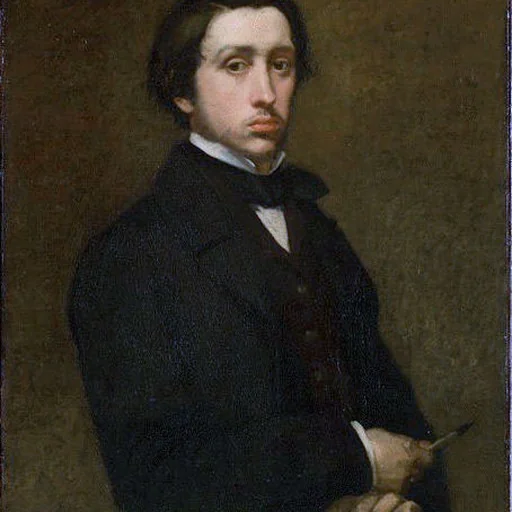
Born Hilaire-Germain-Edgar De Gas on 19 July 1834 in Paris, Edgar Degas came from an affluent banking family with aristocratic roots and spent his childhood among the cultivated circles of the French capital.

 Sunday at the Bois de Boulogne
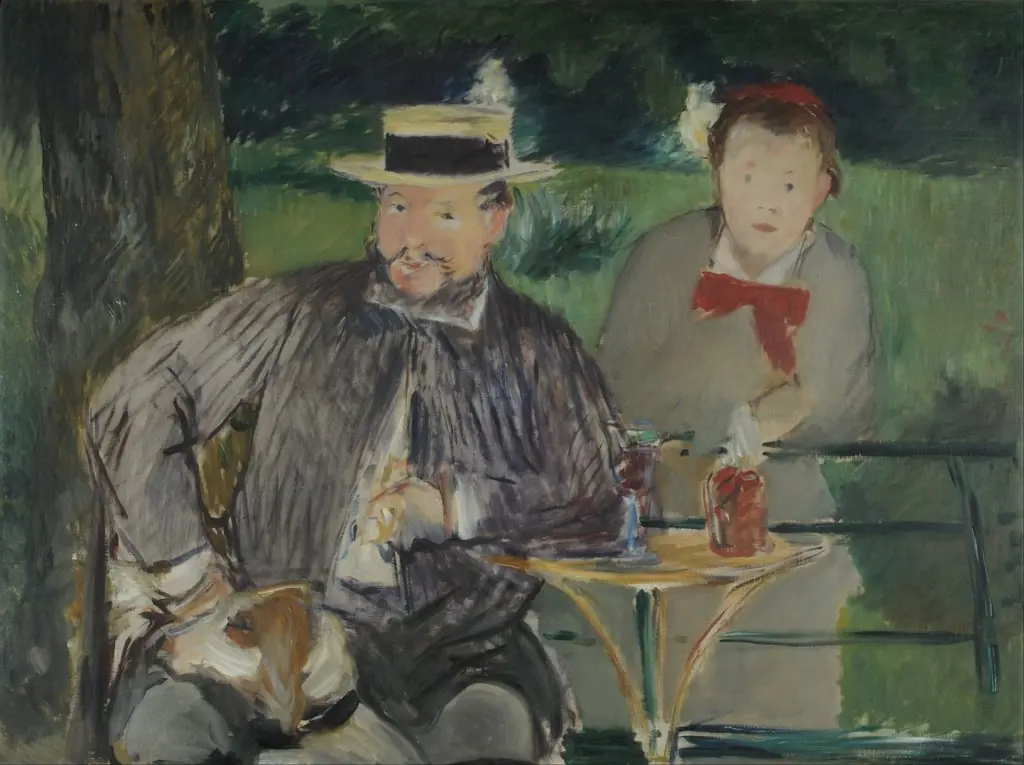 Portrait d'Ernest Hoschedé et sa fille Marthe
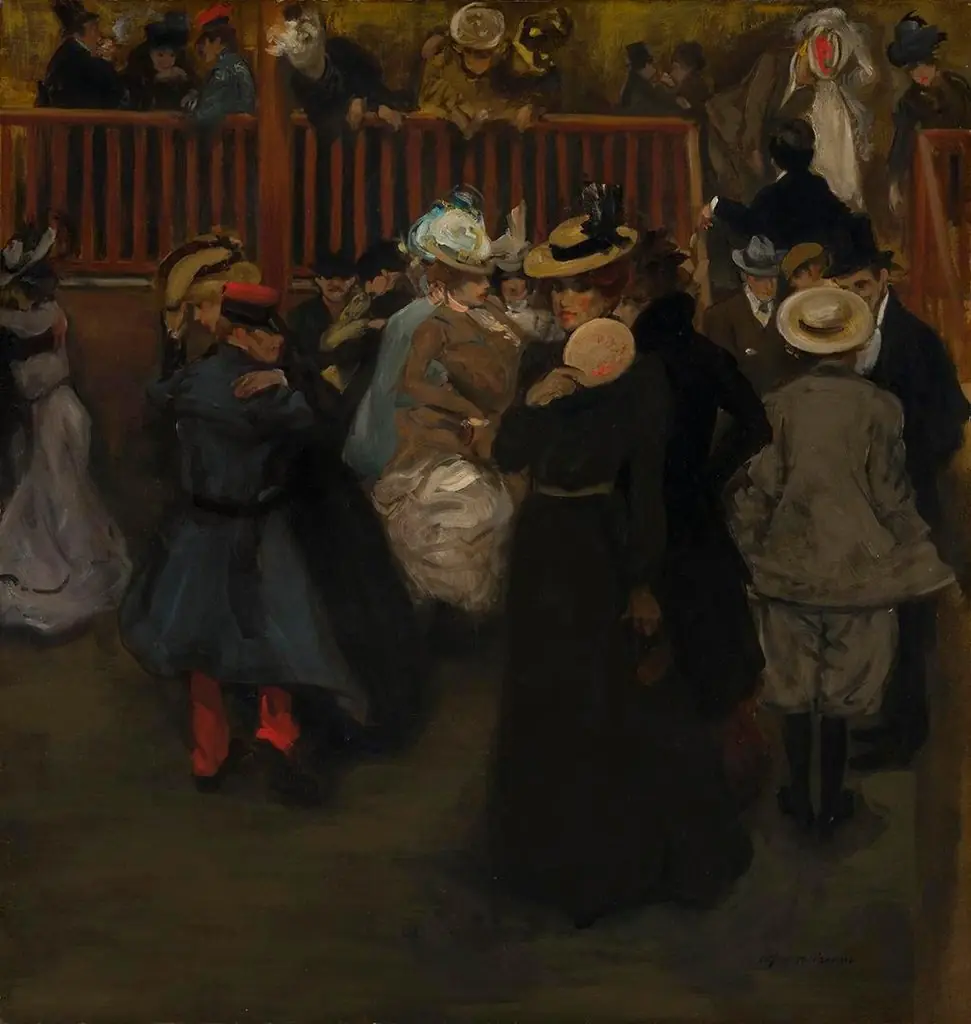 Café Scene
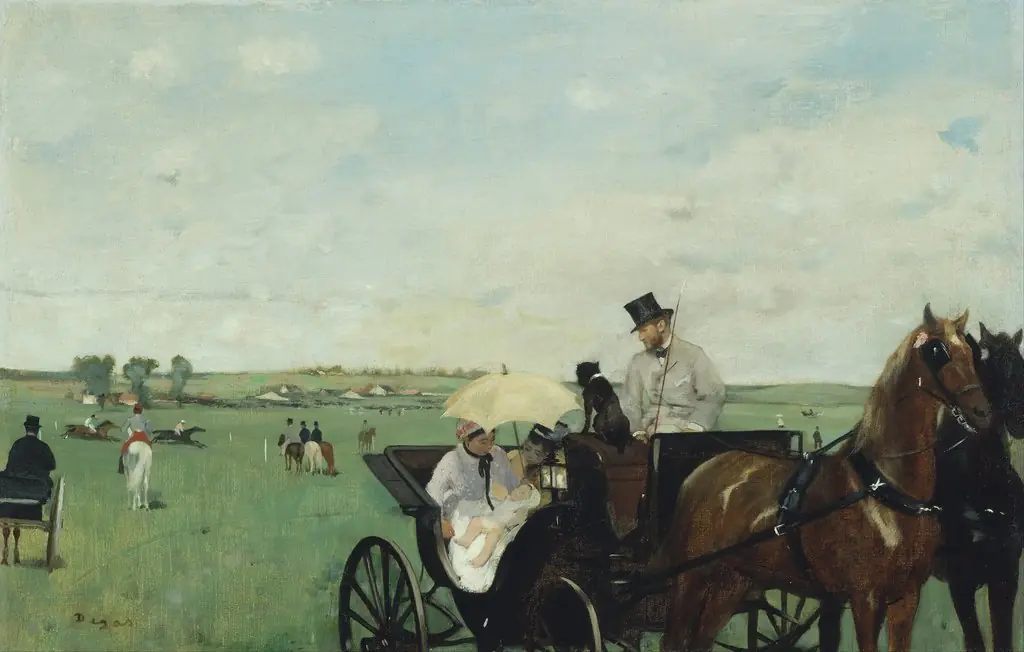 At the Races in the Countryside
 Camille Monet und ihr Sohn Jean in Argenteuil
 Luxembourg Gardens
 At the Races
 John Lewis Brown with Wife and Daughter
 Count Lepic and His Daughters
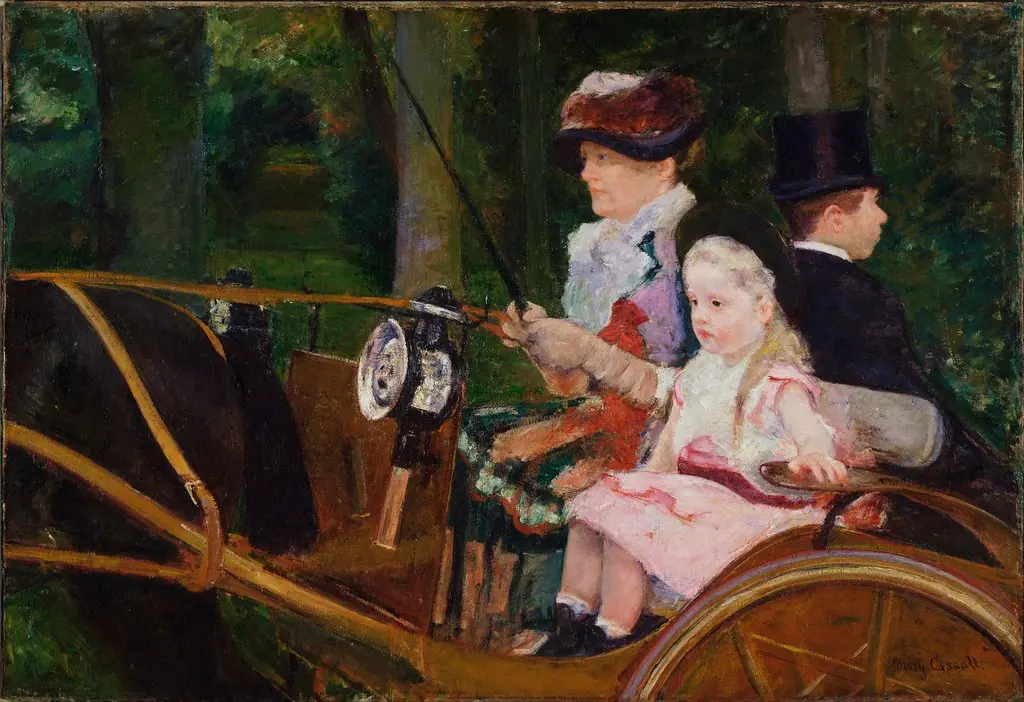 A Woman and a Girl Driving
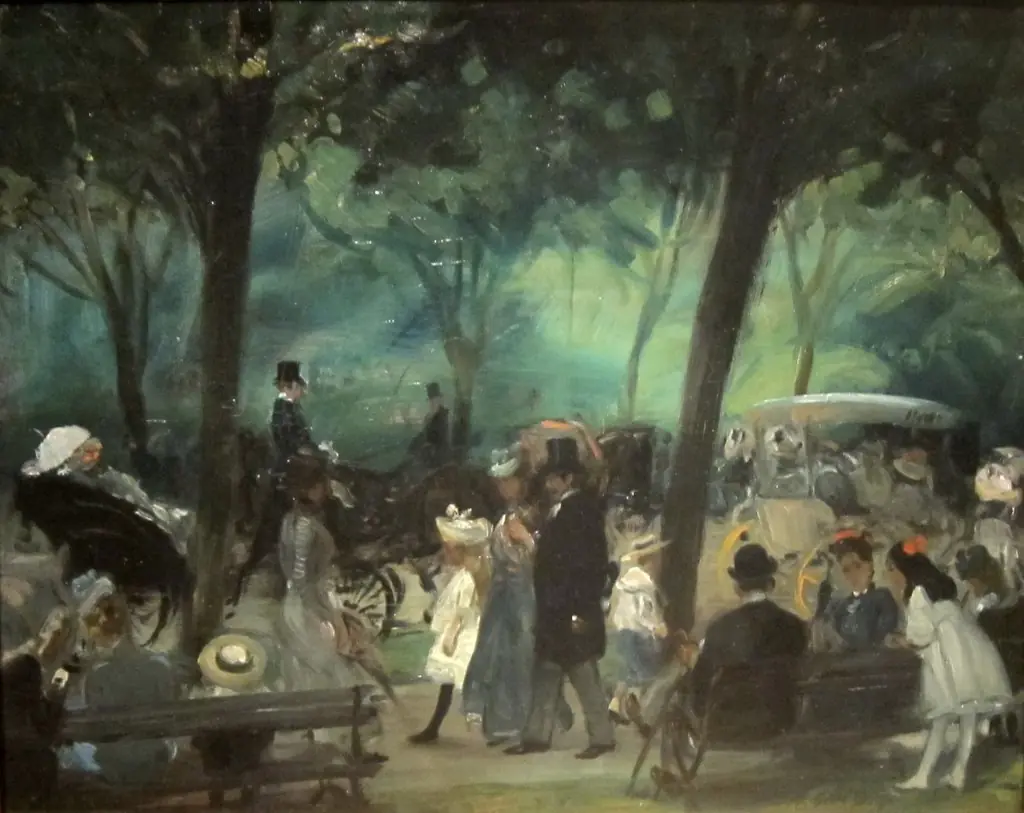 The Drive, Central Park
- La Place Clichy