Artwork
Winter at Nordstrand
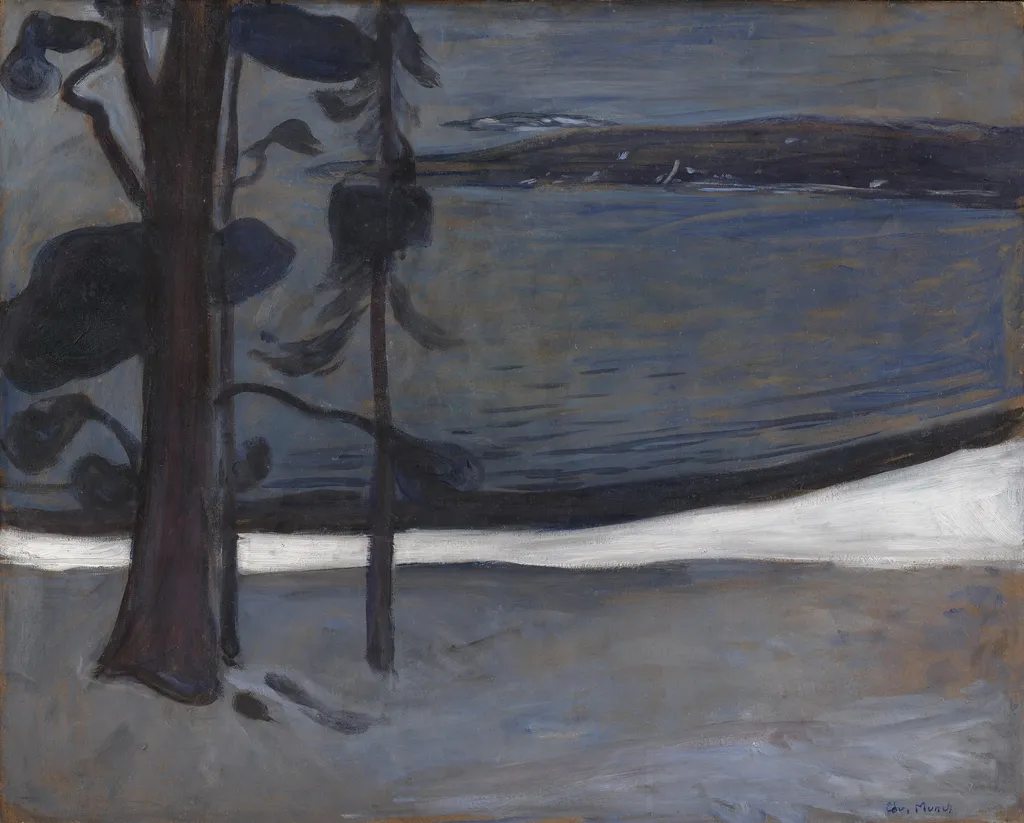
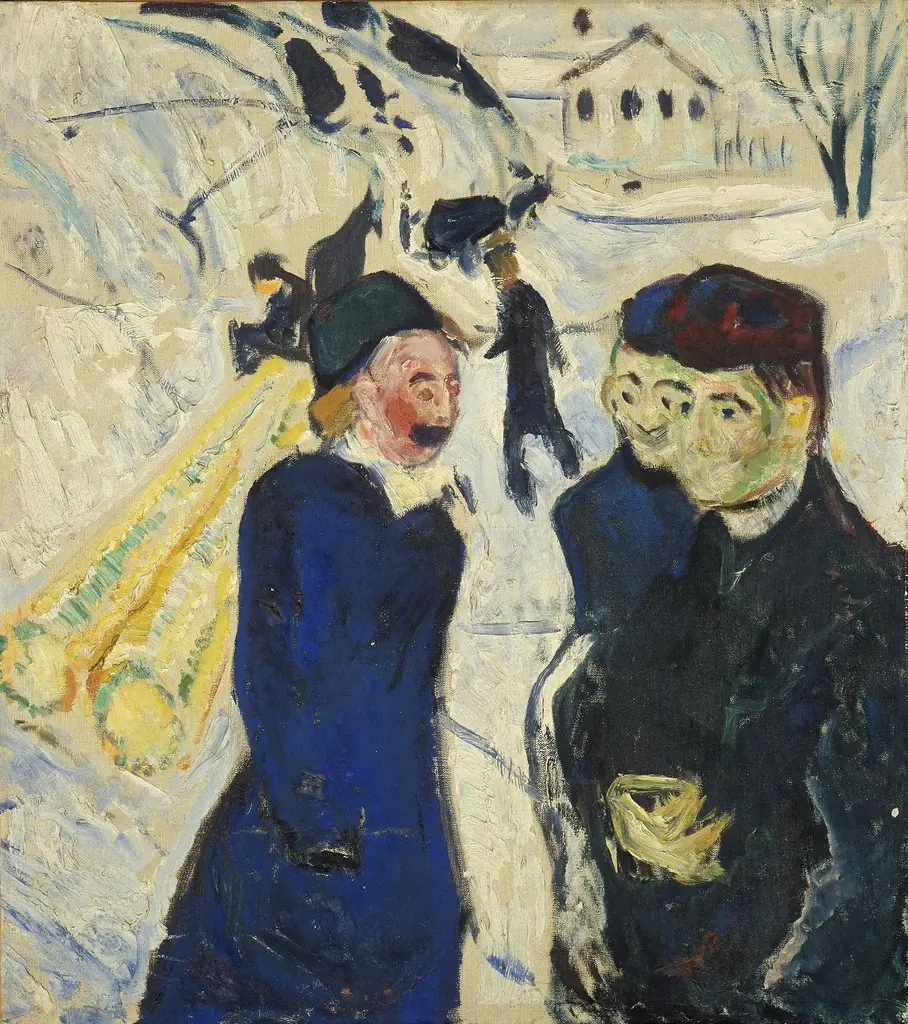
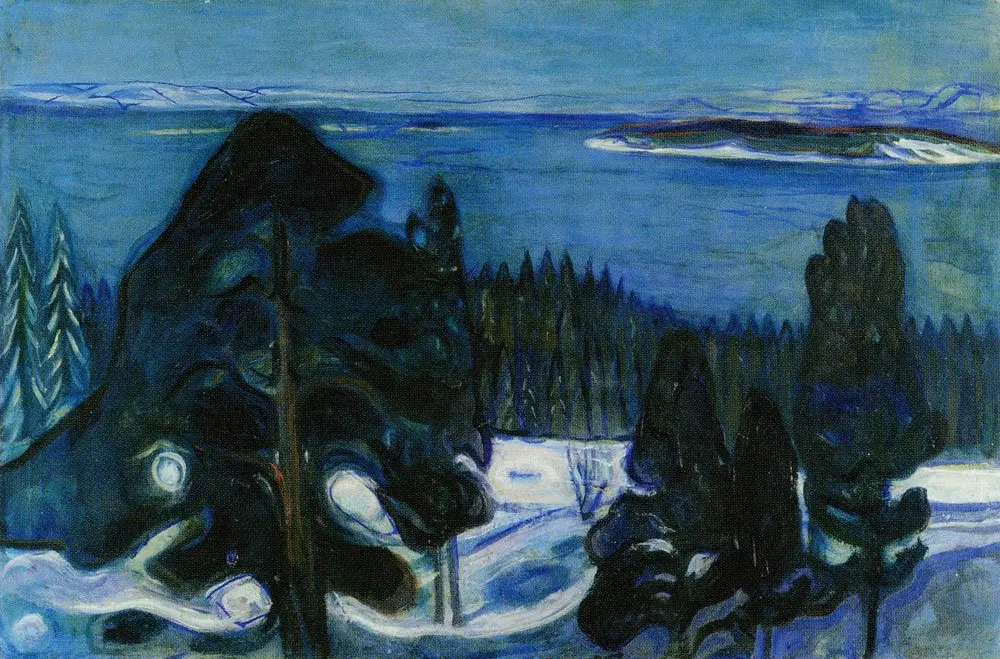
Winter at Nordstrand is an oil painting by the Post-Impressionist artist Edvard Munch. It dates from 1900 and is held in the collection of the Statens Museum for Kunst.
About this work
Subject & Meaning
The work was painted in oil on cardboard and is held at the Statens Museum for Kunst.
Winter at Nordstrand (1900) shows a snow-covered shoreline on the Nordstrand peninsula near Oslo, with a leafless tree and the frozen expanse of the Oslofjord rendered in muted tones. The scene emphasizes the stillness and starkness of a winter landscape, using the barren tree and blanketed ground to suggest isolation and quiet melancholy, motifs that echo Edvard Munch's broader exploration of emotional atmosphere in nature. The work was painted in oil on cardboard and is held at the Statens Museum for Kunst.
Technique & Style
Executed in 1900, Winter at Nordstrand is an oil painting applied to a cardboard support. The work measures 64.5 cm in height and 80 cm in width. As a landscape, the composition depicts a snowy scene featuring trees and the Oslofjord at Nordstrand.
The use of cardboard as a ground for the oil medium reflects a material choice characteristic of the artist's practice during this period.
History & Provenance
Edvard Munch painted Winter at Nordstrand in oil on cardboard in 1900. The work had entered the holdings of the Museum Folkwang in Germany, where it was among the works seized as 'degenerate art' under the Nazi regime in 1937. It later entered the collection of the Statens Museum for Kunst in Copenhagen, the national gallery of Denmark, where it remains. No specific accession number or exhibition history is documented in the available sources beyond these institutional holdings.
Overview
Edvard Munch's Winter at Nordstrand, painted in 1900, captures a stark, snow-covered scene. This oil painting reflects the artist's characteristic focus on emotional depth within a landscape setting. It depicts a solitary tree on a winter shore near the Oslofjord, a location significant to Munch.
The work is recognized as a contribution to the Post-Impressionist movement and is housed at the Statens Museum for Kunst.
Context
Born in Norway, Edvard Munch experienced significant personal hardships, including illness and loss, which profoundly influenced his artistic perspective. He received his formal training at the Royal School of Art and Design in Kristiania, now Oslo. Throughout his career, Munch consistently sought to convey deep emotional and psychological states through his art, often using symbolic landscapes and figures to explore universal themes of human experience.
Own this work as a print
Artist & collection
Artist
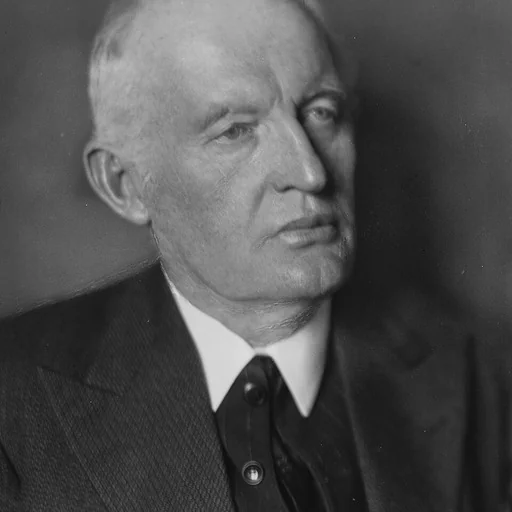
Edvard Munch ( MUUNK; Norwegian:; 12 December 1863 – 23 January 1944) was a Norwegian painter.