Artwork
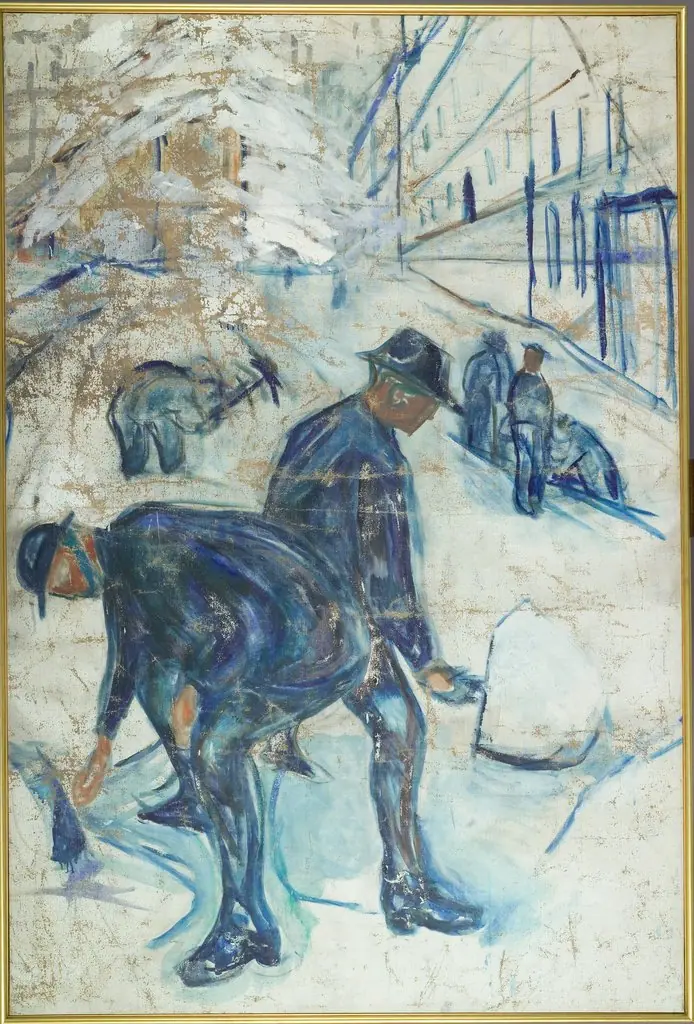
People and Timber Transport in a Kragerø Street
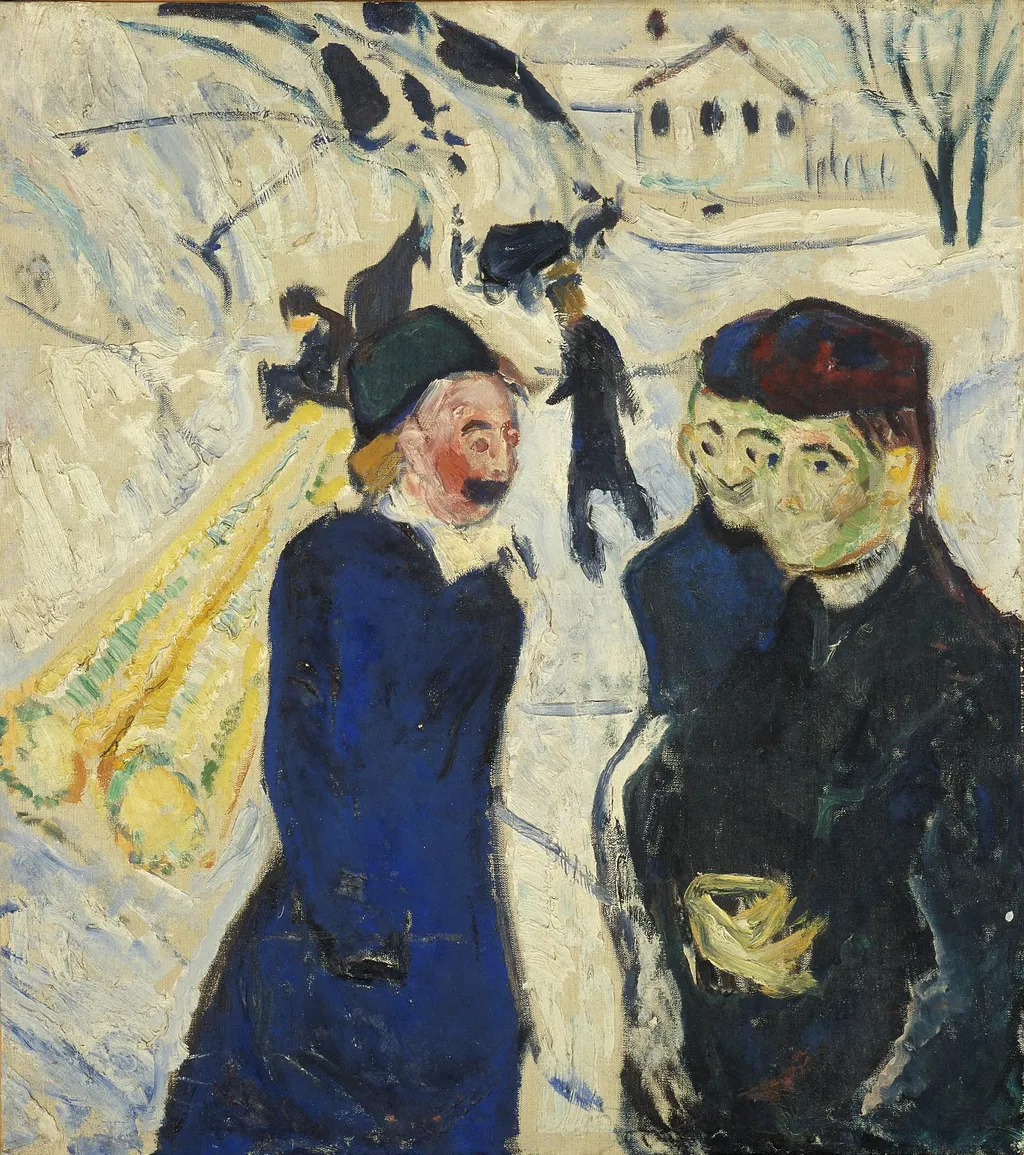
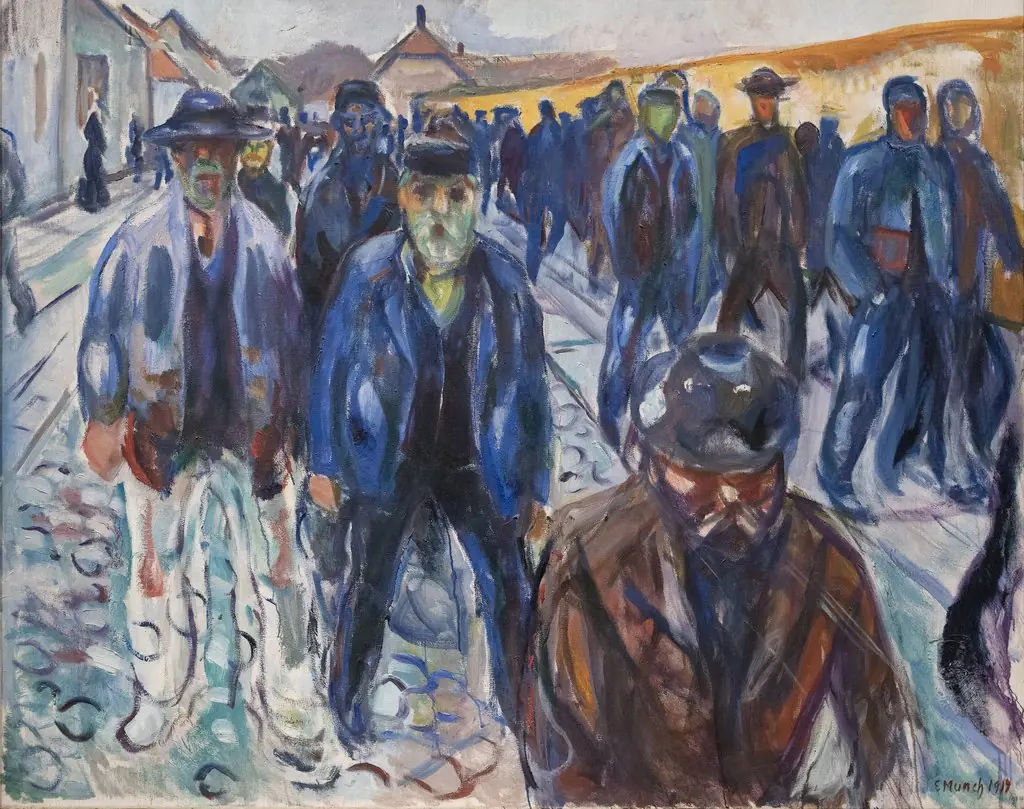
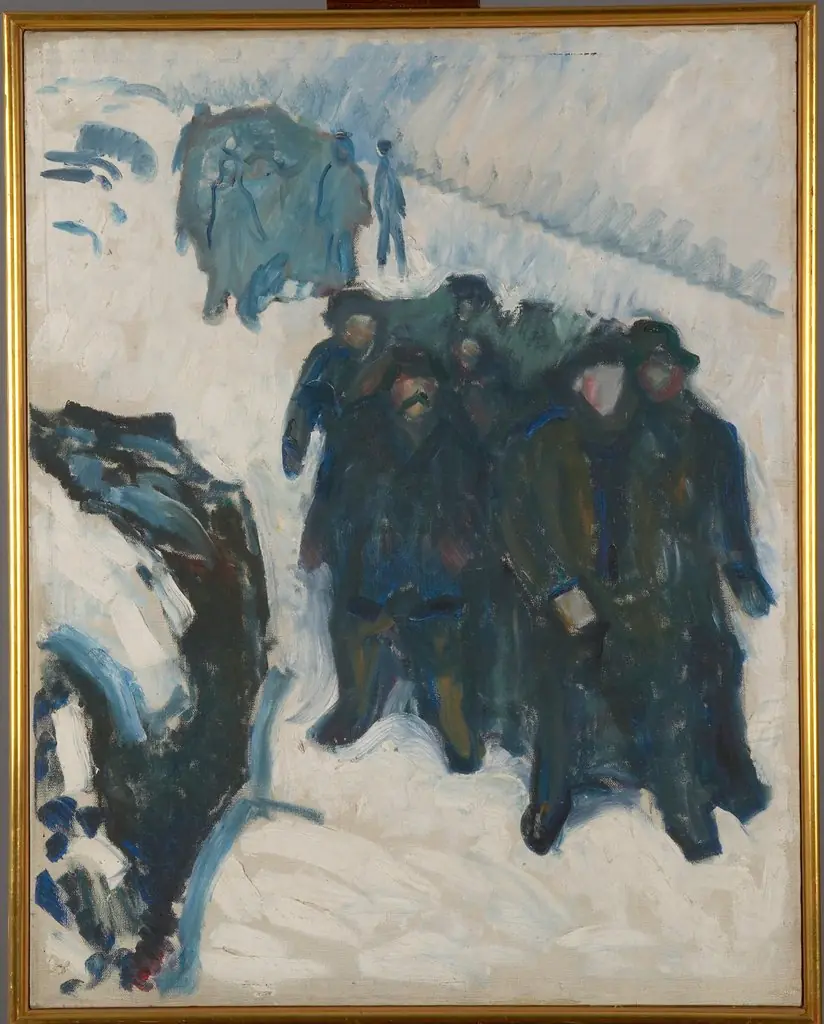
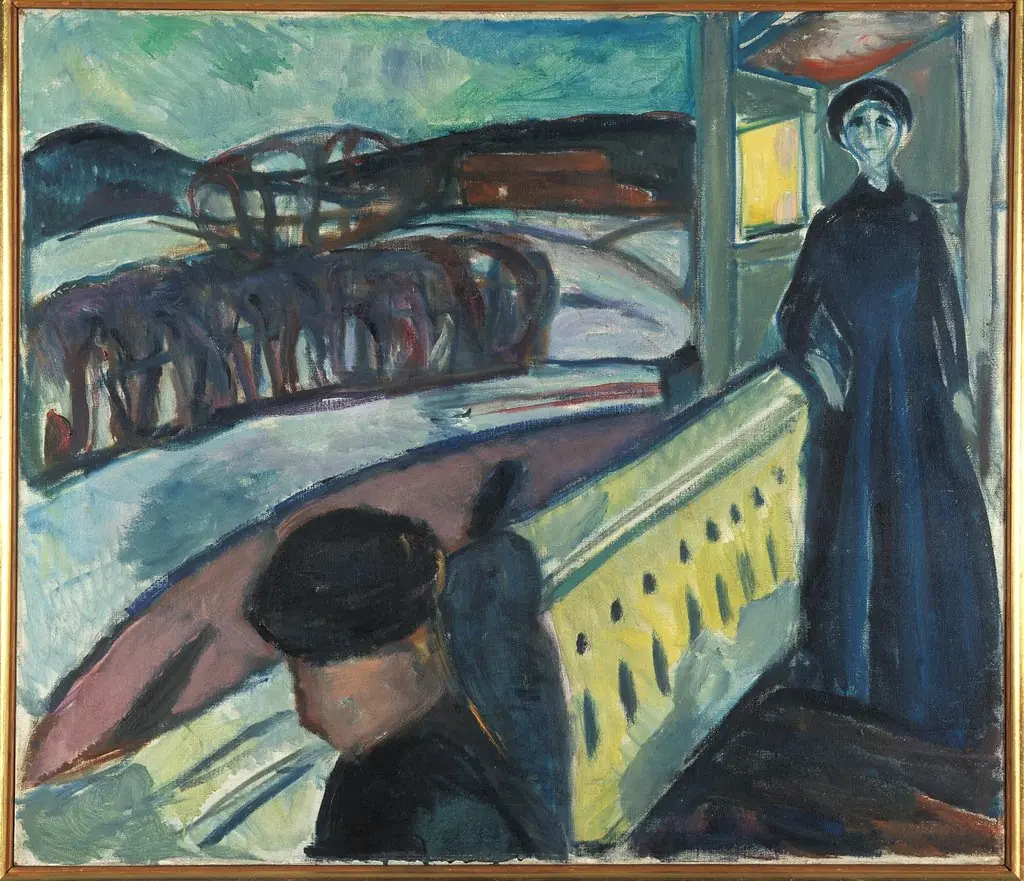
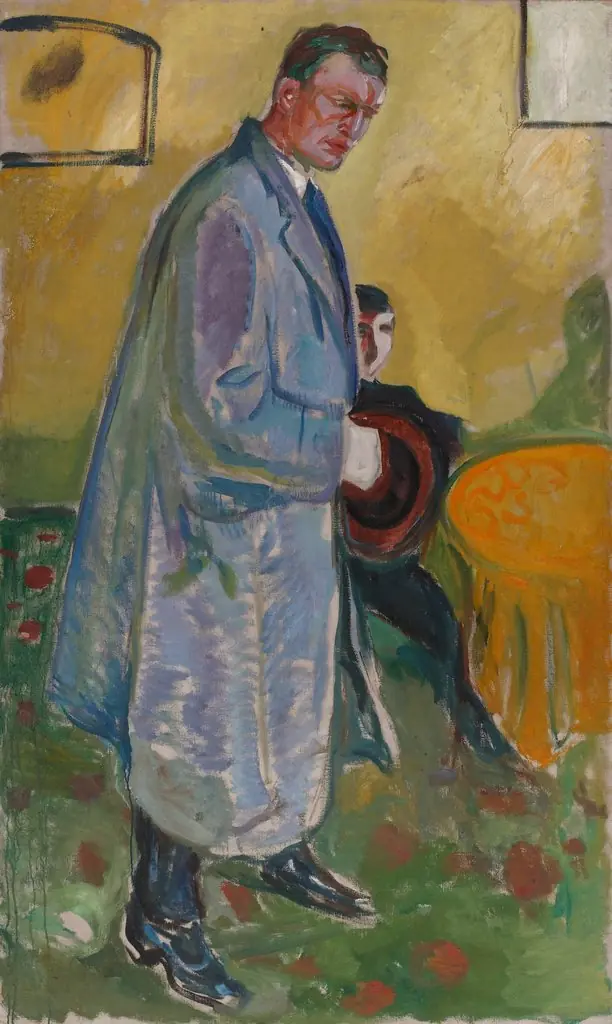
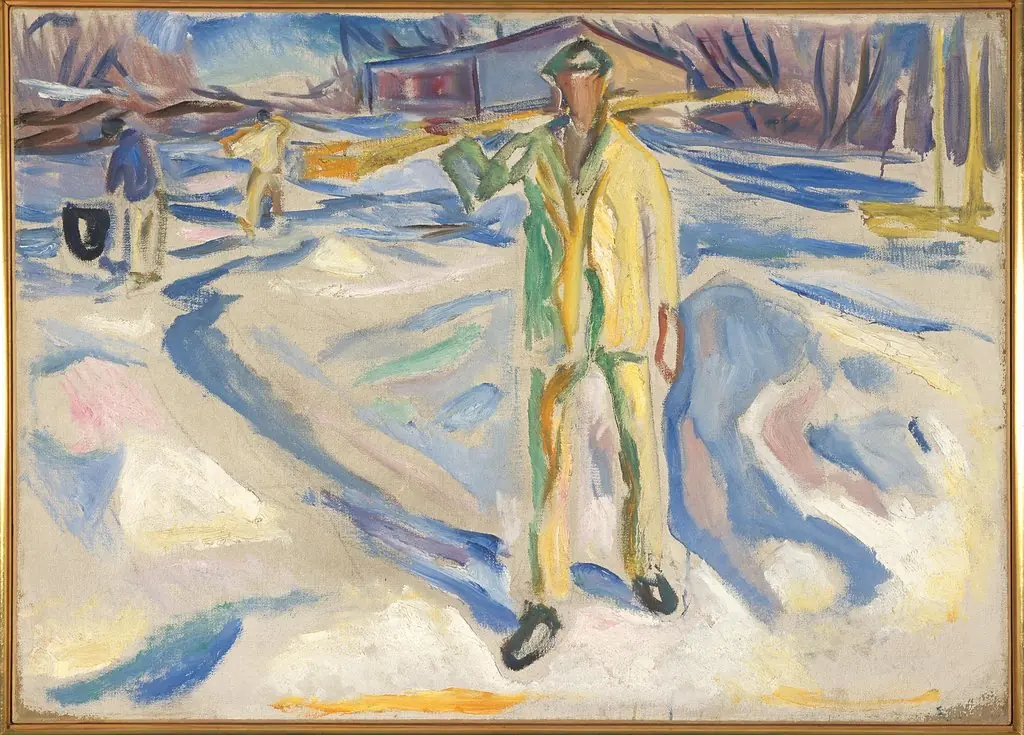
People and Timber Transport in a Kragerø Street is an oil painting by the Post-Impressionist artist Edvard Munch. It dates from 1910 and is held in the collection of the Munch Museum.
About this work
Subject & Meaning
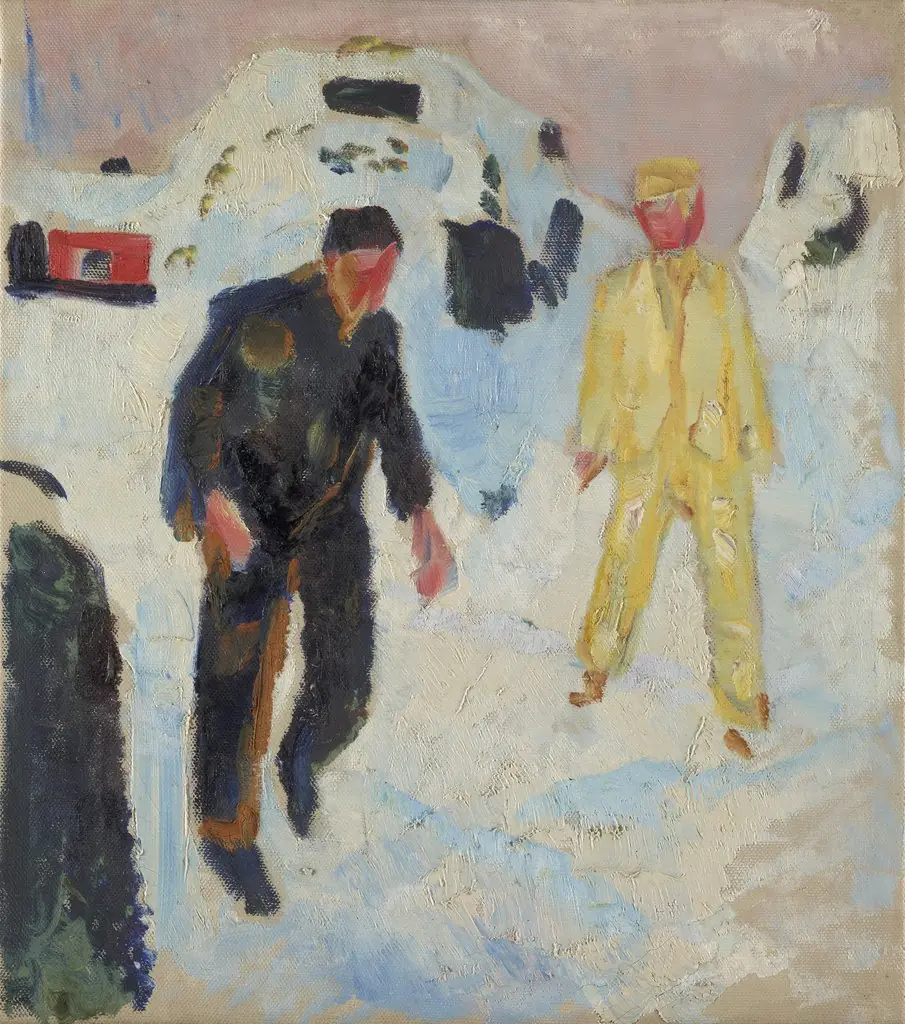
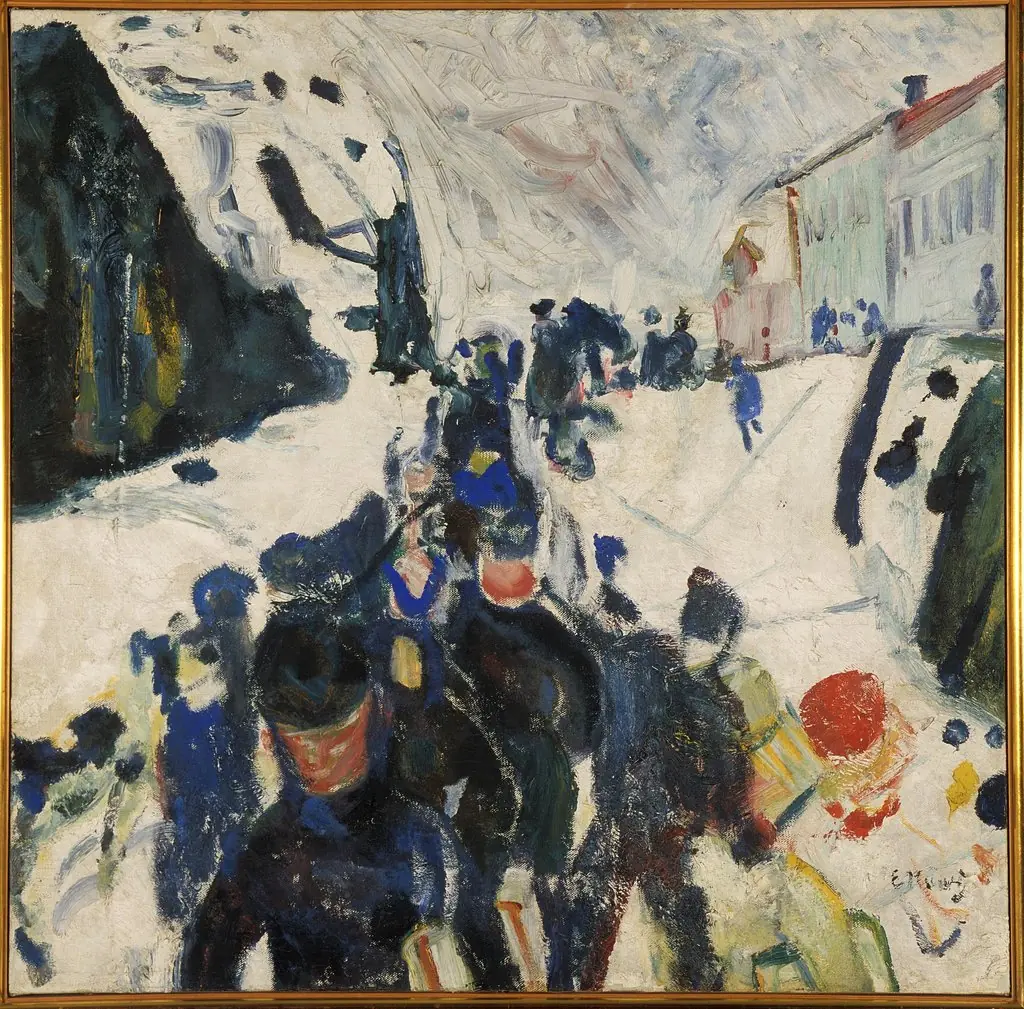
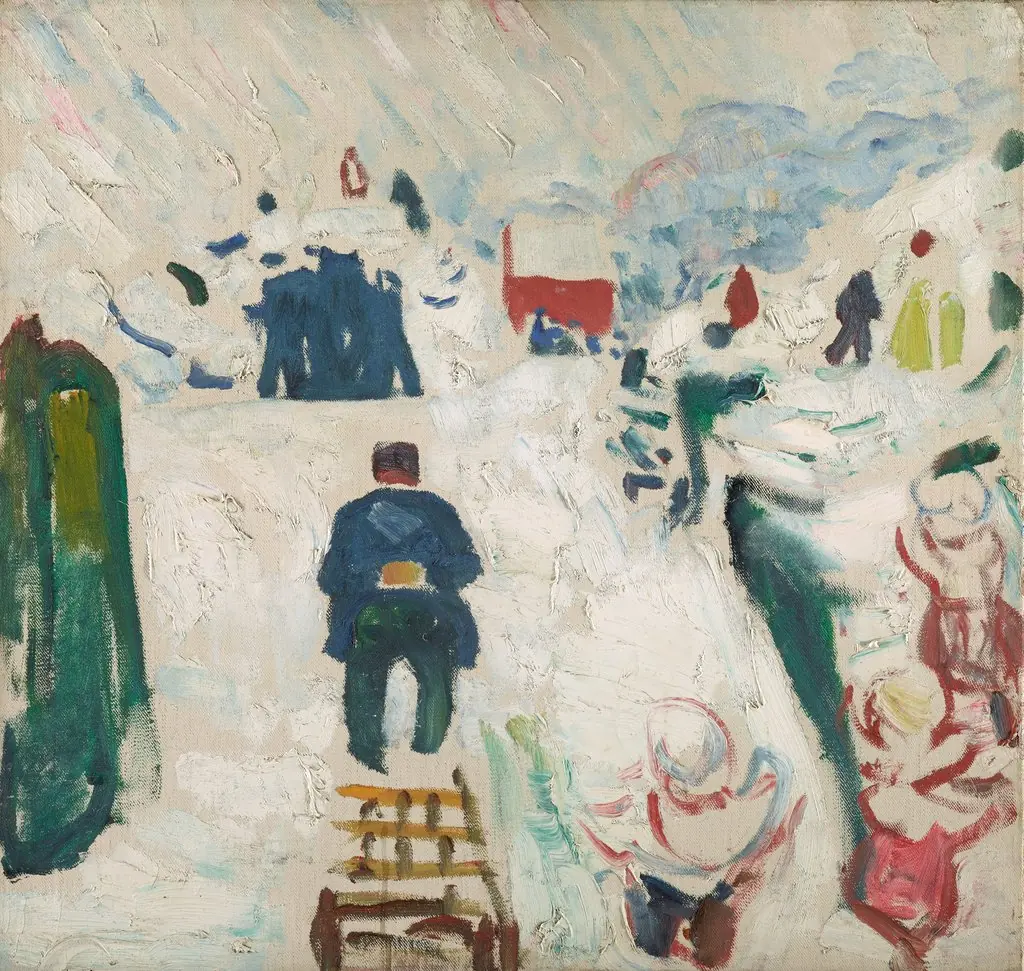
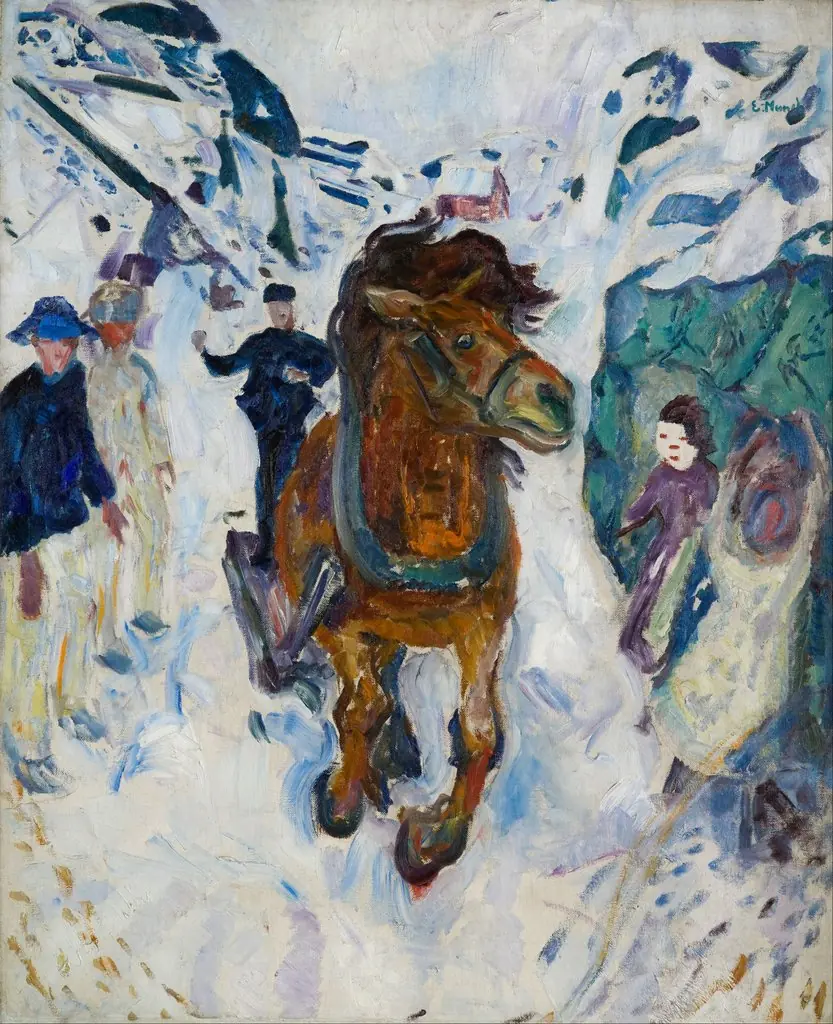
Edvard Munch's 1910 oil painting captures a winter genre scene set on a snow-covered street in the Norwegian town of Kragerø.
Edvard Munch's 1910 oil painting captures a winter genre scene set on a snow-covered street in the Norwegian town of Kragerø. The composition focuses on the laborious activity of timber transport, depicting men, specifically identified as lumberjacks, maneuvering large logs through the urban environment. A woman is also present within the street setting, which is framed by houses and trees under snowy conditions.
The work functions as a representation of daily life and industry within a specific local context, emphasizing the intersection of human effort and the natural landscape during winter. By documenting the movement of lumber alongside figures of different genders, the painting illustrates the communal and physical realities of transport in this coastal community.
Technique & Style
Edvard Munch executed People and Timber Transport in a Kragerø Street in 1910 using oil paint applied to a canvas support. The work measures 106 cm in height and 93.5 cm in width. As a genre scene, the painting depicts a winter street in Kragerø populated by men, women, and lumberjacks alongside logs, trees, and houses.
The composition captures the specific activity of timber transport within a snowy urban environment, utilizing the medium to render the figures and landscape elements characteristic of Munch's treatment of everyday life during this period.
History & Provenance
Edvard Munch painted People and Timber Transport in a Kragerø Street in 1910, an oil on canvas work now held by the Munch Museum in Oslo. The painting entered the museum's collection shortly after its creation and has remained in the institution's custody. Its dimensions are 106 cm by 93.5 cm, and it portrays a snowy street scene with figures including a woman, a man, and a lumberjack transporting timber. The work is classified as a genre scene and was created using oil paint on canvas.
Context
The painting is held in the Munch Museum collection in Oslo, where it is recognized as a significant example of Munch's genre scenes depicting everyday life in coastal Norway. Scholars have analyzed its psychological undertones and use of symbolic elements within the depiction of timber transport, linking it to broader themes in the artist's exploration of human vulnerability. The work is frequently discussed in relation to Munch's broader artistic legacy and his influence on expressionist movements, particularly through its emotive treatment of labor and environment.
Its composition and subject matter are contextualized within early 20th-century Nordic artistic interests in rural life and natural forces.
Overview
Edvard Munch painted People and Timber Transport in a Kragerø Street in 1910 with oil on canvas. The work is part of the Munch Museum’s holdings and reflects the artist’s post‑impressionist phase, focusing on everyday life in a small Norwegian town.
Own this work as a print
Artist & collection
Artist
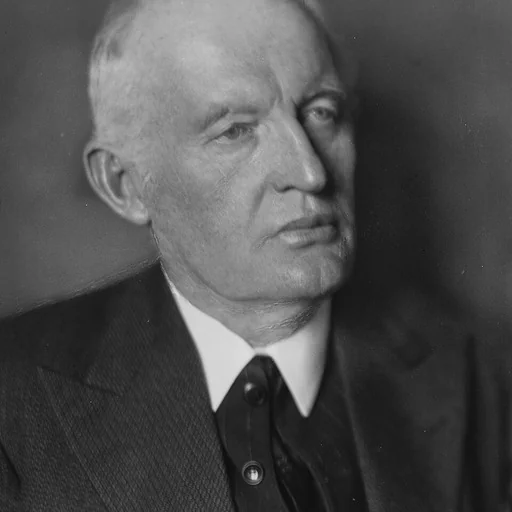
Edvard Munch ( MUUNK; Norwegian:; 12 December 1863 – 23 January 1944) was a Norwegian painter.