Artwork
Anxiety
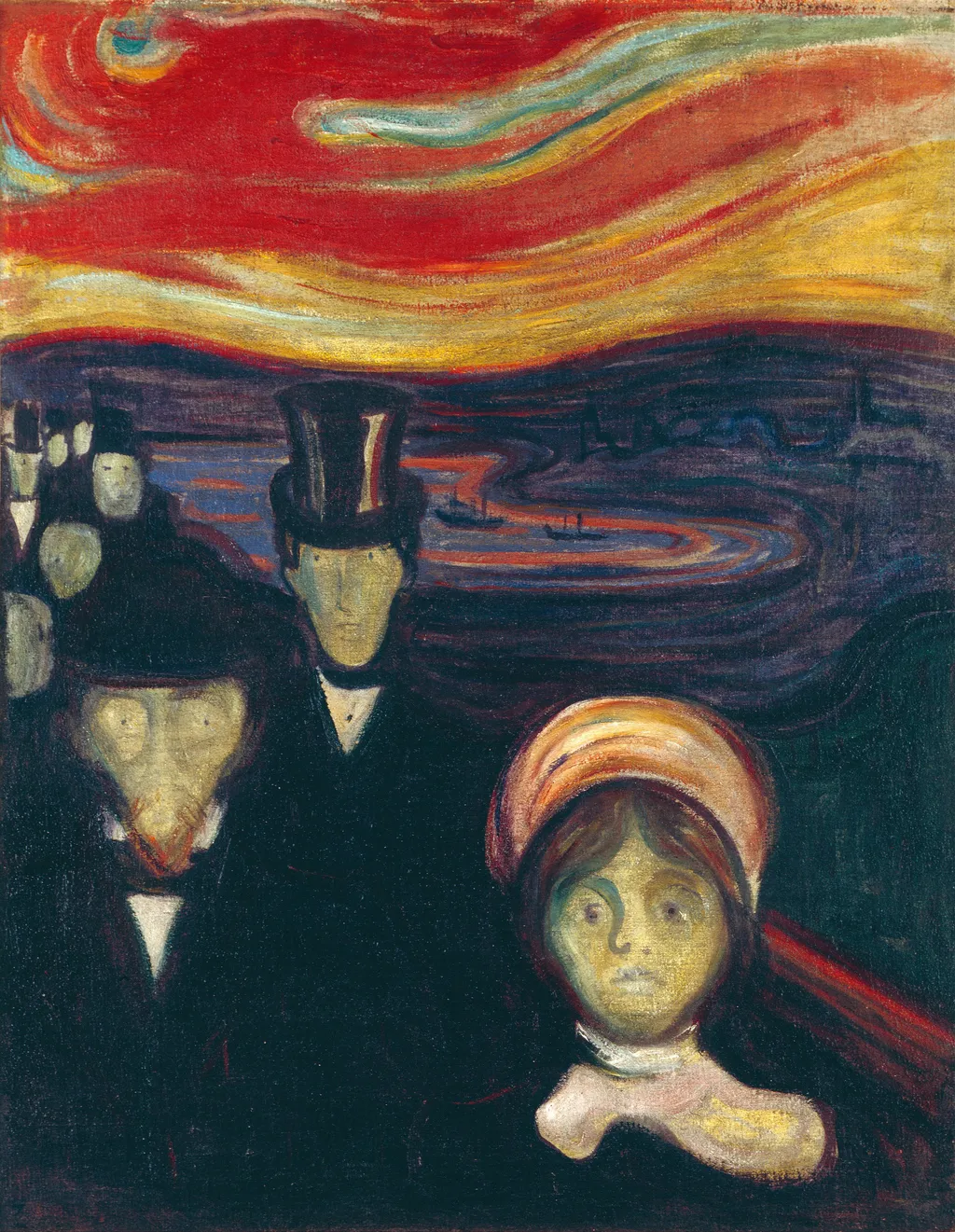
Anxiety is an oil painting by the Expressionist artist Edvard Munch. It dates from 1898 and is held in the collection of the Munch Museum.
About this work
Subject & Meaning
Originally titled Red Clouds, the painting serves as a key motif in Munch's Frieze of Life, exploring the dark, mechanized existence of modern humanity.
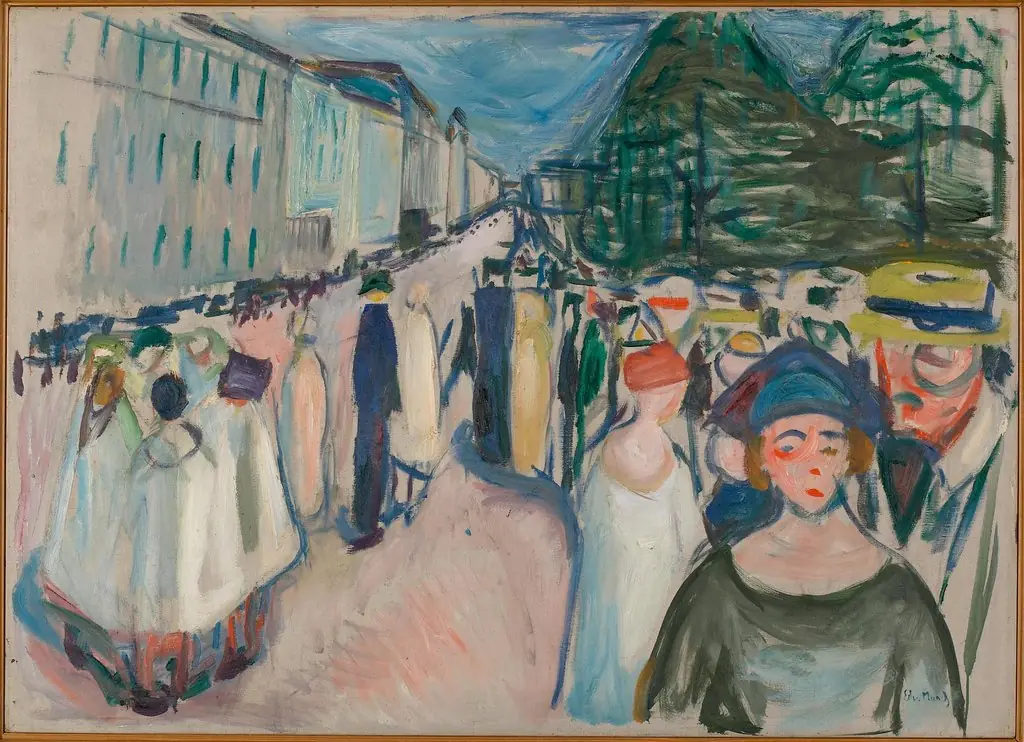
Painted in 1894, Anxiety depicts a group of figures with greenish-pale faces and wide eyes advancing toward the viewer on a bridge against a blood-red sky over the Oslofjord. The composition synthesizes the landscape of The Scream with the alienated crowd from Evening on Karl Johan, creating a scene where individuals appear isolated within a suffocating mass. Art historian Arne Eggum interprets the central woman with a halo-like hat and the man in a top hat as representations of Munch's forbidden love, Milly Thaulow, and her husband, reflecting the artist's personal anxiety attacks.
Conversely, Gerd Woll views the work less as autobiography and more as a symbolic expression of Fin de siècle social decay, using alarming color contrasts to evoke universal fear. Originally titled Red Clouds, the painting serves as a key motif in Munch's Frieze of Life, exploring the dark, mechanized existence of modern humanity.
Technique & Style
Anxiety is an oil paint on canvas painting created in 1894 by Edvard Munch. The work measures 94 cm in height and 74 cm in width. It depicts a group of figures on a bridge under a blood-red sky, with diagonal railing lines cutting across the composition and a deep fjord receding into the distance.
The figures display greenish-pale faces and wide-open eyes, conveying fear and uncertainty. Gerd Woll notes that the signal colors and color contrasts produce an alarming effect, while Uwe M. Schneede identifies the turbulent sky and deep spatial perspective as contributors to the threatening mood. The painting synthesizes earlier motifs such as Evening on Karl Johan (1892) and The Scream (1893), and is part of Munch's Frieze of Life series. It is housed in the Munch Museum in Oslo.
History & Provenance
Anxiety was painted by Edvard Munch in 1894 in oil on canvas, measuring 94 by 74 cm. Arne Eggum's analysis, as cited in the sources, argues that the work was created in Berlin, an inference drawn from the inclusion of a pointed-bearded figure identified as the Polish writer Stanisław Przybyszewski, whom Munch had met in the bohemian circle around the Berlin restaurant Zum schwarzen Ferkel. Originally exhibited under the title Red Clouds (Rote Wolken / Nuages rouges) as part of the first showing of Munch's Frieze of Life, the painting is today held in the collection of the Munch Museum in Oslo. Its documented exhibition history also includes the Munch 150 presentation.
Anxiety is held by the Munch Museum in Oslo, Norway, as part of the institution's collection of Edvard Munch's work.
The painting was first shown publicly as part of Munch's Frieze of Life, where it carried the title Red Clouds. Its documented exhibition history also includes the Munch 150 exhibition.
Context
Anxiety (1894) by Edvard Munch is a key work within his Life Frieze series, synthesizing earlier explorations of emotional distress such as Evening on Karl Johan (1892) and The Scream (1893). It depicts a group of figures with pale, greenish faces and wide eyes moving toward the viewer under a blood-red sky, set against a dramatic fjord landscape. The composition features a diagonal railing cutting through the space, a steep precipice, and turbulent clouds, drawing on motifs from The Scream.
The painting is housed in the Munch Museum in Oslo and was first exhibited as part of the Life Frieze under the title Red Clouds.
Critical interpretations emphasize both personal and symbolic dimensions. Gerd Woll and Uwe M. Schneede highlight the work’s use of signal colors and compositional tension to convey psychological unease, linking it to fin-de-siècle anxieties about social decay. Arne Eggum identifies autobiographical elements, connecting the central figures to Munch’s unrequited love for Milly Thaulow, whom he referred to as 'Mrs. Heiberg,' and to the Polish writer Stanisław Przybyszewski, whose intellectual influence shaped Munch’s anxiety motifs.
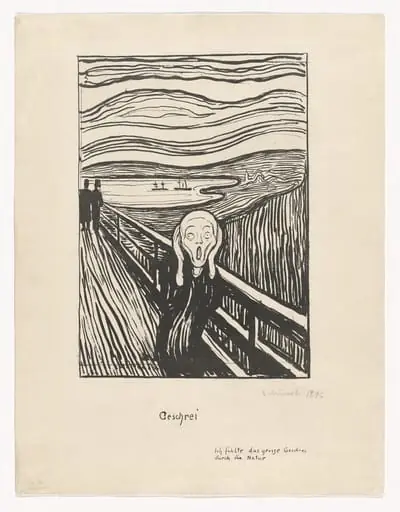
Eggum notes the inclusion of Przybyszewski’s likeness as a tribute to a friend who provided narrative frameworks for Munch’s psychological themes. The work’s symbolic resonance was further amplified through its 1896 prints, lithograph and woodcut, which omit the railing and reconfigure the figures, reflecting Munch’s experimentation with medium and reproduction, as documented in his collaboration with Ambroise Vollard.
Legacy
Anxiety became a pivotal work in the development of Expressionism through its emotional intensity and compositional innovation. The painting's depiction of a crowd advancing under a blood-red sky influenced later artists to explore psychological states through distorted forms and vivid color. Its motifs were adapted into prints that expanded its reach, notably in Ambroise Vollard's 1896 Les Peintres-Graveurs, where Munch contributed a two-color lithograph in black and red.
The work's symbolic use of color and form resonated with contemporaries and later movements, cementing its role in shaping modern art's narrative of inner turmoil.
Overview
Created in 1894, "Anxiety" is an oil painting by Norwegian artist Edvard Munch. The work presents a small crowd moving toward the viewer beneath a sky rendered in intense reds, oranges, and yellows. It belongs to Munch’s larger series known as the Frieze of Life and is currently displayed in the Munch Museum in Oslo.
Own this work as a print
Artist & collection
Artist
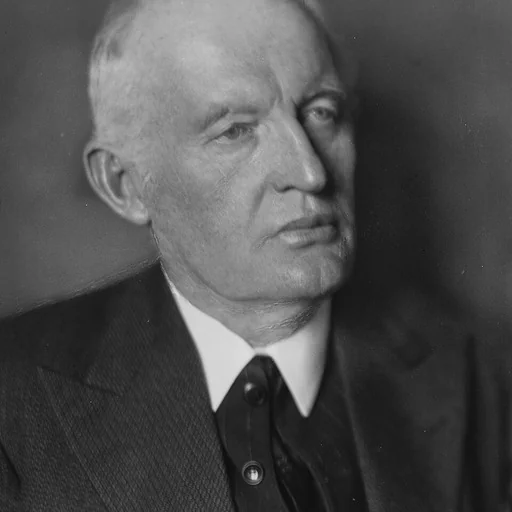
Edvard Munch ( MUUNK; Norwegian:; 12 December 1863 – 23 January 1944) was a Norwegian painter.