Artwork
Lobster Pots
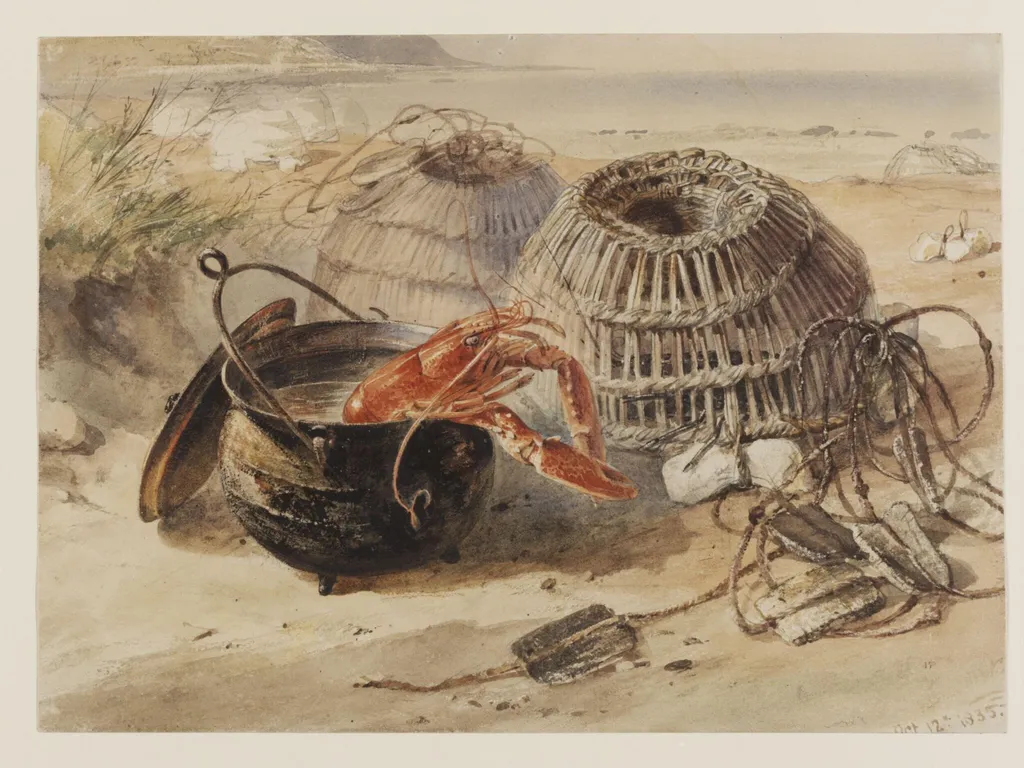
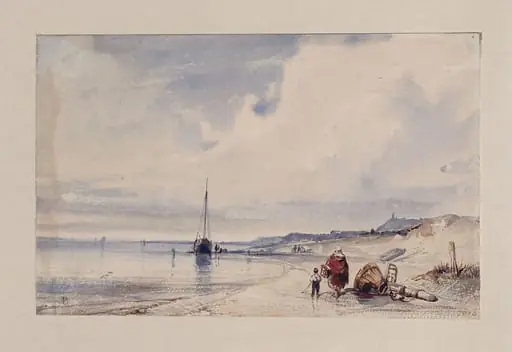
Lobster Pots is a watercolor work on paper by the British Romanticist artist Edward Cooke. It dates from 1835 and is held in the collection of the Victoria and Albert Museum.
About this work
Overview
Lobster Pots is a watercolour study by Edward Cooke, created as a preparatory work for a later oil painting.
Subject & Meaning
The watercolour depicts a beach scene with overturned lobster pots, one containing a red lobster, and scattered shells and driftwood. The everyday scene is rendered with attention to natural textures and colours.
Technique & Style
Cooke employed loose, expressive brushstrokes to capture the rough texture of the sand and the lobsters' shells, with the vibrant red of the lobster contrasting against muted earth tones.
History & Provenance
The watercolour is dated and served as a study for Cooke's 1835 oil painting of the same subject.
Context
The work reflects the Romanticism movement's focus on nature and everyday scenes, often imbuing them with narrative potential.
Own this work as a print
Artist & collection

Artist
This British artist spent decades drawing Scotland’s skylines and shores in pencil and ink.

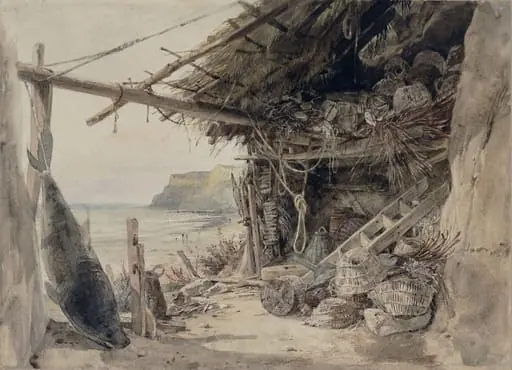 Study for 'Mending the Bait Nets'
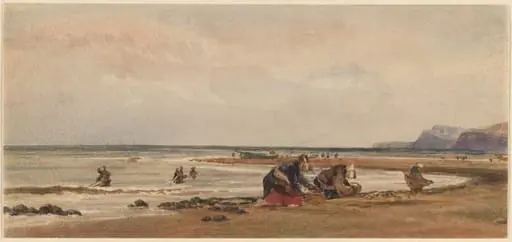 Seaweed Gatherers on the Shore at Redcar, Yorkshire
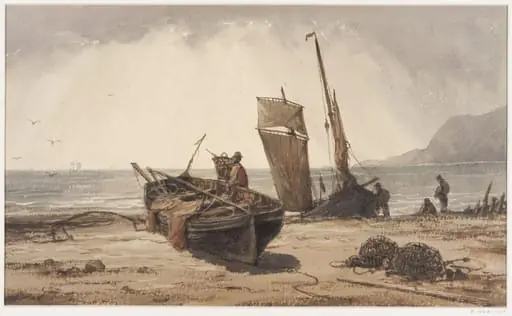 Untitled
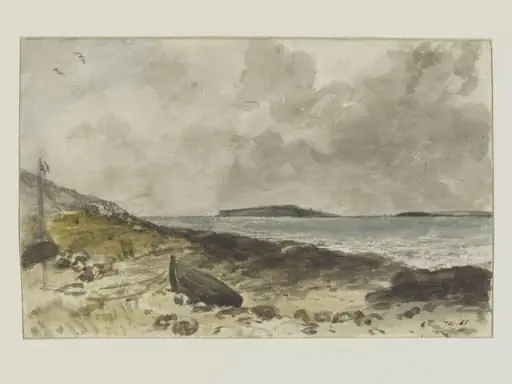 Coast scene near Osmington, with Portland Island in the distance
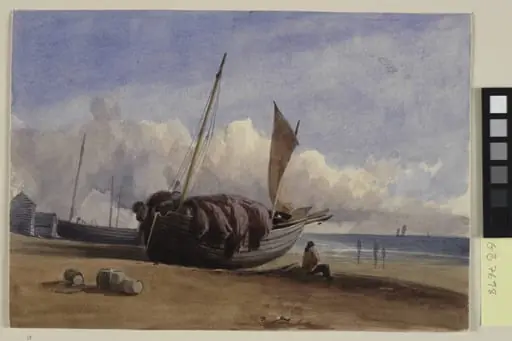 Beached fishing boat with seated fisherman
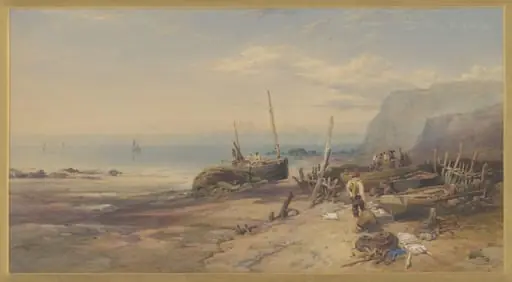 The Sands at Bonchurch, Isle of Wight
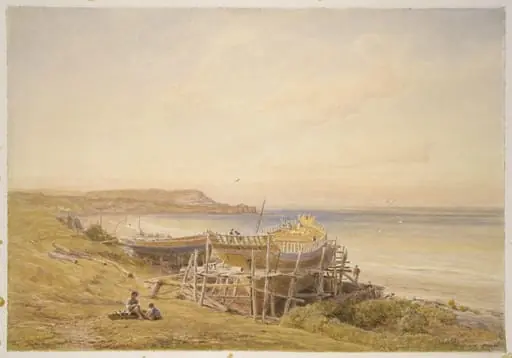 Coast scene with a ship on the stocks
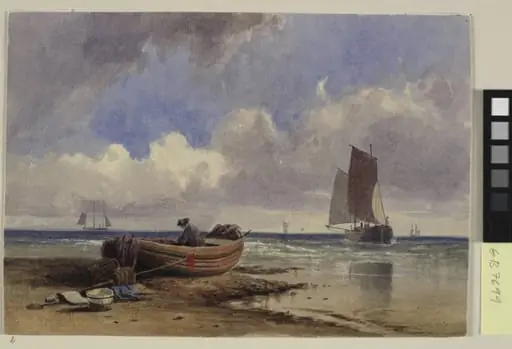 Fishing boat on the shore at Hastings
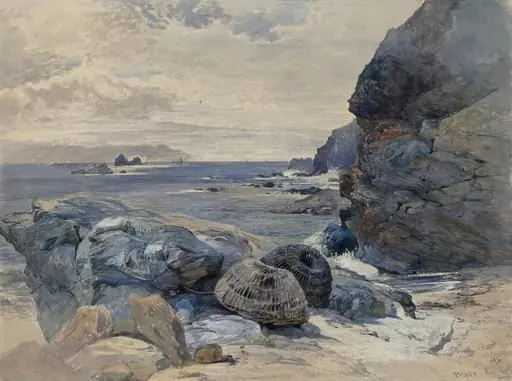 Coast scene, Polpeer, Cornwall
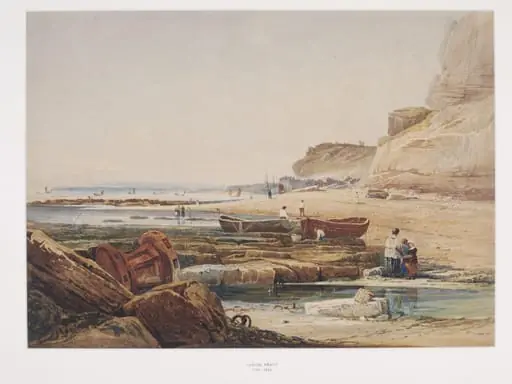 The Beach, Hastings
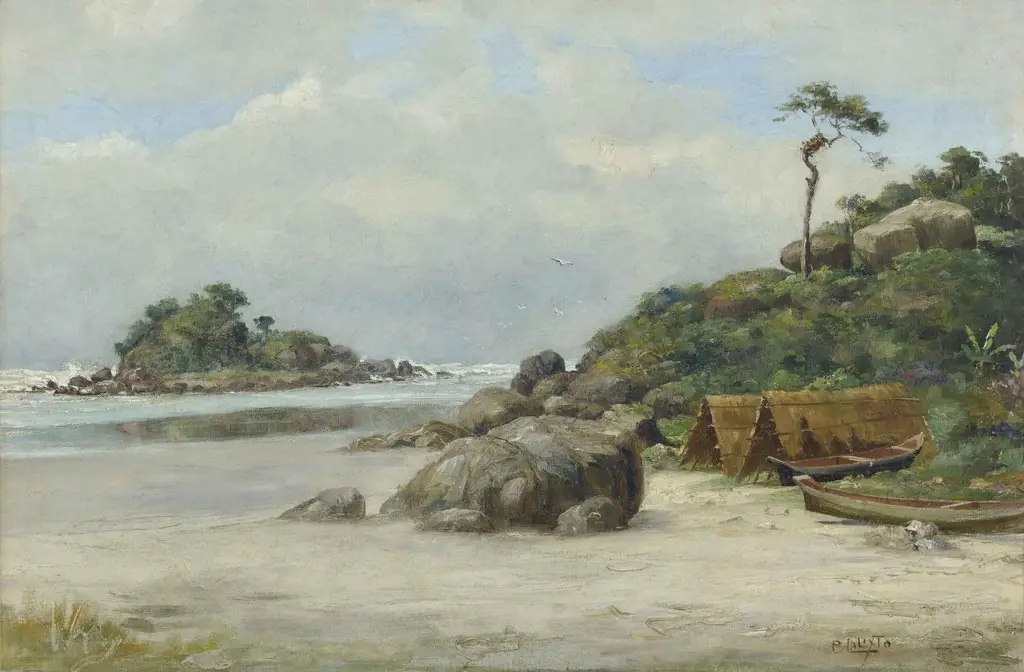 Prainha - Itanhaém
 Dutch Coast Scene